Artwork
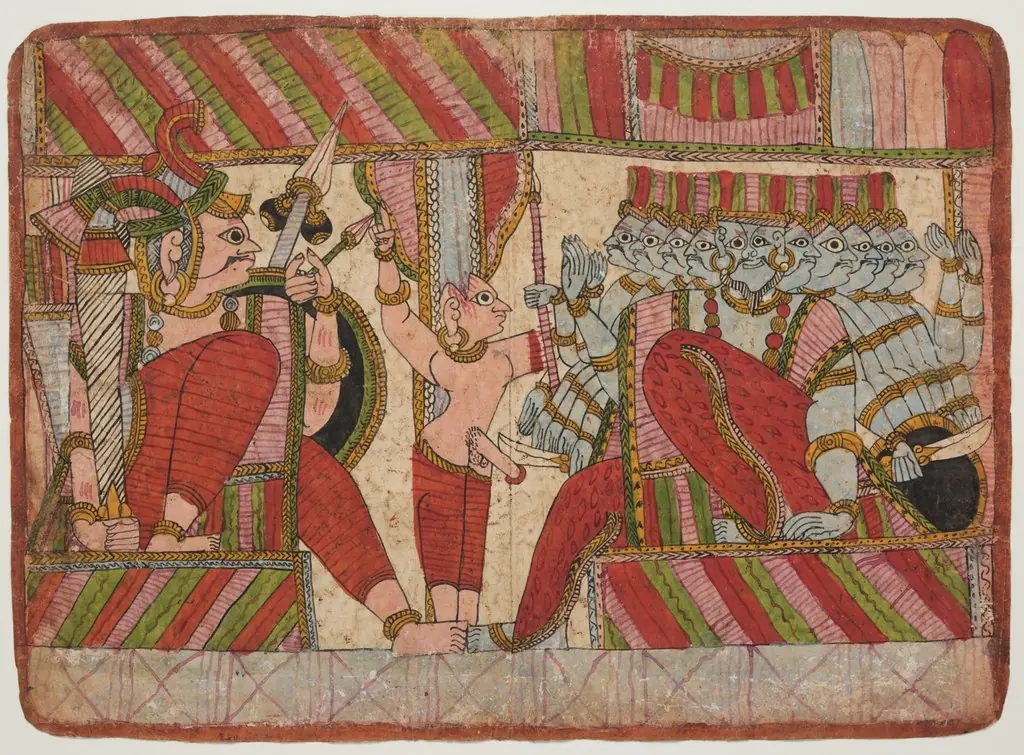
Shurpanakha demands vengeance, from the "Shangri" Ramayana
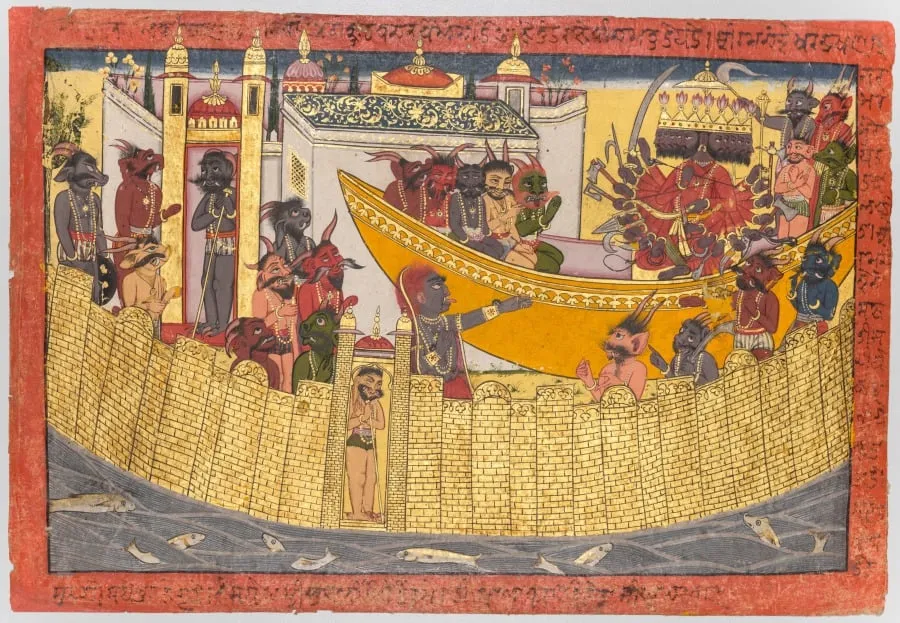
Shurpanakha demands vengeance, from the "Shangri" Ramayana is an unspecified painting by the Baroque artist Unknown. It dates from 1700 and is held in the collection of the Cleveland Museum of Art. The canvas depicts a pivotal episode from the Indian epic Ramayana, focusing on the demon king Ravana and his sister Shurpanakha.
- Accession no.
- 2018.107
- Credit line
- Purchase and partial gift from the Catherine and Ralph Benkaim Collection; Severance and Greta Millikin Purchase Fund
About this work
Overview
Ravana is rendered with ten crowned heads and twenty arms, each hand brandishing a distinct weapon, emphasizing his formidable power.
The canvas depicts a pivotal episode from the Indian epic Ramayana, focusing on the demon king Ravana and his sister Shurpanakha. Ravana is rendered with ten crowned heads and twenty arms, each hand brandishing a distinct weapon, emphasizing his formidable power. Shurpanakha, whose healed nose and ears betray recent injury, implores her brother to exact vengeance against Rama, suggesting the abduction of his wife as a strategy.
Subject & Meaning
The painting captures the moment of Shurpanakha’s renewed resolve for revenge, highlighting familial loyalty among the antagonists of the Ramayana. Her emphatic gesture toward Ravana underscores a narrative turn where personal grievance escalates into a broader conflict, foreshadowing the ensuing battles that define the epic’s moral and heroic dimensions.
Technique & Style
Executed with a lavish application of gold leaf, the work stands out for its opulent surface treatment, surpassing other pieces in the "Shangri" Ramayana series. The artist employs intricate detailing to differentiate the myriad weapons and the multiple heads, while the dynamic poses convey intense emotion and movement, characteristic of narrative Indian painting traditions.
History & Provenance
The painting forms part of the "Shangri" Ramayana collection, a series noted for its elaborate visual storytelling. It entered the Cleveland Museum of Art through a donation in the early 21st century, accompanied by documentation linking it to the same workshop that produced the series’ other, less gilded works.
Context
Within the broader epic, Shurpanakha’s appeal to Ravana marks a decisive escalation that leads to the abduction of Sita and the subsequent war. By focusing on this moment, the artwork reflects the thematic emphasis on the consequences of vengeance and the intertwining of personal vendetta with cosmic order in Hindu narrative art.
Artist & collection









 Scene from the Ramayana
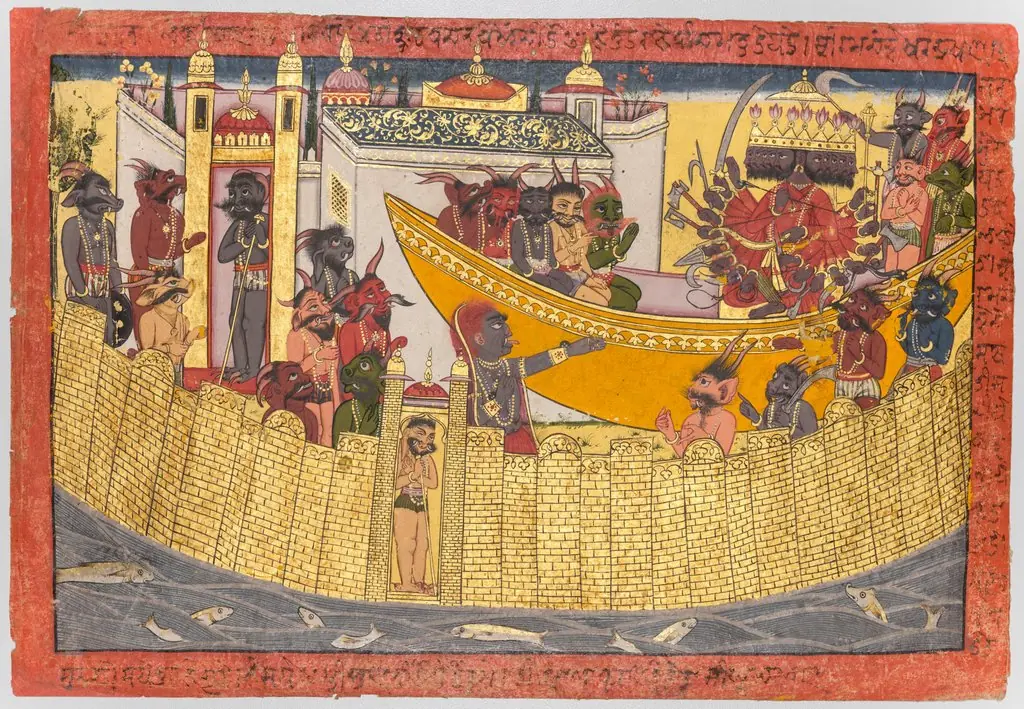 Ravana’s sister Shurpanakha complains that Lakshmana cut off her nose and ears, from Chapter 31 of the Aranya Kanda (Book of the Forest) of a “Shangri” Ramayana (Rama’s Journey)
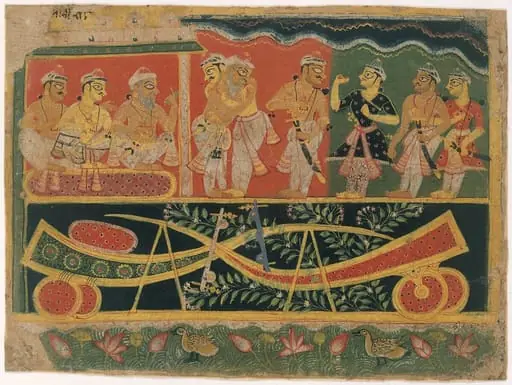 Untitled
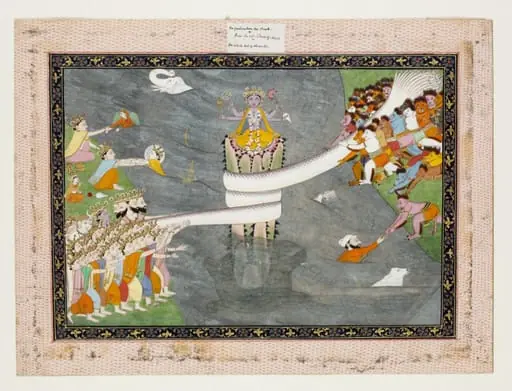 Vishnu as Kurma
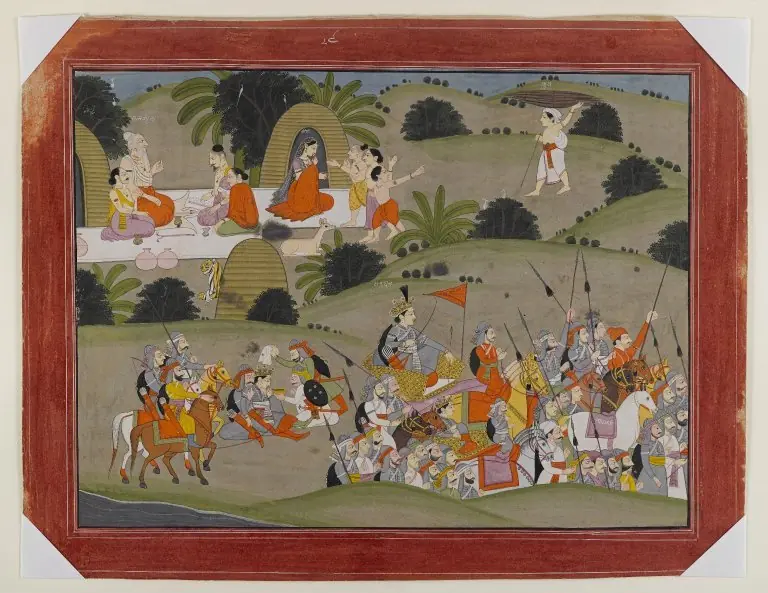 Battle between Lava and Rama's brother, Shatrughna, near the hermitage of Valmiki
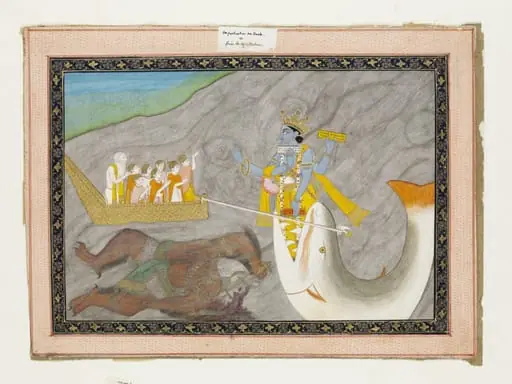 Vishnu as Matsya
 Krishna and Balarama
 Scene from the Ramayana
 King Bikramaditya Summons Madhava, from a Madhavanala Kamakandala
 Untitled
- Ravana addresses Sita in the garden of Lanka, from Chapters 53 and 54 of the Aranya Kanda (Book of the Forest) of a Ramayana (Rama’s Journey)
 Maharao Chattar Sal (reigned 1758–64) of Kota in a Palanquin