Artwork
Triptych: The Last Judgment
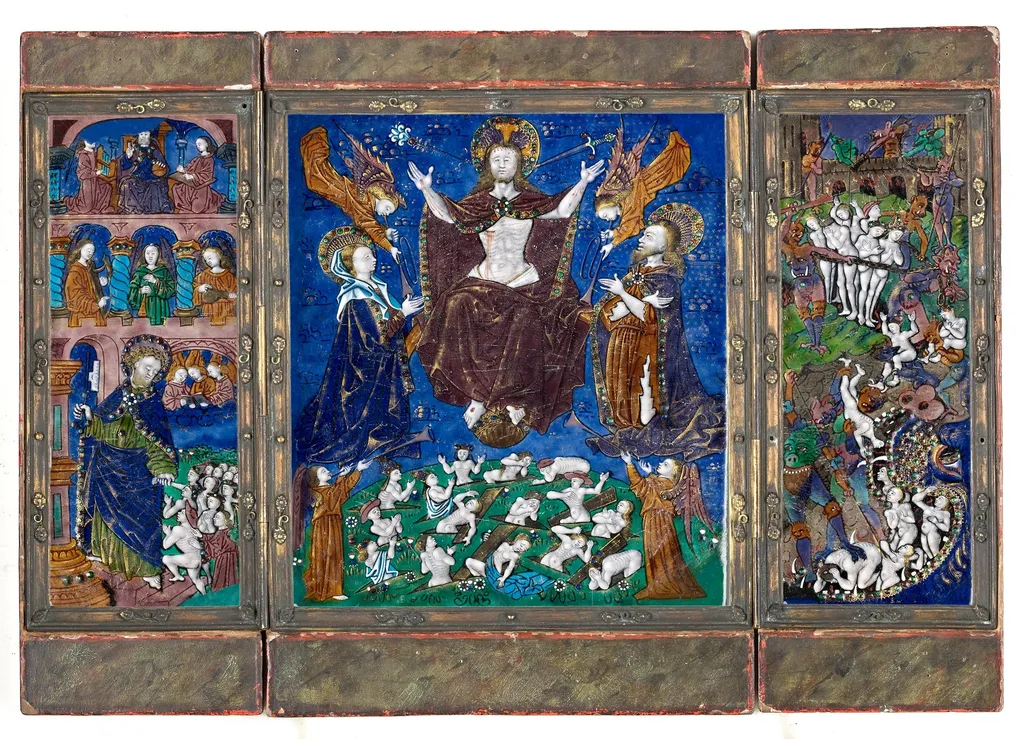
Triptych: The Last Judgment is a paint painting by the Northern Renaissance artist Master of the Orléans Triptych. It dates from 1500 and is held in the collection of the Metropolitan Museum of Art.
About this work
Subject & Meaning
Created in 1500, the triptych embodies the orthodox Christian message of divine judgment, with angels serving as agents of the final reckoning.
The triptych presents the Day of Judgment, a religious subject rendered in vitreous enamel, paint, copper, and gold leaf. Its iconography centers on Christ and angels, the figures through which the Last Judgment is traditionally visualized in late medieval and early Renaissance devotional art. The work belongs to the genre of religious art, and its tripartite format suits a sequential eschatological narrative, with the central panel likely devoted to Christ as judge and the wings extending the heavenly and damned realms associated with the theme.
The use of gold leaf and enamel on copper reflects the precious materials reserved for objects of intense devotional function, signaling the sacred weight of the subject. Created in 1500, the triptych embodies the orthodox Christian message of divine judgment, with angels serving as agents of the final reckoning.
History & Provenance
The Triptych: The Last Judgment was created circa 1500 by the anonymous artist known as the Master of the Orléans Triptych. Executed in vitreous enamel, paint, copper, and gold leaf, the work depicts the Day of Judgment, Christ, and angels. Its provenance traces a significant ownership chain involving prominent collectors E. Vaïsse and J. P. Morgan before entering the collection of Philip Lehman.
The triptych is currently held by the Metropolitan Museum of Art, where it remains part of the Robert Lehman collection. The work's creation date is firmly established around the turn of the 16th century, aligning with the stylistic period of its attributed master.
Overview
This painted triptych, titled Triptych: The Last Judgment, was created around 1500 by an artist known as the Master of the Orléans Triptych. Composed of three panels, the artwork visually interprets the Christian theological concept of the Day of Judgment. It is currently part of the collection at The Metropolitan Museum of Art, offering a significant example of early 16th-century religious art.
Technique & Style
Executed in paint, the triptych employs a vibrant palette, with bright colors and gold accents that enhance the visual impact. The figures are arranged in distinct layers, creating a sense of depth and theatricality within the composition. This deliberate use of contrasting hues against a darker background causes the individual forms to emerge sharply, drawing the viewer's attention to the dramatic narrative unfolding across the panels.
Own this work as a print
Artist & collection

- Sfânmati
 Altarpiece of Saint Vincent
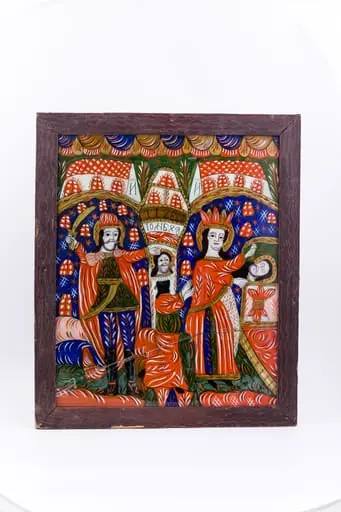 Icoana reprezintă Tăierea capului Sfântului Ioan Botezătorul și Înaintemergătorul Domnului Iisus Hristos. Central este capul Sfântului Ioan tăiat de mâna călăului și dat, prin mâinile Salomeiei în mâinile Irodiadei. În registrul inferior central sunt redate mâinile și poala rochiei dansânde, amintind de dansul Salomeiei, în fața nemilosului împărat Irod. În partea dreaptă este Irodiada, paralelă cu oșteanul călău, având pe tipsie capul Sfântului Ioan Botezătorul. În registrul superior, sunt două dealuri, cu grupuri de elemente de arhitectură - case cu ferestre - formând și alte deschideri-închideri, concavități convexe alternativ cromatizate, cu o bogăție de elemente decorative geometrizante și puncti-fitomorfe. Icoana are o compoziție simetrică și bine-organizată scenografic, cu o cromatică vie, armonioasă, deosebit de picturală: roșu vermillon, înspre trandafiriu, albastru cobalt, verde-brad, de China, roz, kaki, brun, negru, alb, galben citronne. Icoana este pictată de Ana Deji, din Făgăraș, Țara Făgărașului. Inscripția din româno-chirilică se traduce Tăierea Ioan Botez.
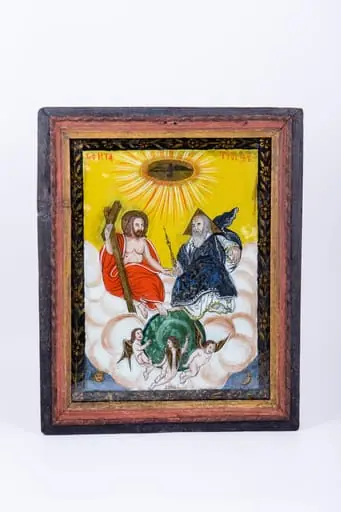 Icoana reprezintă Sfânta Treime. Dumnezeu-Tatăl și Dumnezeu-Fiul sunt înveșmântați în roșu vermillon, verde închis și albastru regal ultramarin bleumarin. În registrul îndepărtat este cerul galben-luminos, Dumnezeu-Fiul ține pe brațul drept Crucea. Duhul Sfânt este într-o mandorlă de raze luminoase bronzii, izvorând din lumină. În registrul inferior, sunt trei îngeri, cu aripi, care susțin de jos, în zbor, globul pământesc de culoare verde smarald, pe care stau cu picioarele Dumnezeu-Tatăl și Fiul Lui Dumnezeu. Inscripția din româno-chirilică se traduce Sfânta Troiță. Cromatica este luminoasă și armonioasă: roșu vermillon, albastru regal ultramarin bleumarin, bleu-ciel, verde smarald, verde brad, galben chihlimbar, alb, auriu, negru. Trăsăturile chipurilor sunt rafinat desenate. Este o icoană pictată de Pavel Zamfir Zugravu din Laz, Valea Sebeșului. Icoana este datată 1888. Ceea ce este de un impact vizual-artistic deosebit sunt veșmântul Lui Dumnezeu-Tatăl, albastru unduios, de înaltul Cerului, cu detalii minuțios-rafinate, floral-punctiforme, de verde pe alb, carnația anatomică a Fiului Lui Dumnezeu, culoarea de verde-smarald a sferei globului pământesc și lumina galbenă de chihlimbar al Cerului - Raiului.
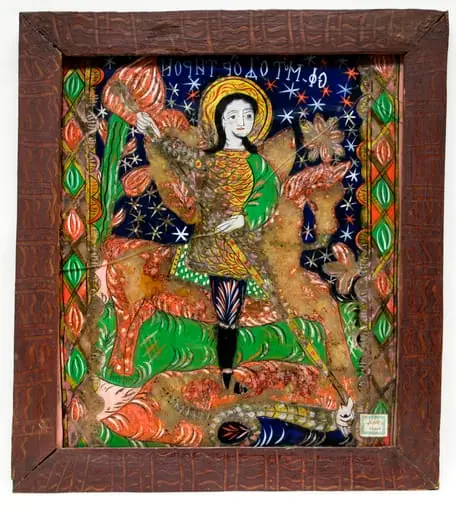 Icoana îl reprezintă pe sfântul mucenic Teodor Tiron . Sfântul, în centrul compoziției, călare pe cal , înfige o suliță lungă(ce marchează diagonala compoziției)în gura balaurului plasat inferior, dimensiuni reduse. Foarte asemănătoare cu reprezentarea sf Gheorghe, calul este roșu. Veșmintele sunt asemănătoare celor ale soldaților chezaro-crăiești, cizme înalte, negre, pantaloni bufanți cu motive fitomorfe, lorică, tunică scurtă, verde, mantie roșu-cărămiziu. Poziționarea neanatomică. trăsăturile butucănoase, ochii mari, negri, părul lung, negru închis lăsat pe umeri. Nimb cu decor fitomorf. Câmp albastru ultramarin cu decor floral(o floare pe o tulpină uriașă, două flori mai mici) și astral(steluțe albe și roșii). Chenar dublu pe laturile verticale(lanț vertical de romburi alternând cromatic) și semicercuri. Relief din benzi orizontale vălurite, diferite culori(verde, roșu, roz) Foiță de aur. Rama brun roșcat, decorată cu linii vălurite dispuse orizontal, întrerupte ritmic de linii drepte transversale. În colțul din stânga jos o etichetă cu numele Prof Gusti, bătut la mașină. Suportul pictural crăpat, stratul pictural exfoliat, temă rară.
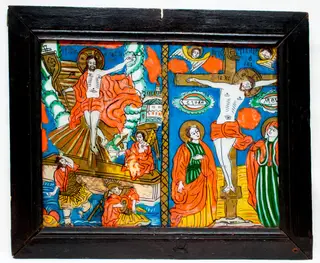 Icoacrip
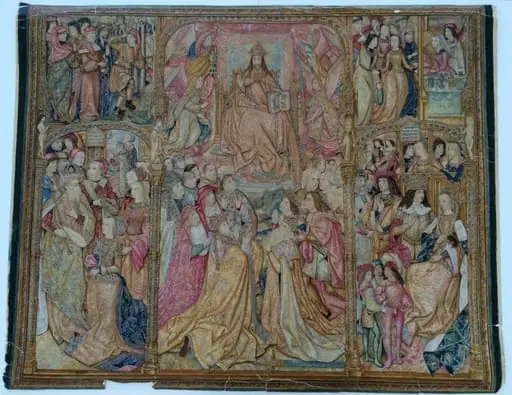 Adoration of the Eternal Father
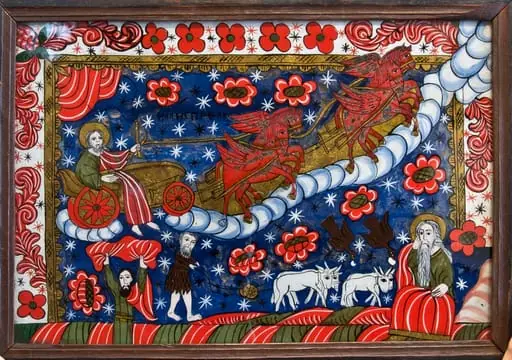 Sf. Ilie Proroc
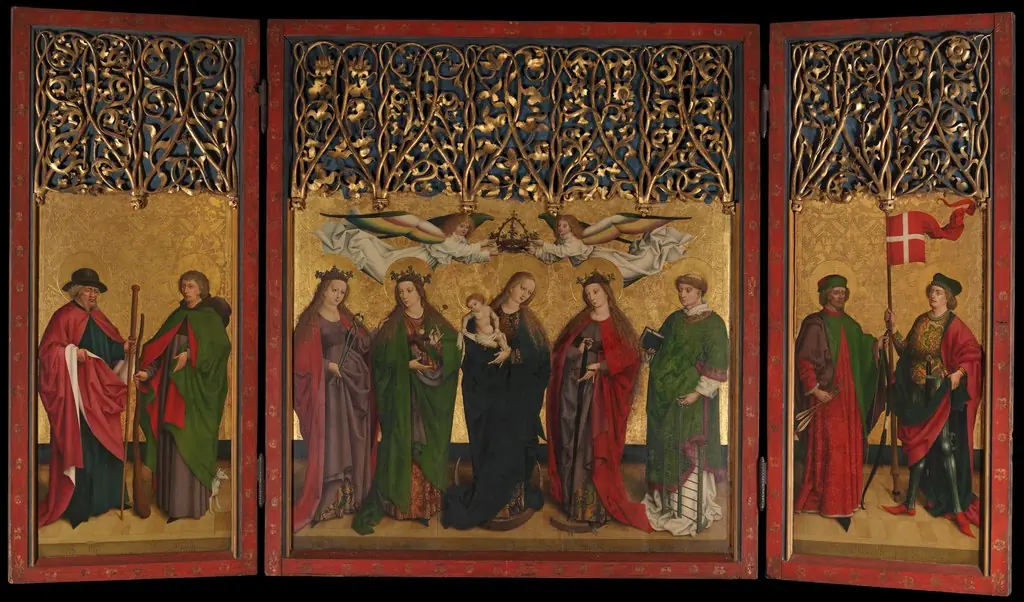
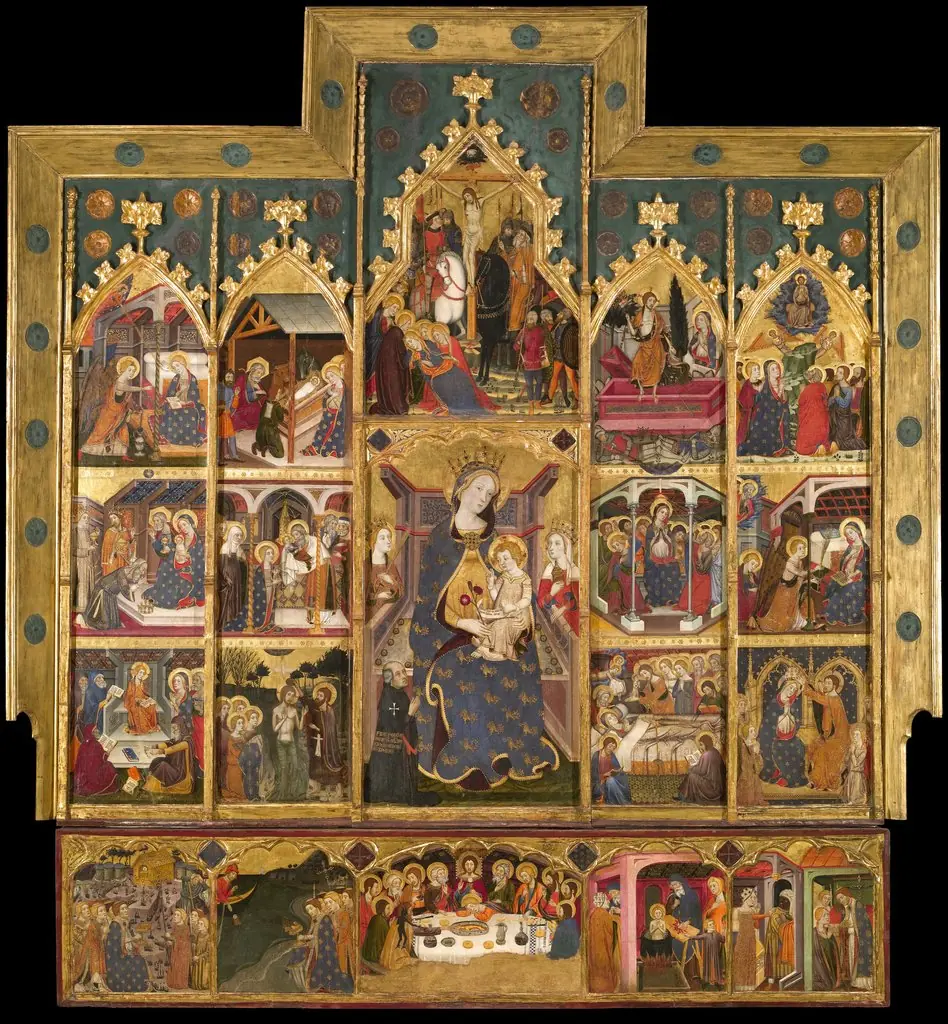 Altarpiece of the Virgin
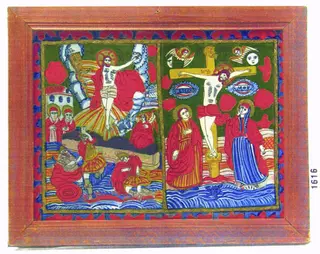 Răstignirea și învierea Mântuitorului Iisus Hristos
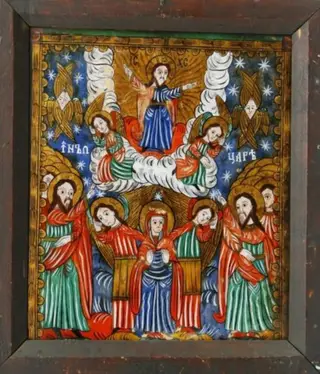 Înălțarea lui Iisus Hristos la ceruri
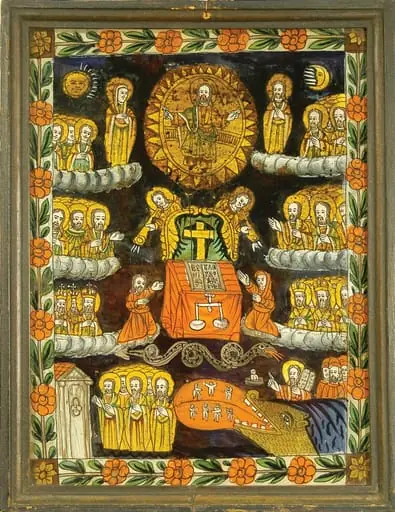 Judecata de Apoi