Artwork
Mary, Queen of Heaven
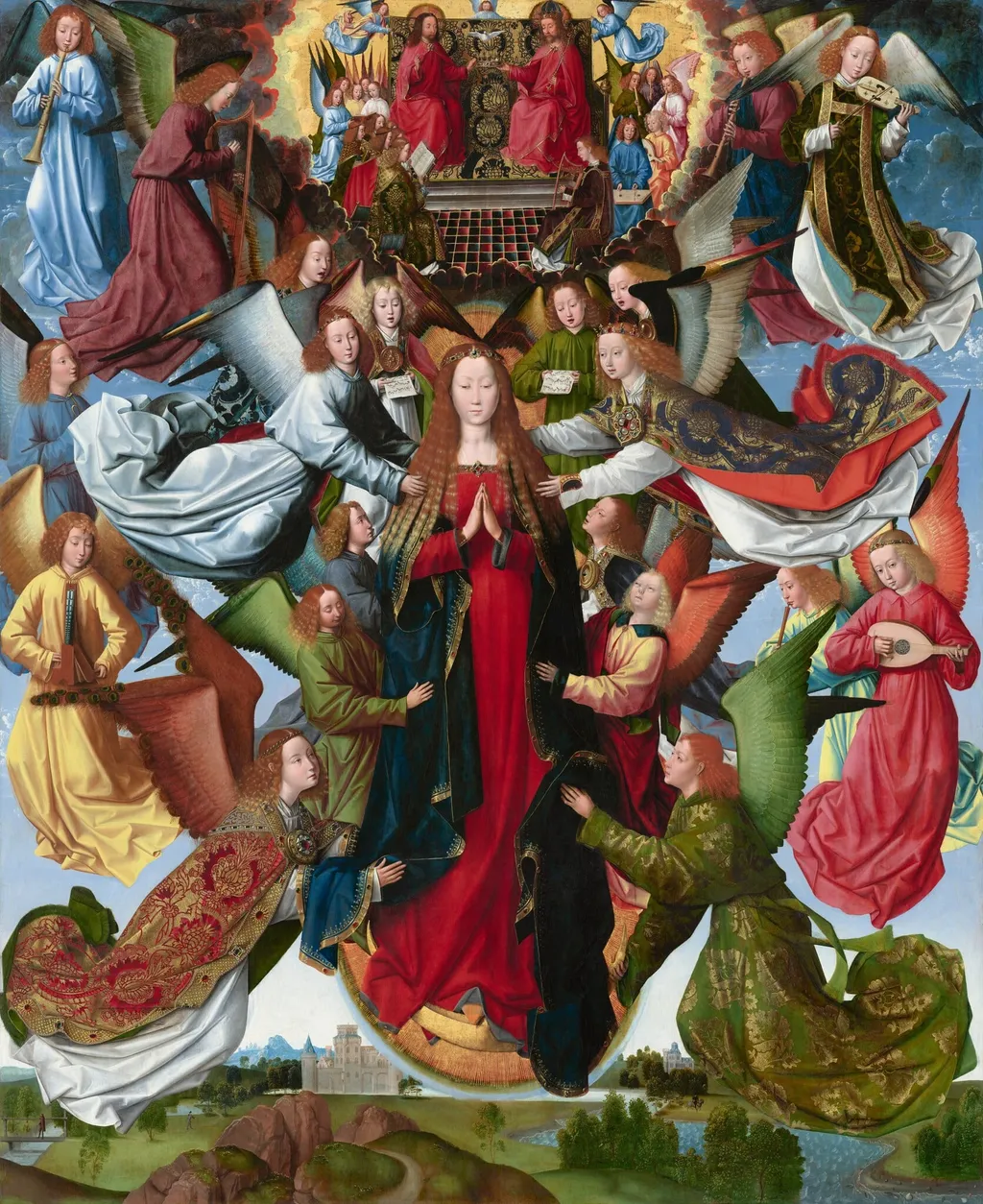
Mary, Queen of Heaven is an oil painting by the Northern Renaissance artist Master of the Legend of Saint Lucy. It dates from 1492 and is held in the collection of the National Gallery of Art.
- Inscription
- Inscribed:on the sheet of music held by the angel to the left of the Virgin's head: A / ve regina celorum mr regis[?]; on the sheet of music held by the angel to the right of the Virgin's head: A / Tenor ve / regina
About this work
Technique & Style
Painted in 1492 by the Master of the Saint Lucy Legend, Mary, Queen of Heaven is an oil-on-panel work depicting the Assumption of Mary.
Painted in 1492 by the Master of the Saint Lucy Legend, Mary, Queen of Heaven is an oil-on-panel work depicting the Assumption of Mary. The support consists of a wooden panel measuring 199 cm in height and 162 cm in width. The painting is classified as religious art and executed in the oil medium, characteristic of Northern Renaissance practice.
Regarding its physical presentation, the work was originally associated with a frame bearing the escutcheon of Don Pedro Fernández de Velasco, though conservation assessments suggest the current frame is not entirely original but incorporates portions of an older structure. The piece remains in the collection of the National Gallery of Art, having been acquired via the Samuel H. Kress Foundation.
History & Provenance
Dated to 1492, this oil painting by the Master of the Saint Lucy Legend was likely commissioned by Don Pedro Fernández de Velasco, Count of Haro and Constable of Castile, for the convent of Santa Clara in Medina de Pomar near Burgos. Historical records indicate the work remained at the convent until at least 1934, supported by notes regarding an escutcheon on the original frame bearing Velasco's arms, though the current frame's authenticity is debated by conservators.
Following its time in Spain, the panel entered the collection of Raimundo Ruiz y Ruiz in Madrid before passing to the dealer French & Company in New York by approximately 1947. The Samuel H. Kress Foundation purchased the work in 1949 and subsequently gifted it to the National Gallery of Art in Washington, D.C., in 1952 through an exchange.
Overview
Mary, Queen of Heaven, an oil painting on panel, was created around 1492 by the artist known as the Master of the Saint Lucy Legend. This religious work depicts the Assumption of Mary, a central event in Christian tradition where the Virgin Mary is believed to have been taken directly into Heaven. The composition features Mary at its center, surrounded by a multitude of celestial figures.
Subject & Meaning
The painting illustrates the Assumption of Mary, a doctrine celebrating her bodily ascent to heaven. The Virgin Mary is prominently featured in a red garment, her hands clasped in prayer, signifying her piety and readiness for divine elevation. She is encircled by numerous angels and musical figures, emphasizing her celestial status and the joyous reception awaiting her in the heavenly realm.
Context
This painting is attributed to the Master of the Saint Lucy Legend, an anonymous Early Netherlandish painter active in Bruges during the late 15th century. The artist is known for religious works that often feature detailed narratives and vibrant color palettes. Mary, Queen of Heaven exemplifies the devotional art prevalent in the period, intended to inspire contemplation and reverence among its viewers.
Own this work as a print
Artist & collection
Artist
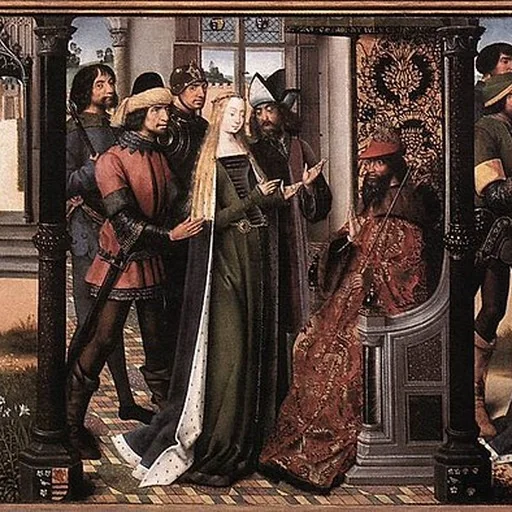
Master of the Legend of Saint Lucy
The Master of the Legend of Saint Lucy (fl. 1480–1510) was an unidentified Early Netherlandish painter from Bruges. His name comes from an altarpiece in the church of Saint James in Bruges, dated 1480, depicting three…

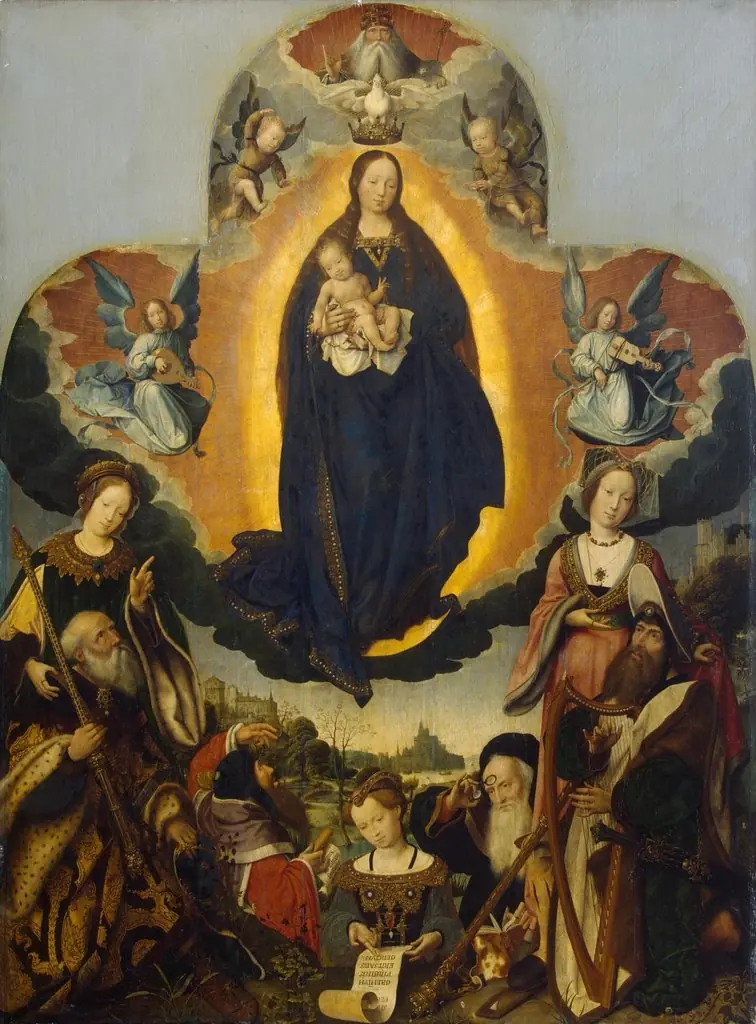
- The Virgin Mary in Glory
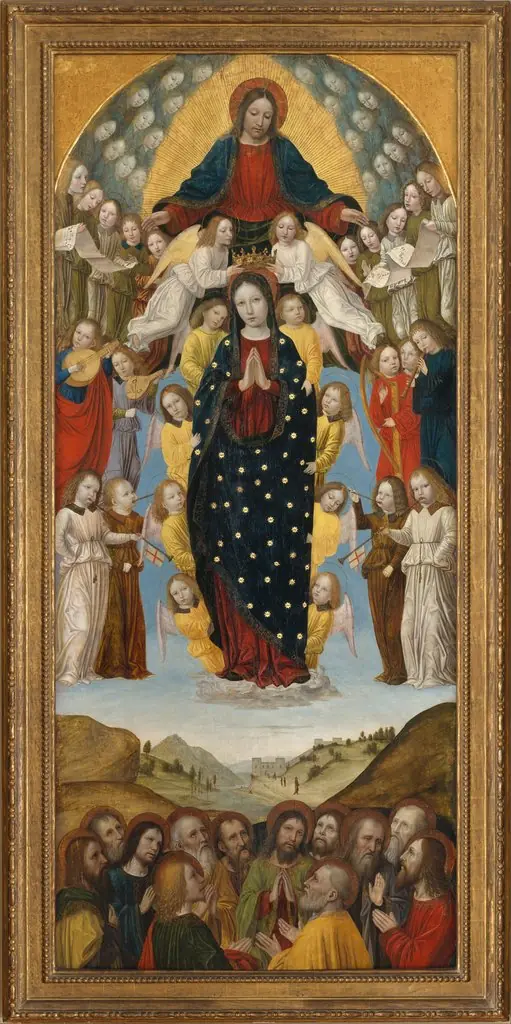 The Assumption of the Virgin
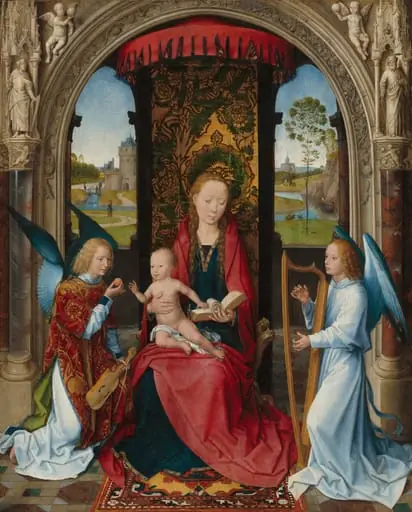 Madonna and Child with Angels
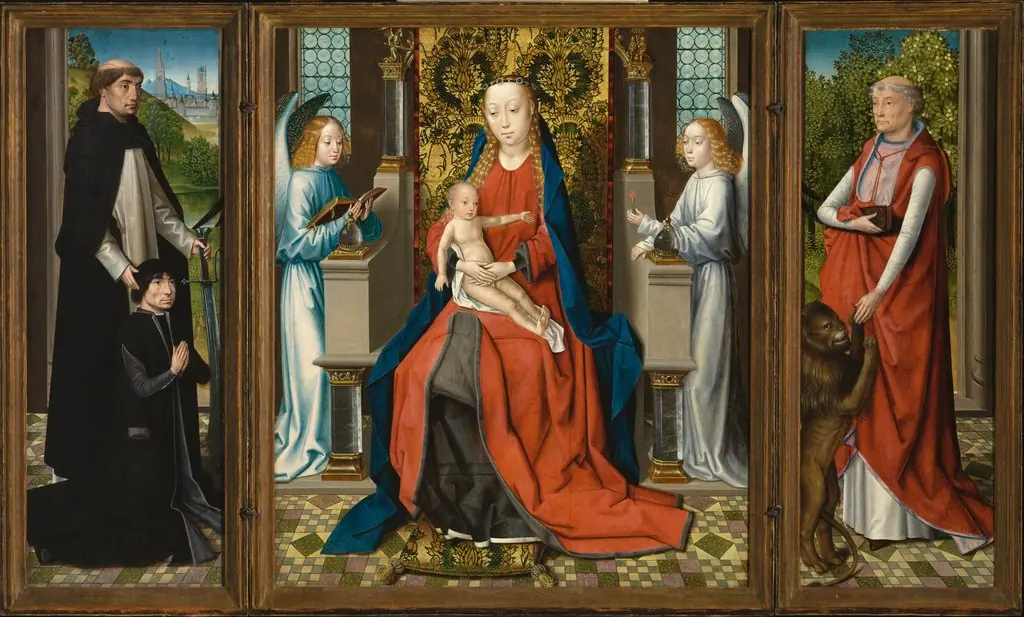 Triptych of Madonna and Child with Angels; Donor and His Patron Saint Peter Martyr; and Saint Jerome and His Lion
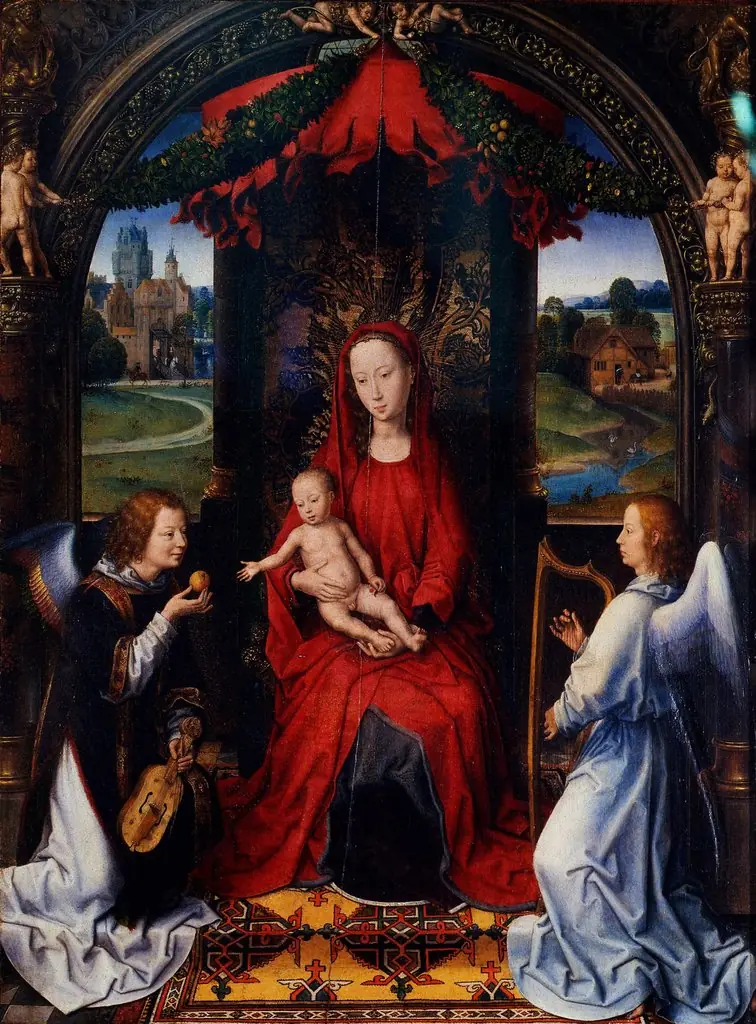 Madonna enthroned with child and two musical angels
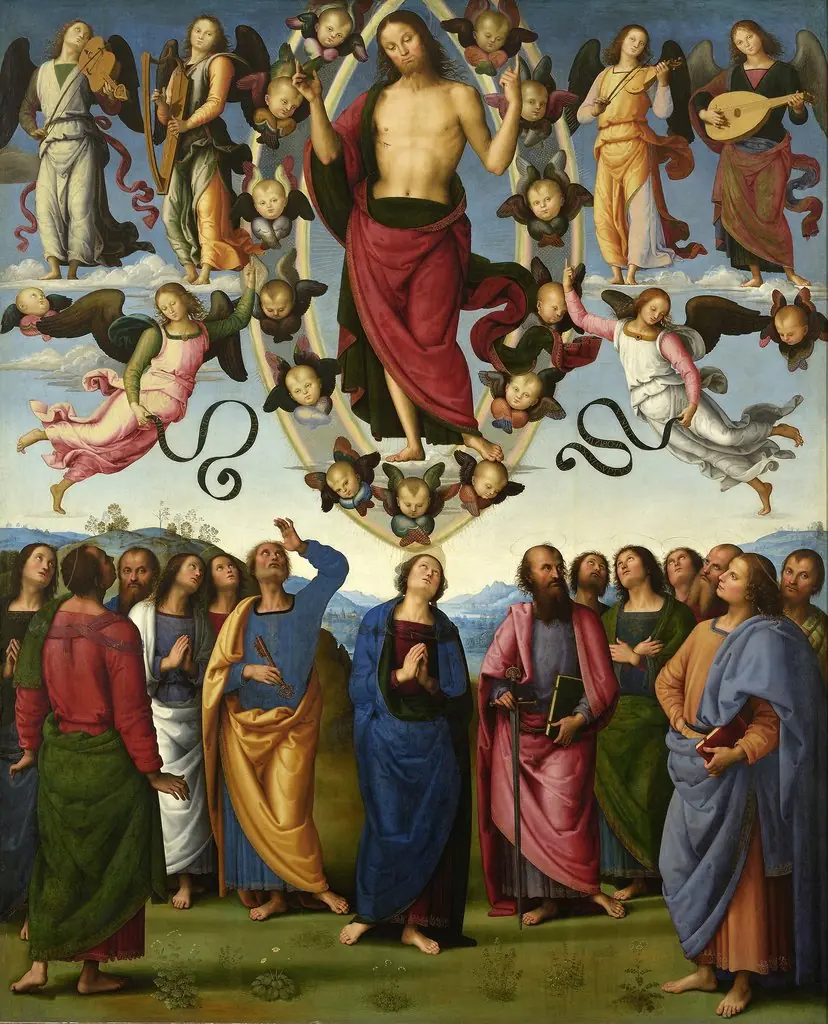 Ascension of Christ
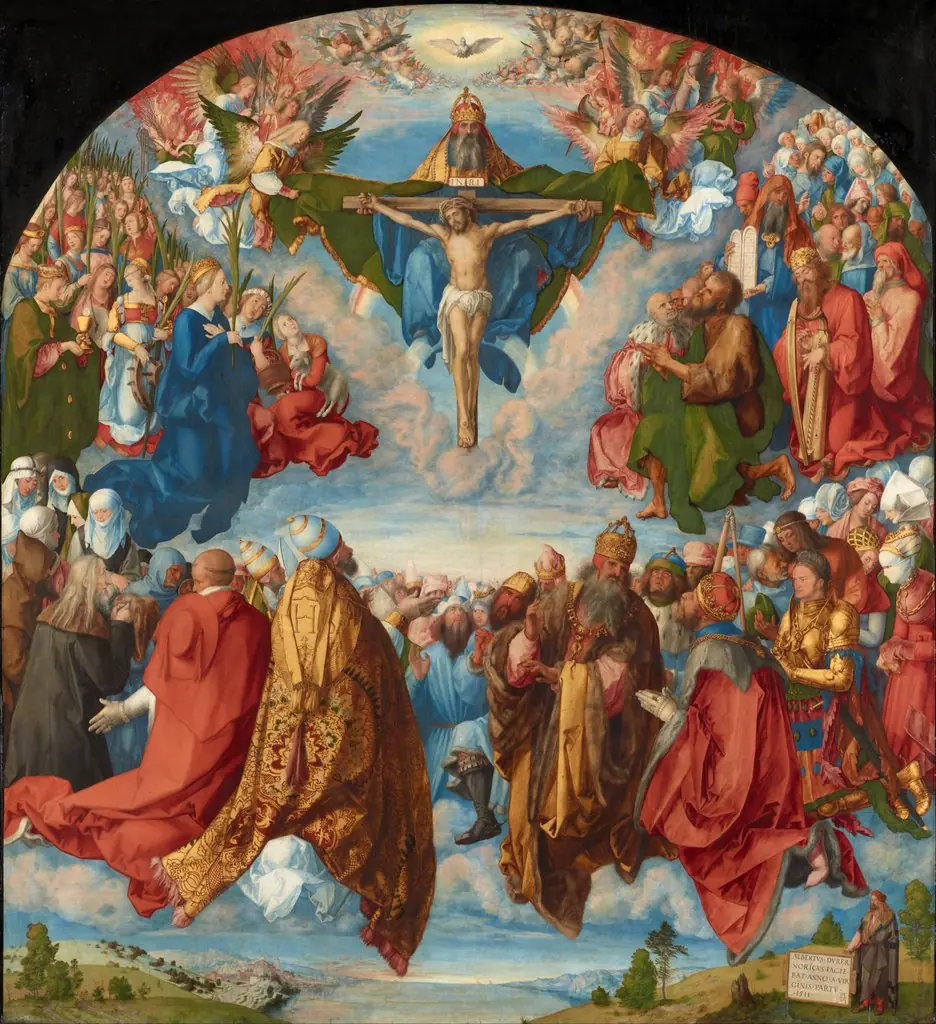 Adoration of the Trinity
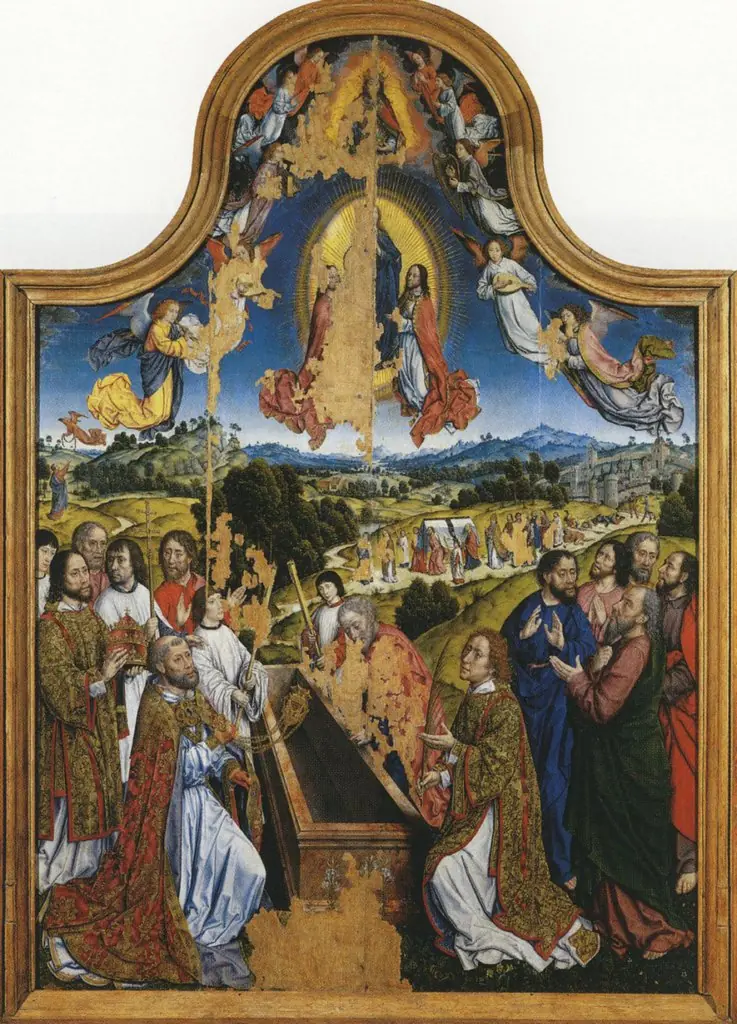 Assumption of the Virgin
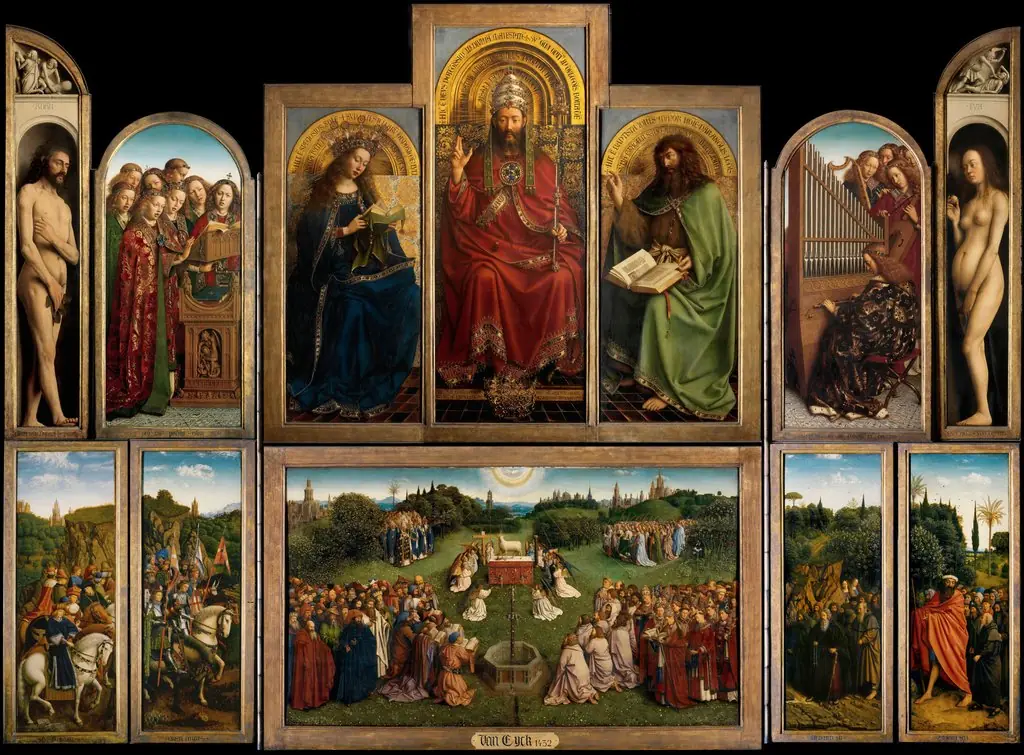 Ghent Altarpiece
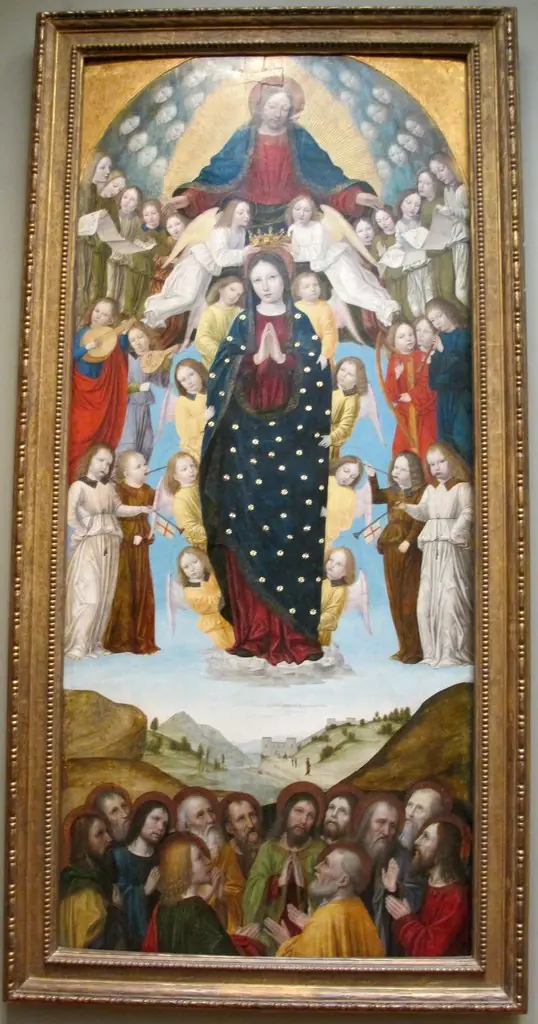 Assumption of the Virgin
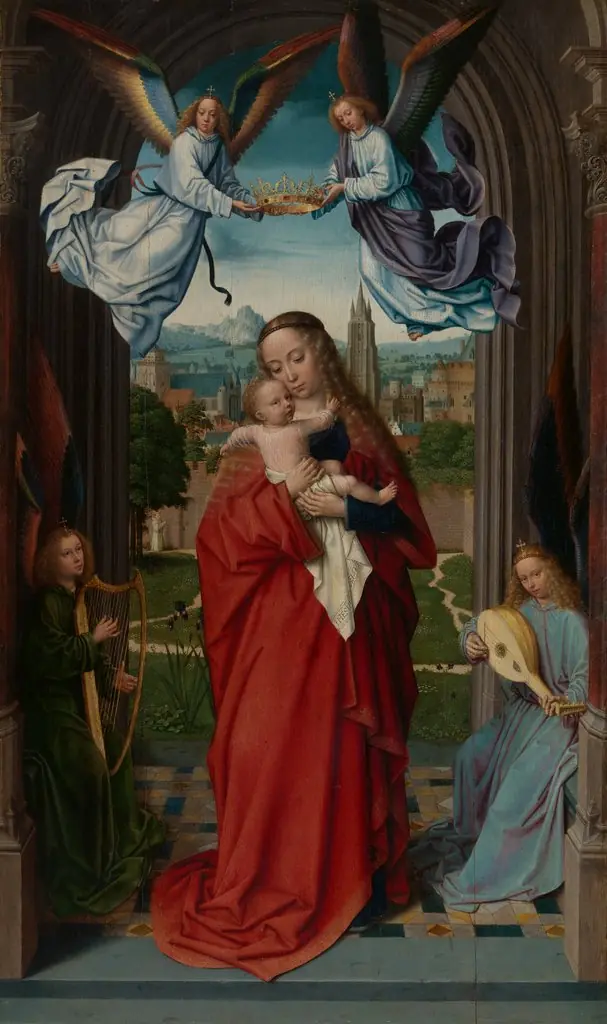 Virgin and Child with Four Angels
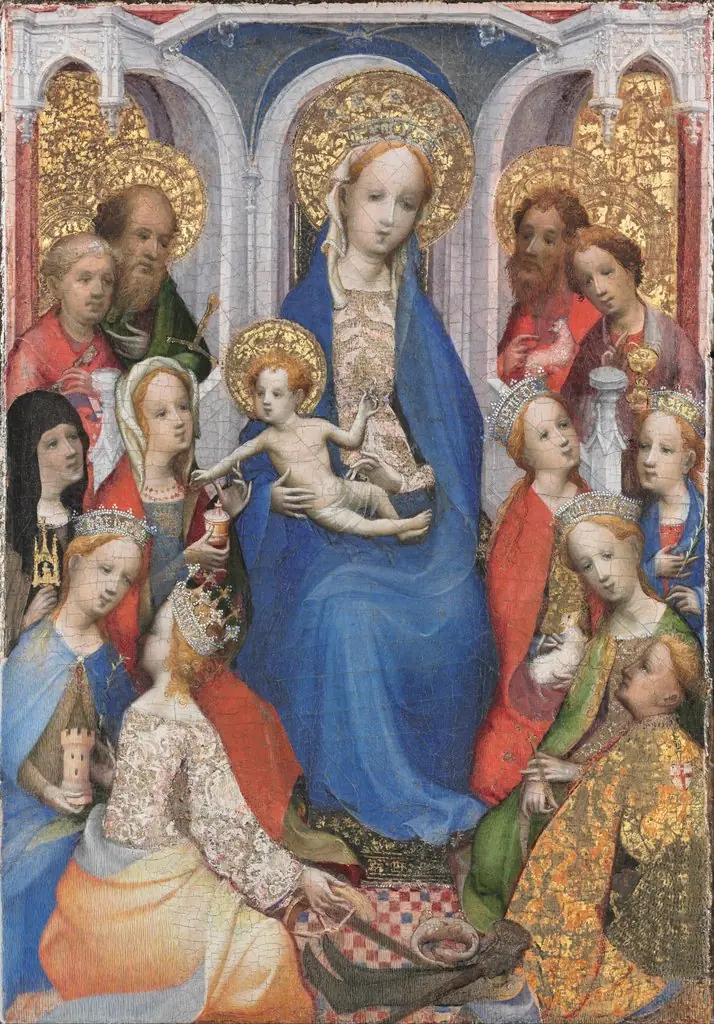 Enthroned Virgin and Child, with Saints Paul, Peter, Clare of Assisi, Mary Magdalene, Barbara, Catherine of Alexandria, John the Baptist, John the Evangelist, Agnes, Cecilia, Margaret of Antioch, and George