Artwork
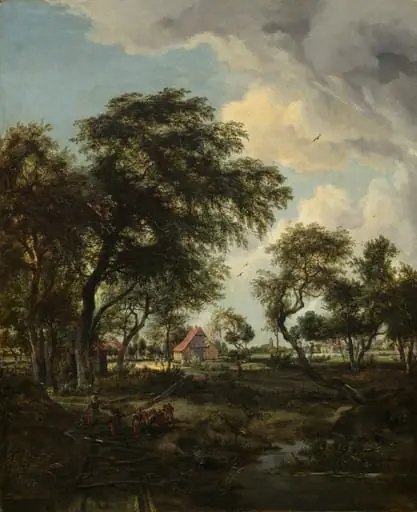
A Watermill
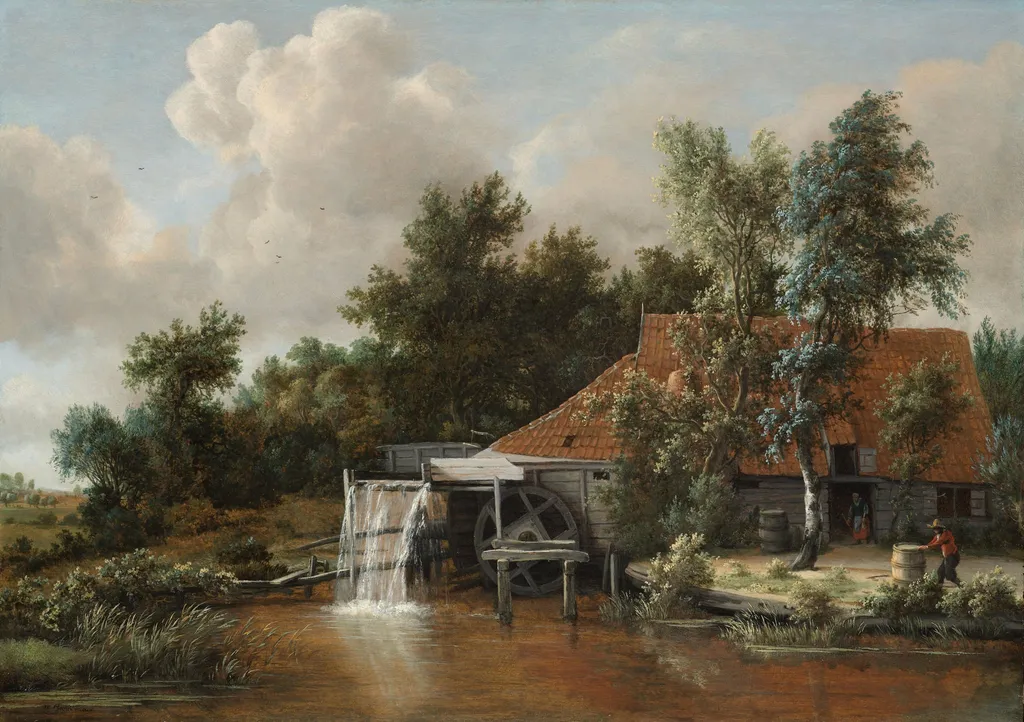
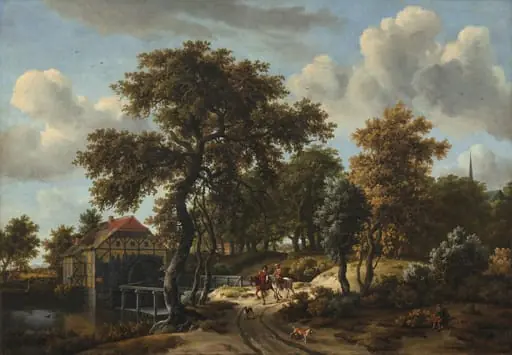
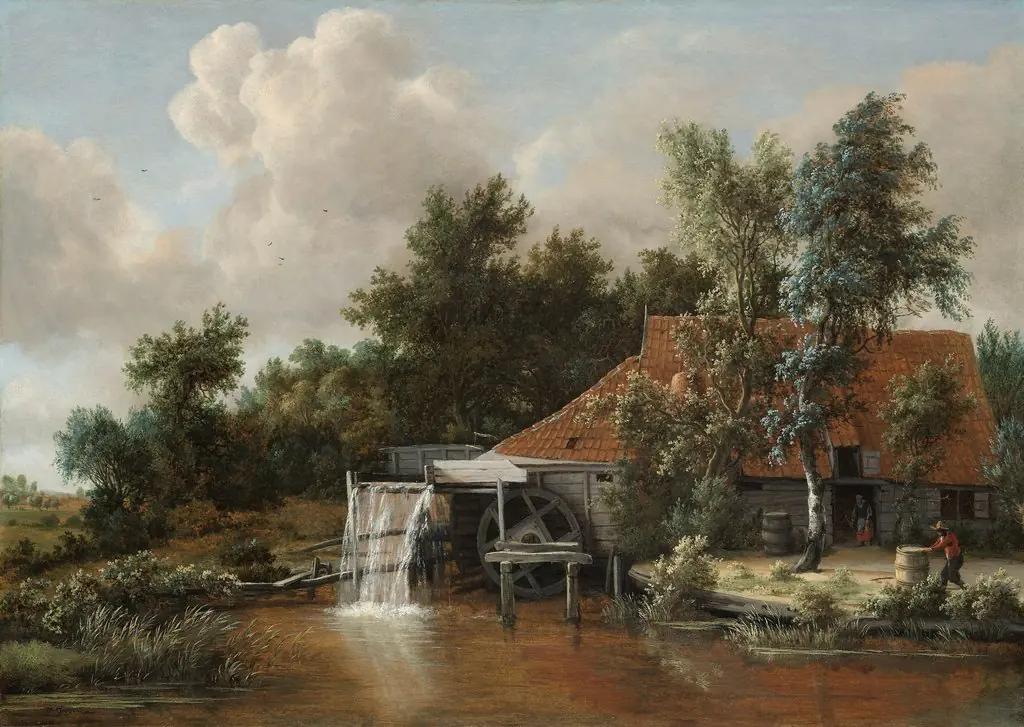
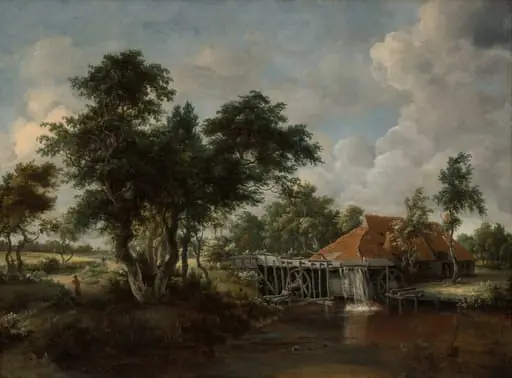
A Watermill is an unspecified painting by the Dutch Golden Age artist Meindert Hobbema. It dates from 1664 and is held in the collection of the Rijksmuseum.
About this work
Subject & Meaning
These compositions typically feature the mill building in the near distance, often accompanied by glistening ponds, winding roads, and scattered tree groups.
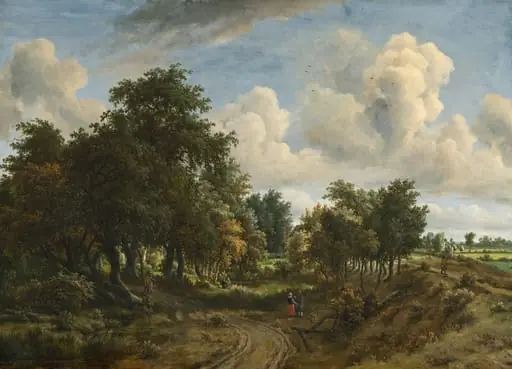
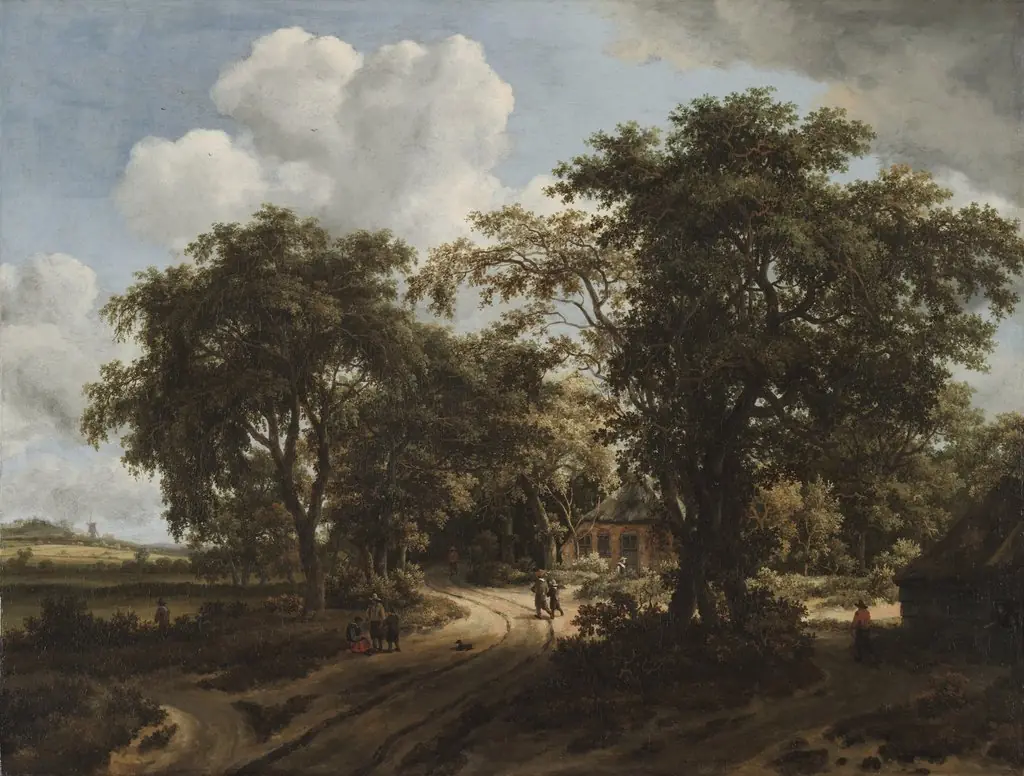
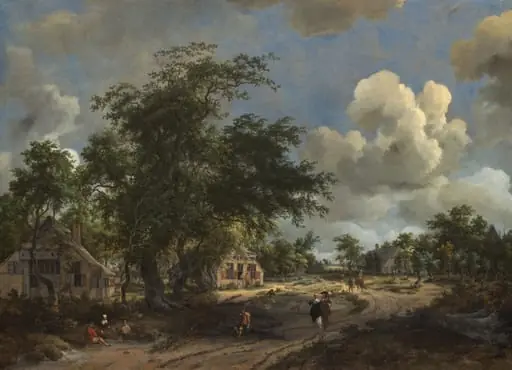
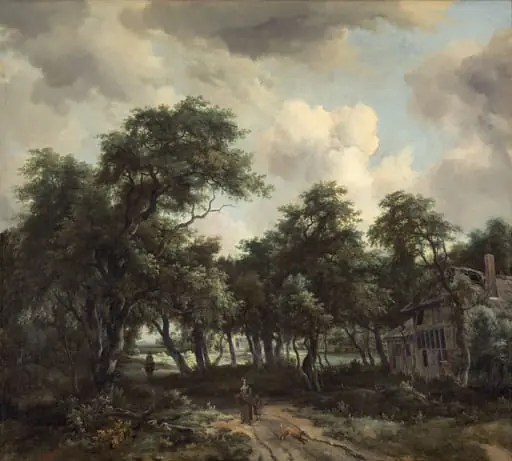
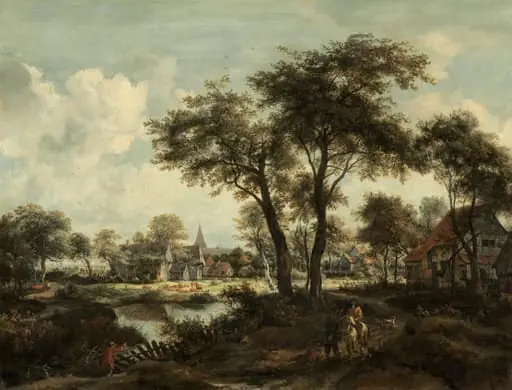
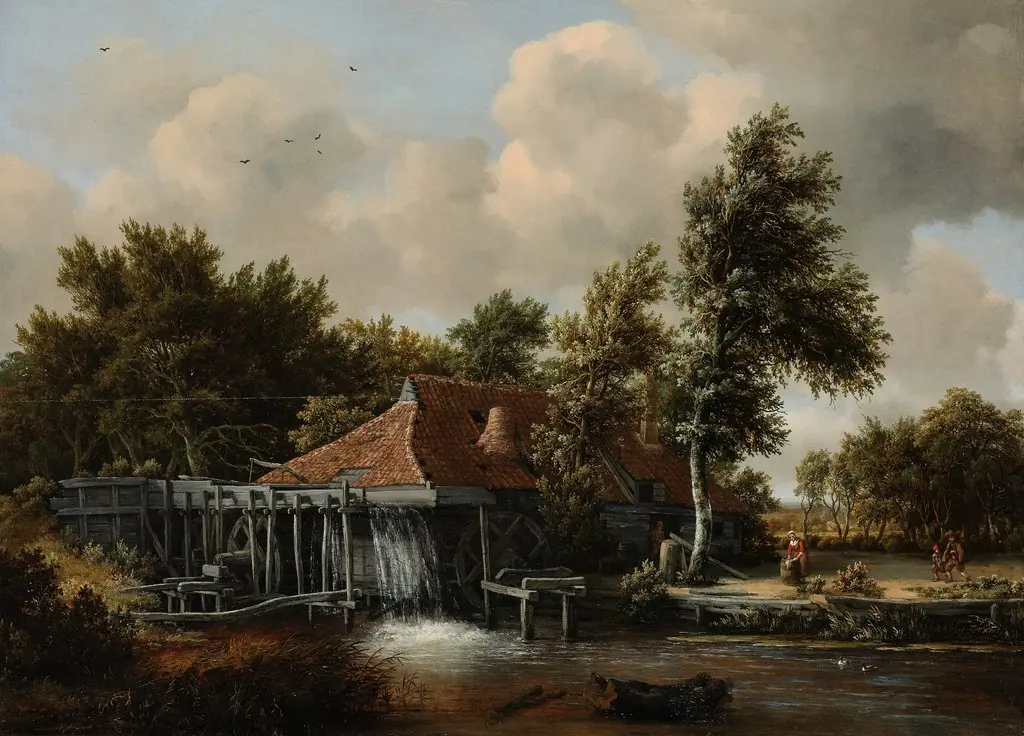
The painting depicts a watermill situated within a wooded landscape, a subject that became a distinctive signature of Hobbema's mature style. While the specific motif of the watermill was originally introduced by his teacher Jacob van Ruisdael, Hobbema specialized in this theme, producing over thirty variations. These compositions typically feature the mill building in the near distance, often accompanied by glistening ponds, winding roads, and scattered tree groups.
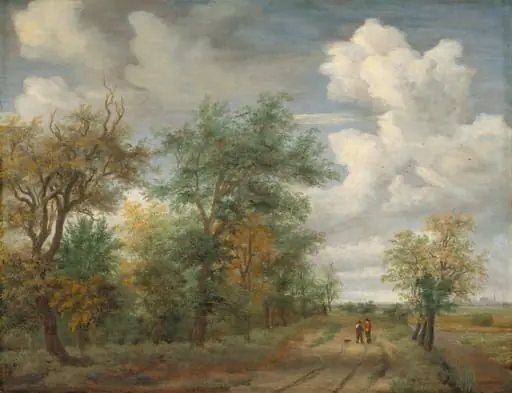
Unlike the dramatic or moralizing undertones found in some contemporary landscapes, Hobbema's work is characterized by sunny, flat terrains and an absence of heavy symbolism. The scenes are carefully contrived and imaginary rather than topographical records, designed to showcase varying effects of light and color. The imagery represents an idealized, peaceful rural existence, focusing on the interplay of sunlight filtering through foliage and reflecting off water surfaces.
Technique & Style
Dating to circa 1664, A Watermill is an oil painting on canvas measuring 62 by 85.2 cm. The work exemplifies Hobbema's mature specialization in wooded landscapes featuring water mills, a subject he treated in over thirty paintings. Stylistically, the composition avoids symmetry, typically arranging paths or roads that wind diagonally through dense vegetation with buildings situated in the near distance. Unlike the darker, more dramatic tones of his teacher Jacob van Ruisdael, Hobbema's handling is characterized by a sunnier atmosphere where principal trees are often silhouetted against the sky. The artist demonstrates exceptional skill in varying light and color effects, utilizing double vanishing points to create compositional interest within these carefully contrived, imaginary scenes.
History & Provenance
A Watermill was painted by Meindert Hobbema circa 1664. This dating places the work within the artist's most productive period, which spanned the 1660s up until his marriage in November 1668. During these years, Hobbema refined his specialization in wooded landscapes featuring water mills, a subject he treated in over thirty paintings. The work reflects the strong influence of his teacher, Jacob van Ruisdael, whose style dominated Hobbema's output from around 1662 onwards. While the painting is currently held by the Rijksmuseum in Amsterdam, specific details regarding its original commission or early ownership chain prior to modern museum acquisition are not provided in the available records. The artist largely ceased painting after taking a position as a wine-gauger in 1668, making this work an example of his mature style before his professional focus shifted.
Context
Meindert Hobbema and Jacob van Ruisdael represent the final development of Dutch Golden Age landscape art, though Hobbema's career was marked by a sharp decline in output after he took a municipal post in 1668. While largely forgotten in the Netherlands during the 17th and early 18th centuries, his reputation grew steadily from the late 1700s, particularly in England where his sunny, detailed woodland scenes influenced artists like Thomas Gainsborough. Unlike the more dramatic and moralizing works of Ruisdael, Hobbema specialized in lighter, carefully composed views featuring water mills, a motif he repeated over thirty times. His work fell out of fashion again by the time of his death in poverty, but regained significant market value and scholarly attention in the 19th century among English, French, and American collectors.
Legacy
Meindert Hobbema experienced a significant posthumous renaissance, as his work remained largely unknown in the Netherlands for nearly a century following his death in 1709. During the 18th century, his name was frequently omitted from art descriptions, and his paintings were often misattributed to his master, Jacob van Ruisdael, with signatures sometimes removed to increase their market value. His reputation began to recover in the last decades of the 18th century, particularly in England, where his landscapes heavily influenced the early work of Thomas Gainsborough. This appreciation spread to France, where his balanced, sunlit rural scenes captivated 19th-century Romantic painters. By the late 19th century, American collectors also began actively seeking his works, driving up prices and unfortunately leading to instances of false dating and forgery as demand surged.
Own this work as a print
Artist & collection
Artist
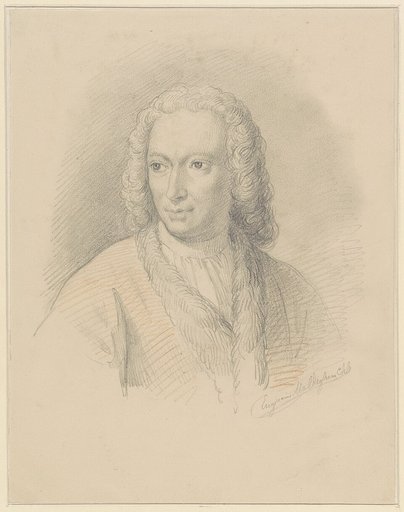
Meindert Lubbertszoon Hobbema (bapt. 31 October 1638 – 7 December 1709) was a Dutch Golden Age painter of landscapes, specializing in views of woodland, although his most famous painting, The Avenue at Middelharnis…