Artwork
Bridgewater Madonna
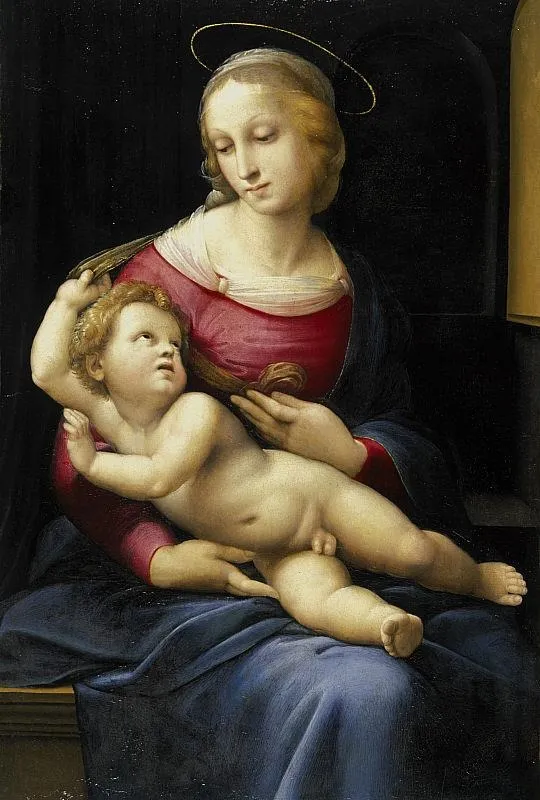
Bridgewater Madonna is an oil painting by the High Renaissance artist Raphael. It dates from 1507 and is held in the collection of the National Galleries Scotland.
About this work
Subject & Meaning
Its symbolic focus on maternal care and divine humanity aligns with devotional practices of private prayer in early 16th-century Florence.
The Bridgewater Madonna depicts the Virgin Mary holding the infant Jesus in a private devotional scene typical of the High Renaissance. The composition shows Mary nursing the Child, who reaches toward her veil while her hands rest on His body, creating a serpentine movement of intertwined gestures. This intimate exchange of gaze and touch emphasizes tenderness and spiritual connection.
Originally painted on wood with a landscape background, Raphael later altered the setting to a dark space to heighten chiaroscuro effects and volumetric presence. The work reflects influences from Michelangelo’s sculptural tenderness and Leonardo’s compositional innovations, particularly in the contraposto twist and dynamic interplay of figures. Its symbolic focus on maternal care and divine humanity aligns with devotional practices of private prayer in early 16th-century Florence.
Technique & Style
Executed in oil on wood transferred to canvas, the Bridgewater Madonna measures 81 by 56 cm. X-radiography reveals Raphael initially set the Virgin against a landscape background, later replacing it with a darkened interior so that concentrated chiaroscuro could heighten the figures’ volume and monumentality.
The composition pivots on a serpentine interplay of gestures: the Christ Child’s arms clutch the Madonna’s veil while her hands gently touch his body, creating an elegant contrapposto twist. Intense, luminous hues model the intertwined forms against an indistinct setting of niche and bench, emphasizing tactile presence and rhythmic harmony.
History & Provenance
Painted by Raphael around 1507 in Florence, the Bridgewater Madonna began as an oil work on wood before being transferred to canvas. It entered the collection of Francis Egerton, 3rd Duke of Bridgewater, in 1792 and remained at Bridgewater House until 1945, acquiring its popular name from that estate. The painting later passed to the Duke of Sutherland, whose family has held it since.
In 1945 it was acquired by the National Galleries of Scotland and is now on loan to the Scottish National Gallery. The work shows the Virgin and Child in a dark interior, with gestures and drapery that reflect influences from Michelangelo and Leonardo da Vinci. X‑ray studies reveal an earlier landscape background that was later replaced to heighten chiaroscuro contrast. Preparatory drawings are held by the Albertina Museum in Vienna and the British Museum in London.
The Bridgewater Madonna is held in the permanent collection of the Scottish National Gallery in Edinburgh, where it is displayed on loan from the Duke of Sutherland Collection. The work measures 81 by 56 cm and was originally executed in oil on wood before being transferred to canvas.
Its provenance traces back to the seventeenth-century Seignelay collection in France, after which it entered the holdings of the Duke of Orleans at the Palais-Royal in Paris. In 1792, Francis Egerton, the 3rd Duke of Bridgewater, purchased the painting for £3,000. It remained at Bridgewater House until 1945, a residency that provided the artwork with its common name.
Context
Dating to 1507, the Bridgewater Madonna is a seminal work from Raphael's mature Florentine period, firmly situated within the High Renaissance movement. Scholarship identifies the painting as a synthesis of influences from his contemporaries, specifically Michelangelo and Leonardo da Vinci. Preparatory drawings held in Vienna and London reveal that Raphael adapted the dynamic, intertwined figures and chiaroscuro effects characteristic of Leonardo, while the composition echoes the sculptural form of Michelangelo's Taddei Tondo.
Technical analysis, including X-rays, indicates Raphael initially planned a landscape background before shifting to a dark setting to enhance the volume and monumentality of the figures through light and shadow. This evolution demonstrates the artist's refinement of the Madonna and Child motif, moving away from traditional backgrounds to create a more intimate, devotional image defined by a serpentine movement and harmonious balance.
Overview
Created in 1507, the Bridgewater Madonna is an oil painting by Raphael now held in the Scottish National Gallery, Edinburgh. Originally executed on wood and later transferred to canvas, the work measures roughly 81 by 55 centimetres and forms part of the Duke of Sutherland Collection on long‑term loan.
Artist & collection

Artist
Raphael was born Raffaello Sanzio in Urbino on April 6, 1483, the son of Giovanni Santi, a painter and poet attached to the ducal court.

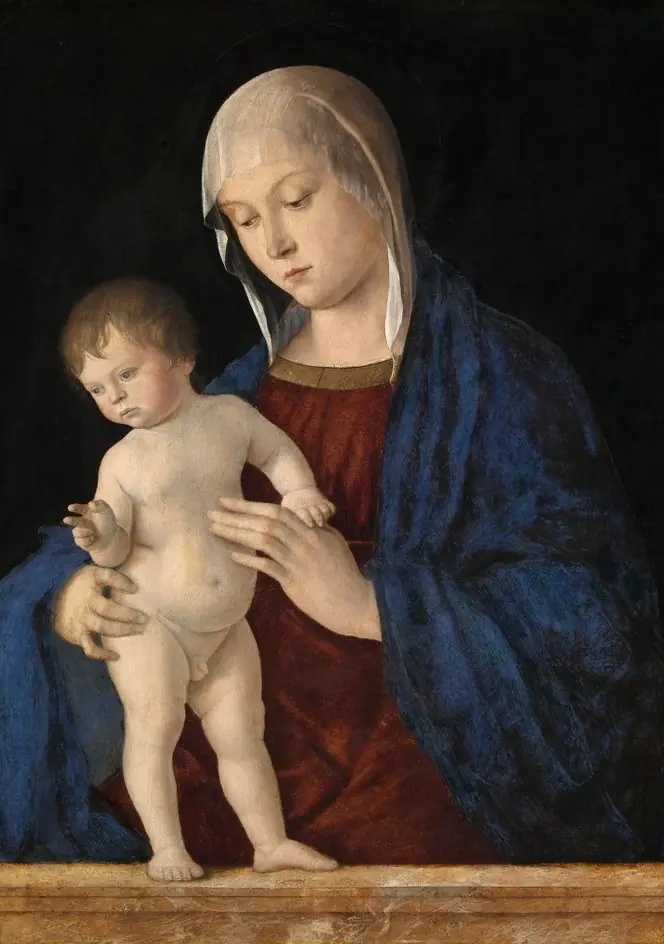 Virgin and Child
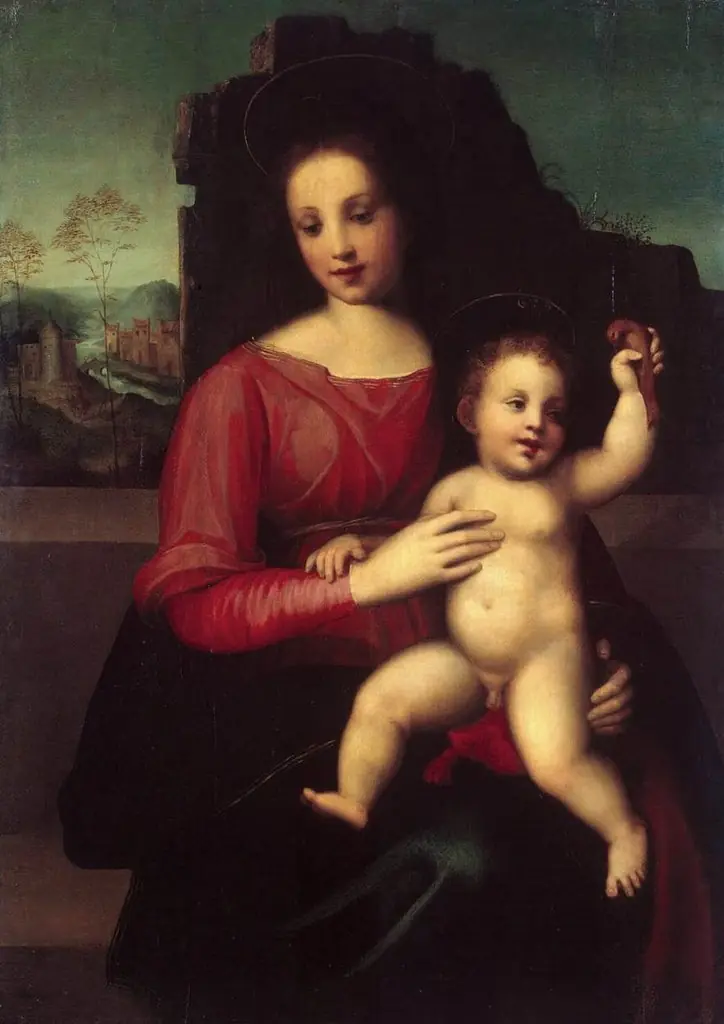 Madonna with Child
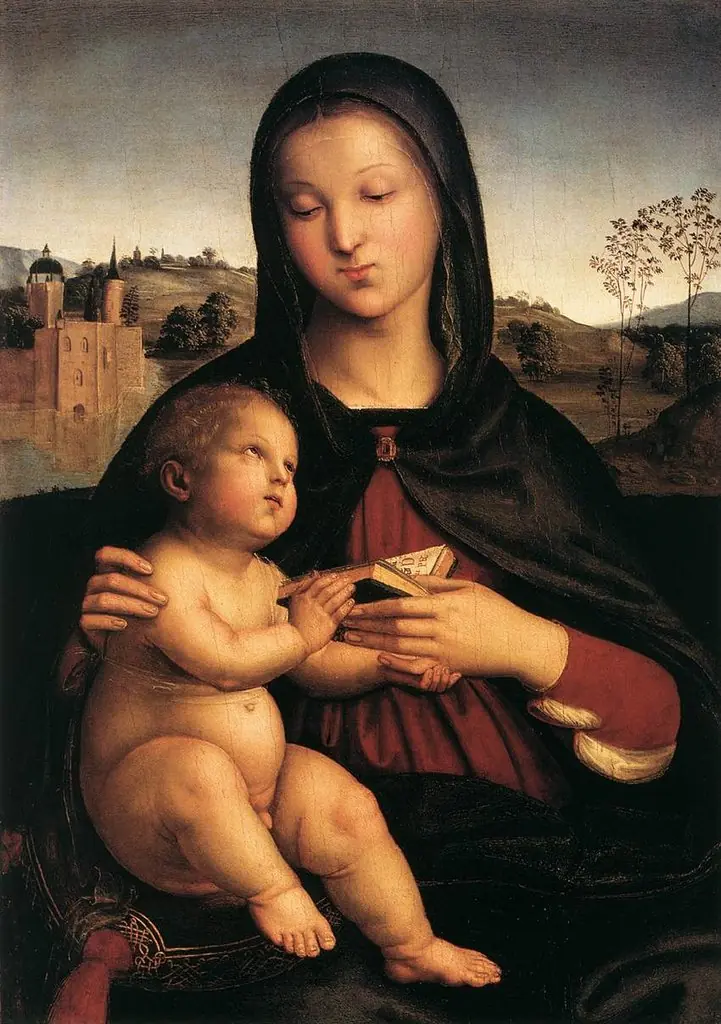 Madonna and Child with the Book
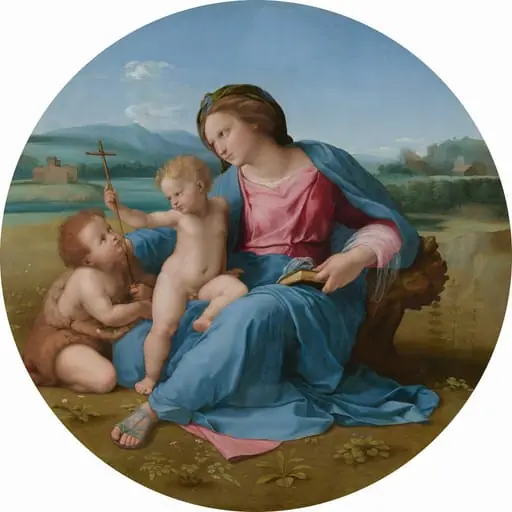
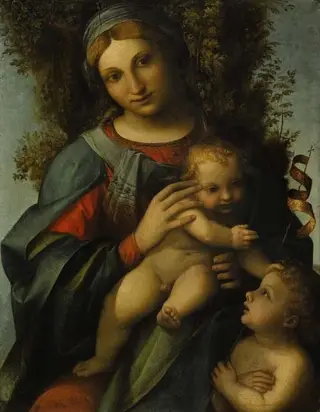 Madonna and Child with infant St John the Baptist
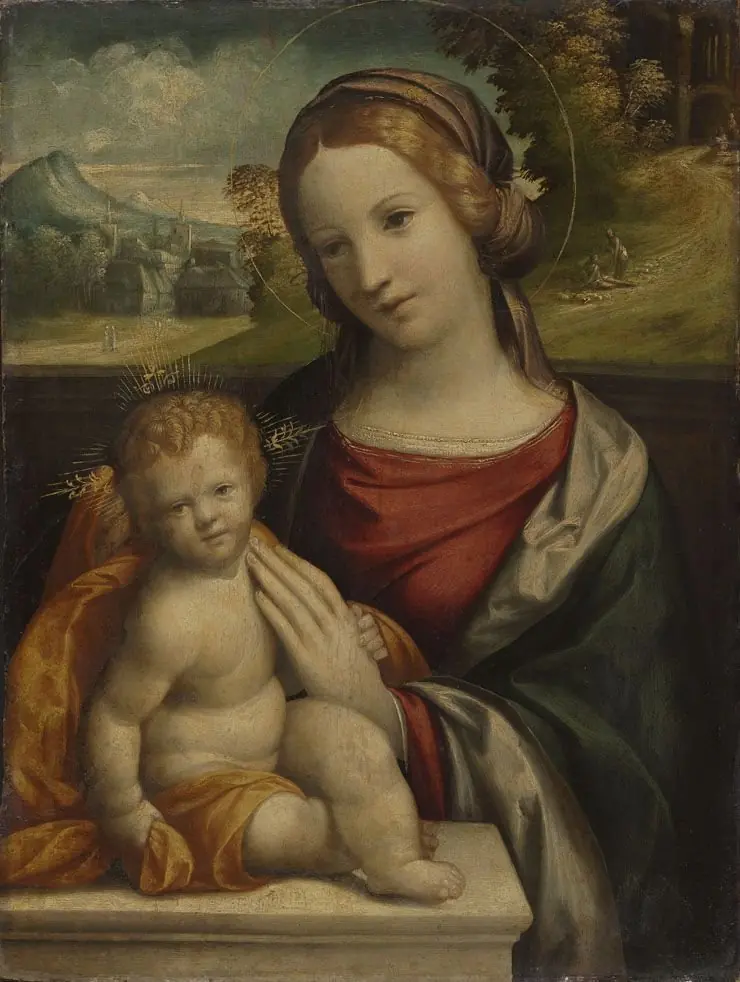 Mary with Child
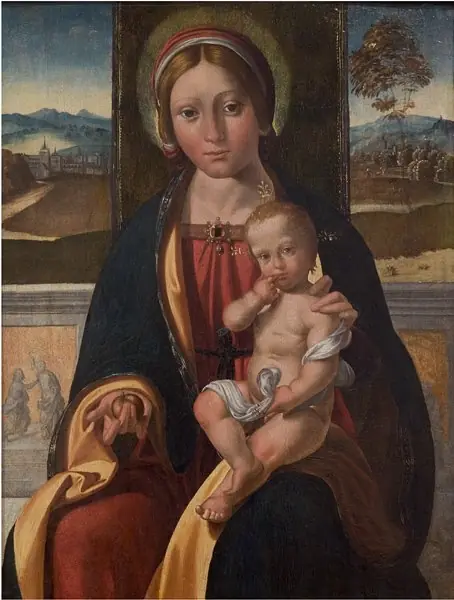 The Virgin and Child
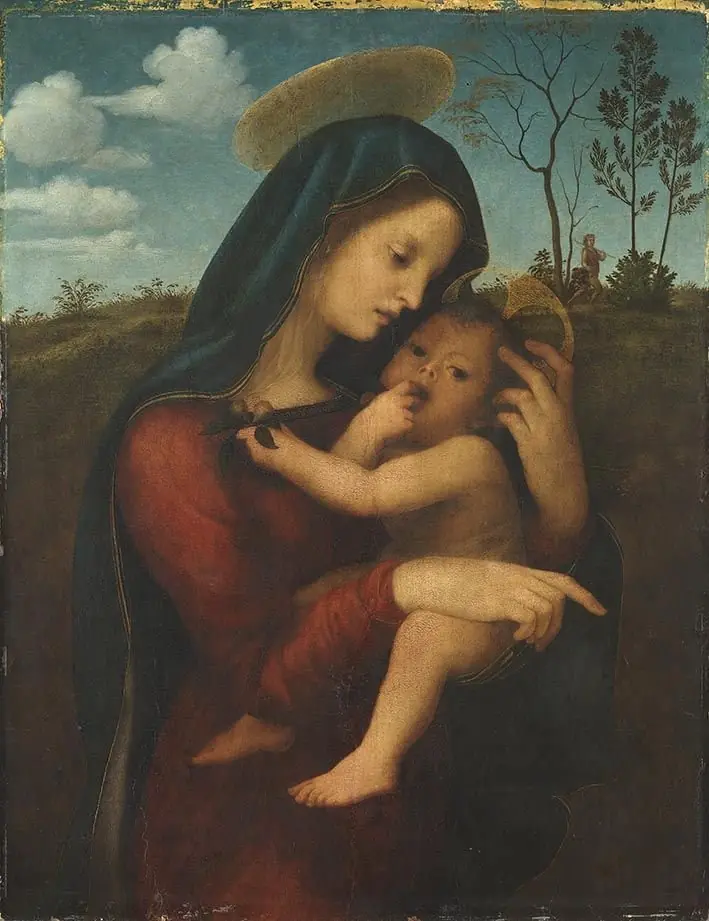 Madonna with Christ-child
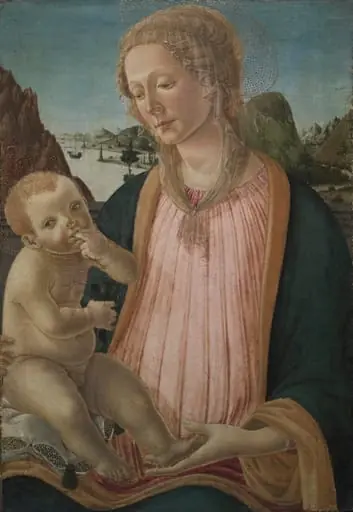 Madonna and Child
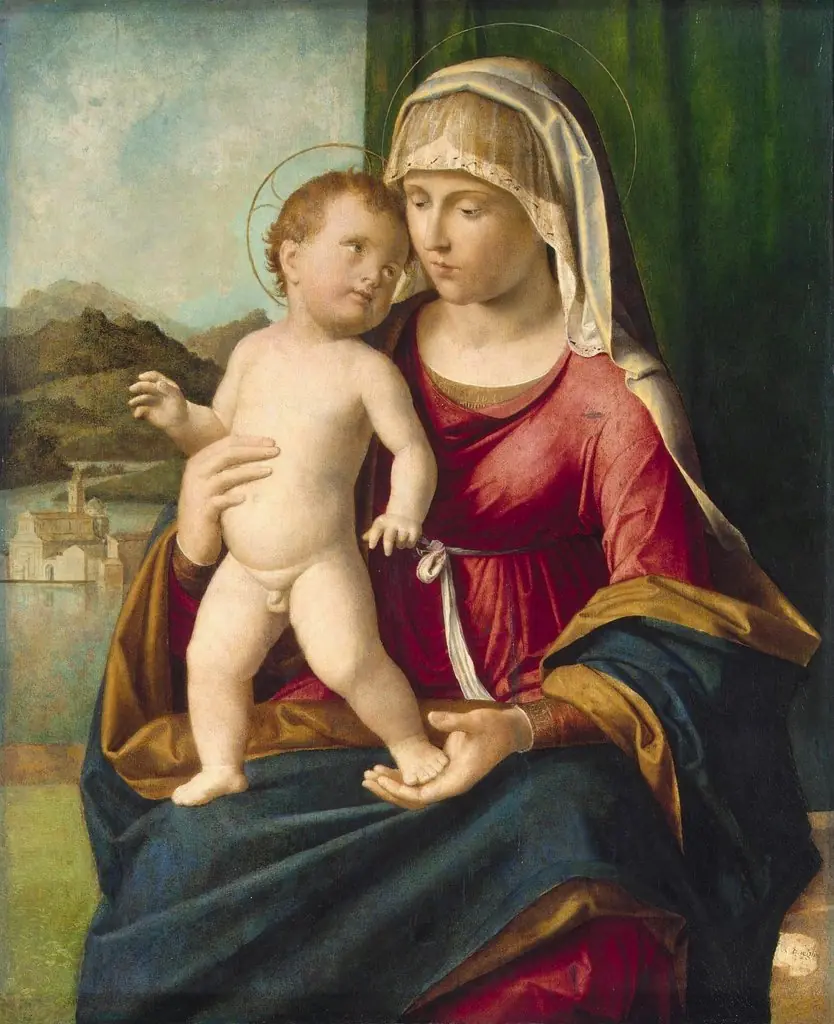 Madonna and Child
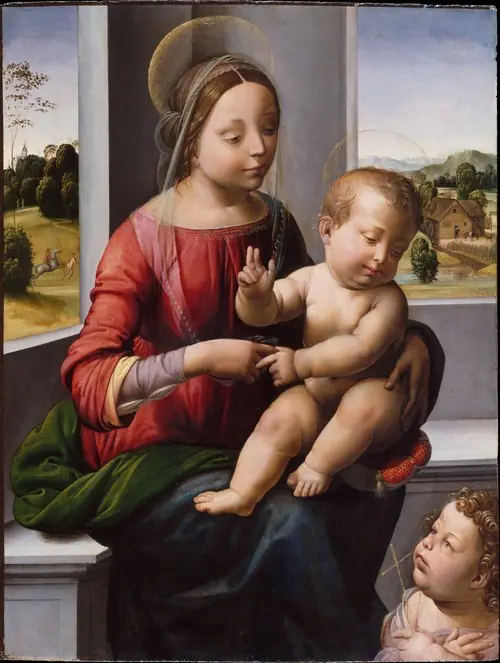 Madonna and Child with the Young Saint John the Baptist
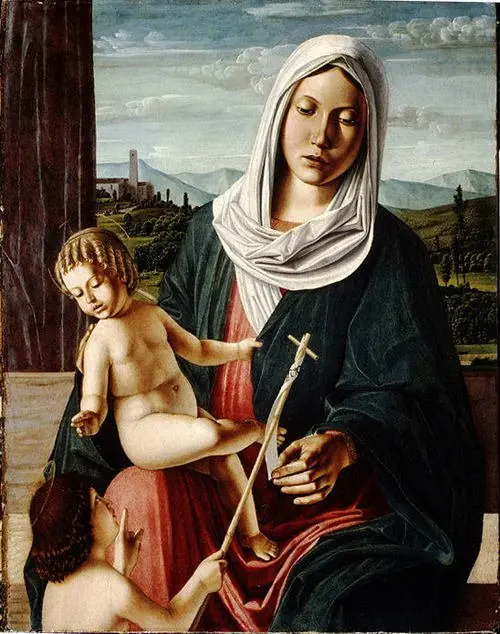 Madonna and Child with the Infant Saint John the Baptist
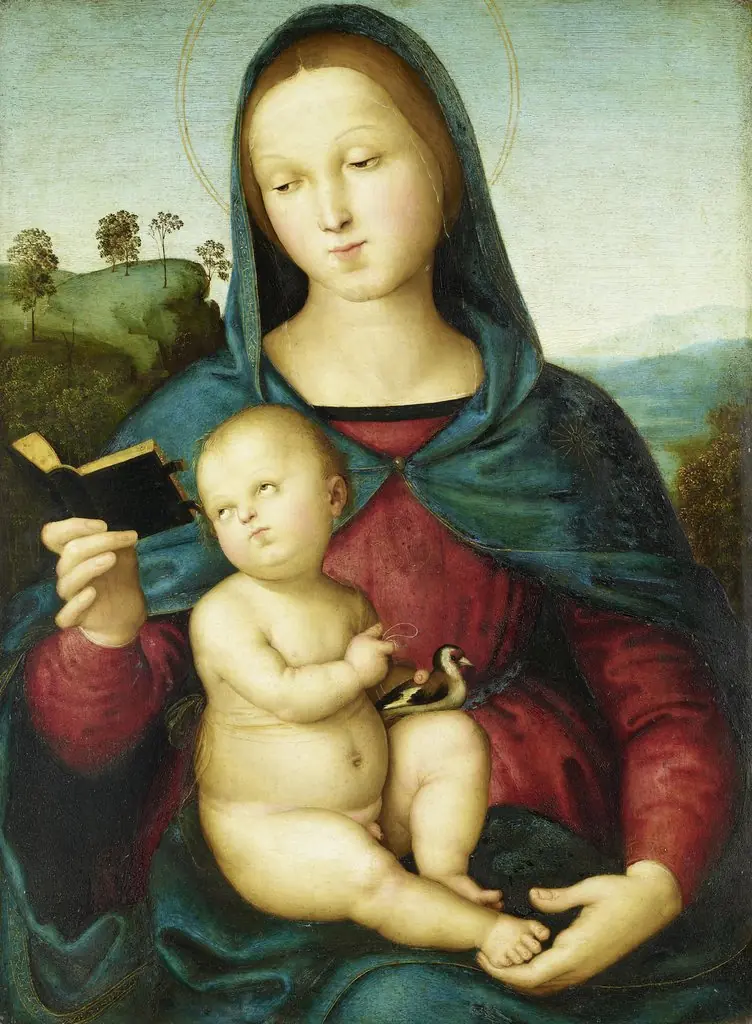
- Solly Madonna