Artwork
Ecce homo
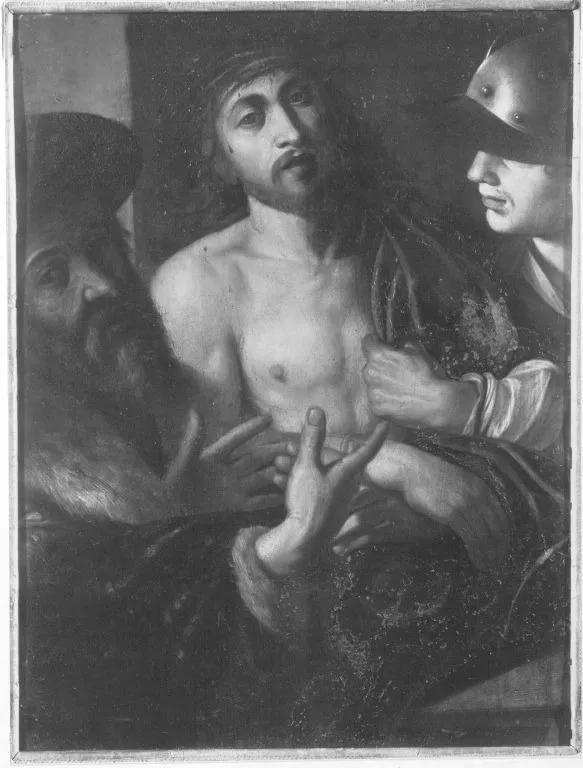
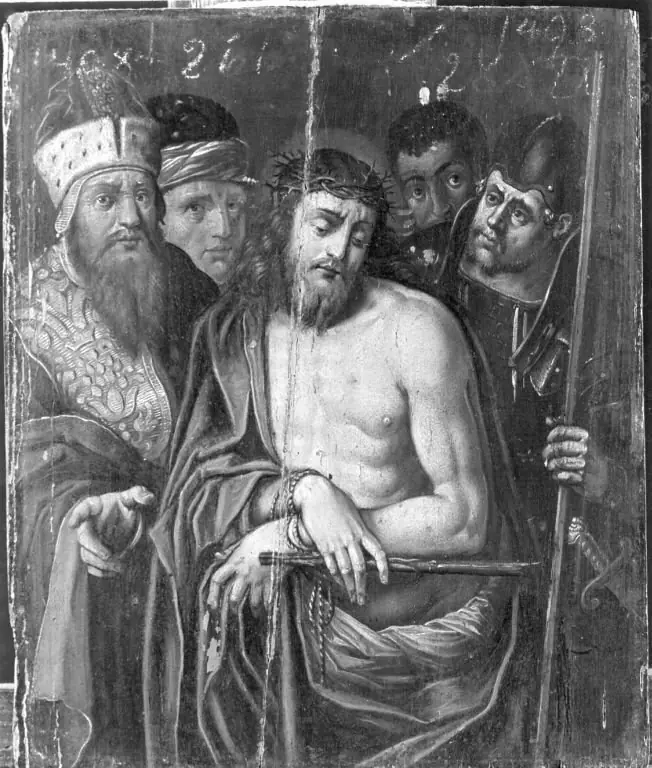
Ecce homo is an unspecified painting by the Mannerist artist Unknown. It dates from 1590 and is held in the collection of the Bavarian State Painting Collections.
About this work
Subject & Meaning
As a religious painting, it serves as a devotional image intended to inspire meditation on Christ’s sacrifice and the injustice of his condemnation.
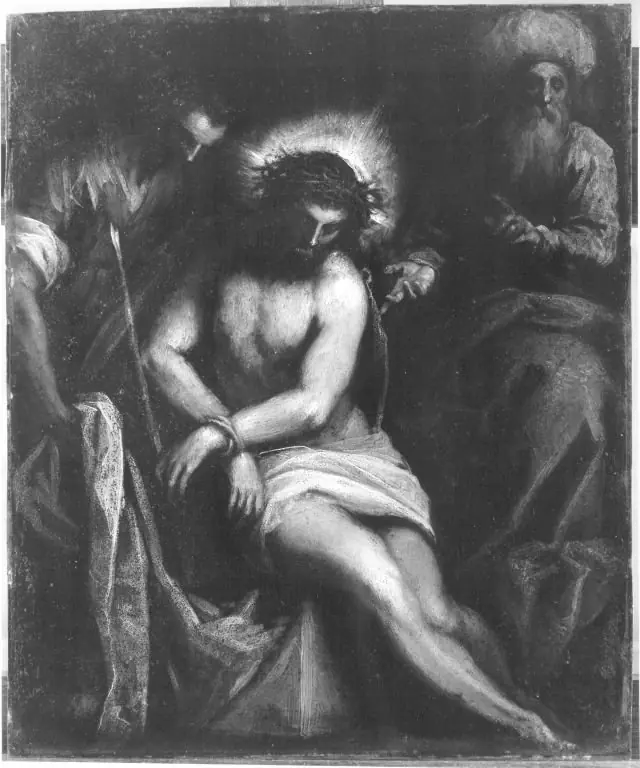
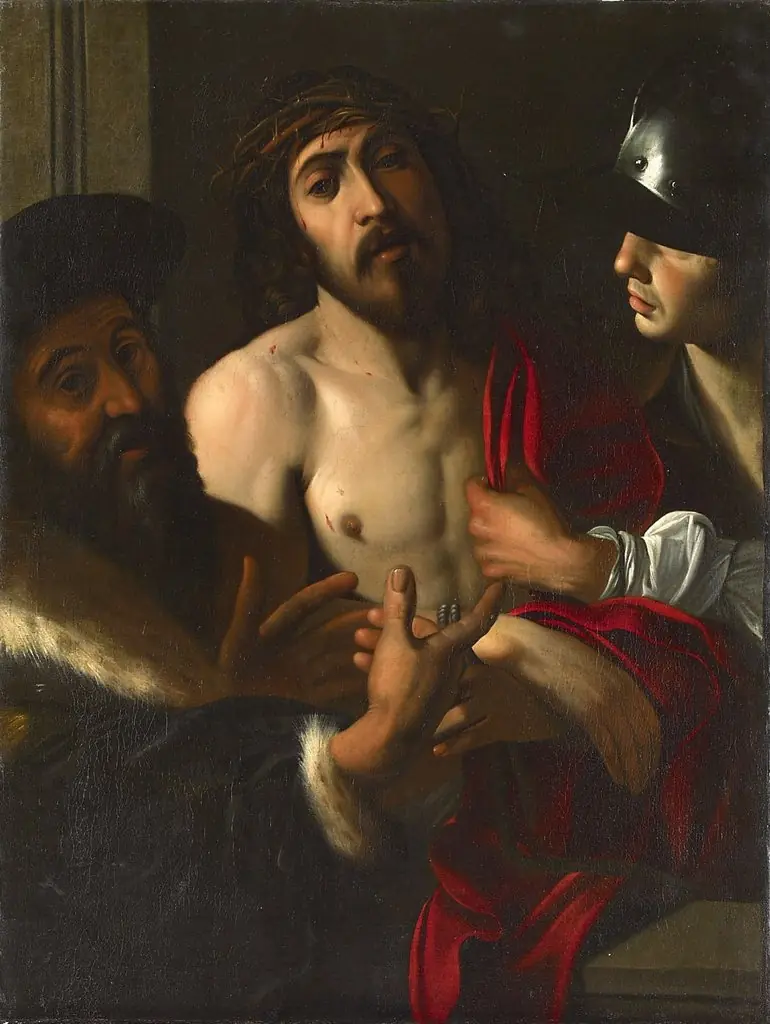
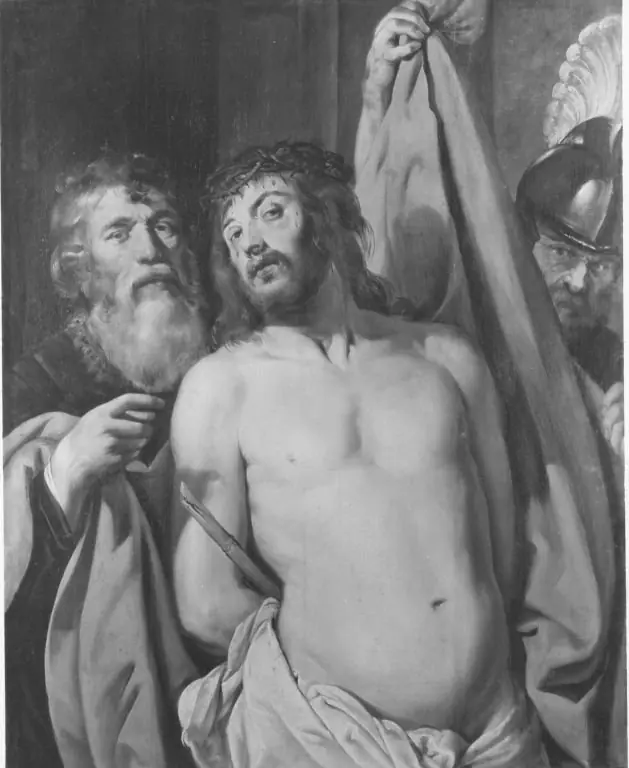
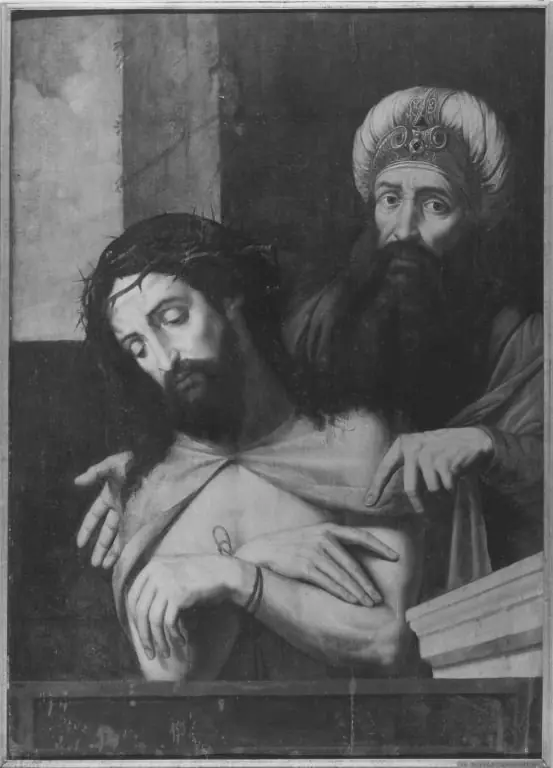
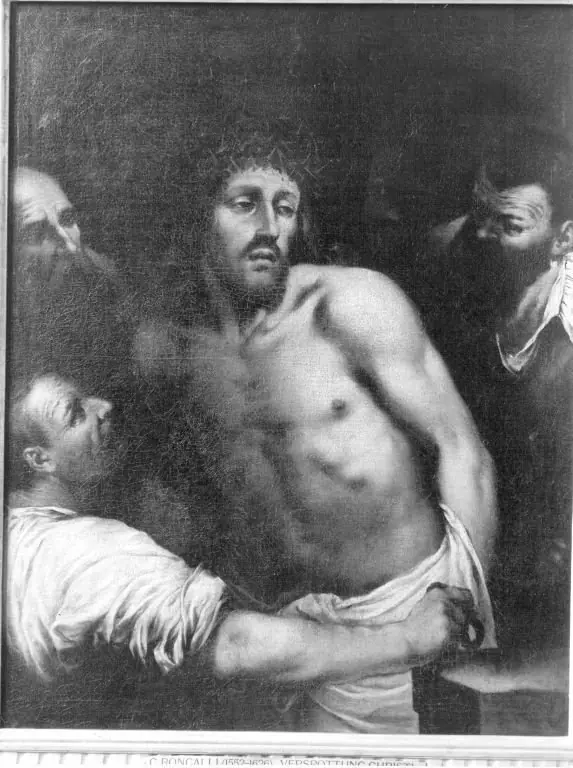
The painting depicts the Ecce Homo scene, a key moment in the Passion of Christ. According to the Gospel of John, Pontius Pilate presents a scourged and crowned Jesus to the crowd with the words “Behold the Man” (Ecce Homo). The work focuses on Jesus Christ as the main subject, emphasizing his suffering and humiliation before the crucifixion.
As a religious painting, it serves as a devotional image intended to inspire meditation on Christ’s sacrifice and the injustice of his condemnation. The iconography of the crowned, wounded Christ figure carries deep symbolic meaning, representing both the physical torment endured and the theological concept of redemption through suffering.
History & Provenance
The painting is dated to 1580 by internal records and by Wikidata, which assigns the same year as the inception date.
It is attributed to a Netherlandish hand and is held by the Bavarian State Painting Collections, where it is part of the holdings of the Alte Pinakothek in Munich.
The painting is held by the Bavarian State Painting Collections and is on view at the Alte Pinakothek in Munich. Dated to 1580, the work is catalogued as a religious painting depicting the Ecce Homo subject, with recorded dimensions of 50 cm in height and 38.5 cm in width.
No specific inventory or accession number is recorded in the available sources, and no exhibition history beyond its placement in the Alte Pinakothek collection is documented.
Overview
The work titled Ecce homo depicts a partially nude male figure with a beard and long hair, his gaze directed upward and his arms raised. A cloaked individual wearing a dark hood leans close, placing a hand on the man's shoulder, while a shadowed face in a tall hat appears at the left edge of the composition.
Technique & Style
The painting employs pronounced chiaroscuro, with side lighting that sculpts the man's musculature and chest, creating a stark contrast between illuminated flesh and surrounding darkness. This manipulation of light and shadow reflects a Renaissance interest in three‑dimensional modeling and dramatic visual emphasis.
Context
The use of dramatic lighting and the portrayal of a semi‑nude figure align the work with broader trends in Renaissance art, where artists explored human anatomy, emotional expression, and narrative tension through controlled illumination.
Artist & collection