Artwork
Saint Augustine and Alypius Receiving Ponticianus
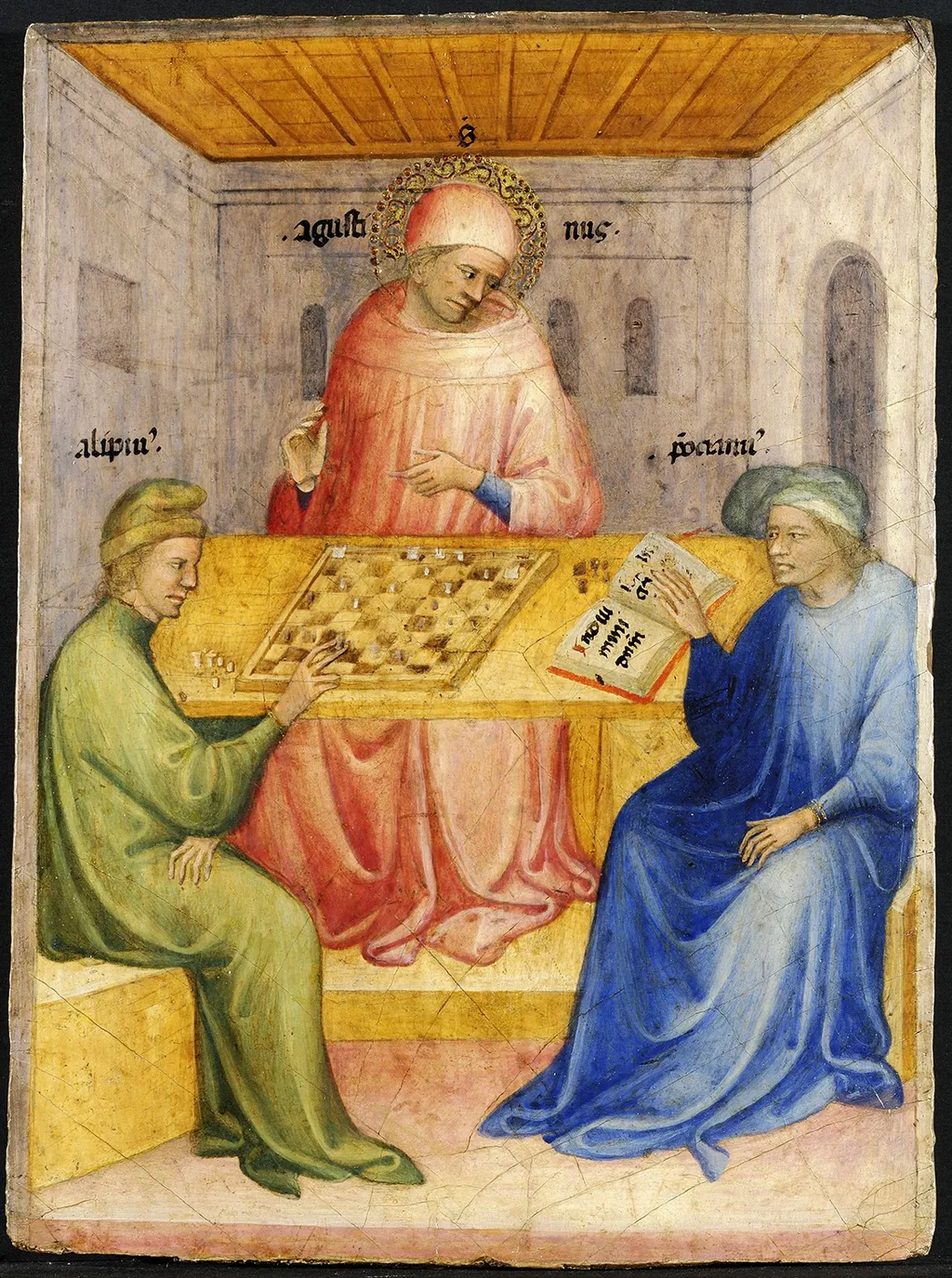
Saint Augustine and Alypius Receiving Ponticianus is a tempera painting by the Italo Byzantine artist Niccolò di Pietro Gerini. It dates from 1414 and is held in the collection of the Museum of Fine Arts of Lyon.
About this work
This painting depicts a scene of three men in a room, with one man standing behind a table and the other two seated on either side.
This painting depicts a scene of three men in a room, with one man standing behind a table and the other two seated on either side. The standing man wears a red robe and a white hat, while the seated men wear green and blue robes. The table holds a game board with pieces on it.
The room has a wooden ceiling and white walls, with a doorway visible in the background. The men are engaged in a game, with the standing man gesturing towards the board.
The painting is a tempera work from 1414, held at the Museum of Fine Arts of Lyon. If you want to learn more about the artist who created this piece, look up Niccolò di Pietro.
Overview
Painted in 1414 by Niccolò di Pietro Gerini, this tempera work depicts a moment from the life of Saint Augustine. Executed in Florence during the late Gothic period, the painting reflects the enduring influence of Italo-Byzantine conventions in Tuscan religious art. Its formal composition and restrained emotional tone align with the devotional priorities of the time, emphasizing spiritual narrative over naturalistic detail.
Subject & Meaning
The scene illustrates the moment when Ponticianus, a court official, visits Augustine and his companion Alypius. As Ponticianus gestures toward a game board, he recounts the story of Anthony the Great, prompting Augustine’s conversion. The game, a common pastime, becomes a symbolic threshold, mundane distraction giving way to spiritual awakening. The moment captures a turning point in Augustine’s spiritual journey.
Technique & Style
Executed in tempera on panel, the painting employs flat planes of color and linear precision typical of late Gothic aesthetics. Figures are arranged with deliberate symmetry, their robes rendered in vivid but non-naturalistic hues, red, green, and blue, to denote status and role. The wooden ceiling and plain walls create a contained, introspective space, reinforcing the painting’s contemplative mood.
History & Provenance
The painting has been held since at least the 19th century by the Museum of Fine Arts of Lyon. Its journey from Florence to France remains undocumented, but its preservation suggests continued recognition within ecclesiastical or aristocratic collections. No major alterations or restorations are recorded, and the tempera surface retains much of its original clarity.
Context
Gerini worked within a Florentine tradition that balanced devotional intensity with lingering Byzantine formalism, even as early Renaissance innovations emerged nearby. This painting reflects a conservative approach, prioritizing scriptural narrative over spatial depth or anatomical realism. It was likely commissioned for private devotion or a monastic setting, where such scenes encouraged meditation on conversion.
Legacy
Though Gerini’s style did not pioneer the naturalism of later Renaissance painters, his work exemplifies the transitional phase of early 15th-century Tuscan art. This painting preserves a specific moment in Augustine’s biography, rendered with quiet dignity. It stands as a testament to the enduring power of religious storytelling in pre-humanist visual culture.
Artist & collection

Artist
Niccolò di Pietro Gerini (c. 1340 – 1414) was an Italian painter of the late Gothic period, active mainly in his native Florence although he also carried out commissions in Pisa and Prato. He was not an innovative…

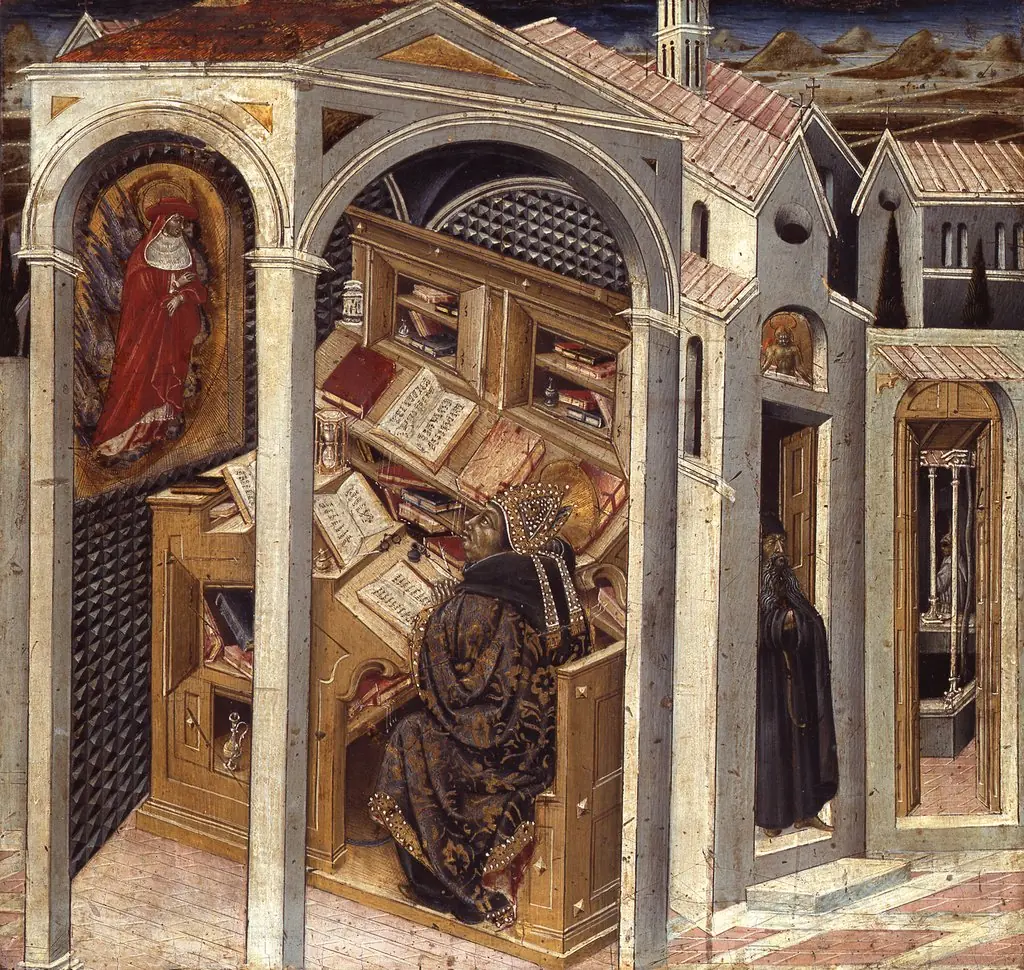
- St. Jerome Appearing to St Augustine.jpg
![The Papacy Offered to Saint Gregory the Great [?], by Fra Angelico](https://artifactworldgallery.com/img/fra-angelico--the-papacy-offered-to-saint-gregory-the-great--6c28505dc47c9093-w320.webp) The Papacy Offered to Saint Gregory the Great [?]
The Papacy Offered to Saint Gregory the Great [?]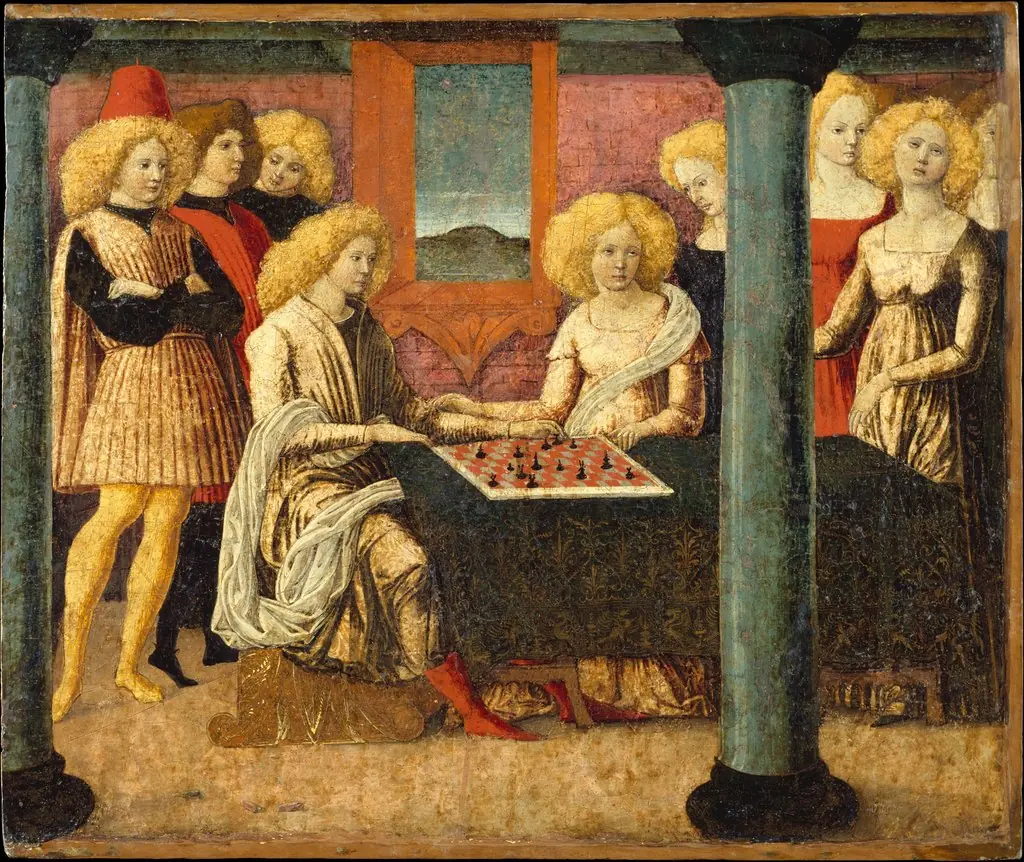 The Chess Players
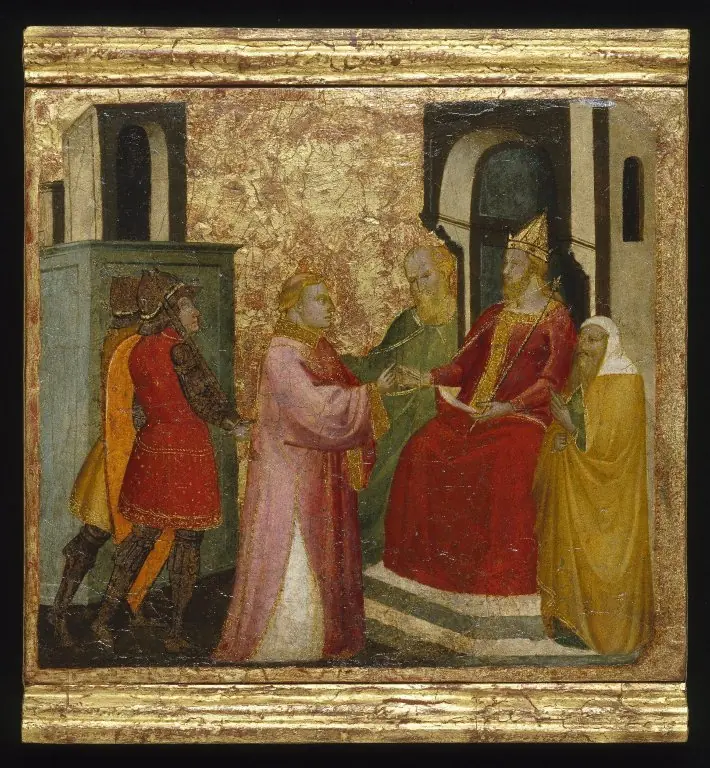 Saint Lawrence Arraigned Before the Prefect Valerianus
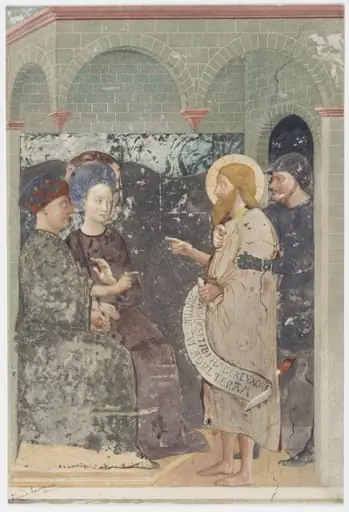 Copy after the painting St John the Baptist before Herod by Masolino in Castiglione d'Olona
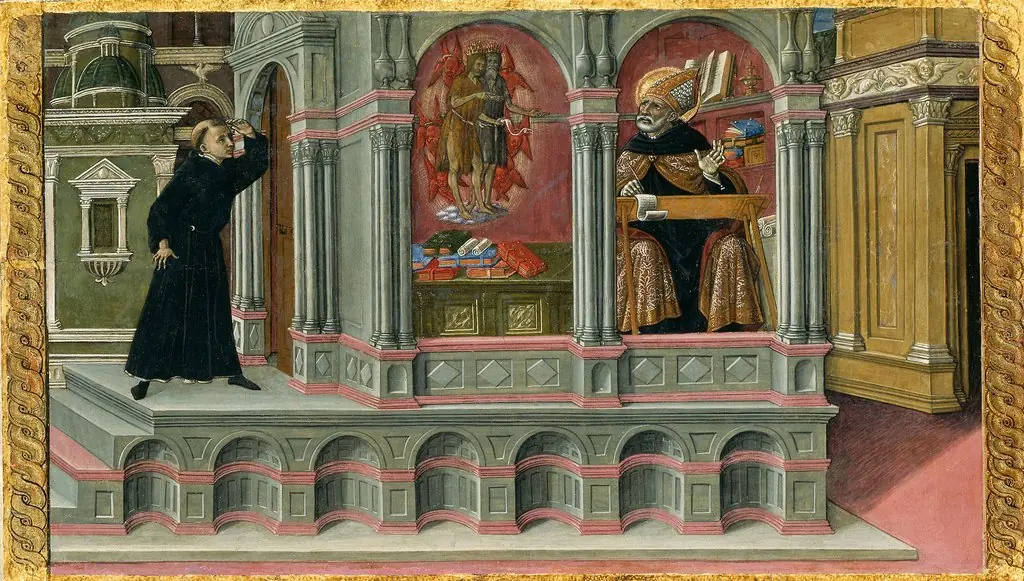 Saint Augustine's Vision of Saints Jerome and John the Baptist
 Saint Augustine's Vision of Saints Jerome and John the Baptist
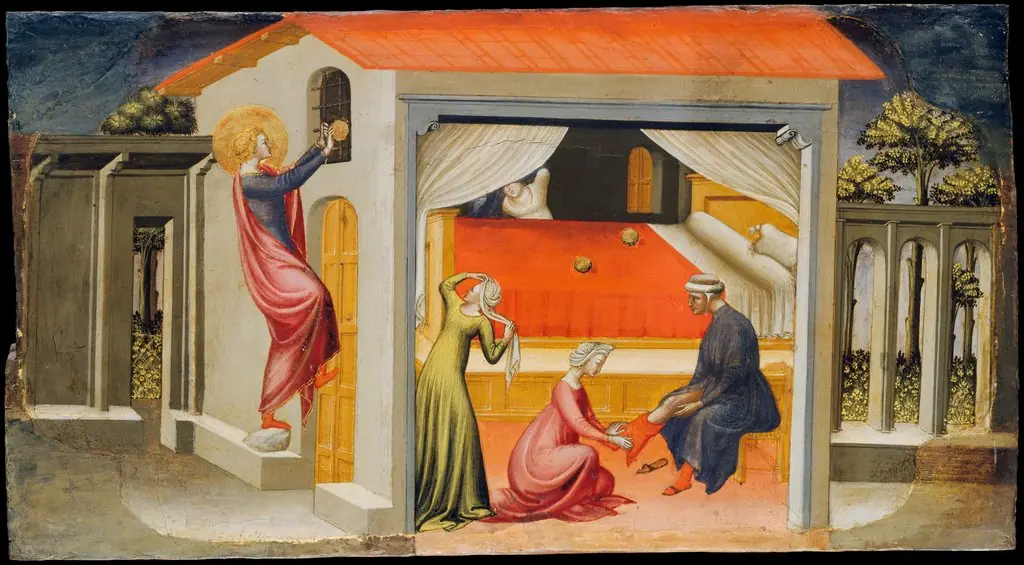 Saint Nicholas Providing Dowries
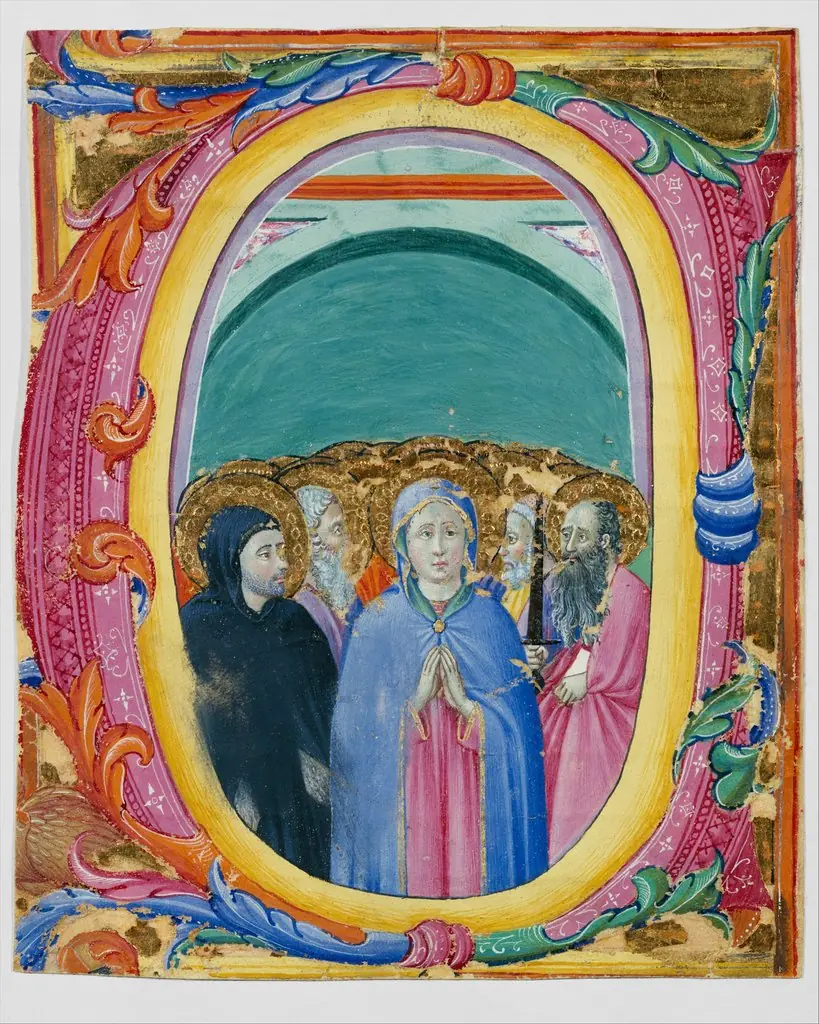 All Saints in an Initial E or O
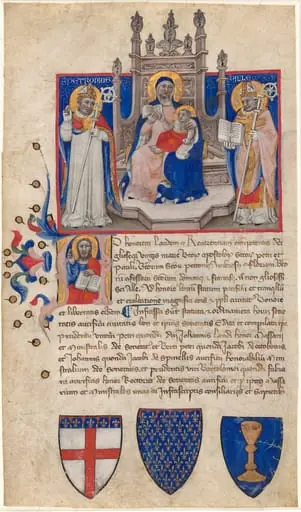 Madonna and Child Enthroned between Saints Petronius and Alle (Eligius); Christ in the Initial A
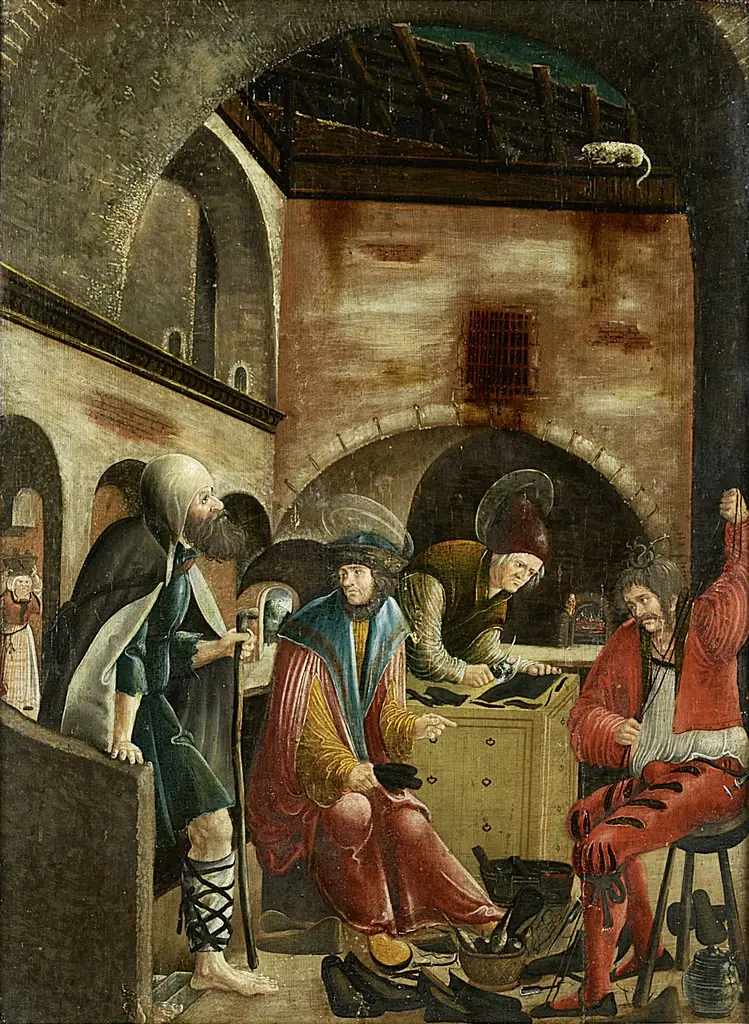 Die Heiligen Crispinus und Crispinianus in ihrer Schusterwerkstatt
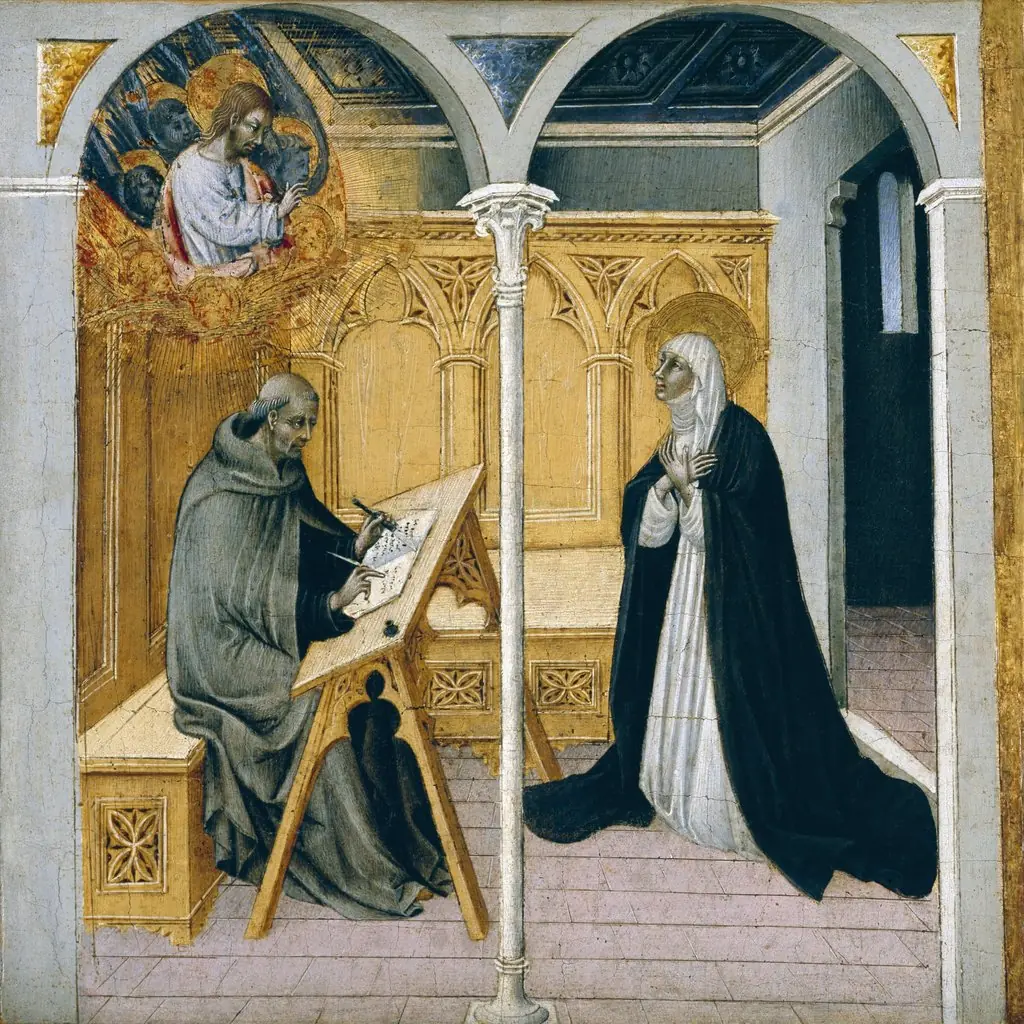 Saint Catherine of Siena Dictating Her Dialogues