Artwork
Chakhtiorka
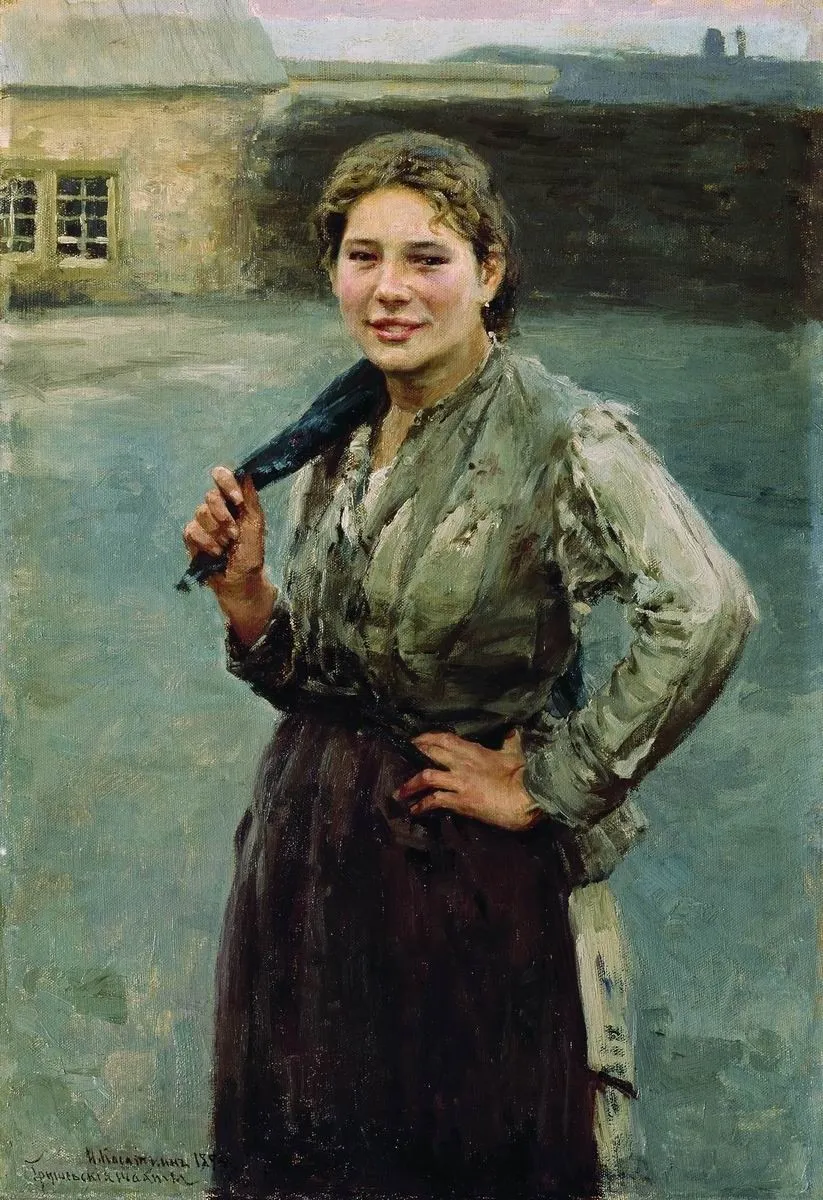
Chakhtiorka is an oil painting by the Realist artist Nikolay Kasatkin. It dates from 1898 and is held in the collection of the Tretyakov Gallery.
About this work
Subject & Meaning
The artist, Nikolay Kasatkin, focused extensively on the lives of mining families, and this portrait serves as a representation of their resilience.
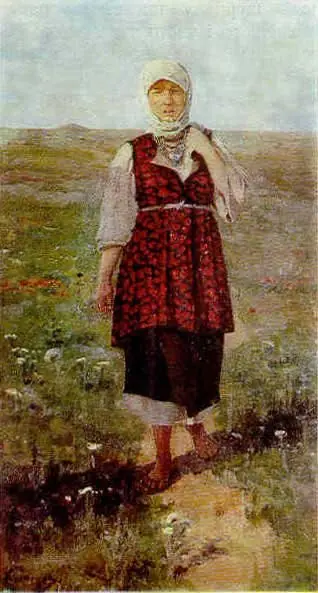
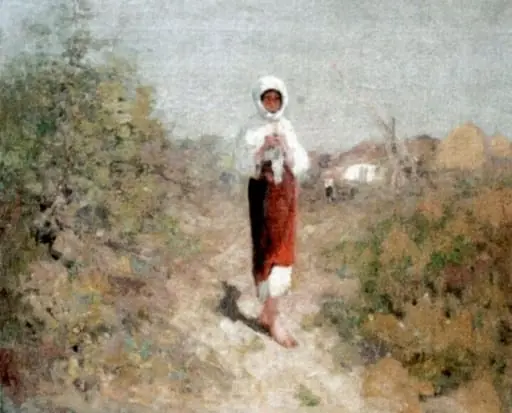
The painting depicts a young female coal miner, a figure whose title translates to "miner" in the feminine form in both Russian and Ukrainian. Created in the Donbas region, the work captures the subject standing with a calm, confident demeanor and a direct gaze toward the viewer. Her face is described as charming and warm, yet her clothes are visibly blackened by soot, a visual contrast that simultaneously reveals the hardship and poverty inherent in her labor.
The artist, Nikolay Kasatkin, focused extensively on the lives of mining families, and this portrait serves as a representation of their resilience. Beyond the individual portrait, the figure of the miner stands as a broader symbol of the Donbas region and Donetsk, areas historically defined by the wealth generated from their coal mines.
Technique & Style
Chakhtiorka is an 1894 oil on canvas painting by Russian realist Nikolay Kasatkin, depicting a young female miner in a dark apron and dress, rendered in a calm, confident composition that balances warmth of expression with the harshness of her working conditions. The work measures 65.4 cm by 45 cm and is housed in the Tretyakov Gallery in Moscow, where it was created en plein air as a small preparatory study for larger mining-themed pieces.
The painting’s formal qualities emphasize a relaxed pose, subtle gaze toward the viewer, and a contrapposto stance that conveys both serenity and the miner’s socioeconomic reality, while the darkened attire underscores poverty. Its symbolic status as a representation of Donbas mining culture persists through references in Russian and Ukrainian cultural discourse.
Kasatkin’s approach combined social realism with a focus on individual dignity, and the work reflects his field studies in the Donbas basin beginning in 1892, during which he documented miners’ lives and gradually earned their trust.
History & Provenance
Chakhtiorka was painted by Nikolay Kasatkin in 1894. The work was created during the artist’s repeated visits to the Donbas coal basin, beginning in 1892, when he traveled there to study the lives of miners and their families. The painting is a small-format oil study (65.4 × 45 cm) and depicts a young girl in a soot-stained apron, embodying the hardship and resilience associated with the region’s mining culture.
The painting entered the collection of the Tretyakov Gallery in Moscow, where it remains in the permanent holdings. Its subject, "Chakhtiorka" (a feminine form of the Russian and Ukrainian words for "miner"), became emblematic of Donbas identity, reflecting the social realities that Kasatkin sought to document through his realist practice.
Nikolay Kasatkin's 1894 oil painting Chakhtiorka is held in the collection of the Tretyakov Gallery in Moscow. The work is cataloged as a portrait measuring 65.4 by 45 centimeters. While the sources confirm its permanent location at the gallery, they do not provide a specific inventory or accession number for the piece.
No exhibition history is recorded in the provided texts; the available information only notes that the painting is currently exposed or displayed at the Tretyakov Gallery.
Overview
Created in 1898 by Russian painter Nikolay Alekseyevich Kasatkin, Chakhtiorka is an oil on canvas portrait executed within the Realist tradition. The composition presents a solitary figure in a modest stance, set against a simple rural backdrop. The work belongs to the collection of Moscow’s Tretyakov Gallery, where it is displayed as part of the museum’s Russian art holdings.
Artist & collection
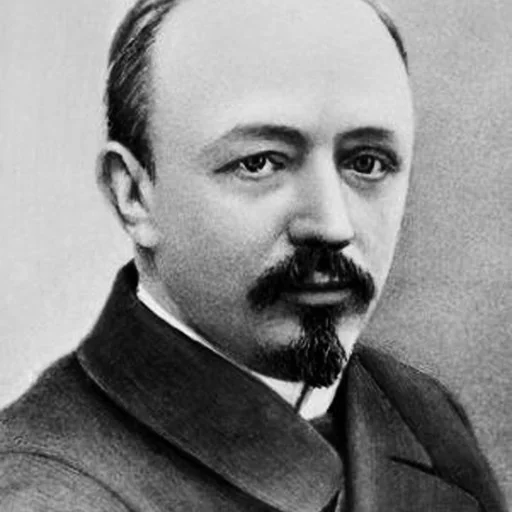
Artist
Nikolay Alekseyevich Kasatkin (Russian: Никола́й Алексе́евич Каса́ткин; 13 December 1859, Moscow – 17 December 1930, Moscow) was a Russian painter; considered to be one of the founders of Social Realism in Russia.