Artwork
Portrait of Alexander Farnese (1545-1592)
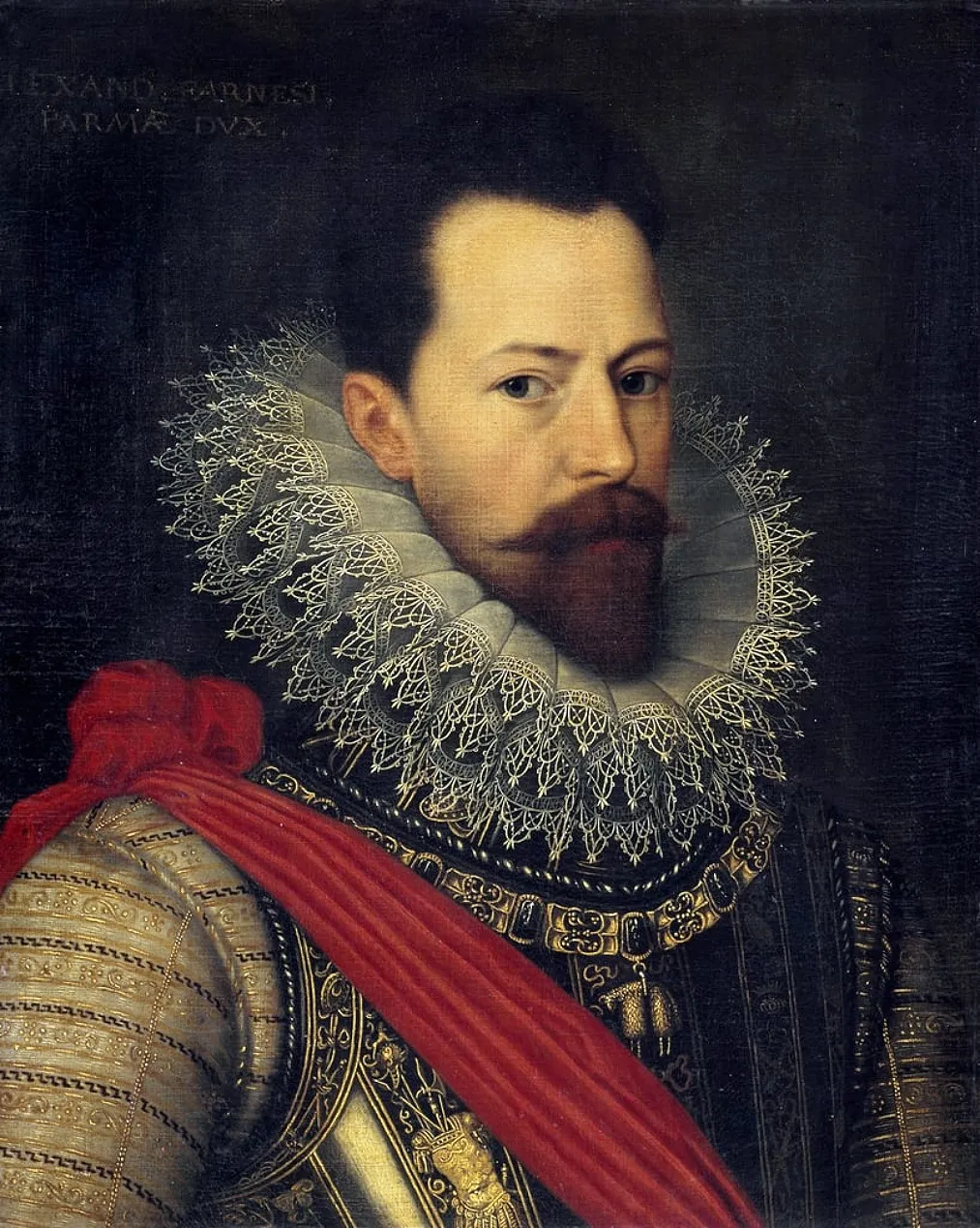
Portrait of Alexander Farnese (1545-1592) is an oil painting by the Dutch Golden Age artist Otto van Veen. It dates from 1596 and is held in the collection of the Royal Museums of Fine Arts of Belgium.
About this work
Overview
This oil painting, completed in 1596 by Otto van Veen, portrays Alexander Farnese, Duke of Parma and a leading military commander in the Spanish Netherlands.
This oil painting, completed in 1596 by Otto van Veen, portrays Alexander Farnese, Duke of Parma and a leading military commander in the Spanish Netherlands. The work is part of the collection at the Royal Museums of Fine Arts of Belgium. It captures Farnese in full ceremonial attire, emphasizing his status through detailed rendering of armor and fabric. The composition is restrained, with a dark background focusing attention on the figure's presence and demeanor.
Subject & Meaning
Alexander Farnese is depicted as a seasoned statesman and general, his serious expression and direct gaze conveying authority and resolve. The red sash signifies his rank within the Order of the Golden Fleece, while the ornate armor reflects his military role. The faint inscription in the upper corner likely identifies him and dates the portrait, reinforcing its function as an official likeness. The image serves less as a personal portrait and more as a statement of power and legitimacy.
Technique & Style
Van Veen employs precise brushwork to render the textures of armor, lace, and silk, demonstrating his training under Titian and his mastery of Netherlandish realism. The dark, unobtrusive background isolates the figure, enhancing the three-dimensionality of his form. Subtle lighting models the contours of his face and chest, while the ruffled collar and sash introduce dynamic contrasts. The style balances courtly elegance with disciplined detail, typical of late 16th-century portraiture in the Habsburg territories.
History & Provenance
Commissioned shortly after Farnese’s death in 1592, the portrait was likely intended to honor his legacy within the Spanish Netherlands. Van Veen, who served as court painter to the governors of the Low Countries, had direct access to Farnese’s circle. The painting remained in aristocratic collections before entering the Royal Museums of Fine Arts of Belgium in the 19th century, where it has been preserved as a key example of early modern political portraiture.
Context
Created during the Eighty Years’ War, the portrait reflects the Habsburg effort to legitimize their rule through imagery of loyal commanders. Farnese, instrumental in securing Spanish control over the southern provinces, was a symbol of stability. Van Veen’s depiction aligns with broader trends in European portraiture that merged military identity with noble decorum, using costume and posture to communicate political authority in an era of religious and territorial conflict.
Legacy
The portrait endures as a representative example of how political figures were visually codified in the late Renaissance. Van Veen’s restrained realism and attention to symbolic detail influenced later court painters in the Low Countries. While not widely reproduced, it remains a significant reference for understanding the intersection of military leadership, aristocratic identity, and visual propaganda in the Spanish Habsburg domains.
Artist & collection

Artist
Otto van Veen, was a painter, draughtsman, and humanist active primarily in Antwerp and Brussels in the late 16th and early 17th centuries.

Museum
Royal Museums of Fine Arts of Belgium
Continue through works from the same source collection.
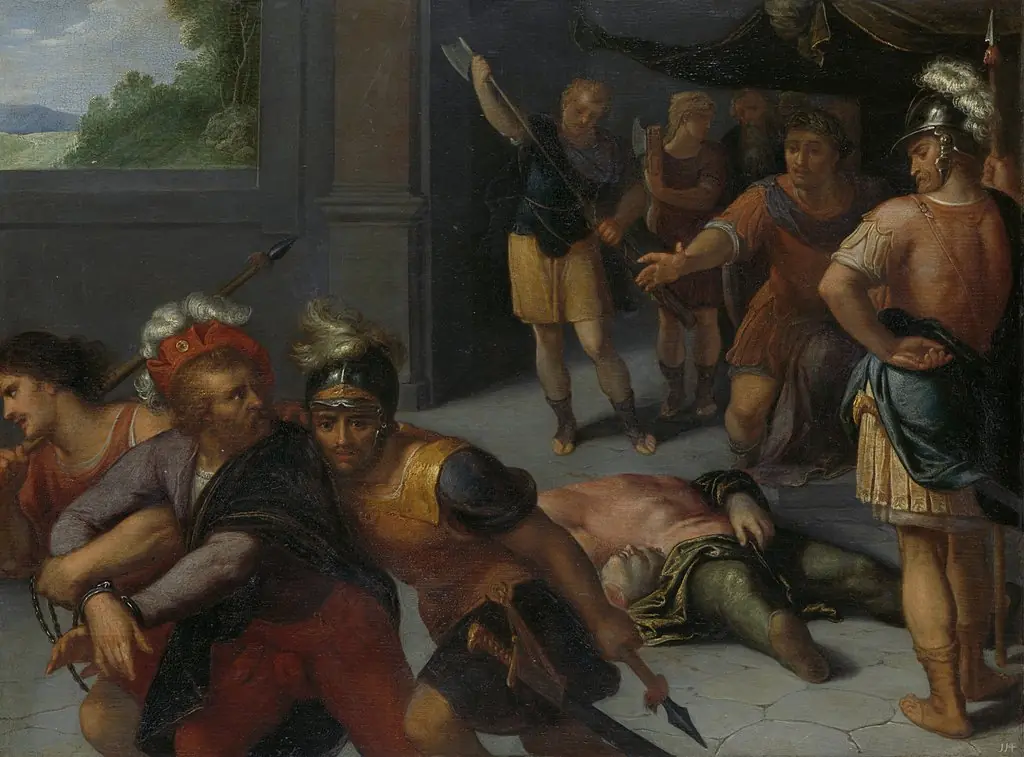 Beheading of Julius Paulus and Imprisonment of Claudius Civilis
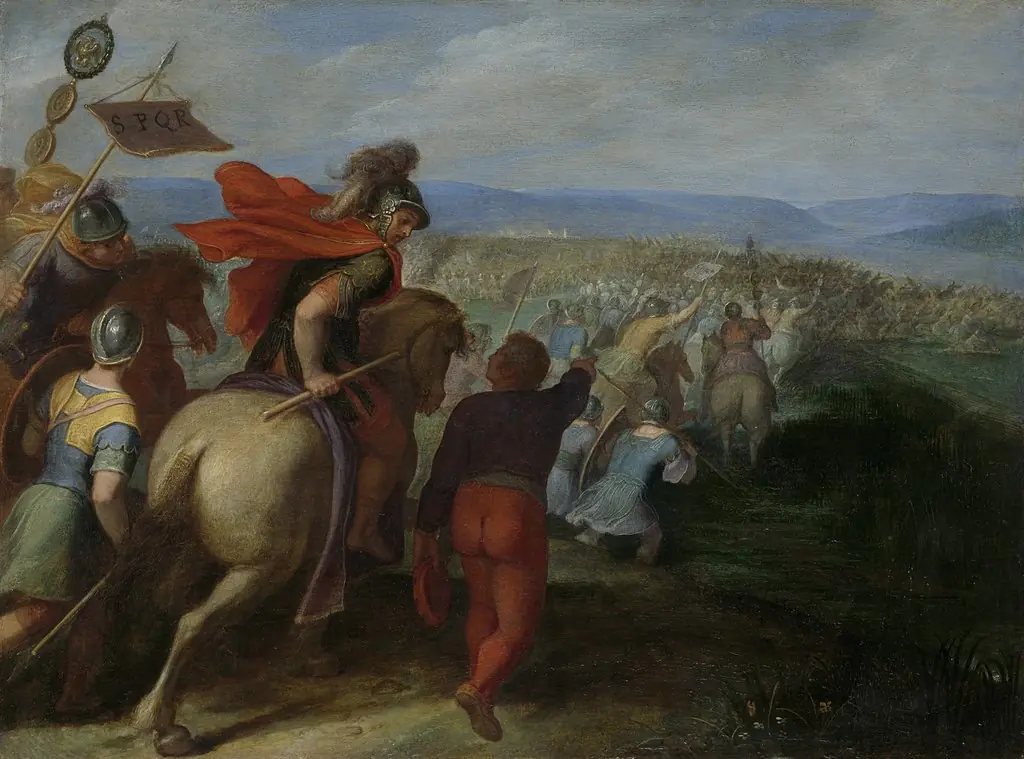 The Romans under Cerealis Defeat Claudius Civilis and the Batavians following betrayal from within
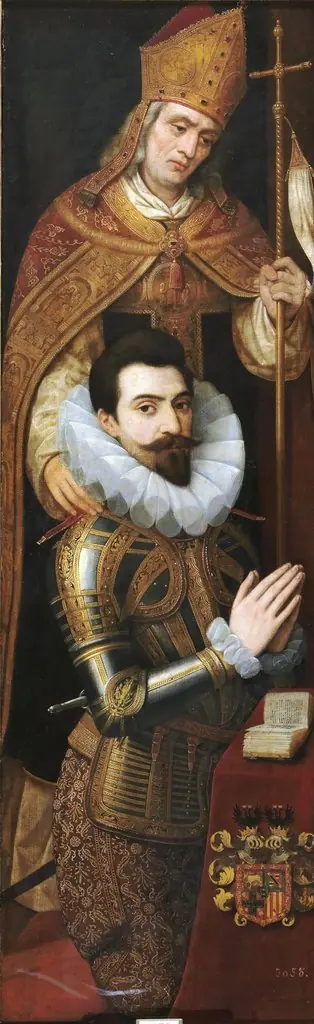 Alonso de Idiáquez duque de Ciudad Real (Cittá-Reale en Nápoles)
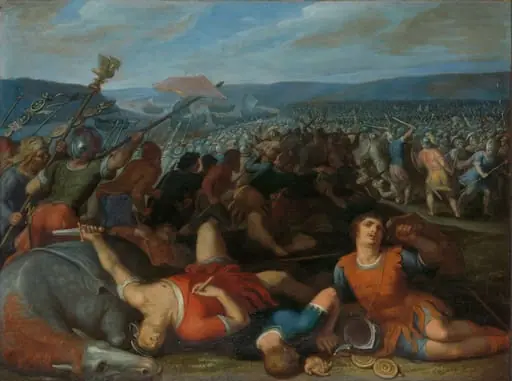 De Bataven verslaan de Romeinen bij de Rijn
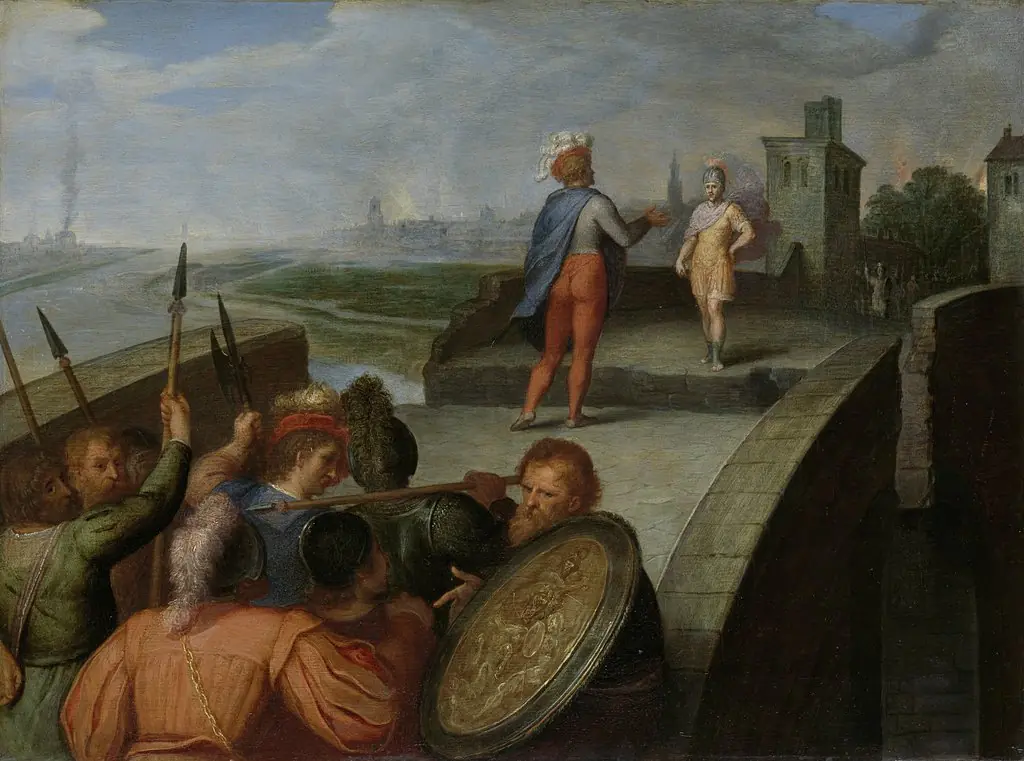 Peace Negotiations between Claudius Civilis and Cerealis
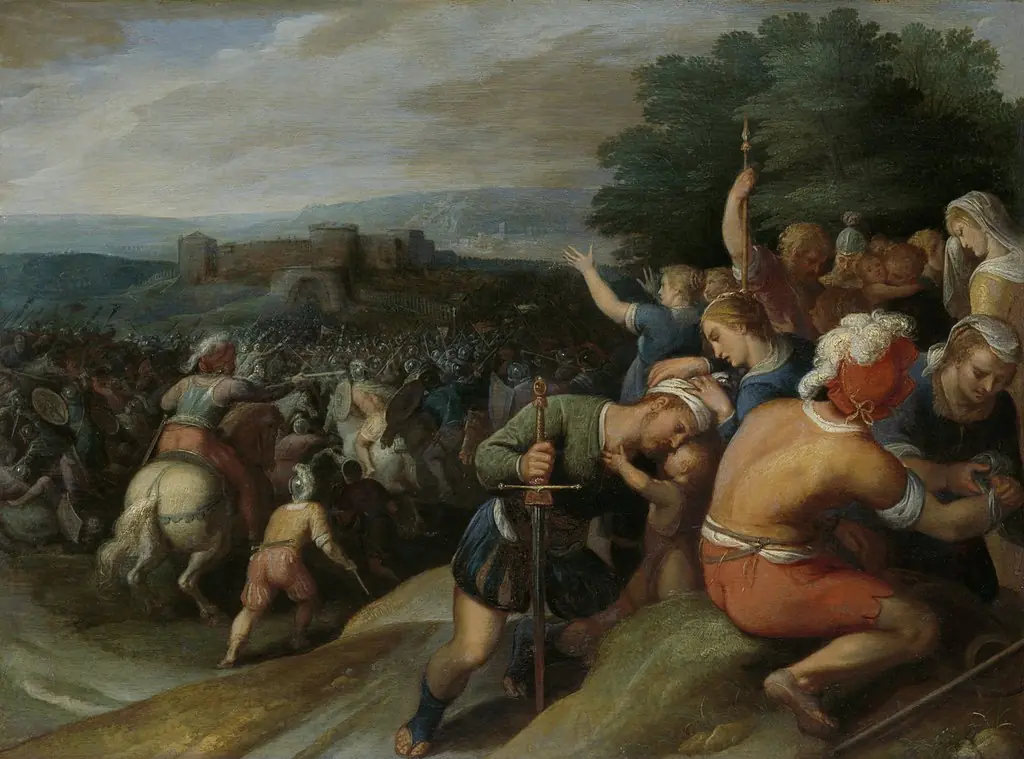 The Batavians Surround the Romans at Vetera
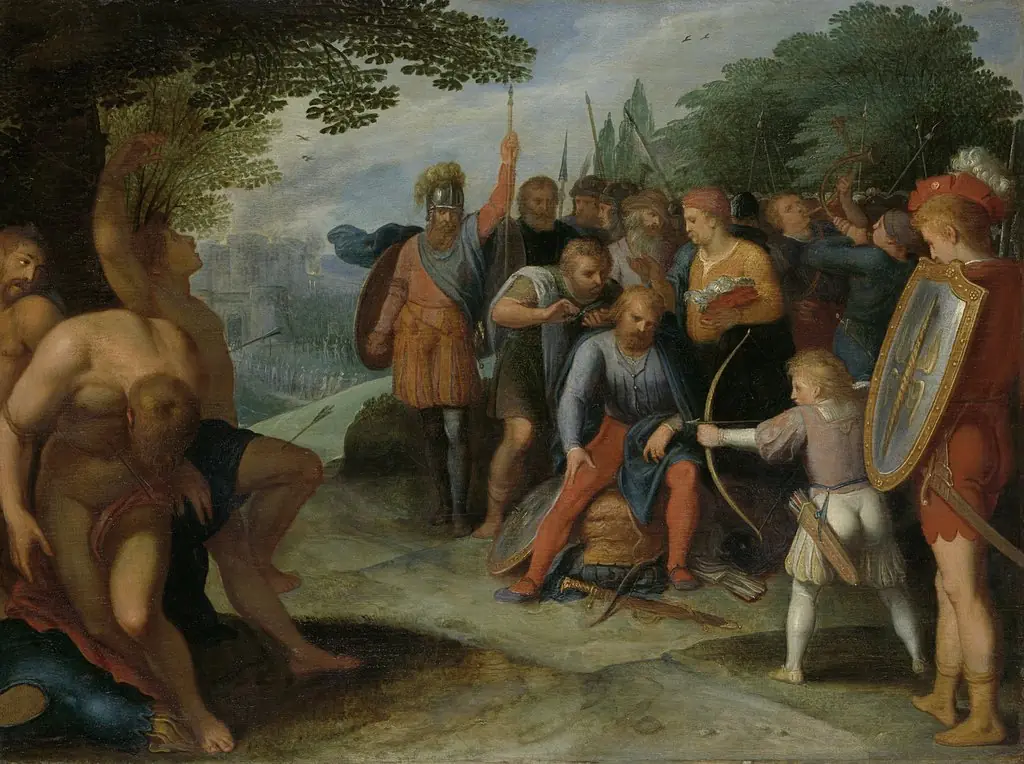 After the Fall of Vetera Castra Claudius Civilis has his hair cut while his son shoots some prisoners
 During a Famine in Myra Saint Nicholas Saves the People