Artwork
Rape of Hippodamia
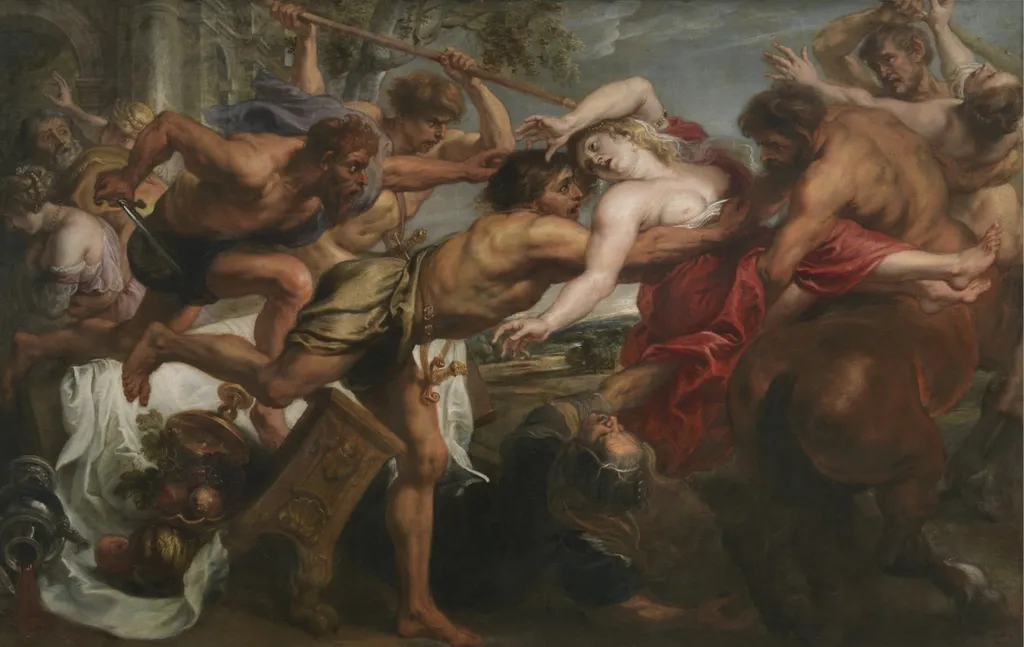
Rape of Hippodamia is an oil painting by the Flemish Baroque painting artist Peter Paul Rubens. It dates from 1636 and is held in the collection of the Museo del Prado.
About this work
Subject & Meaning
Peter Paul Rubens's 1636 oil painting depicts the mythological abduction of Hippodamia, a narrative classified within the genre of mythological painting.
Peter Paul Rubens's 1636 oil painting depicts the mythological abduction of Hippodamia, a narrative classified within the genre of mythological painting. The composition illustrates the violent seizure of the bride by her suitor, a scene populated by various figures and objects including a sword, a spear, a fountain, and a table. These elements serve to anchor the dramatic action within a specific setting, emphasizing the chaos and physical force inherent in the rape narrative.
As a work based on the classical story of the abduction, the painting represents the intersection of desire and conflict central to the myth.
Technique & Style
Executed in 1636, this mythological painting by Peter Paul Rubens utilizes oil paint applied to a canvas support. The work presents a large-scale composition measuring 182.5 cm in height and 285.5 cm in width. Visually, the scene incorporates specific narrative elements including a sword, a spear, a fountain, and a table to depict the titular event.
The piece is classified as a mythological painting and was created as part of a series for the Torre de la Parada.
History & Provenance
Painted in 1636 by Peter Paul Rubens, The Rape of Hippodamia entered the Spanish royal collection shortly after its completion.
It was housed at the Torre de la Parada, Philip IV’s hunting lodge near Madrid, by the late 1630s. The work descended through successive Spanish monarchs, Philip V and Charles III, before passing to Ferdinand VII. It has remained in Madrid ever since, now held by the Museo del Prado.
The painting is held in the collection of the Museo del Prado in Madrid, where it is listed under the inventory number P00968. It has been part of royal Spanish collections, recorded as belonging to Ferdinand VII, Charles III, and Philip V. The work has been exhibited in major retrospectives of Rubens at the Prado, including the 2005 exhibition "Peter Paul Rubens: The Master of Baroque" and again in the 2019 exhibition "Rubens and the Rise of the Baroque"
Overview
Peter Paul Rubens painted Rape of Hippodamia in 1636, employing the dramatic vigor typical of Flemish Baroque. The canvas captures a tumultuous mythological episode, populated by a mass of intertwined figures rendered in earthy tones, punctuated by a vivid red cloak that draws the eye. The work now belongs to the Museo del Prado’s permanent collection.
Own this work as a print
Artist & collection
Artist
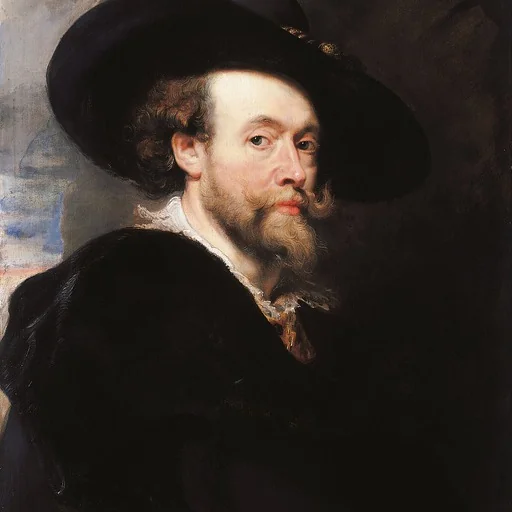
Sir Peter Paul Rubens ( ROO-bənz; Dutch:; 28 June 1577 – 30 May 1640) was a Flemish artist and diplomat.