Artwork
Cadmus and Minerva
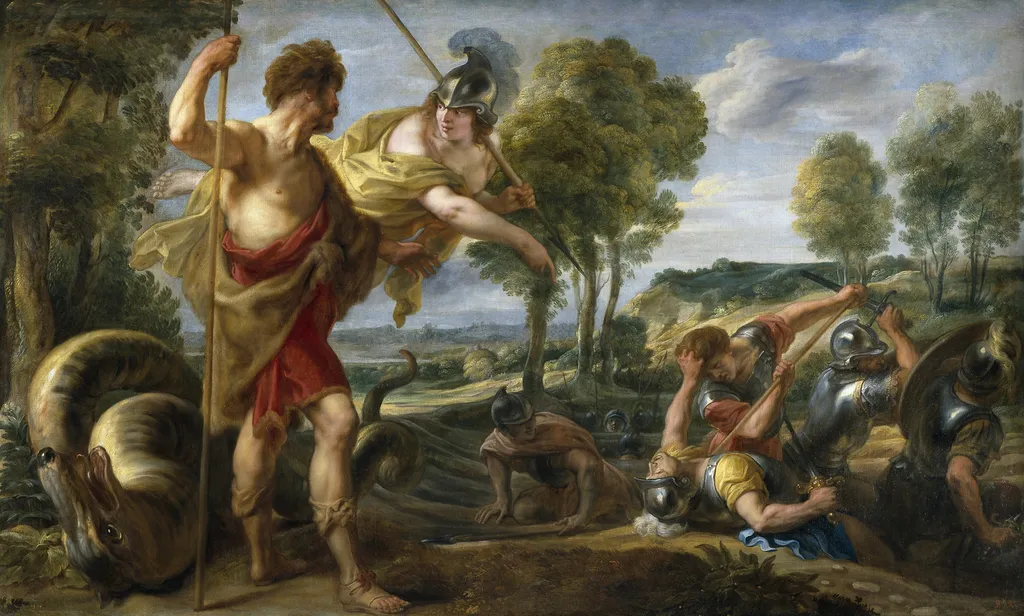
Cadmus and Minerva is an oil painting by the Flemish Baroque painting artist Peter Paul Rubens. It dates from 1636 and is held in the collection of the Museo del Prado.
About this work
Subject & Meaning
The scene encapsulates the specific episode described in the ancient text, rendered in oil on canvas to visualize this legendary encounter.
The painting depicts the mythological figures Cadmus and Minerva, drawn from Ovid's Metamorphoses (Book III, lines 95–114). As a work of mythological painting, the subject illustrates a narrative moment from classical antiquity where the founder of Thebes encounters the goddess of wisdom. The composition centers on the interaction between the mortal hero and the deity, representing the intersection of human endeavor and divine intervention within the context of the Theban founding myths.
The scene encapsulates the specific episode described in the ancient text, rendered in oil on canvas to visualize this legendary encounter.
Technique & Style
Cadmus and Minerva is executed in oil paint on canvas, a standard support for large-scale Flemish mythological compositions of the period. The work measures 181 cm in height by 300 cm in width, giving it a distinctly horizontal format suited to a multi-figure narrative scene drawn from Ovid's Metamorphoses (Book III, lines 95–114). The painting is classified as mythological and is held in the Museo del Prado in Madrid, where it remains part of the Spanish royal collection originally assembled under Ferdinand VII of Spain.
Stylistically, the canvas is attributed to Peter Paul Rubens, with Jacob Jordaens also credited as a collaborator on the execution. The broad horizontal layout and the collaborative authorship are consistent with the production of ambitious decorative cycles produced in Antwerp during the mid-1630s, designed to accommodate densely populated mythological episodes.
History & Provenance
The painting Cadmus and Minerva, depicting the mythological figures from Ovid's Metamorphoses, was created in 1636. While the work is attributed to Jacob Jordaens, it also lists Peter Paul Rubens as a creator, suggesting a collaborative effort or workshop association. The canvas was executed in oil and measures 181 cm in height by 300 cm in width.
Historical records indicate the piece was owned by Ferdinand VII of Spain. It is currently held in the collection of the Museo del Prado in Madrid, having been part of the Royal Palace of Madrid's holdings.
The painting depicting Cadmus and Minerva is held in the collection of the Museo del Prado, located within the Royal Palace of Madrid. Created in 1636 with oil on canvas, the work is attributed to Jacob Jordaens and Peter Paul Rubens. Historical records indicate the piece was owned by Ferdinand VII of Spain. The artwork was created based on the narrative found in Ovid's Metamorphoses.
Overview
Peter Paul Rubens executed the oil painting Cadmus and Minerva in 1636. The work belongs to the mythological genre and is part of the collection of the Museo del Prado in Madrid. It illustrates a narrative from classical legend, rendered in Rubens’s vigorous Baroque manner, and exemplifies the artist’s role as both painter and diplomat in 17th‑century Flanders.
Context
Cadmus and Minerva illustrates the Counter‑Reformation’s preference for vivid, emotionally charged religious and mythological subjects designed to inspire devotion. Rubens’s treatment of classical narratives influenced subsequent generations of European artists, reinforcing the Baroque emphasis on drama, color, and the integration of mythic allegory into visual culture.
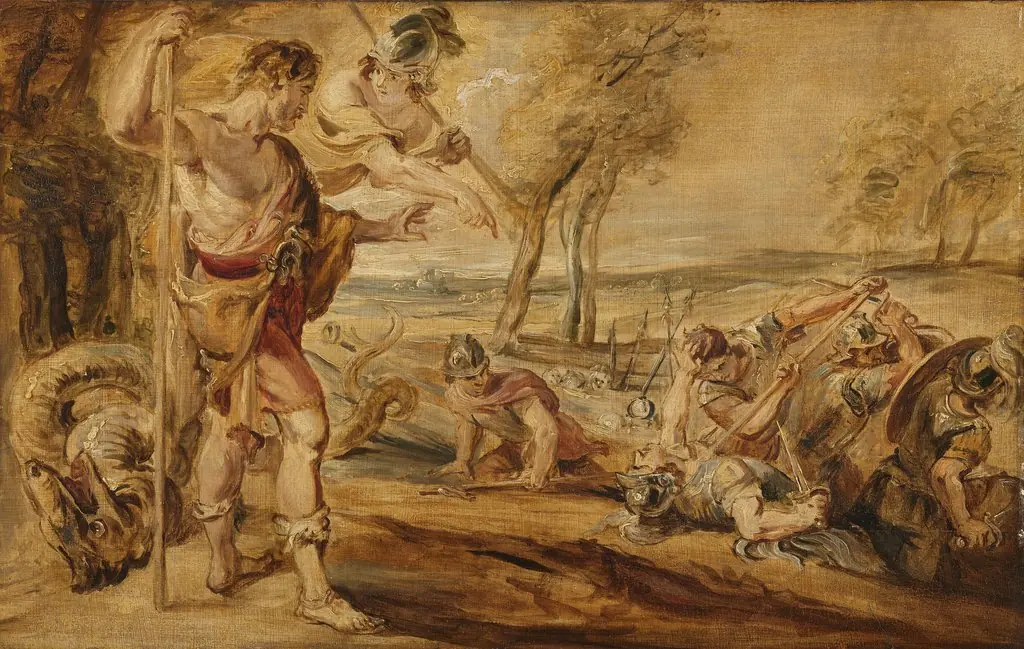
Own this work as a print
Artist & collection
Artist
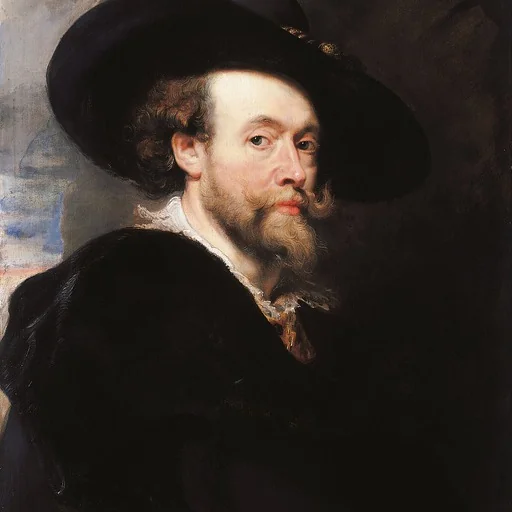
Sir Peter Paul Rubens ( ROO-bənz; Dutch:; 28 June 1577 – 30 May 1640) was a Flemish artist and diplomat.

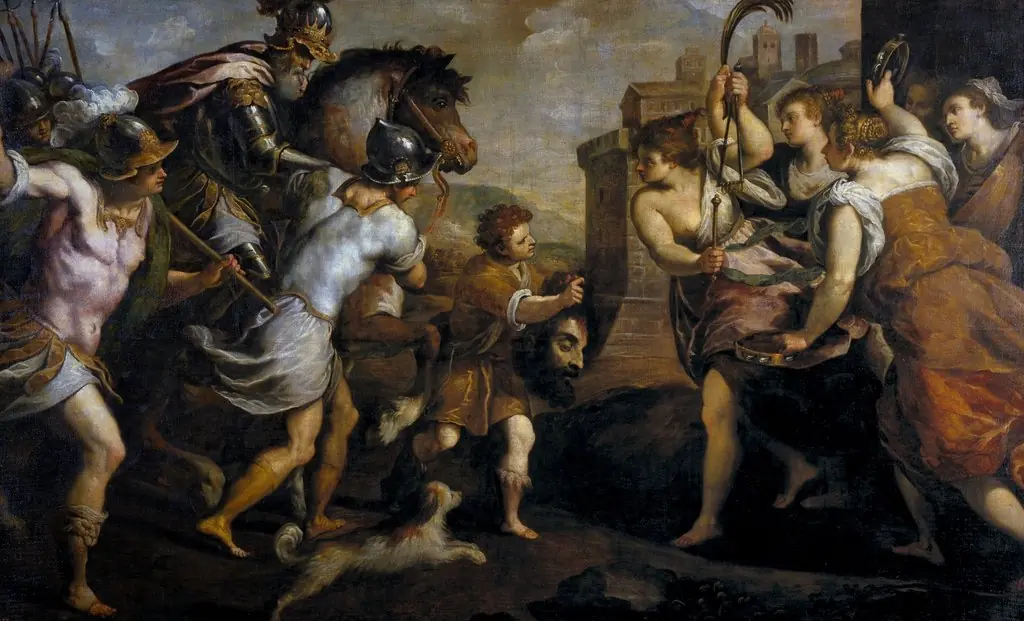 David with Goliath's Head
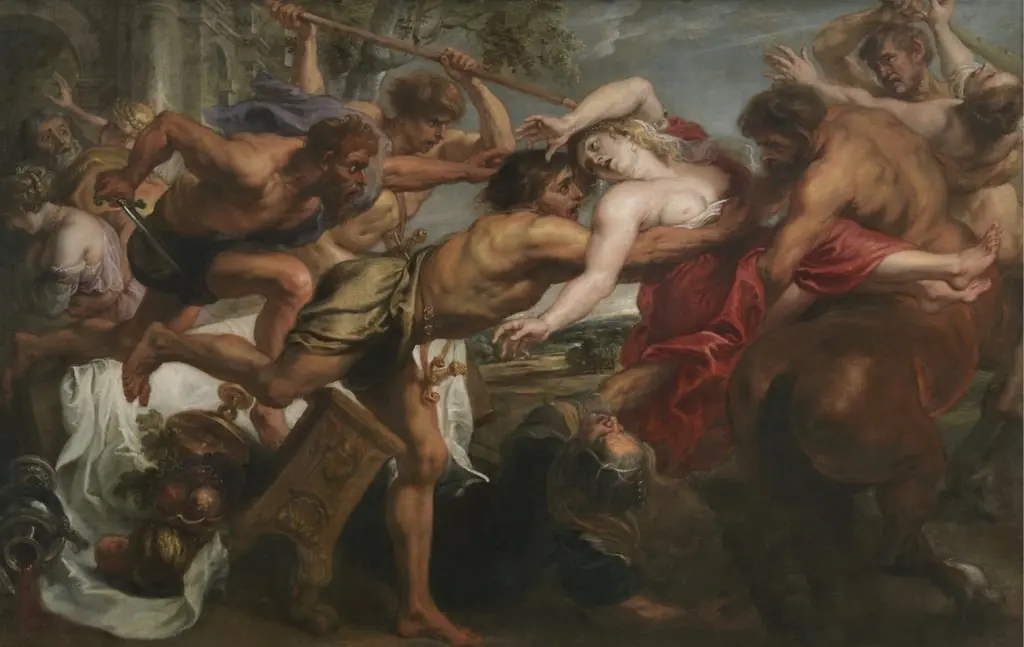 Rape of Hippodamia
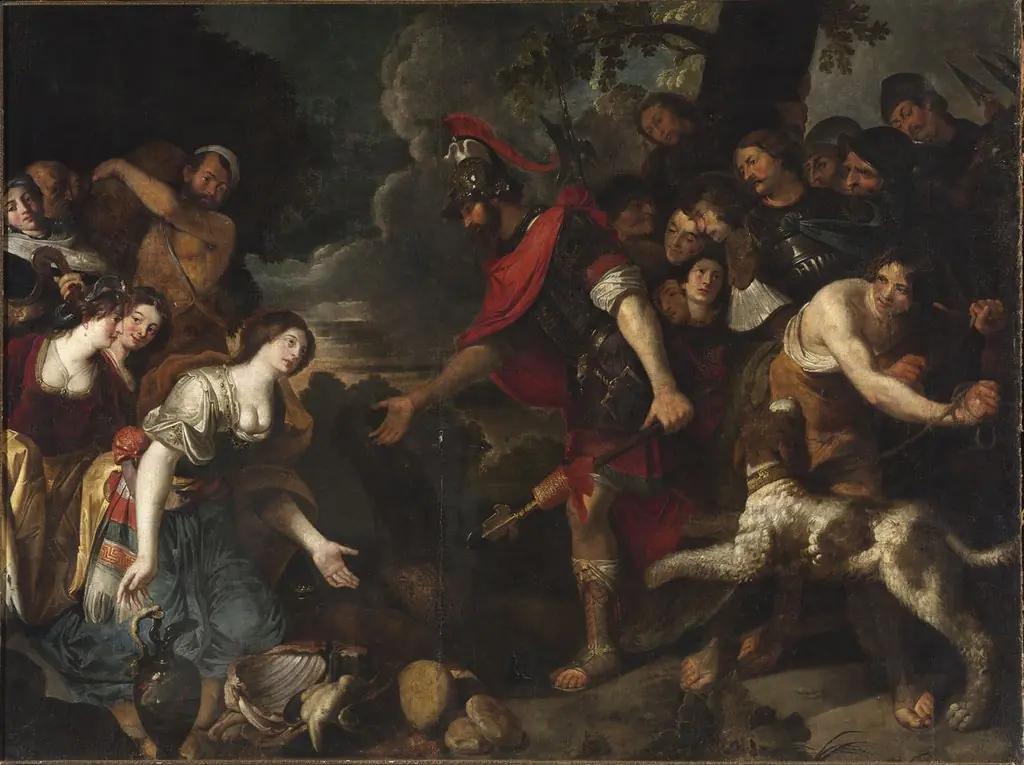 The Meeting of David and Abigail
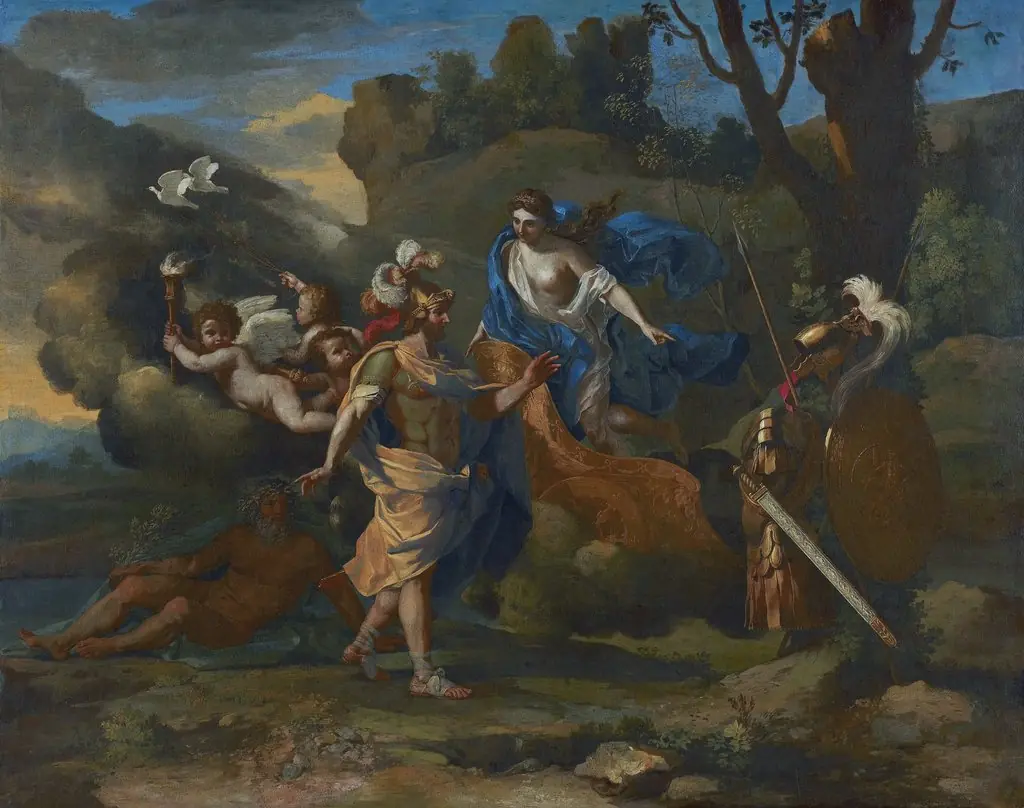 Venus, Mother of Aeneas, presenting him with Arms forged by Vulcan"
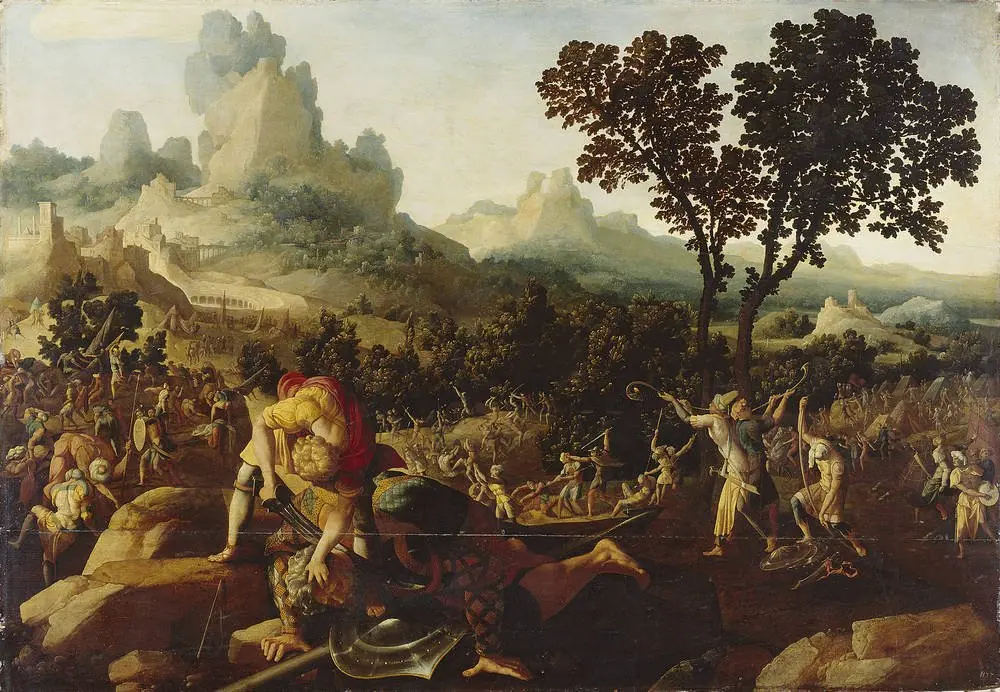 David and Goliath
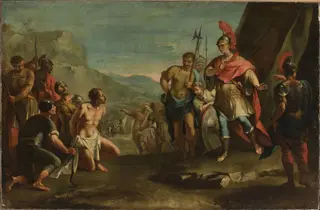 Killer of Darius before Alexander (King Porus and Alexander the Great)
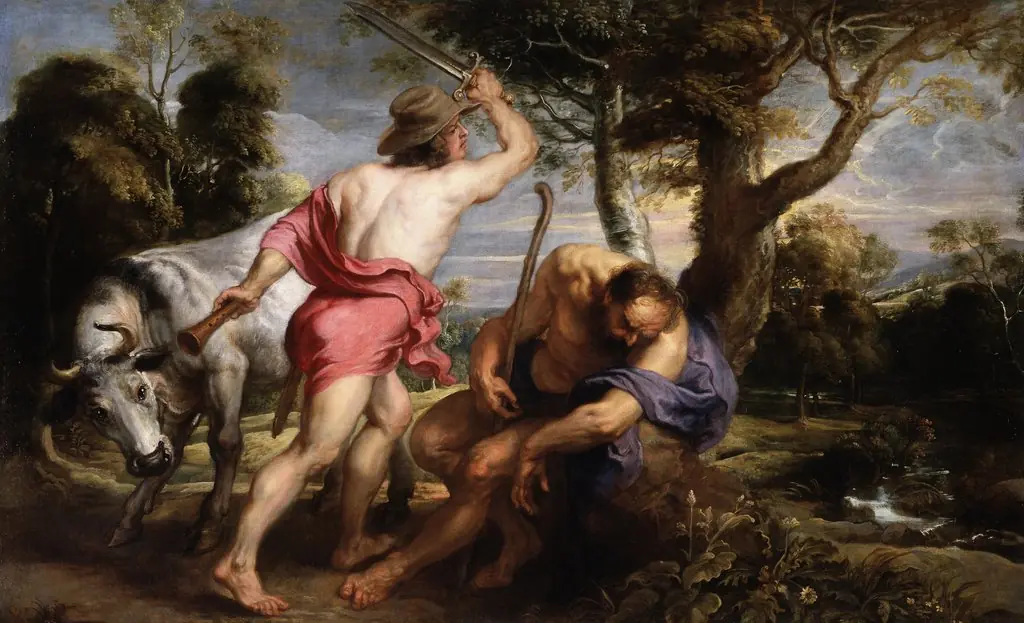 Mercury and Argus
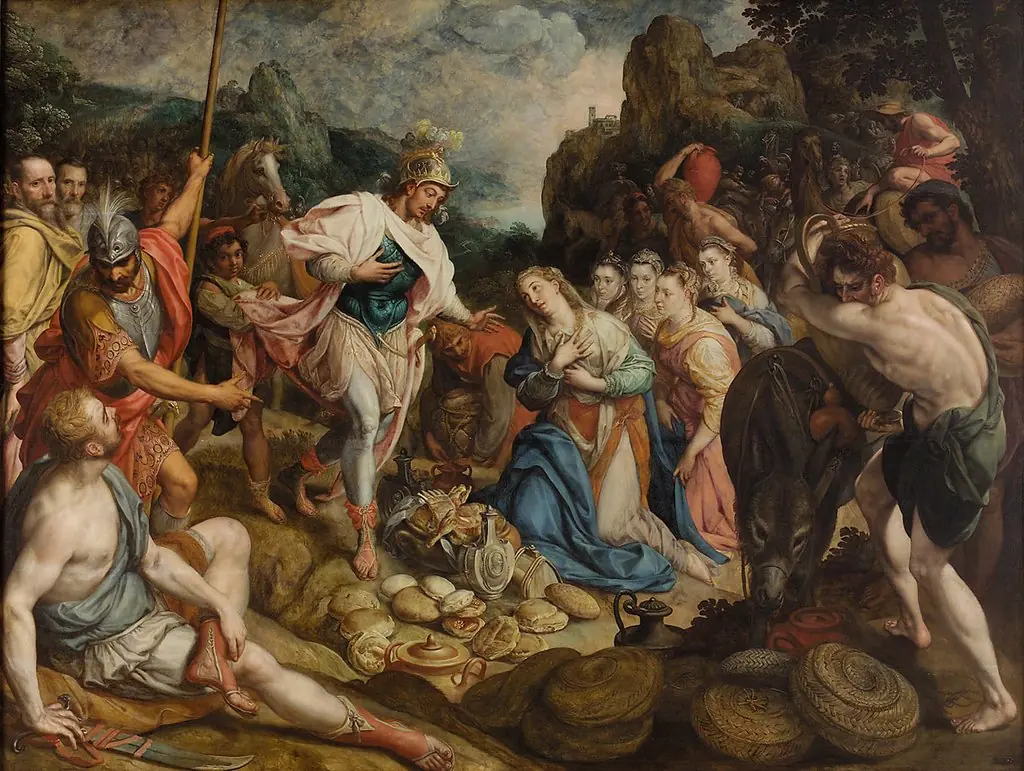 David and Abigail
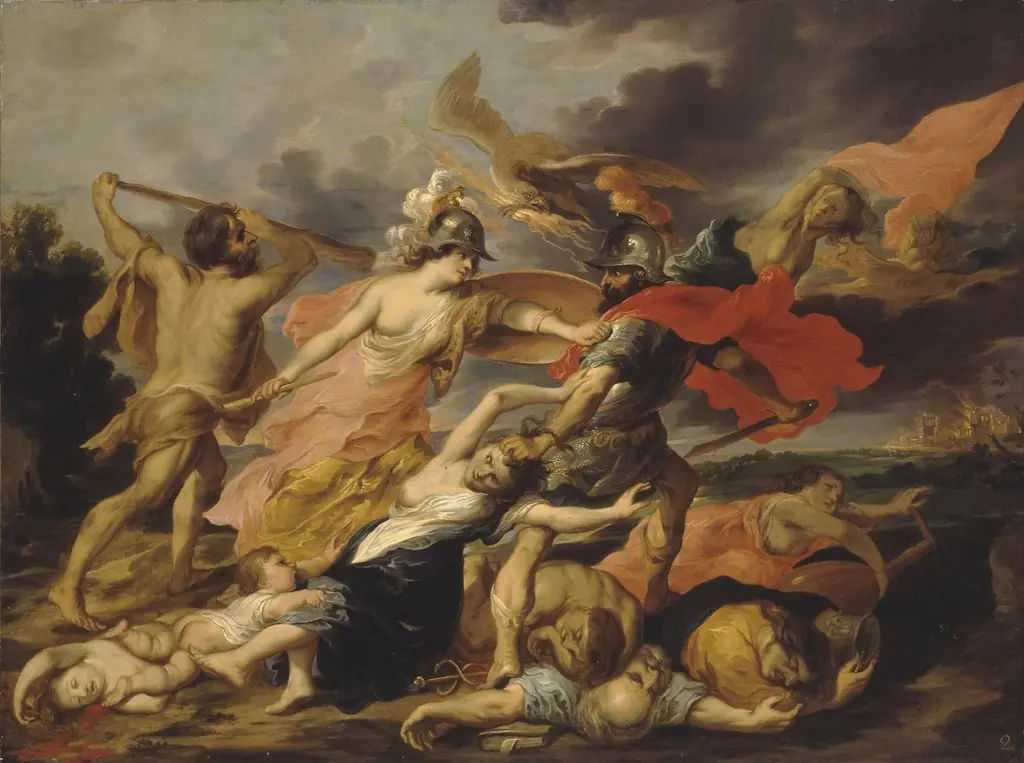 Hercules and Minerva Expelling Mars
 Rape of the Sabines