Artwork
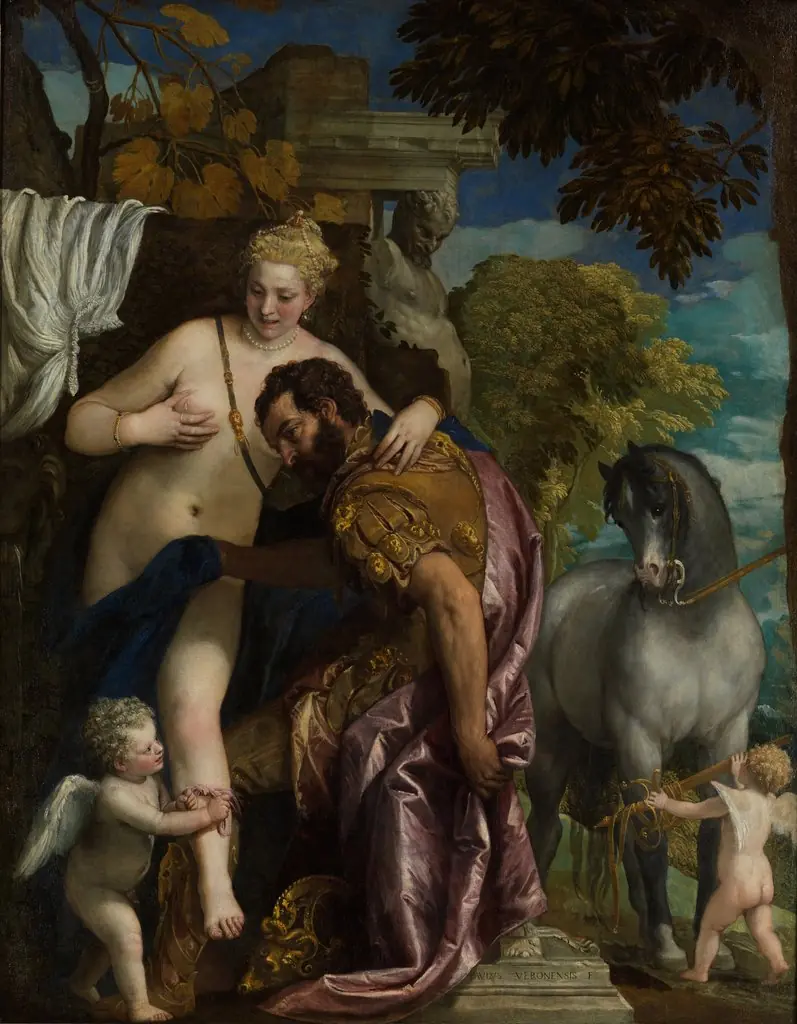
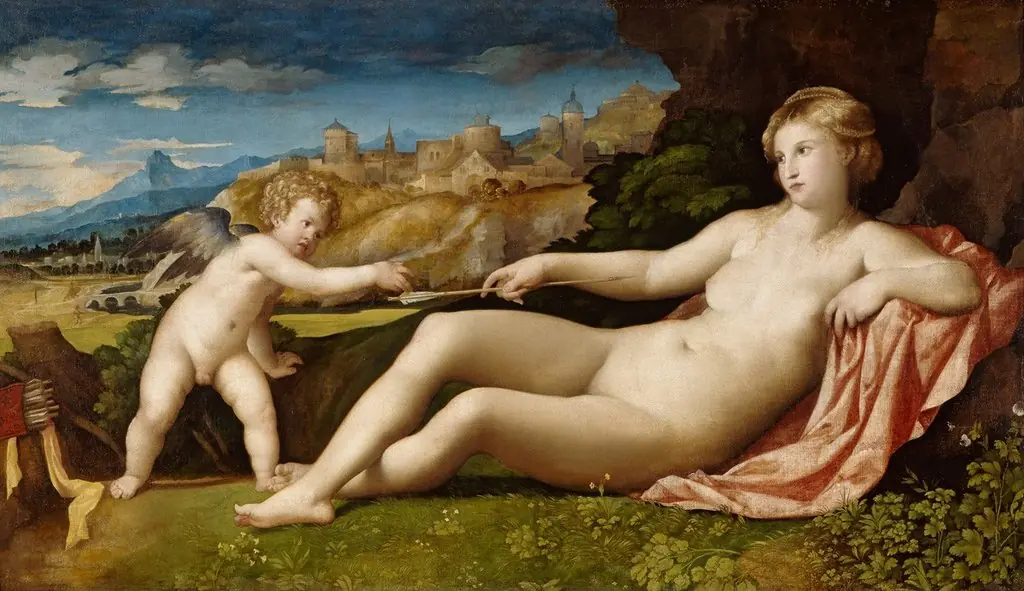
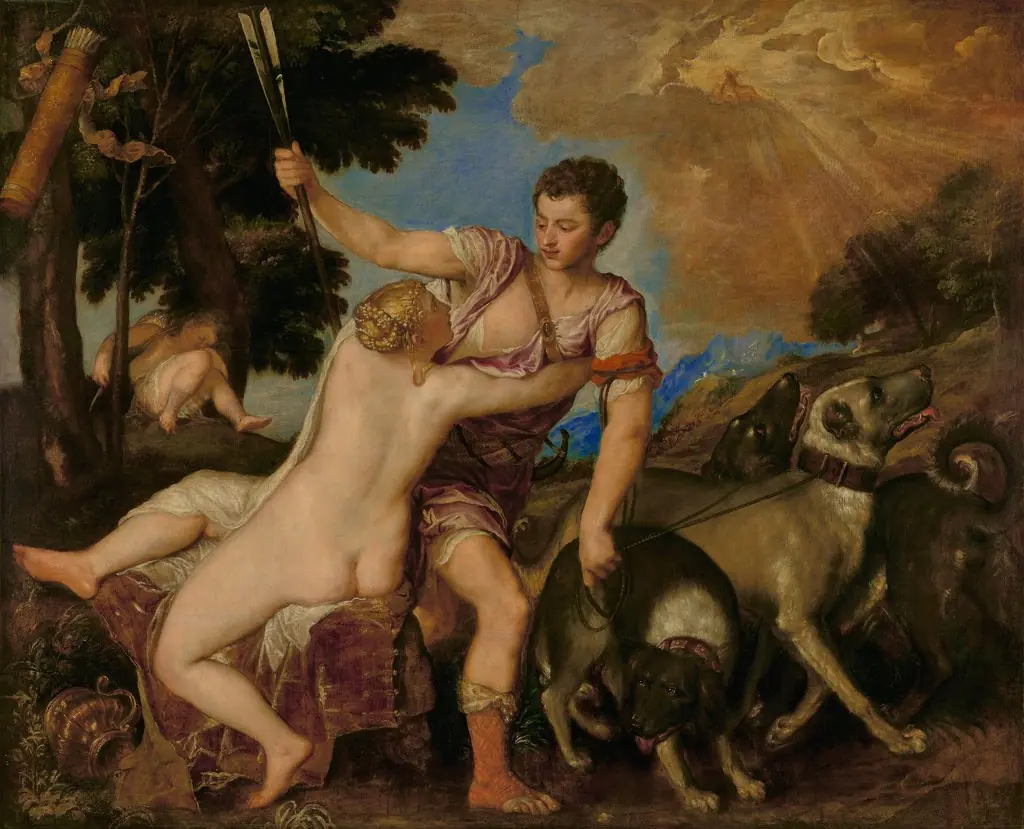
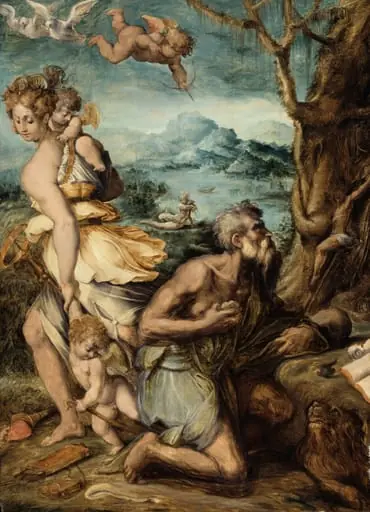
Allegoy (Mars, Venus, Flora and Cupid)
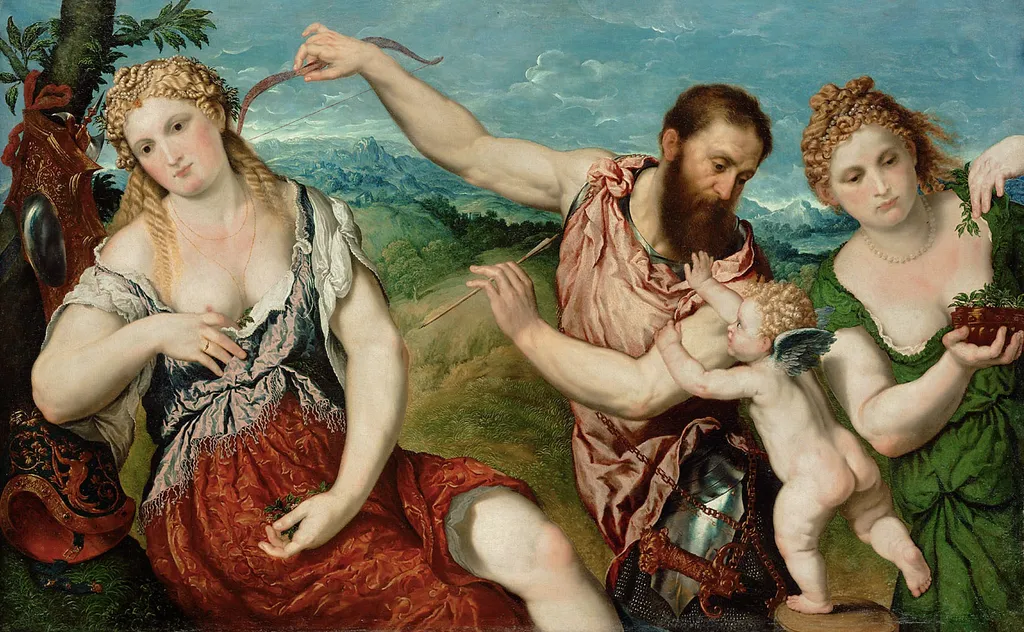
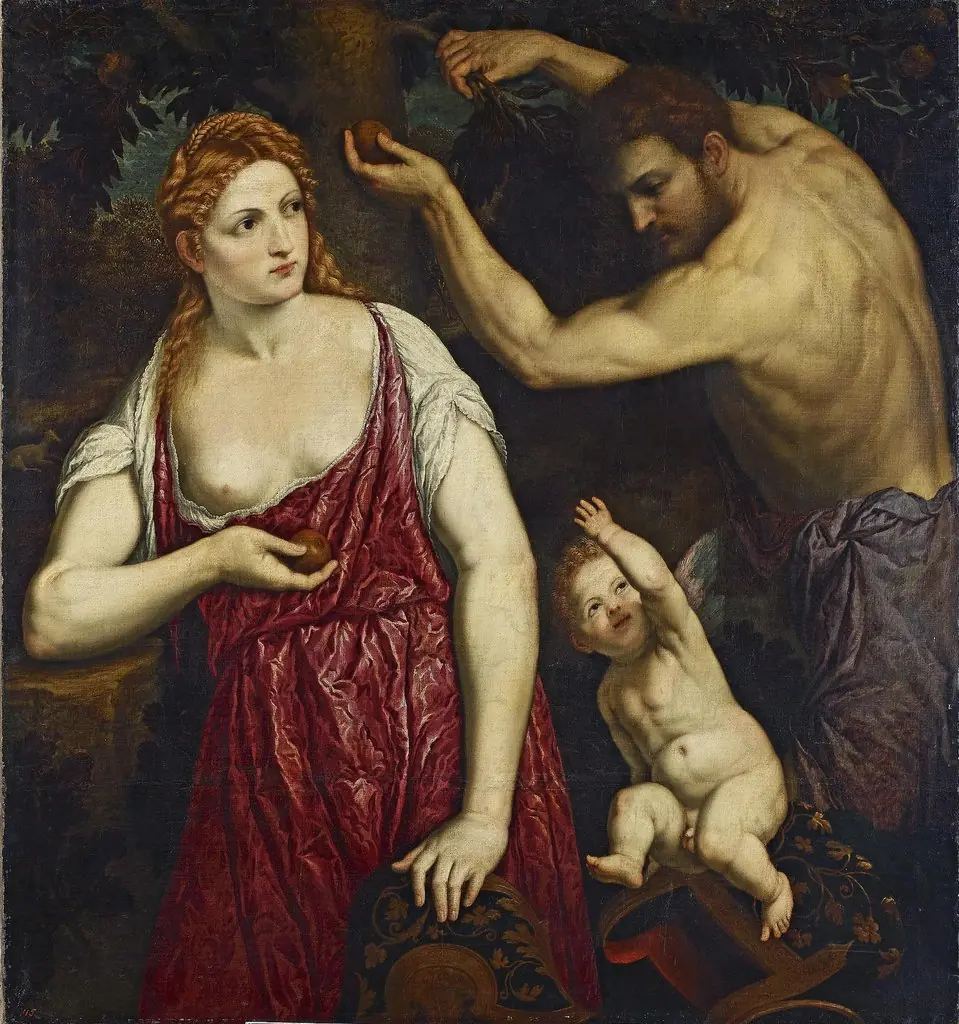
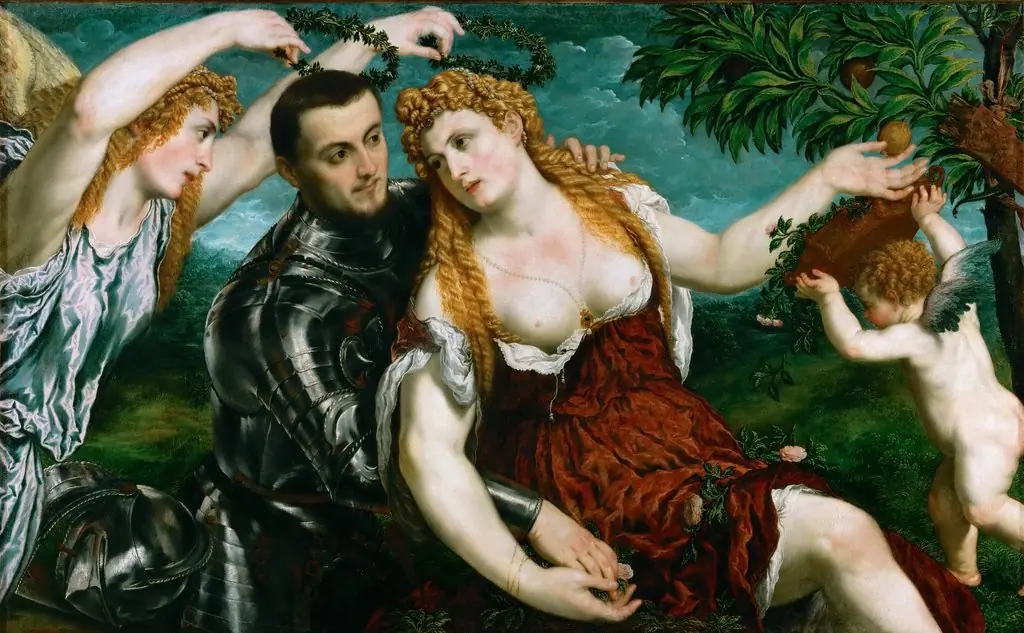
Allegoy (Mars, Venus, Flora and Cupid) is an unspecified painting by the Mannerist artist Paris Bordone. It dates from 1560 and is held in the collection of the Kunsthistorisches Museum.
About this work
Overview
Allegory (Mars, Venus, Flora and Cupid), a painting by Paris Bordone, dates to circa 1560 and exemplifies the Mannerist style. The work features four figures from Roman mythology set within a lush landscape, characterized by refined forms and complex composition.
Subject & Meaning
The painting depicts Mars (bearded, with a pink draped cloth), Venus (in a red, gold-trimmed dress, holding a bow), Flora (winged, with a fruit basket), and Cupid (as a small child). Their interaction embodies the mythological narrative of love and war, with Venus and Mars symbolizing the contrasting themes.
Technique & Style
Bordone employs Mannerist traits: stylized elegance, intricate figural arrangement, and pronounced chiaroscuro. The latter technique creates a striking contrast between the softly glowing faces of the figures and the shadowy surroundings, emphasizing their presence.
History & Provenance
Trained in Titian’s Venetian workshop, Bordone blends Venetian influences with Mannerist exaggerations of grace and artificiality. The painting is currently part of the Kunsthistorisches Museum’s collection.
Context
Created during the Mannerist movement, the work reflects the era’s aesthetic preferences for complexity and refined, albeit somewhat artificial, beauty. Bordone’s Venetian background adds depth to the piece’s stylistic identity.
Artist & collection

Artist
Paris Bordone (Paris Paschalinus Bordone; 5 July 1500 – 19 January 1571) was an Italian painter of the Venetian Renaissance who, despite training with Titian, maintained a strand of Mannerist complexity and provincial vigor.