Artwork
Portrait of Federico II Gonzaga
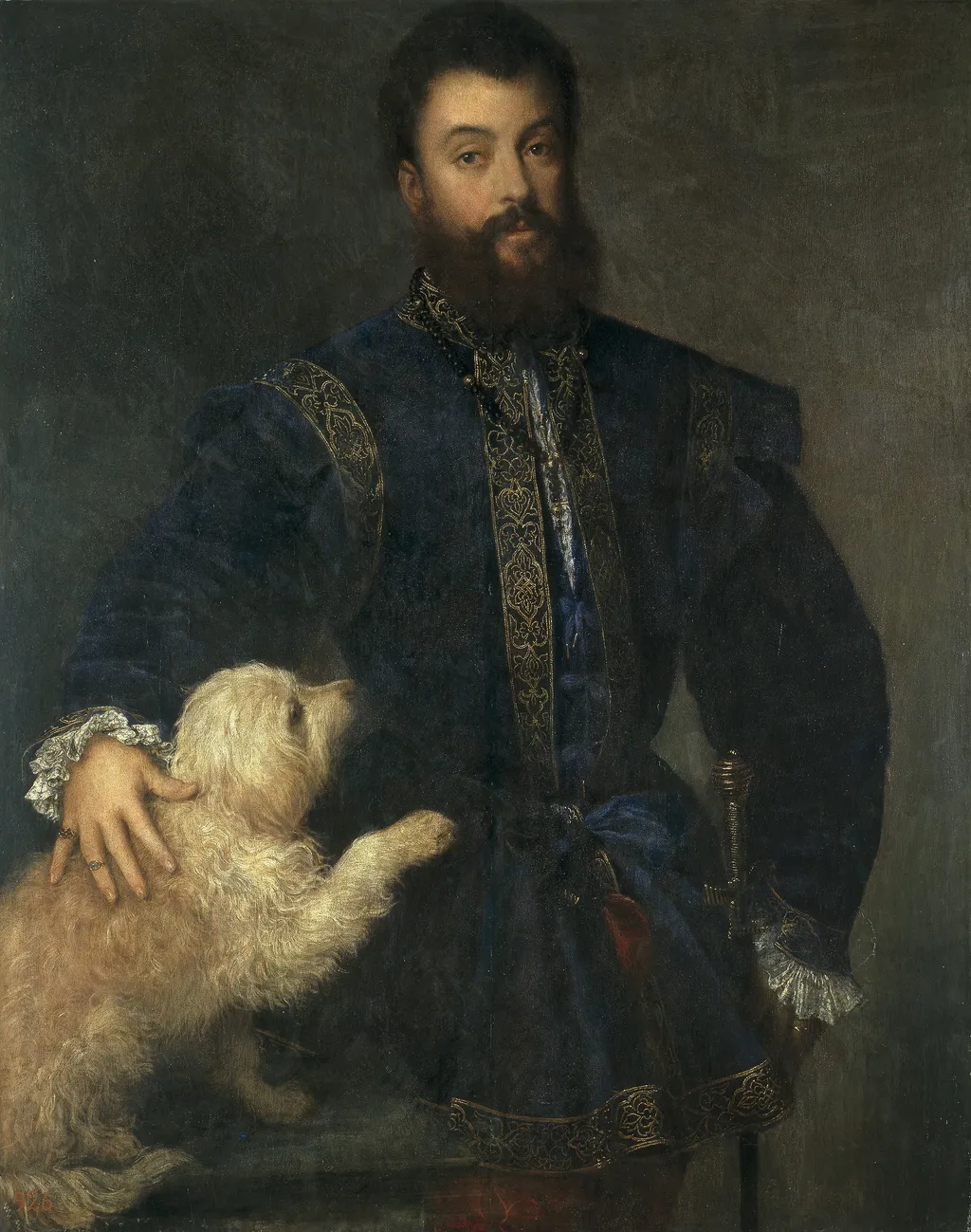
Portrait of Federico II Gonzaga is an oil painting by the High Renaissance artist Titian. It dates from 1529 and is held in the collection of the Museo del Prado.
About this work
Subject & Meaning
He stands with an attentive gaze, wearing a sumptuous velvet tunic with gold embroidery, a long beard, and a necklace of black pearls featuring a crucifix.
The painting depicts Federico II Gonzaga, Duke of Mantua, portrayed at half-length against a dark, neutral background. He stands with an attentive gaze, wearing a sumptuous velvet tunic with gold embroidery, a long beard, and a necklace of black pearls featuring a crucifix. His left hand rests on a sword while his right hand strokes a small Maltese dog, an iconographic choice typically reserved for female portraits to symbolize faithfulness.
This dual gesture underscores the subject's nature: ready to fight enemies yet friendly to the loyal. The inclusion of the dog and the crucifix serves to soften Federico's image, emphasizing his piety and redemption from a dissolute past. These elements were likely intended to present the Duke as an aristocratic and affable figure suitable for his marriage negotiations in 1529.
Technique & Style
Executed in oil on canvas around 1529, this half-length portrait measures 125 by 99 centimeters and bears the signature "Ticianus f.". Titian depicts Federico II Gonzaga standing against a dark, neutral background in a three-quarter pose, combining realistic observation with an idealized presentation intended to soften the Duke's reputation. The subject wears a sumptuous blue velvet tunic featuring gold embroidery, tight at the waist and flaring at the hips, accessorized with a necklace of black pearls or lapis lazuli and a crucifix symbolizing piety.
Stylistically, the composition balances dual aspects of the Duke's character: his left hand rests on a sword indicating martial readiness, while his right hand gently strokes a small Maltese dog, a motif typically reserved for female portraits to signify loyalty and affection. The rendering of the long beard and attentive gaze adheres to sixteenth-century fashion while projecting intelligence.
History & Provenance
Portrait of Federico II Gonzaga, painted by Titian in 1529, depicts the Duke of Mantua with a Maltese dog, a symbol of loyalty, alongside attributes of authority and faith such as a sword and crucifix. The work shows him in contemporary attire with a long beard, reflecting 16th-century fashion, and features a dark neutral background that emphasizes his dual nature as both amiable and martial. It was likely commissioned around the time of his 1529 marriage, aligning with Gonzaga’s desire to present a reformed public image.
The painting entered the Royal Alcázar of Madrid inventory by 1666, having passed through the collection of the Marquess of Leganés and previously been acquired by Charles I of England from the Gonzaga collection. It was later identified by scholars such as Gronau and remained in the Museo del Prado, Madrid, since its acquisition by Philip IV and formal entry into the museum in 1821.
The Portrait of Federico II Gonzaga is held by the Museo del Prado in Madrid. It bears the inventory number P00968 and was acquired by the museum in 1821 after passing through the collection of Charles I of England and the marquess of Leganés. The work was mentioned in the 1666 inventory of the Royal Alcázar of Madrid and was later identified by art historian Gronau.
Its provenance includes a period in the Gonzaga collection, a sale following Charles I’s execution, and eventual purchase by the Spanish crown. The painting is signed "Ticianvs f." and dates to around 1529.
Context
The painting entered the Royal Alcázar of Madrid inventory in 1666, having been acquired from the Gonzaga collection via Charles I of England; it was later owned by the Marquess of Leganés and eventually by Philip IV before entering the Museo del Prado in 1821, illustrating its provenance through successive European collections
Titian’s Portrait of Federico II Gonzaga (c. 1529) exemplifies Venetian school portraiture, combining the era’s fashionable half‑length pose, symbolic Maltese dog for loyalty, and sumptuous attire that conveys both martial readiness and pious redemption, reflecting the sitter’s desire to present an aristocratic, devout image ahead of his 1529 marriage
Scholars such as Francesco Valcanover (1969) have emphasized the work’s role in demonstrating Titian’s ability to cater to patron desires through idealized realism, a skill evident in its later copies and workshop replicas, while its stylistic details, long beard, embroidered tunic, black‑pearl necklace with crucifix, anchor it within 16th‑century visual rhetoric
Overview
Titian’s oil portrait, dated around 1529, depicts Federico II Gonzaga, the Duke of Mantua, at the moment of his marriage. The work is signed “Ticianus f.” and is now displayed in Madrid’s Museo del Prado. The composition centers on the duke, dressed in sumptuous blue attire, with a small Maltese dog resting in his right hand.
Own this work as a print
Artist & collection
Artist
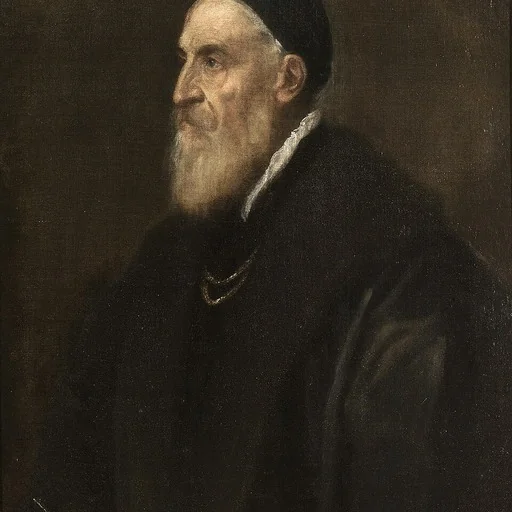
Tiziano Vecellio (Italian:; c. 1488/1490 – 27 August 1576), Latinized as Titianus, hence known in English as Titian ( TISH-ən), was an Italian Renaissance painter. The most important artist of Renaissance Venetian…

- Portrait of a Man
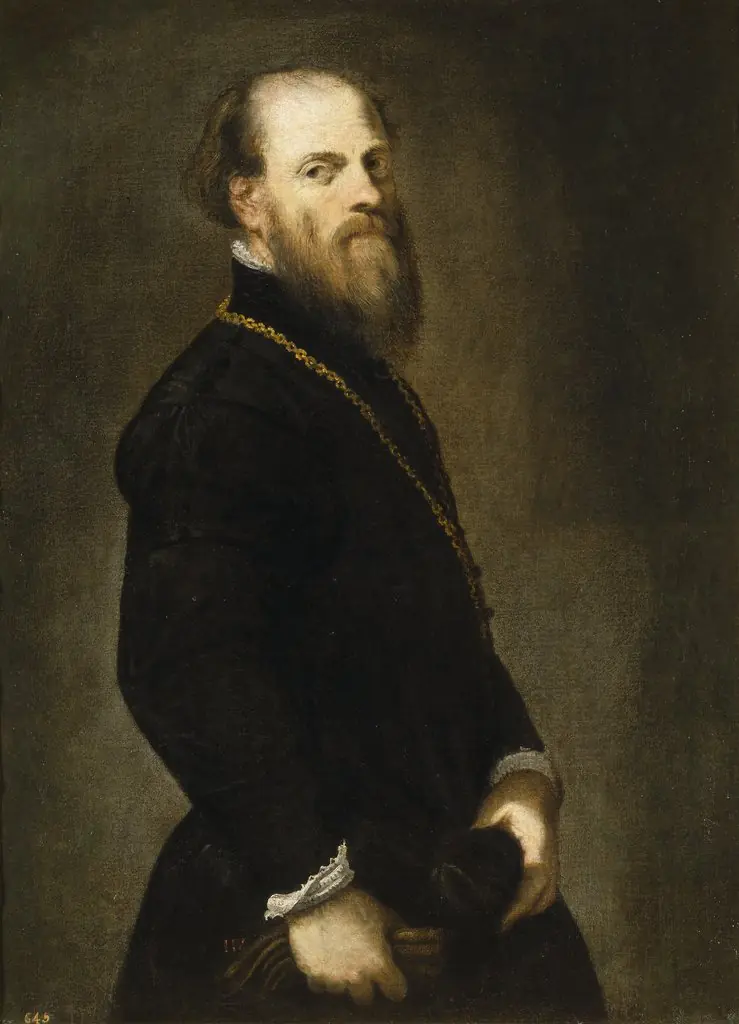 Man with a Golden Lace
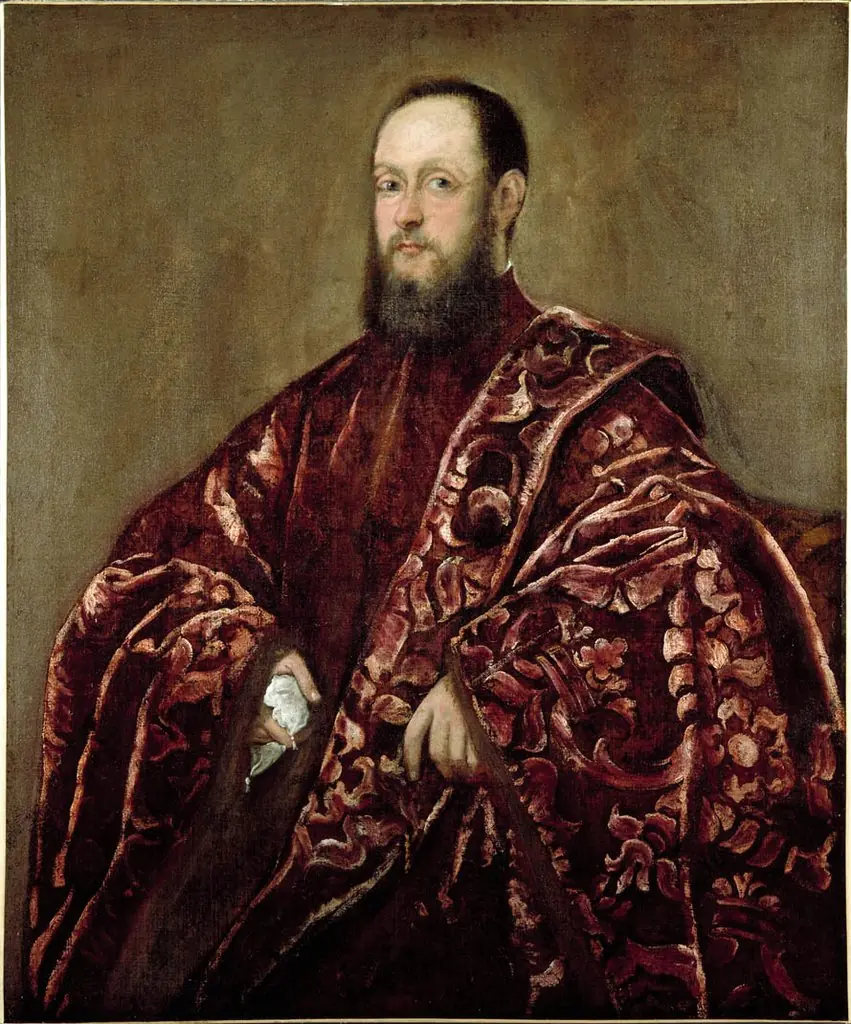 Portrait d'un membre de la famille Foscari
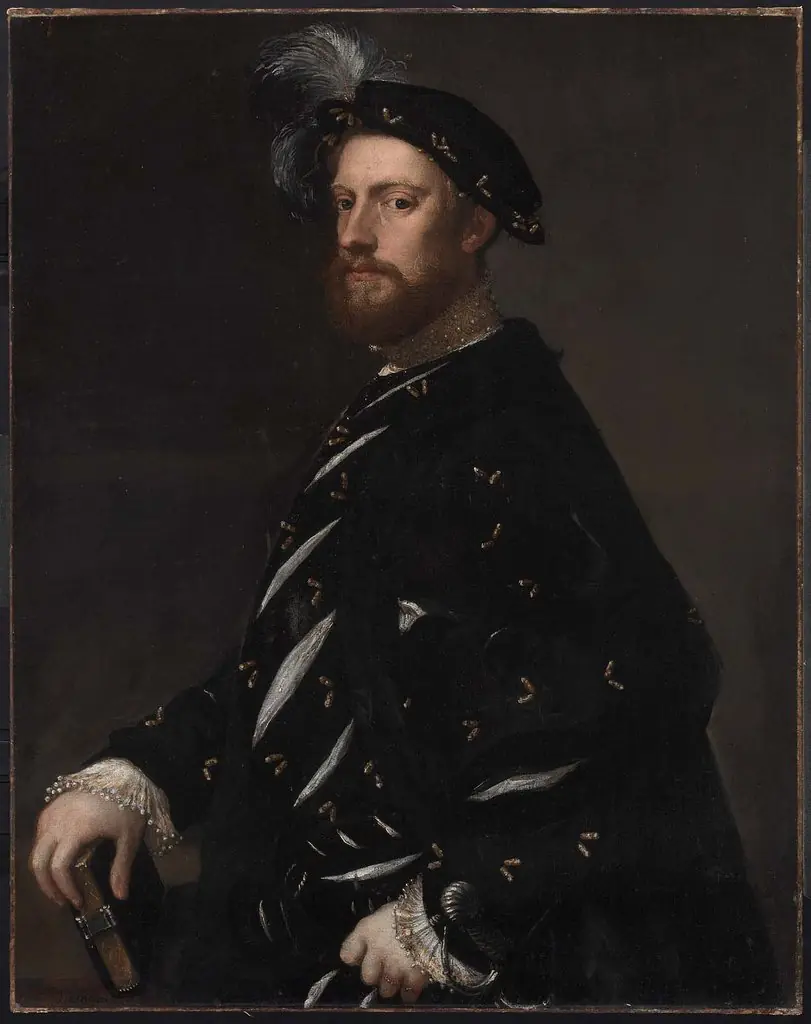 Portrait of a Man Holding a Book
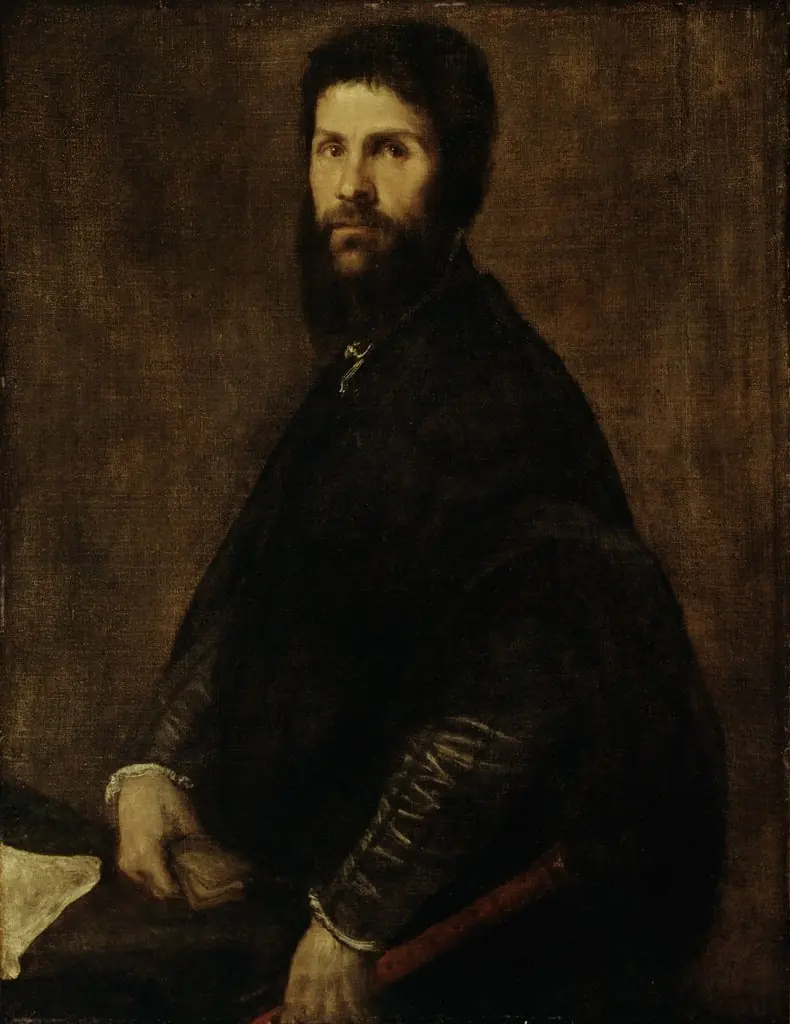 Man Holding a Flute
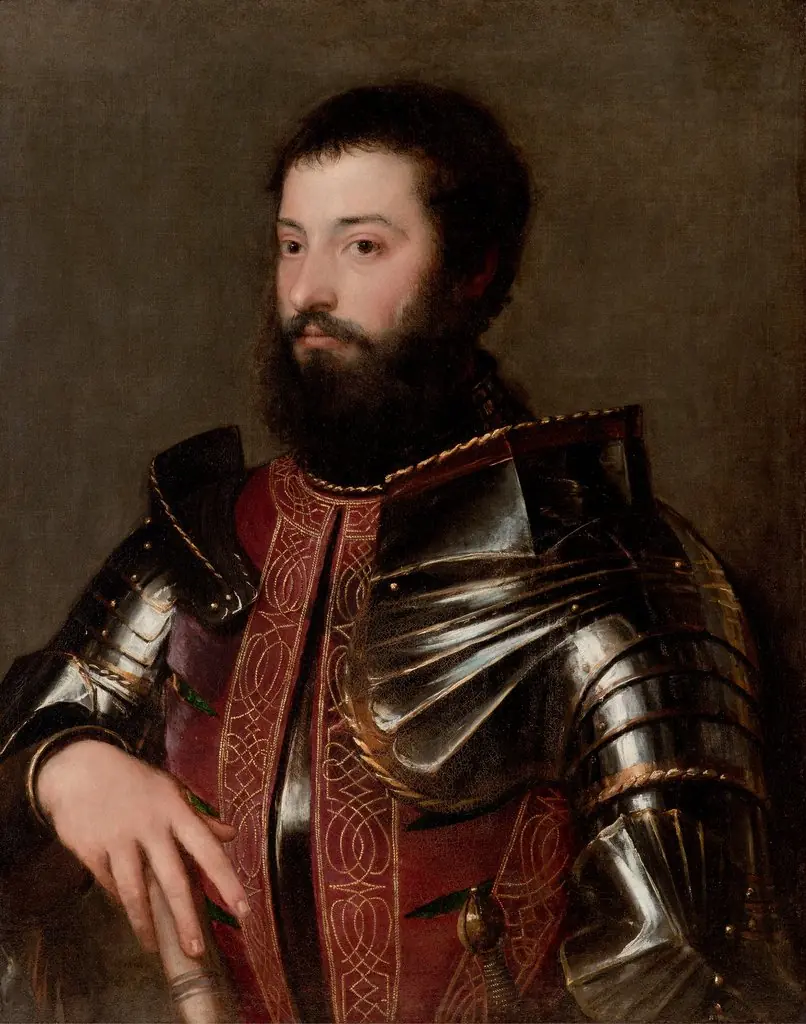 Portrait of a Man in Armor
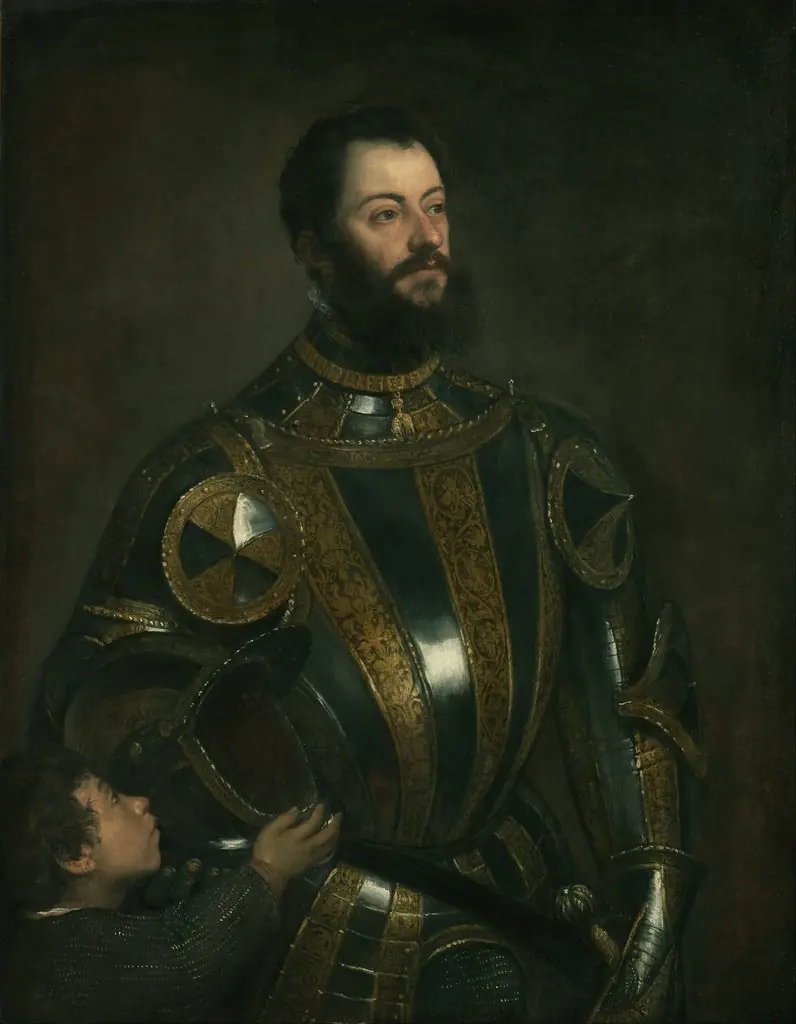 Portrait of Alfonso d'Avalos, Marchese del Vasto, in Armor with a Page
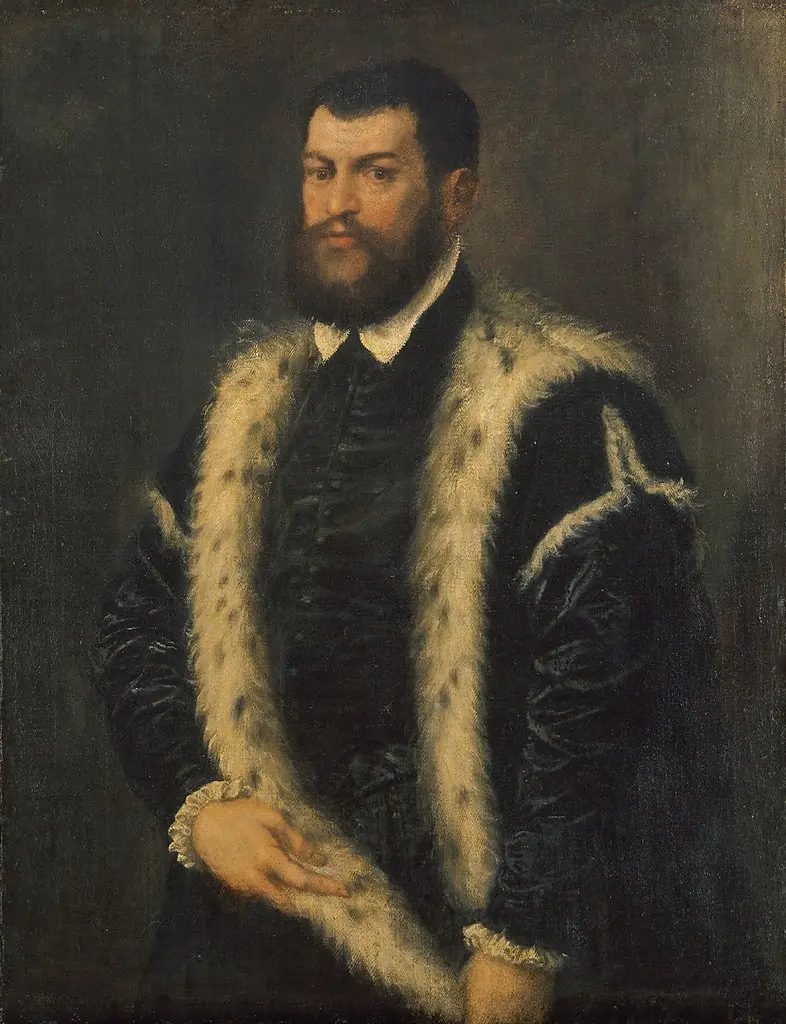 Man with Ermine Coat
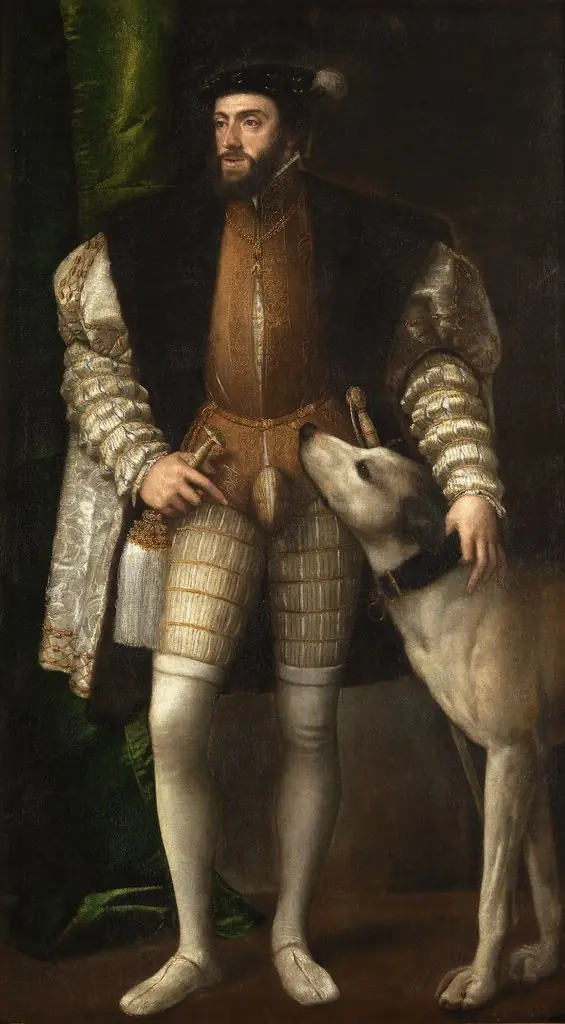 Portrait of Charles V with a Dog
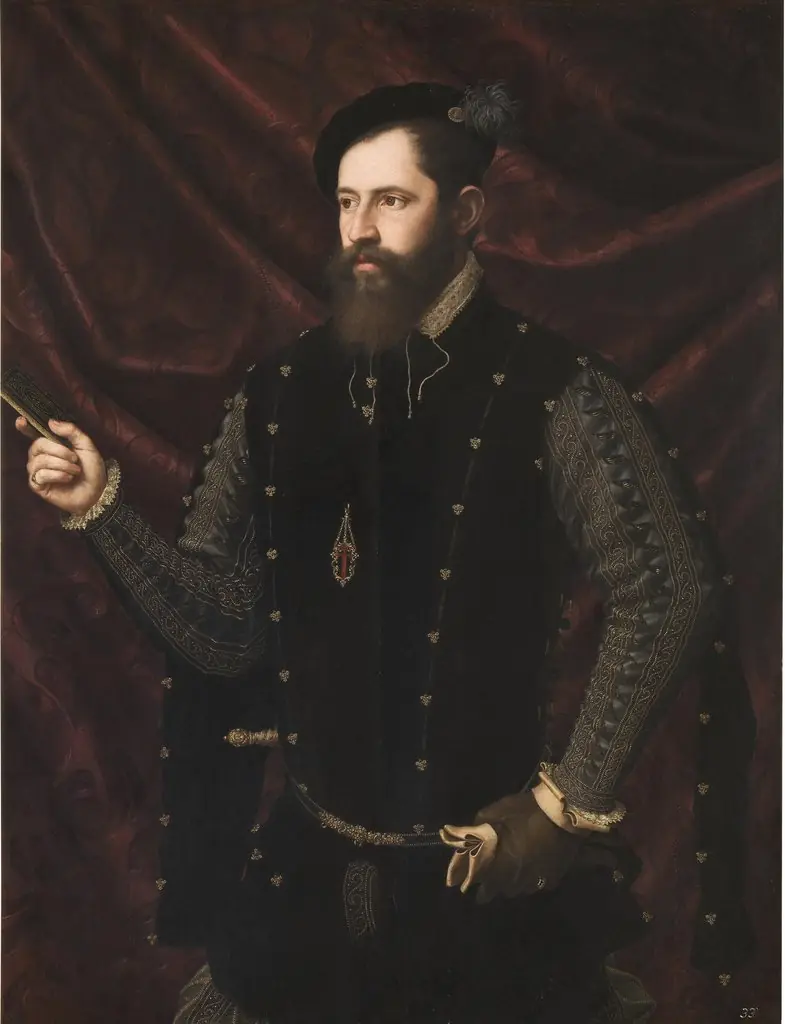 Portrait of a Knight of the Order of Santiago
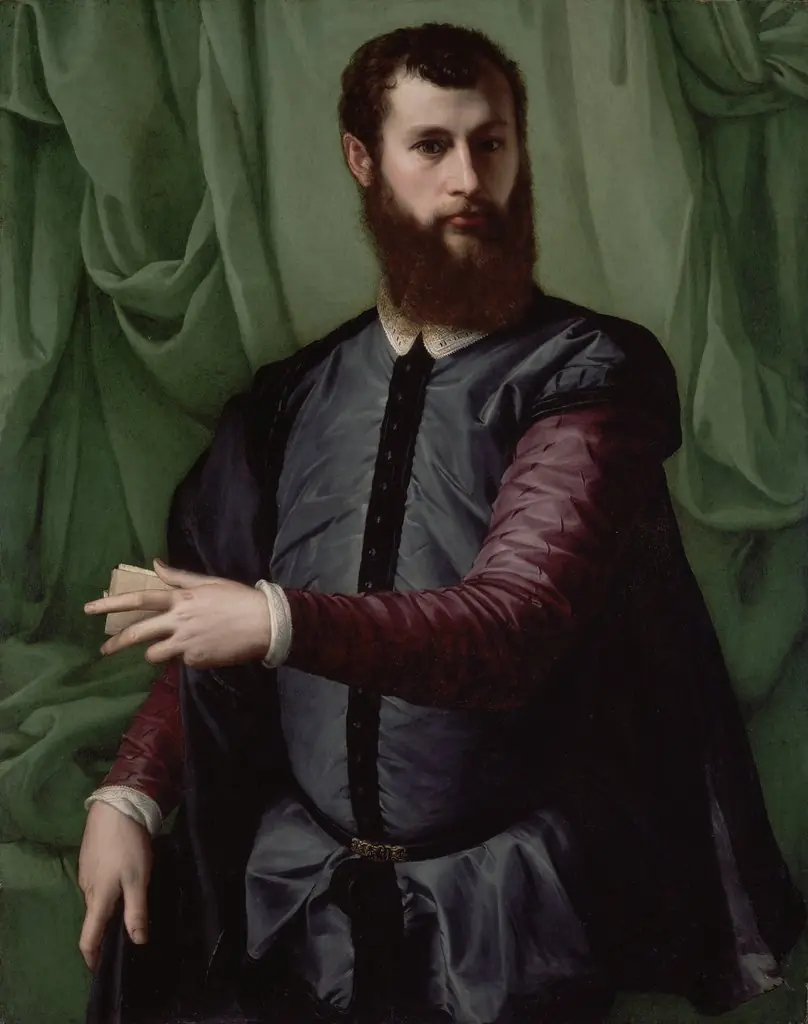 Portrait of a Man
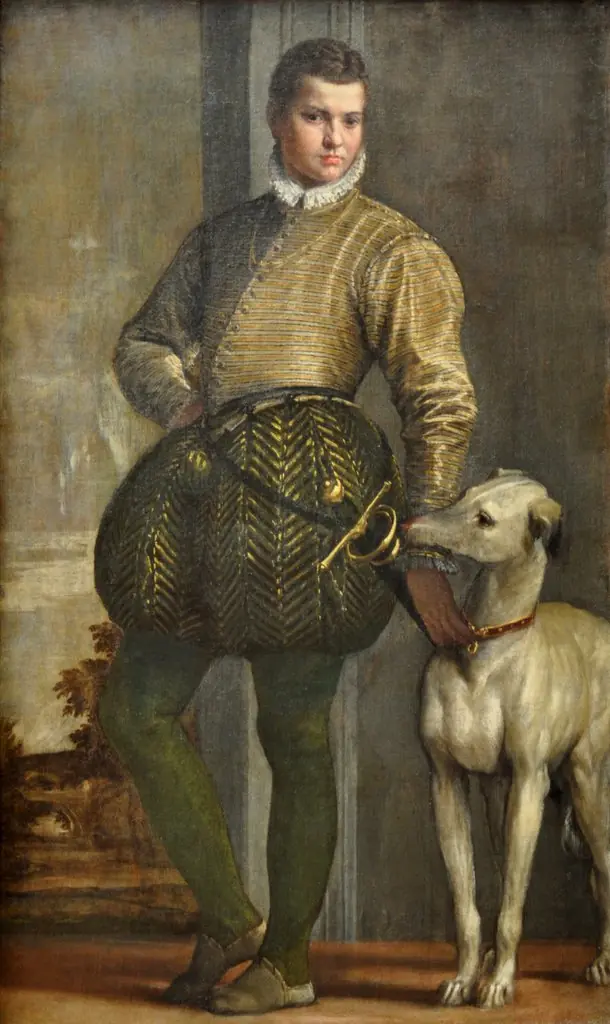 Boy with a Greyhound