Artwork
Agee and Rose, D29
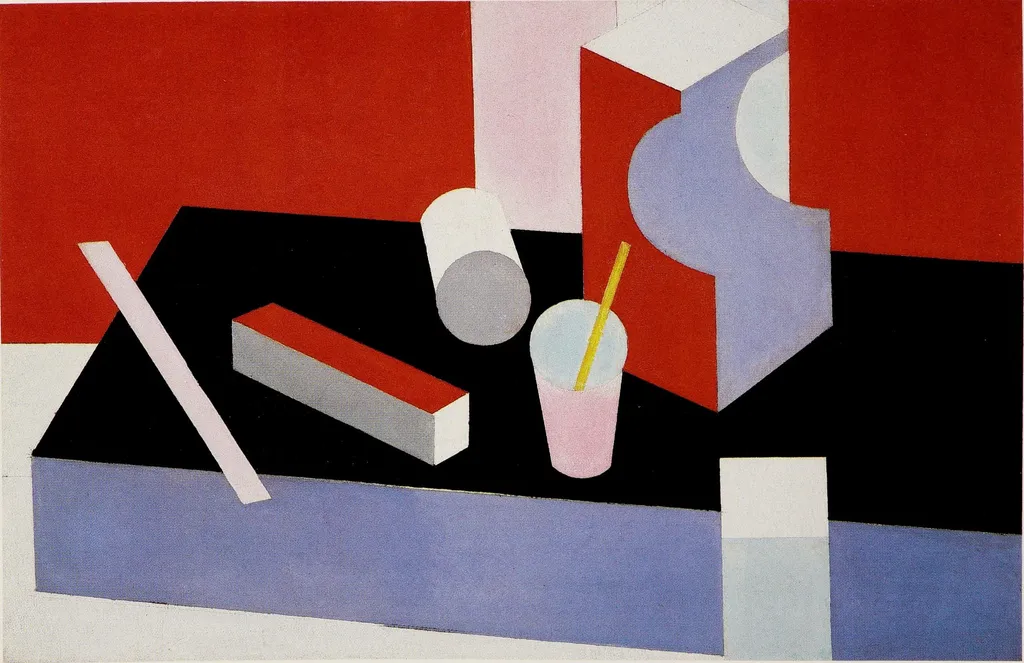
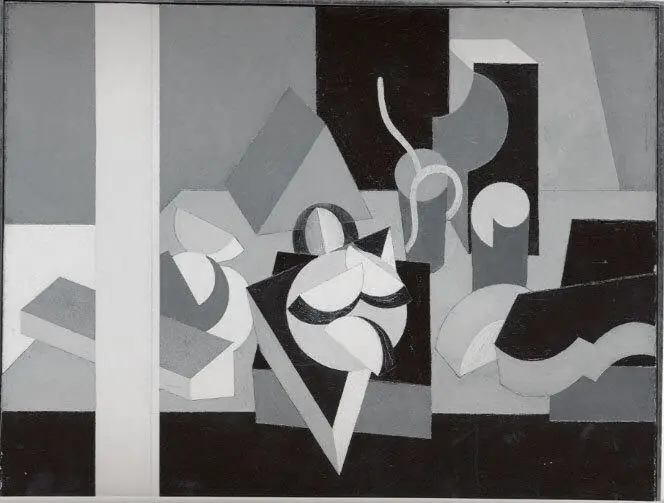
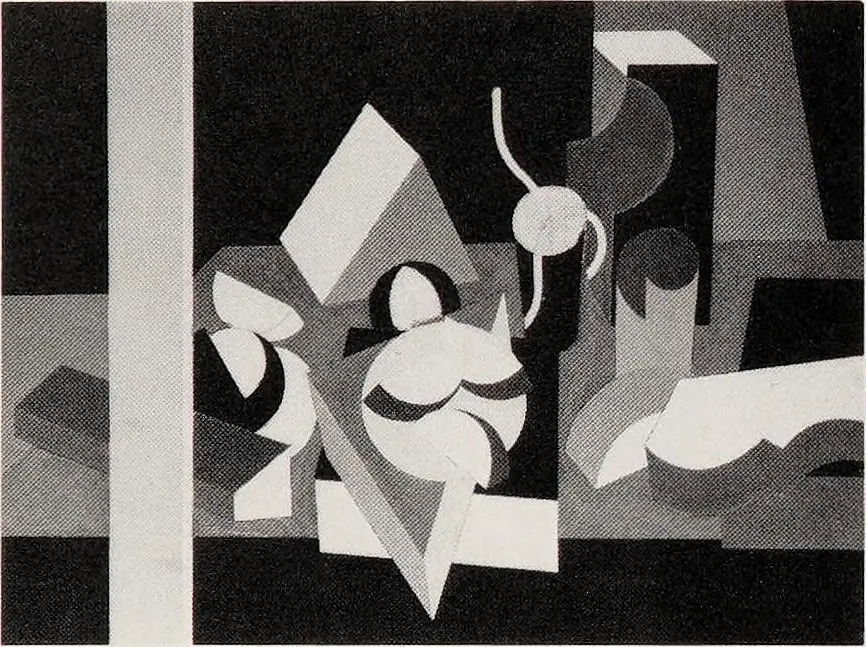
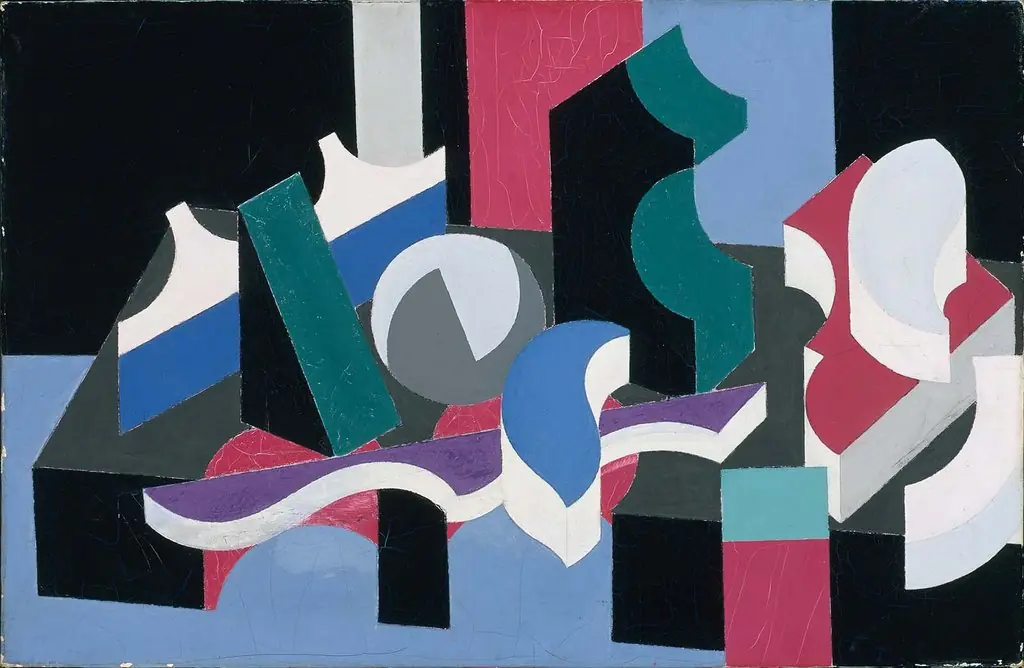
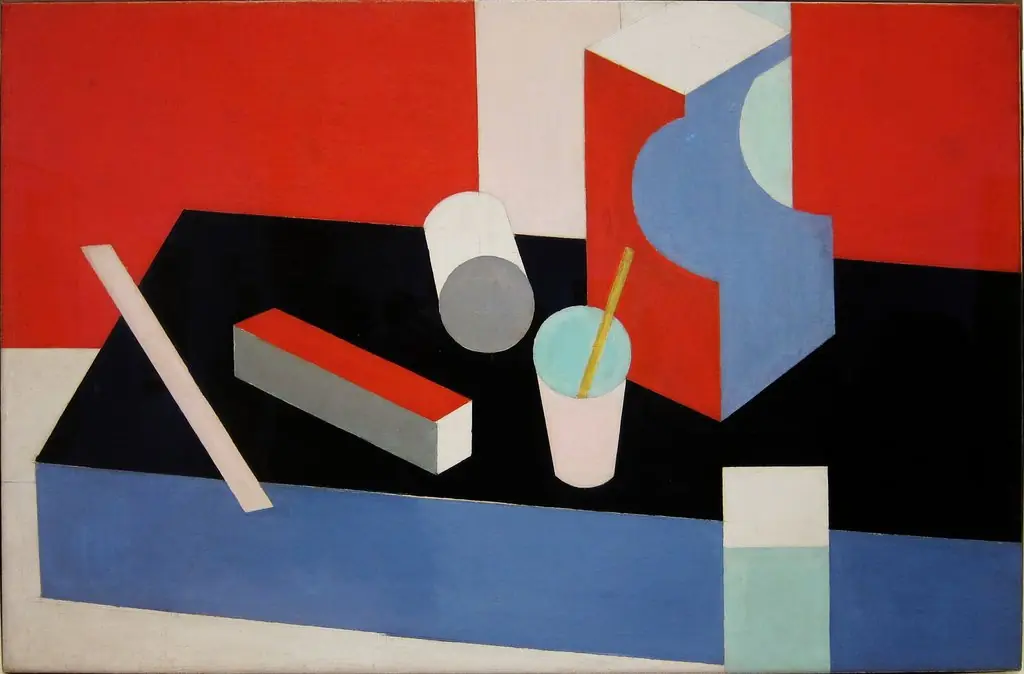
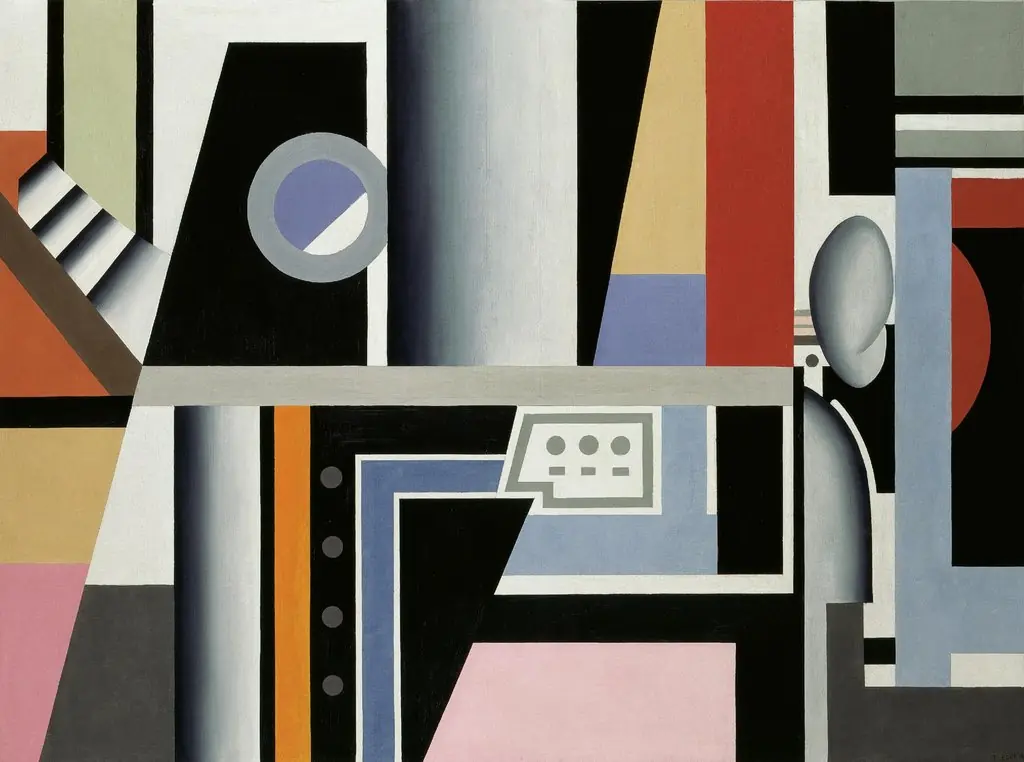
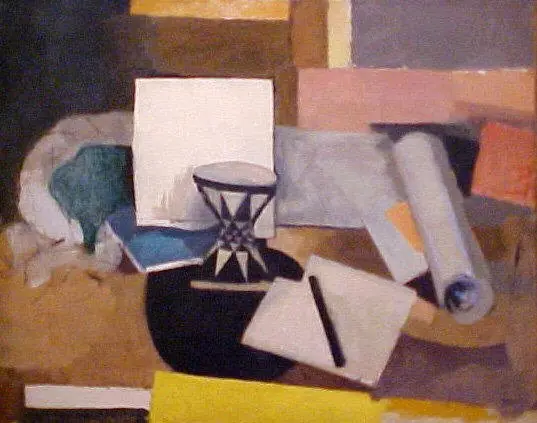
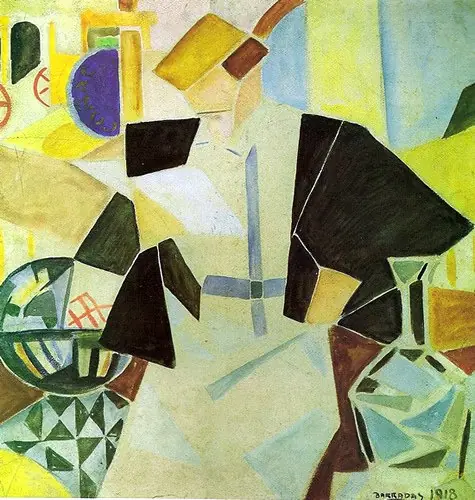
Agee and Rose, D29 is an unspecified painting by the Cubism Synthetic artist Patrick Henry Bruce. It dates from 1918 and is held in the collection of the Museum of Modern Art.
About this work
Overview
The work reflects Bruce’s engagement with early modernist abstraction, reducing forms to essential geometries while maintaining a quiet, contemplative mood.
Agee and Rose, D29 is a still-life painting by American artist Patrick Henry Bruce, dated around 1918. It resides in the collection of the Museum of Modern Art in New York. The composition presents a sparse arrangement of everyday objects, a glass with a straw, a rectangular form, and a cylinder, arranged on a flat surface.
The work reflects Bruce’s engagement with early modernist abstraction, reducing forms to essential geometries while maintaining a quiet, contemplative mood.
Subject & Meaning
The painting’s subject is a restrained still life, devoid of narrative or symbolic intent. Objects are presented without context, their function obscured by abstraction. The title, referencing two names, offers no clear connection to the imagery, suggesting an intentional ambiguity.
The focus lies in the formal relationships between shapes and hues rather than in representing the objects’ material reality, inviting quiet observation over interpretation.
Technique & Style
Bruce employs flat planes of color and sharply defined contours to construct the composition. The glass and straw are rendered in pale, cool tones, lavender, mint, and gray, while the block and cylinder appear in subdued ochres and browns. A deep red background intensifies the spatial tension, flattening perspective while enhancing the sense of volume through color contrast. Brushwork is deliberate but unobtrusive, emphasizing structure over texture.
History & Provenance
Created during Bruce’s time in France, the painting emerged from his engagement with Cubist principles and the Parisian avant-garde. It entered the Museum of Modern Art’s collection in the mid-20th century, part of a broader effort to document American modernists who worked in Europe. Its provenance traces back to private collections in New York and Paris before institutional acquisition.
Context
Painted in the aftermath of World War I, Agee and Rose, D29 reflects a broader shift in modern art toward abstraction and formal economy. Bruce, influenced by Cézanne and Picasso, moved away from traditional representation, aligning with contemporaries like Gleizes and Gris. The work embodies a quieter, more introspective strand of modernism, distinct from the dynamism of Futurism or the emotional intensity of Expressionism.
Legacy
Though less widely known than his peers, Bruce’s work contributed to the development of American geometric abstraction. Agee and Rose, D29 exemplifies his unique synthesis of European modernism and American restraint. The painting remains a reference point in studies of early 20th-century still life, illustrating how simplicity and color can convey structure and calm without narrative or ornament.
Own this work as a print
Artist & collection