Artwork
Nearly Hit
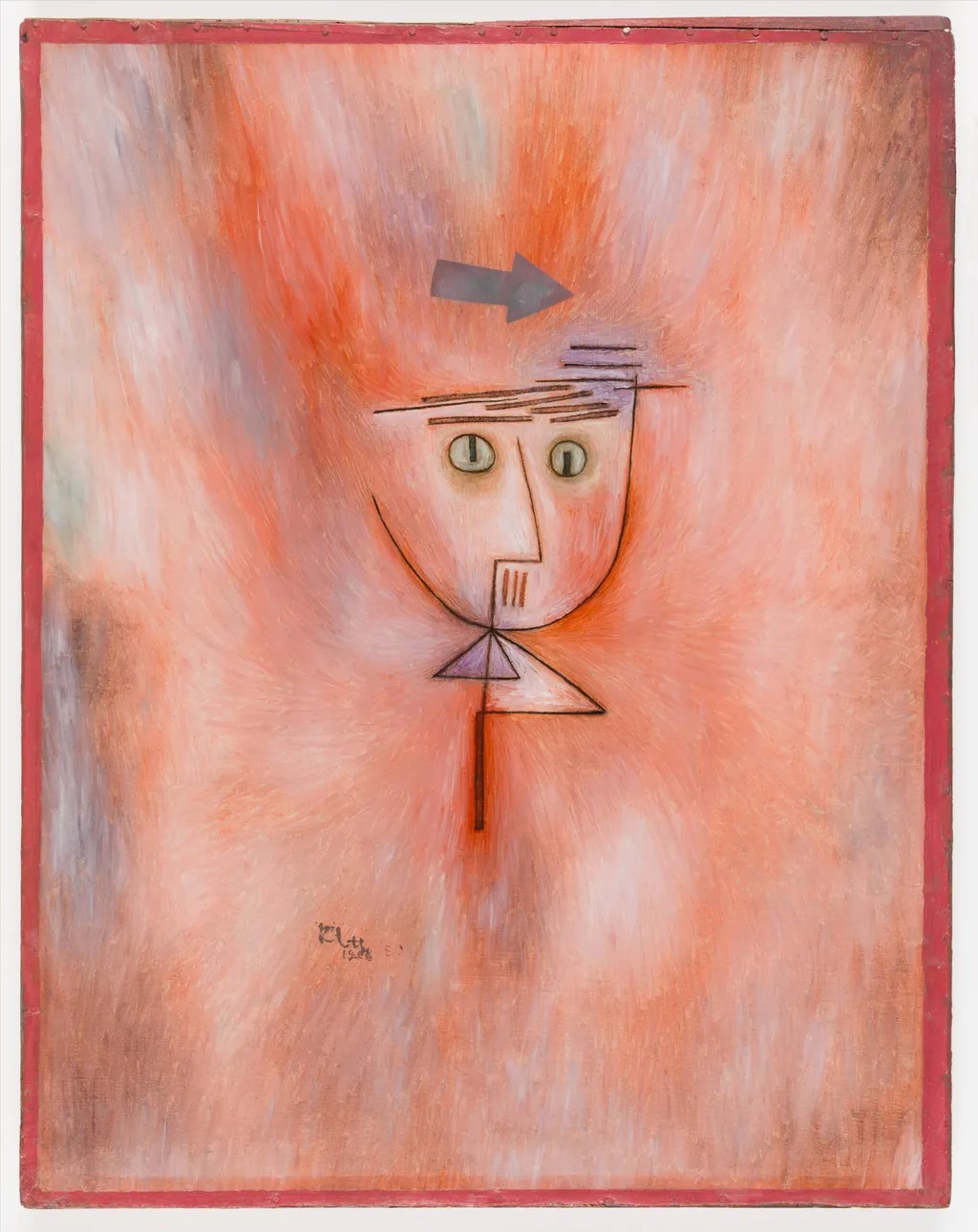
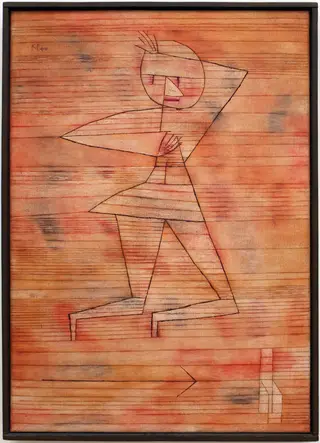
Nearly Hit is an oil painting by the Bauhaus artist Paul Klee. It dates from 1928 and is held in the collection of the San Francisco Museum of Modern Art.
About this work
Overview
Paul Klee, a Swiss artist active in Germany during the 1920s, produced Nearly Hit in 1928 as part of his tenure at the Bauhaus.
Paul Klee, a Swiss artist active in Germany during the 1920s, produced Nearly Hit in 1928 as part of his tenure at the Bauhaus. Executed in oil paint on canvas, the work reflects his sustained interest in abstracted form and chromatic harmony. It resides in the collection of the San Francisco Museum of Modern Art, where it contributes to broader discussions of modernist experimentation in interwar Europe.
Subject & Meaning
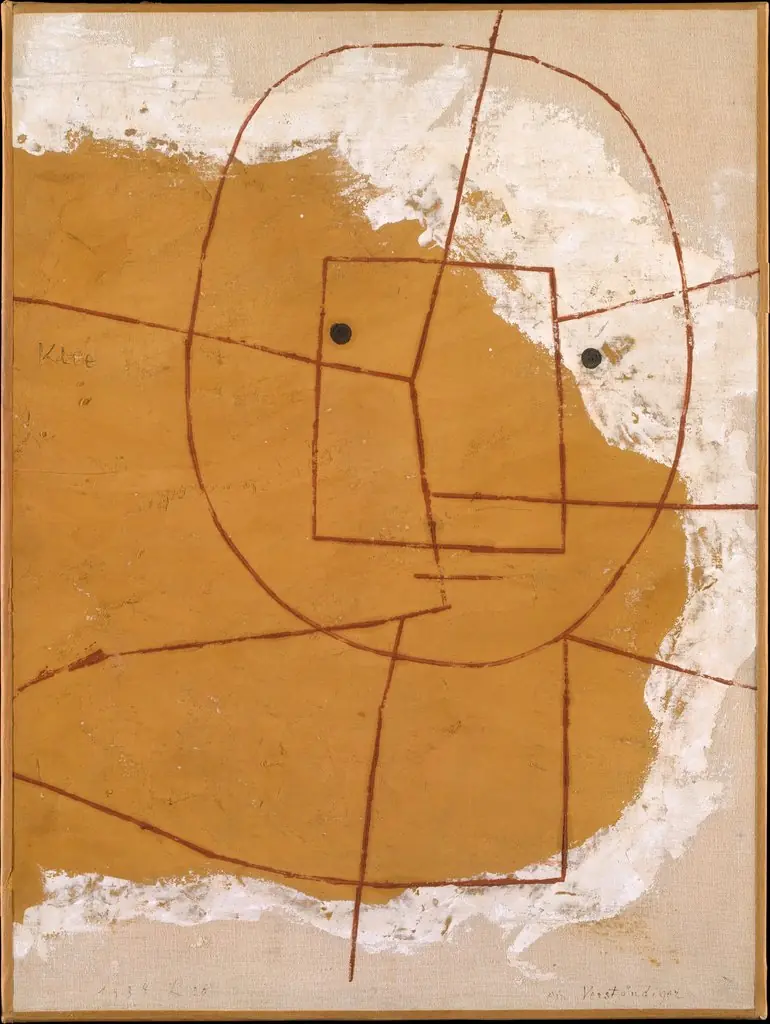
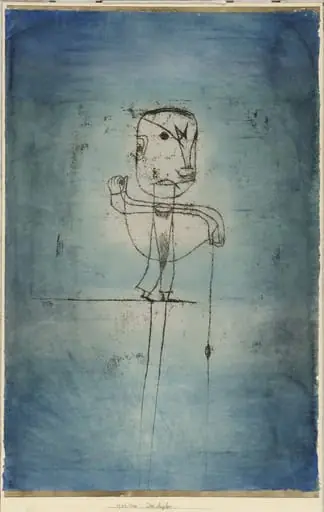
The painting presents a simplified, mask-like face with exaggerated features: a broad head, slender neck, and prominent nasal and oral forms. Two circular eyes suggest introspection, while a dark arrow piercing the upper skull introduces an element of disruption. The face does not depict a specific person but evokes psychological stillness punctuated by an unseen force, inviting interpretation as a metaphor for vulnerability or sudden awareness.
Technique & Style
Klee employed restrained hues, muted ochres, grays, and soft peach tones, to construct a tranquil atmosphere. Forms are reduced to geometric essentials: circles for eyes, arcs for the mouth, and straight lines for the arrow. The brushwork is deliberate yet unobtrusive, emphasizing flat planes over modeling. This approach aligns with his Bauhaus-era focus on structure, symbolism, and the emotional potential of color relationships.
History & Provenance
Created during Klee’s time teaching at the Bauhaus in Dessau, Nearly Hit emerged from a period of intense theoretical exploration into visual language. It entered the San Francisco Museum of Modern Art’s collection in the mid-20th century, following the dispersal of European modernist works after World War II. Its presence in the museum underscores the institution’s early commitment to European avant-garde traditions.
Context
In the late 1920s, Klee was synthesizing influences from Expressionism, Cubism, and childlike drawing into a personal visual grammar. His engagement with color theory, particularly through Goethe’s writings, informed his use of subtle tonal shifts. Nearly Hit reflects this synthesis, situated within a broader artistic climate where abstraction was being used to explore inner states rather than external reality.
Legacy
The painting exemplifies Klee’s enduring influence on postwar abstraction, particularly in how he merged symbolic content with formal discipline. Its quiet intensity and restrained palette have resonated with later artists exploring psychological depth through minimal means. Though not widely exhibited, it remains a key example of his ability to convey complex emotion through understated visual elements.
Own this work as a print
Artist & collection
Artist
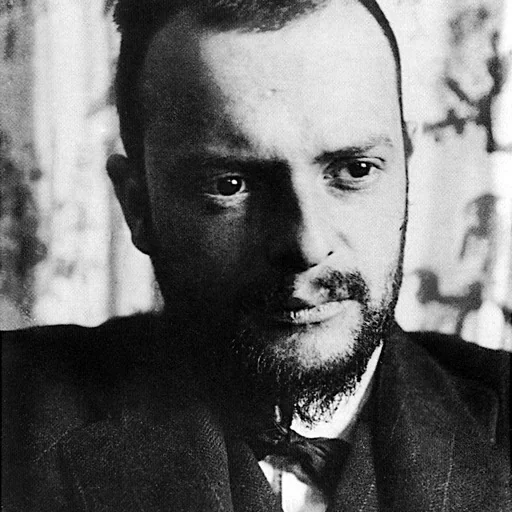
Paul Klee (German:; 18 December 1879 – 29 June 1940) was a Swiss-born German artist.