Artwork
Allegory of the Month of March
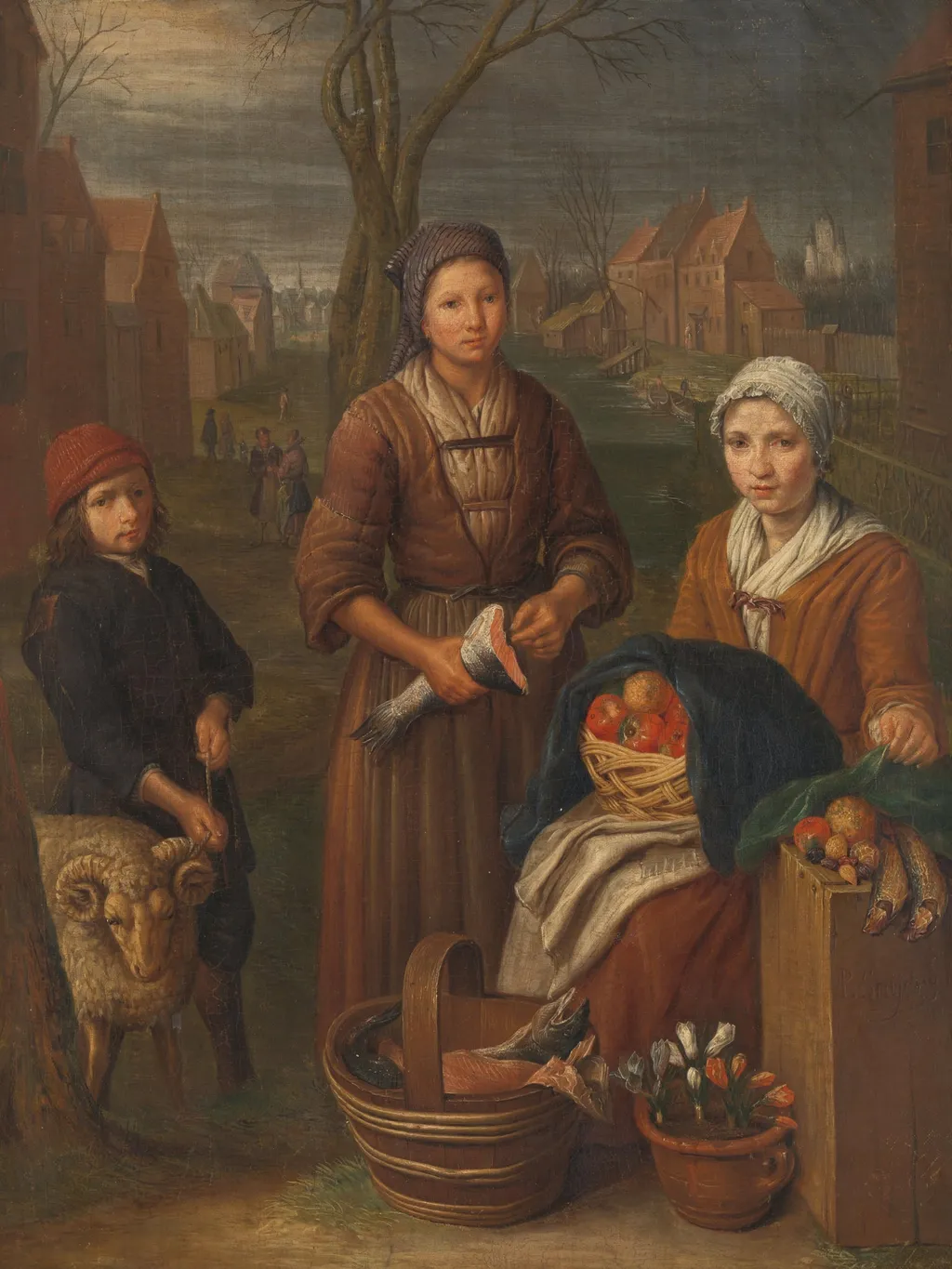
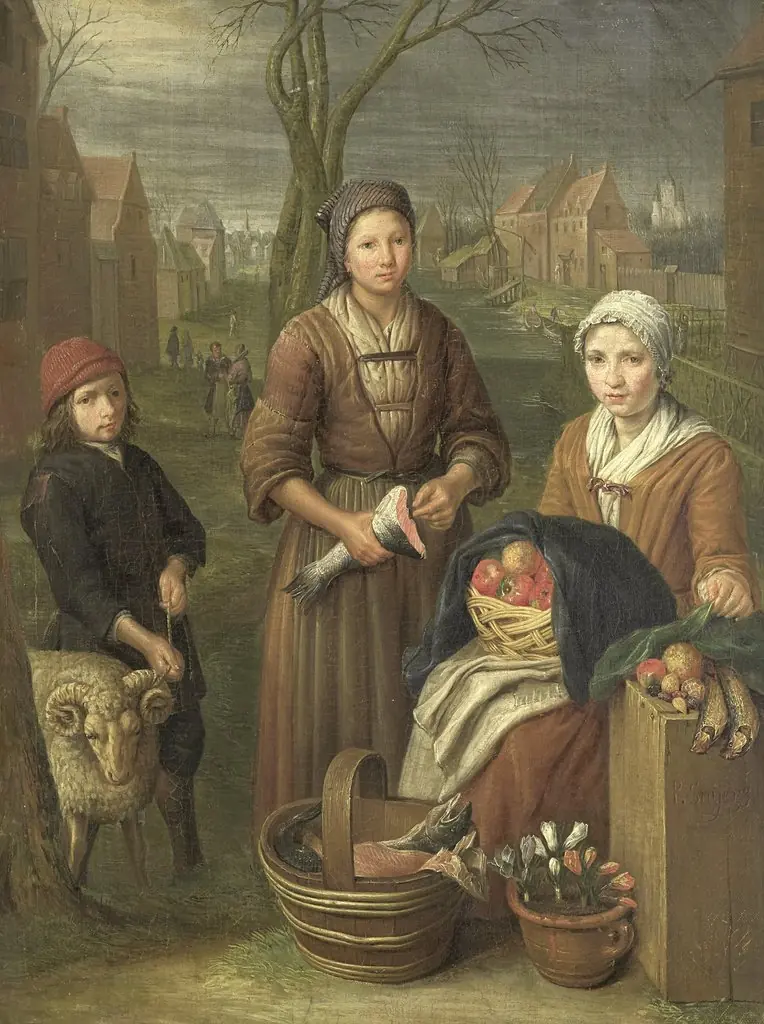
Allegory of the Month of March is an unspecified painting by the Rococo painting artist Peeter Snijers. It dates from 1730 and is held in the collection of the Rijksmuseum. The work portrays a modest village lane populated by three figures engaged in everyday tasks.
About this work
Subject & Meaning
This work belongs to a twelve-part series regarded as the artist's masterpiece, with each painting personifying a specific month of the year.
This work belongs to a twelve-part series regarded as the artist's masterpiece, with each painting personifying a specific month of the year. The iconography integrates genre scenes with astrological symbolism, depicting the designated month alongside its corresponding zodiac sign. While specific visual details for March are not enumerated in the available records, the series' methodology is illustrated by the depiction of January, which combines seasonal activities like Epiphany singing with a figure pouring water to represent Aquarius.
Consequently, the Allegory of the Month of March functions as both a calendar representation and a symbolic embodiment of the astrological forces governing that period.
Technique & Style
The painting is executed on canvas using oil pigments, characteristic of 18th-century Flemish genre painting. The work depicts a winter scene with symbolic elements including three Epiphany singers, children with winter cakes, and a man pouring water representing Aquarius. It belongs to a series of twelve monthly allegories, each incorporating astrological symbols associated with the respective month.
The composition features a profusion of small, carefully arranged objects typical of Snyers' still-life approach, blending genre narrative with seasonal personification.
History & Provenance
Allegory of the Month of March was created by Flemish artist Pieter Snyers (also known as Peeter Snijers or Peter Snijers) around 1730 as part of a twelve-painting series depicting the months of the year, which he regarded as his masterpiece and kept in his Antwerp studio throughout his life. The work remained in Snyers' collection until 1763, when the entire series was auctioned off; two paintings from the series, including the March allegory, were later sold at Christie's New York in 1998 (lot 3), and a reduced copy of the March painting is held in the Rijksmuseum, Amsterdam. The series, which includes representations of the months through their astrological signs, may have influenced Pieter Casteels III and Jacob van Huysum to create similar series.
Snyers painted the January work in the Royal Museum of Fine Arts, Antwerp, showing Epiphany singers and symbols of Aquarius, reflecting the seasonal and astrological themes of the series. He was born in Antwerp in 1681, studied under Alexander van Bredael, became a master of the Antwerp Guild of Saint Luke in 1707, lived in London from 1720 to 1726, and died in Antwerp in 1752, leaving a significant estate that included a large collection of artworks.
The painting remained in Pieter Snyers's studio during his lifetime and was dispersed in 1763 when his twelve-month series was auctioned. The March panel, together with that for December, was offered at Christie's in New York on 29 January 1998 (lot 3). No current holding institution or accession number is identified in the available sources. A reduced copy of the March composition is held by the Rijksmuseum in Amsterdam.
For context within the dispersed series, the January and July panels are in the Royal Museum of Fine Arts in Antwerp, while the April and May panels are in the Royal Museums of Fine Arts of Belgium in Brussels.
Context
Pieter Snyers's series of twelve paintings representing the months of the year is widely regarded by scholars as his artistic masterpiece. These genre paintings, which integrate astrological signs to symbolize each month, demonstrate the artist's versatility across portraiture, still life, and landscape genres. The series remained in Snyers's studio throughout his lifetime and was only dispersed following an auction in 1763.
Art historically, this comprehensive cycle is noted for potentially inspiring later series by Pieter Casteels III and Jacob van Huysum. While the original painting for March was sold at Christie's in New York in 1998, a reduced copy currently resides in the Rijksmuseum in Amsterdam. The work exemplifies Snyers's reputation as a devout painter who never repeated a composition, securing his status within the Flemish tradition of the early eighteenth century.
Overview
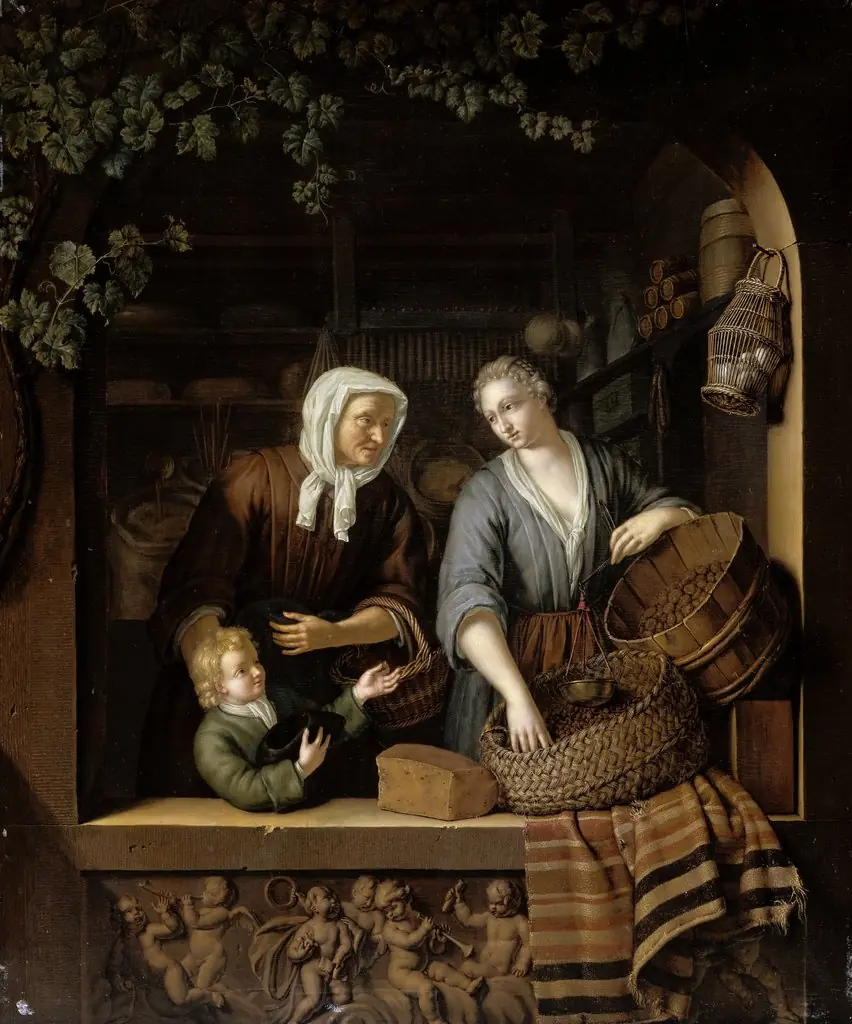
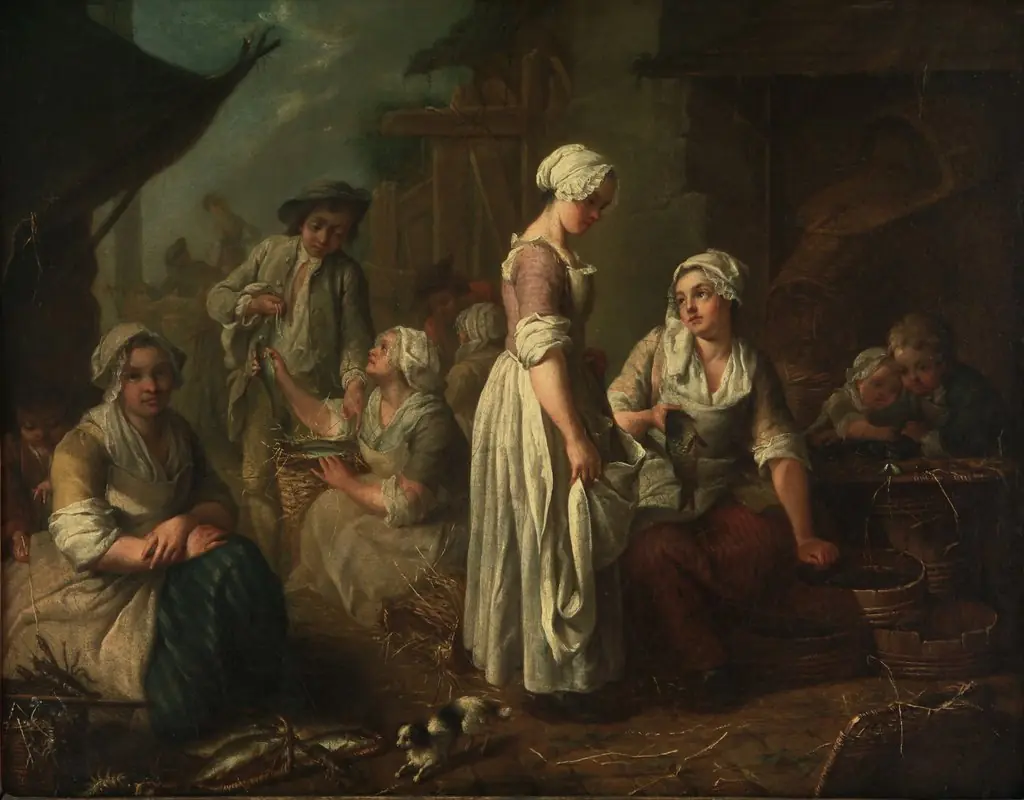
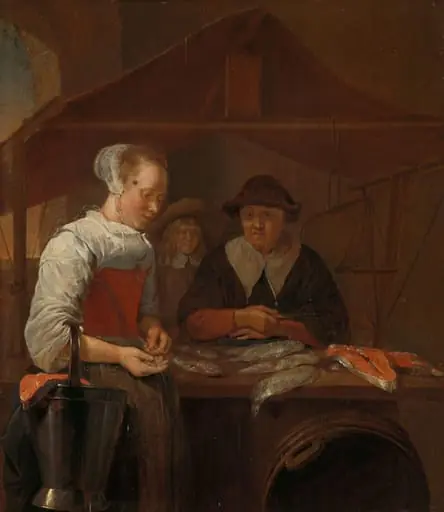
The work portrays a modest village lane populated by three figures engaged in everyday tasks. To the left a boy leads a ram, at the centre a young woman holds a freshly caught fish, while a seated vendor cradles a basket of apples on her lap. A nearby crate bears herring and assorted fruit, accompanied by a pot of crocuses and a bucket of fish, suggesting a snapshot of rural life.
Own this work as a print
Artist & collection
Artist
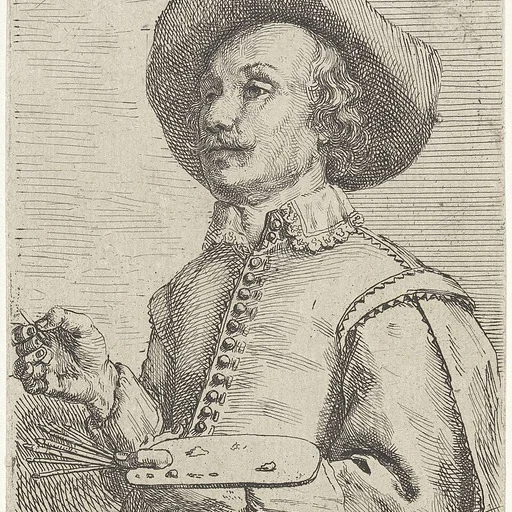
Pieter Snyers or Peter Snijers (first name also written as: 'Peeter' and nickname 'De Heilige' or 'The Holy One') (30 March 1681 – 4 May 1752) was a Flemish art collector, painter, draughtsman and engraver.