Artwork
Achilles among the Daughters of Lycomedes
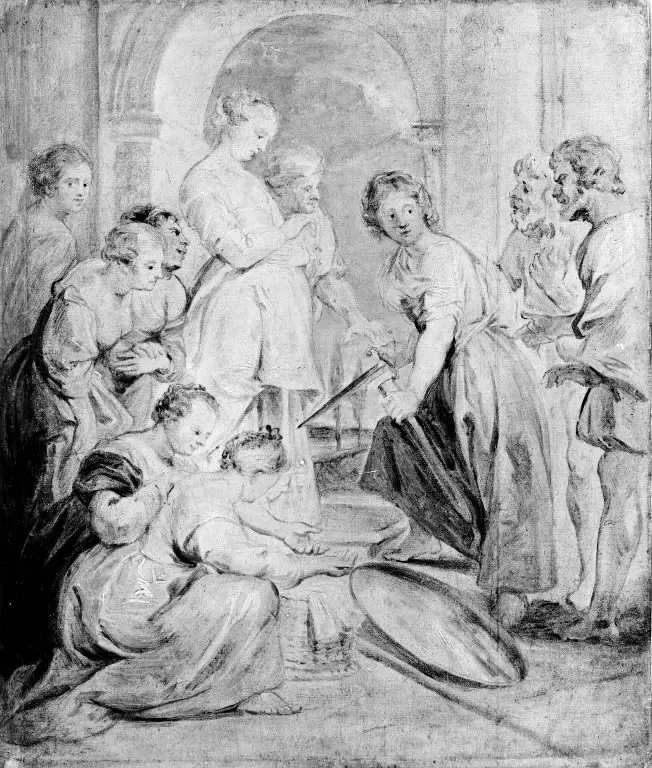
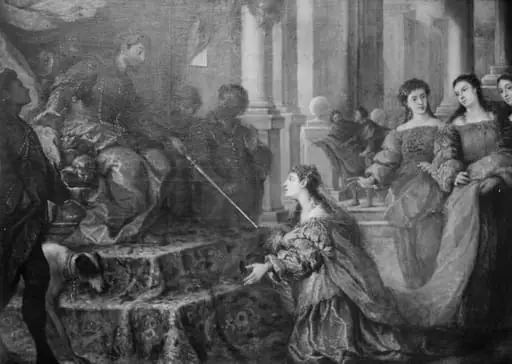
Achilles among the Daughters of Lycomedes is an unspecified painting by the Flemish Baroque painting artist Peter Paul Rubens. It dates from 1617 and is held in the collection of the Statens Museum for Kunst.
About this work
Subject & Meaning
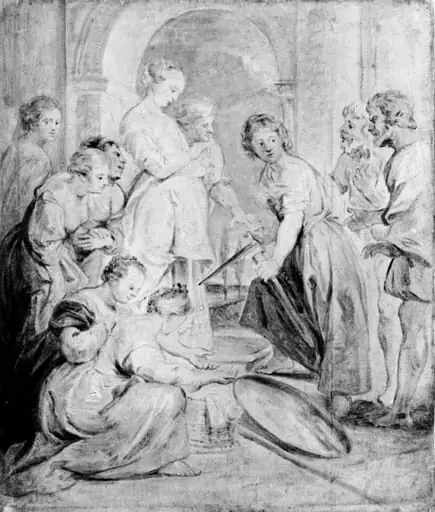
This mythological painting depicts the narrative of Achilles on Skyros, a story from Greek mythology concerning the hero's concealment among the daughters of King Lycomedes. Created by Peter Paul Rubens in 1617, the work illustrates the specific episode where Achilles, disguised as a woman to avoid the Trojan War, is ultimately revealed. The composition focuses on the main subject of Achilles within the royal court of Lycomedes, capturing the moment of his discovery or the surrounding intrigue of his disguise.
As a mythological genre piece, the artwork represents the classical themes of deception, destiny, and the transition of the young hero from a hidden existence to his destined role in the Trojan War.
History & Provenance
The painting was created in 1617 by Peter Paul Rubens as a mythological work depicting Achilles concealed among the daughters of Lycomedes.
The painting was created in 1617 by Peter Paul Rubens as a mythological work depicting Achilles concealed among the daughters of Lycomedes. It was commissioned for an unknown patron and has remained in the collection of the Statens Museum for Kunst since its creation. The work measures 348.0 cm in height and 294.0 cm in width. It is classified as a mythological painting and belongs to the genre of mythological painting.
The painting was acquired directly by the Statens Museum for Kunst upon its completion and has been part of its permanent collection without documented resale or transfer.
The painting Achilles among the Daughters of Lycomedes is held in the collection of the Statens Museum for Kunst, where it is listed under inventory number 1850. It was first exhibited at the Salon de Paris in 1810 and later featured in a Rubens retrospective at the Musée du Louvre in 1953.
Overview
Created in 1617 by the Flemish painter Peter Paul Rubens, this oil work portrays the Greek hero Achilles concealed among the daughters of King Lycomedes. Executed during the height of the Flemish Baroque, the composition combines a mythological narrative with the dramatic visual language favored by the Counter‑Reformation. The painting is part of the permanent collection of the Statens Museum for Kunst in Copenhagen.
Technique & Style
Rubens employs the vigorous movement and rich coloration characteristic of Baroque painting, yet the treatment of figures retains a sketch‑like spontaneity. Faces and hands are rendered with loose, gestural strokes, giving the tableau a sense of immediacy. The chiaroscuro of the dim interior, highlighted by the fire’s glow, creates depth while the soft, slightly blurred features convey a lively, unfinished quality that invites the viewer’s imagination.
Artist & collection
Artist
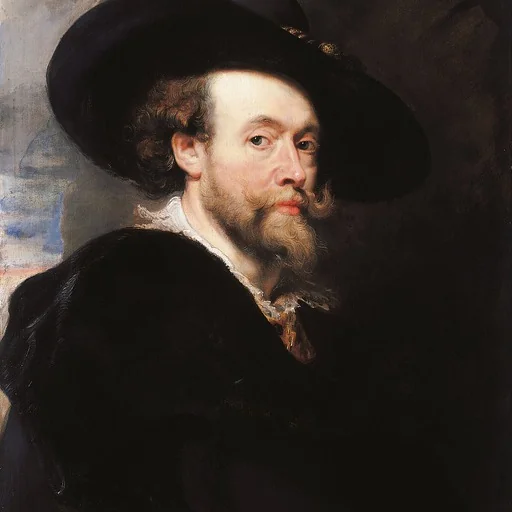
Sir Peter Paul Rubens ( ROO-bənz; Dutch:; 28 June 1577 – 30 May 1640) was a Flemish artist and diplomat.

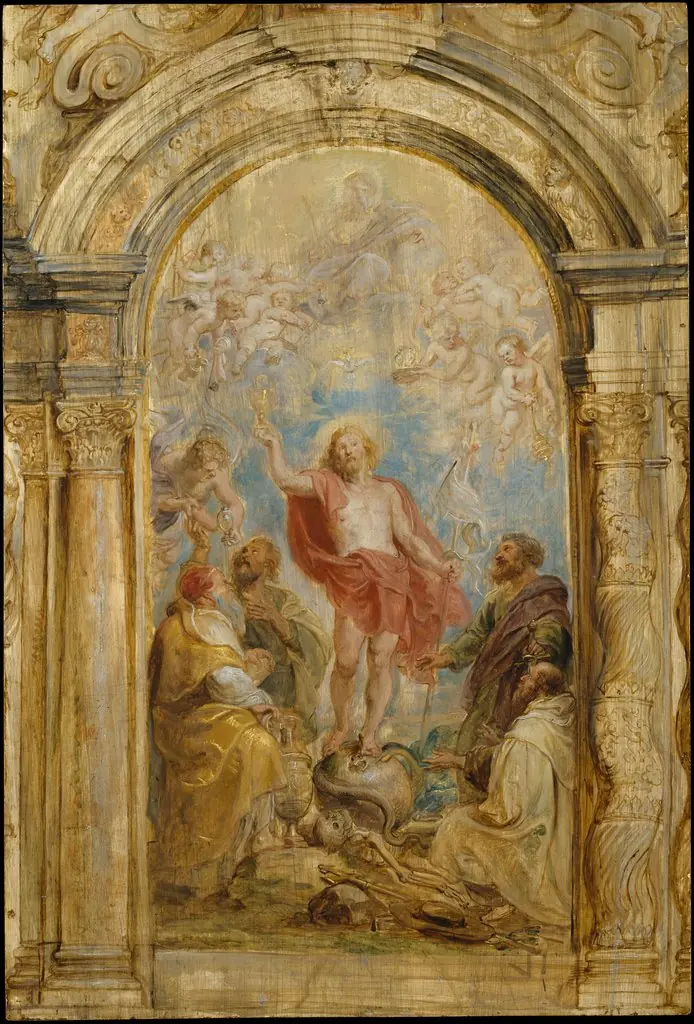
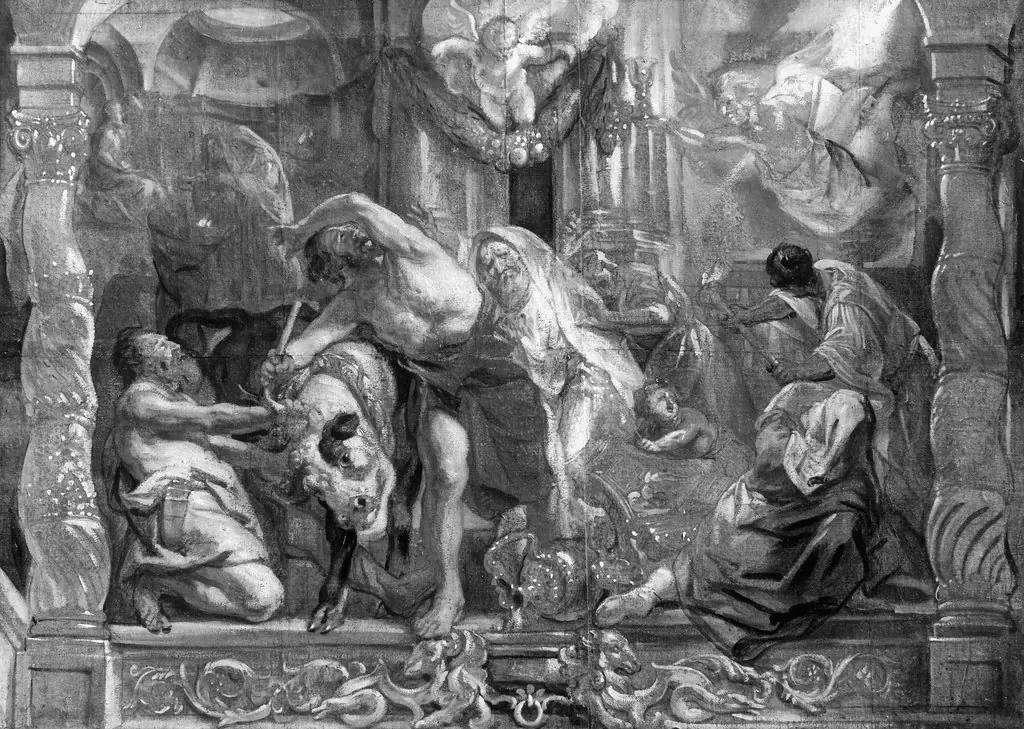 Triumph of the Lord's Supper over the bloody sacrifice of paganism
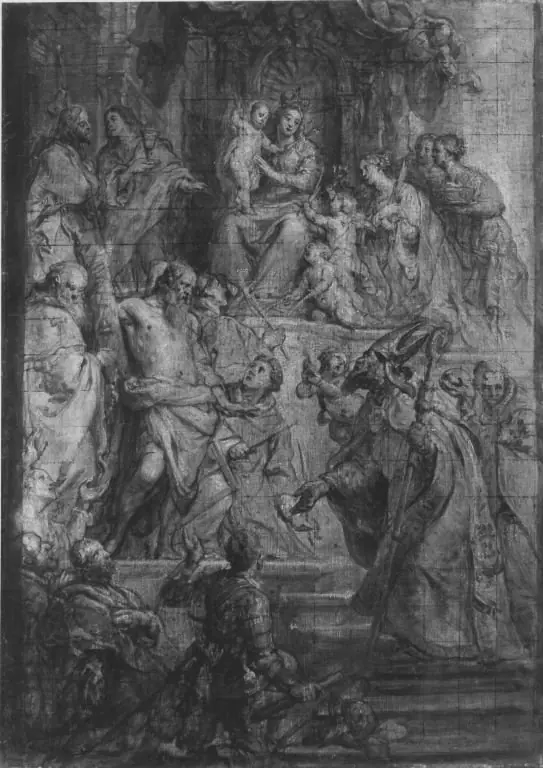 Verehrung Mariae durch Heilige
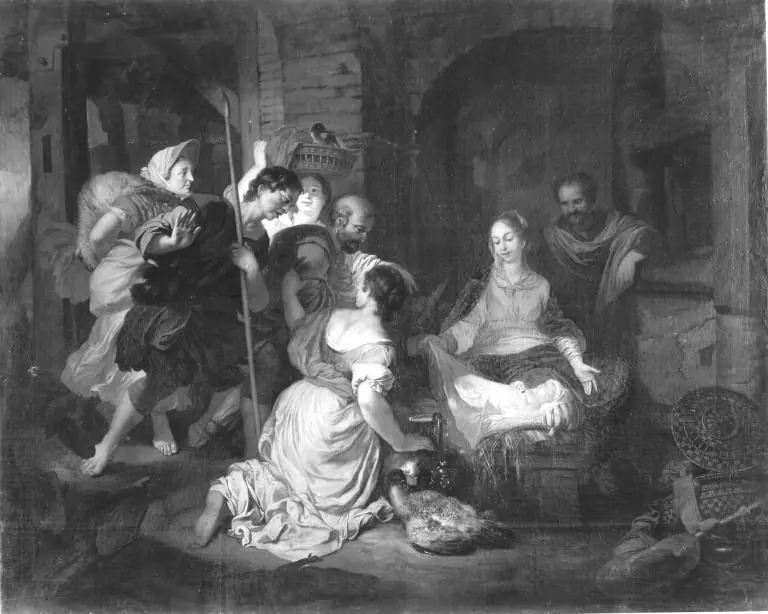 Anbetung der Hirten (?)
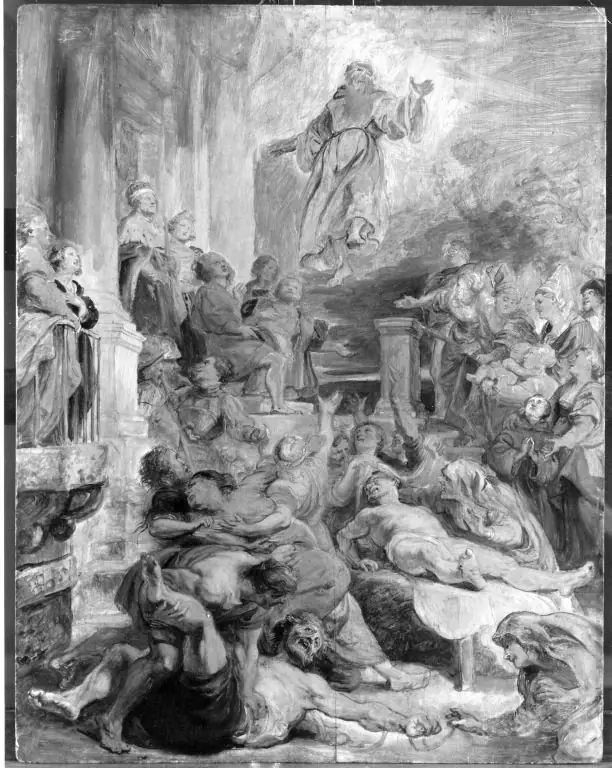 Miracles of St. Francis of Paola (Sketch)
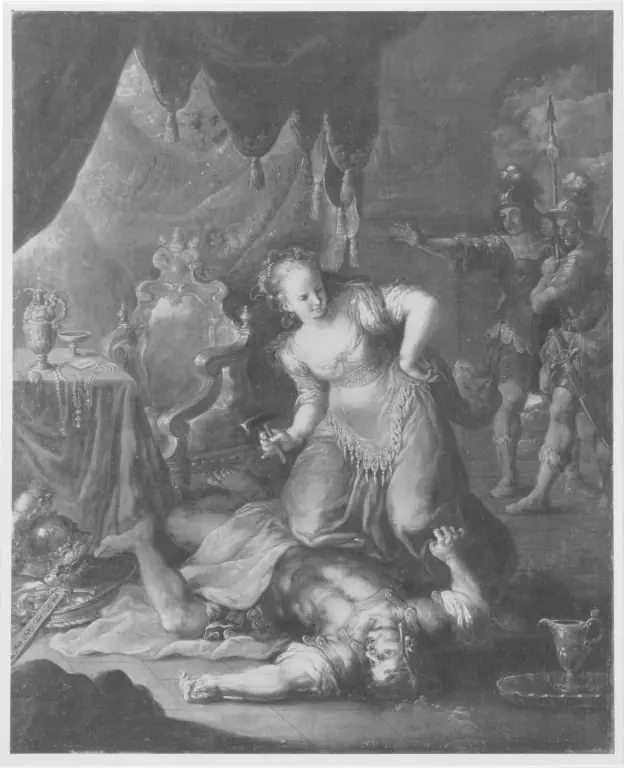 Jael und Sisera
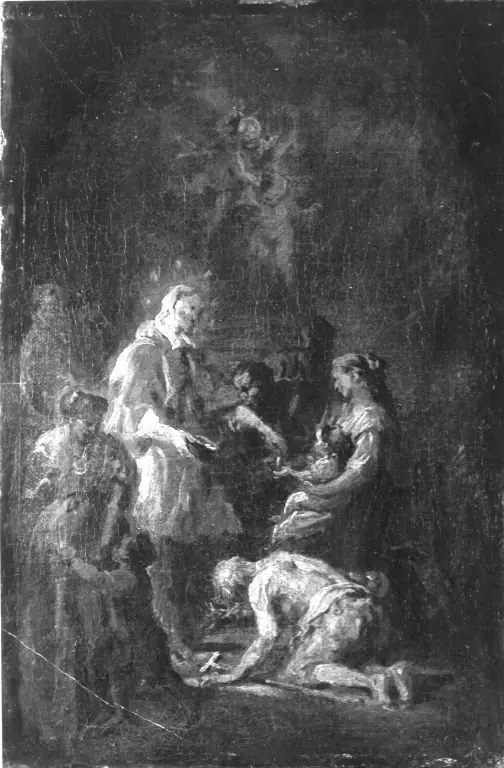 Der hl. Nepomuk Almosen spendend
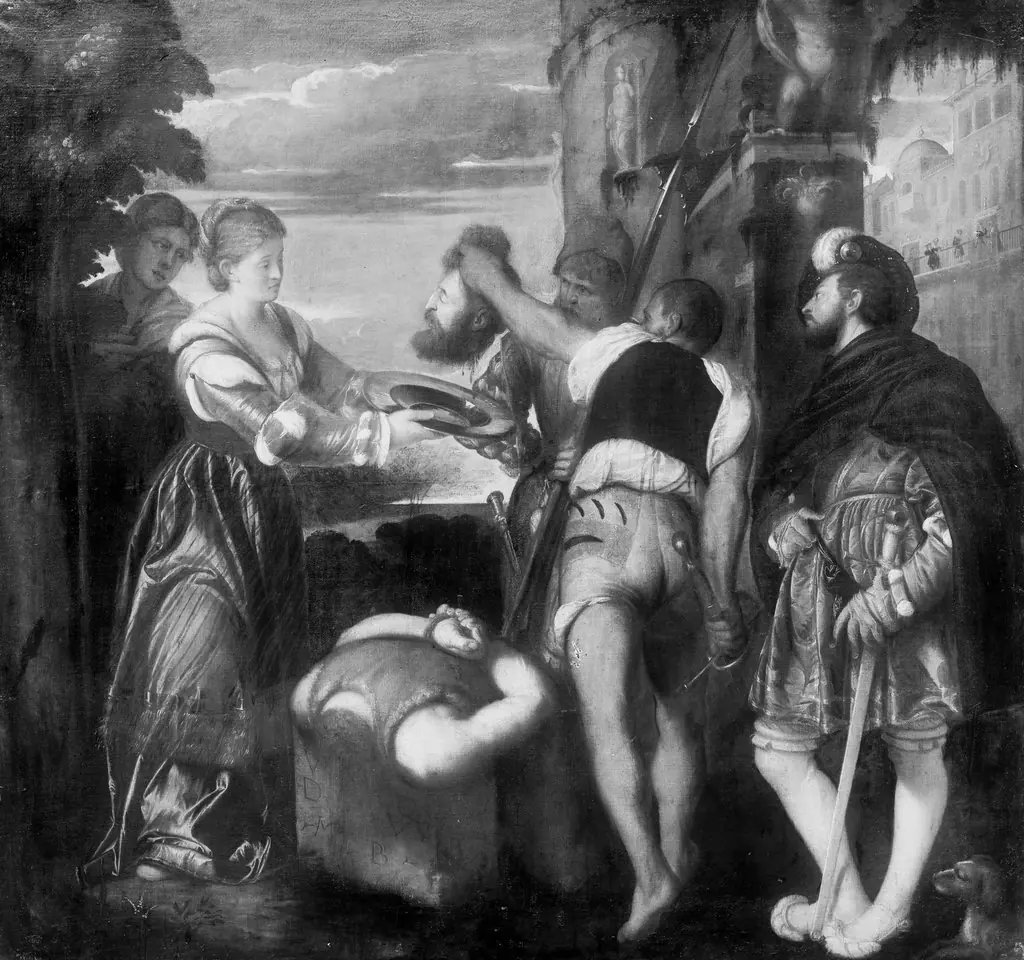 Beheading of John the Baptist
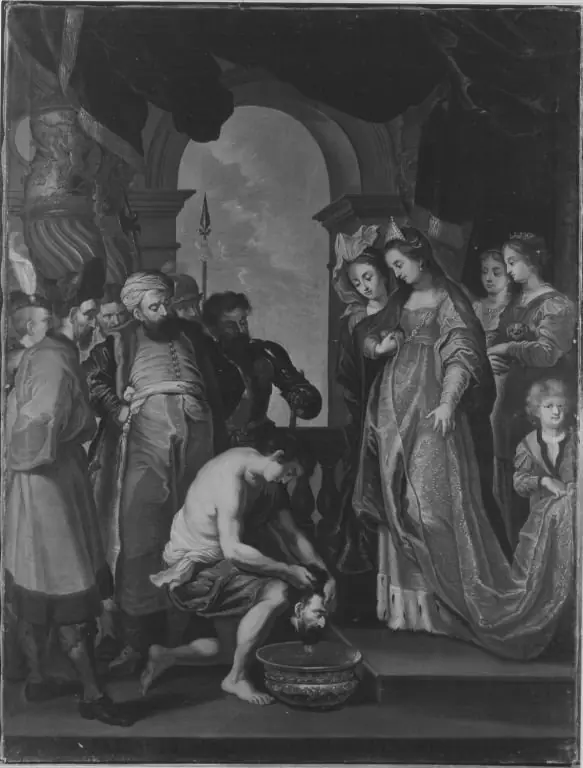 Tomyris with the head of Cyrus (after the engraving by Paulus Pontius)
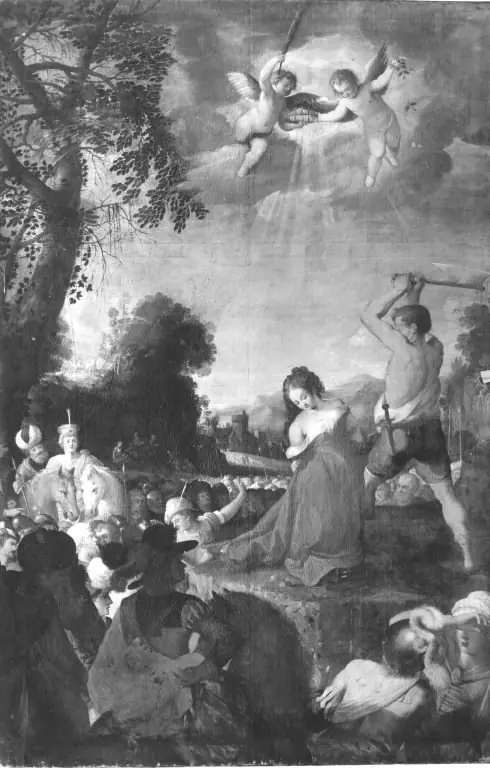 Enthauptung der hl. Katharina (?)
 Esther Kneeling before Ahasverus