Artwork
Equestrian portrait of Mary de' Medici (1575-1642) and the triumph at Julich
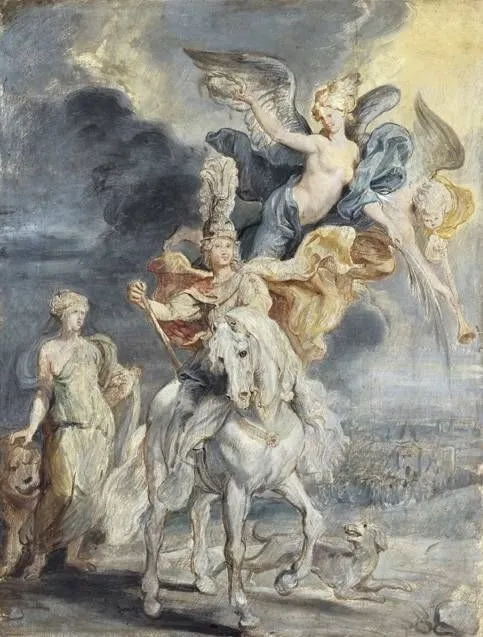
Equestrian portrait of Mary de' Medici (1575-1642) and the triumph at Julich is an oil painting by the Flemish Baroque painting artist Peter Paul Rubens. It dates from 1622 and is held in the collection of the Bavarian State Painting Collections.
About this work
Subject & Meaning
The composition centers on the historical figure of Marie de' Medici, utilizing the traditional iconography of the mounted sovereign to convey authority.
The painting depicts Marie de' Medici mounted on a horse, presenting her as a triumphant ruler. Created in 1622, the work functions as an equestrian portrait that visually asserts the subject's power and status. The composition centers on the historical figure of Marie de' Medici, utilizing the traditional iconography of the mounted sovereign to convey authority.
By portraying her in this specific manner, the artwork represents her political significance and the celebration of her achievements.
Technique & Style
Created in 1622, the Equestrian portrait of Mary de' Medici and the triumph at Julich is an oil painting executed on a panel support. The work measures 64.8 cm in height and 50 cm in width. As an equestrian portrait by Peter Paul Rubens, it depicts Marie de' Medici mounted on a horse, utilizing the medium of oil paint to render the figure and the triumphal scene.
The painting is currently held within the collection of the Bavarian State Painting Collections at the Alte Pinakothek.
History & Provenance
Commissioned as part of a larger cycle, this equestrian portrait of Marie de' Medici was executed by Peter Paul Rubens in 1622. The work depicts the queen alongside a representation of the triumph at Jülich, rendered in oil paint on a wooden panel. Following its creation, the painting entered the holdings of the Bavarian State Painting Collections.
It is currently preserved and displayed within the Alte Pinakothek in Munich, where it remains a significant example of Rubens' portraiture from the early seventeenth century.
The Equestrian portrait of Mary de' Medici and the triumph at Julich is held by the Bavarian State Painting Collections. Within this institution, the work is located at the Alte Pinakothek in Munich. The painting was created in 1622 and is executed in oil on panel, measuring 64.8 cm in height and 50 cm in width.
The provided sources do not contain specific details regarding an inventory number, accession date, or a history of exhibitions for this artwork.
Overview
Created in 1622 by the Flemish painter Peter Paul Rubens, this oil on canvas presents a dynamic equestrian portrait of Marie de’ Medici. The composition places the queen on a white horse against a turbulent sky, while a winged figure bearing a crown hovers above and a attendant with a scroll stands below. The work is housed in Munich’s Alte Pinakothek.
Context
The portrait aligns with the Counter‑Reformation’s artistic agenda, which favored emotionally engaging images that reinforced authority. Rubens, both an artist and a diplomat, used his mastery of Baroque aesthetics to craft a visual assertion of the queen’s power, situating her triumph within a broader narrative of divine right and political restoration.
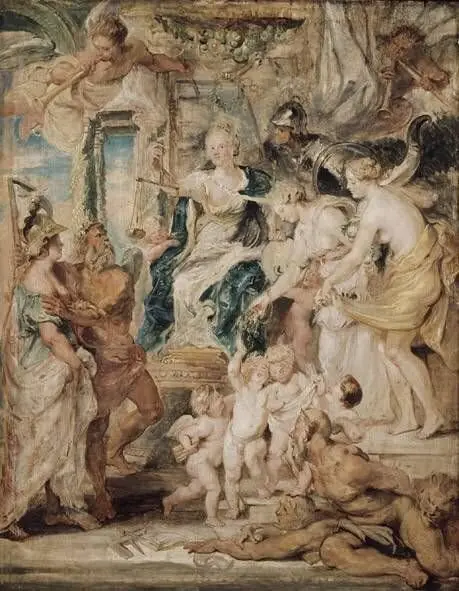
Artist & collection
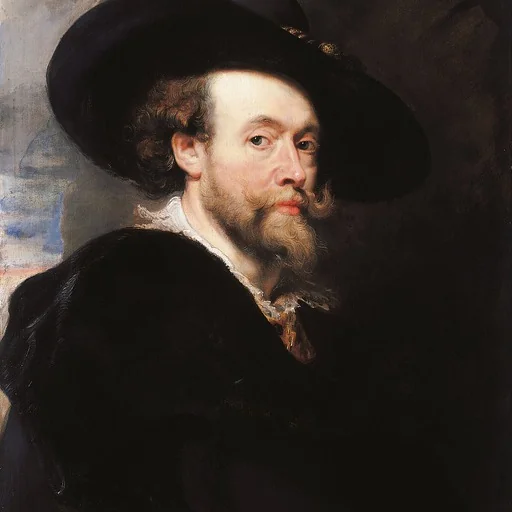
Artist
Sir Peter Paul Rubens ( ROO-bənz; Dutch:; 28 June 1577 – 30 May 1640) was a Flemish artist and diplomat.

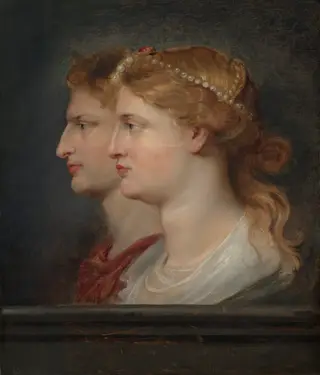
- The Felicity of the Regency
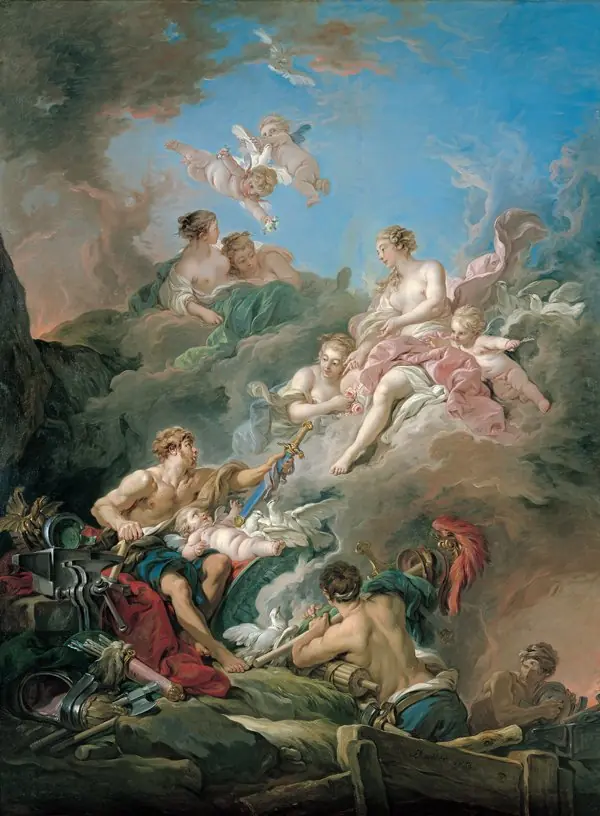 Venus at Vulcan's Forge
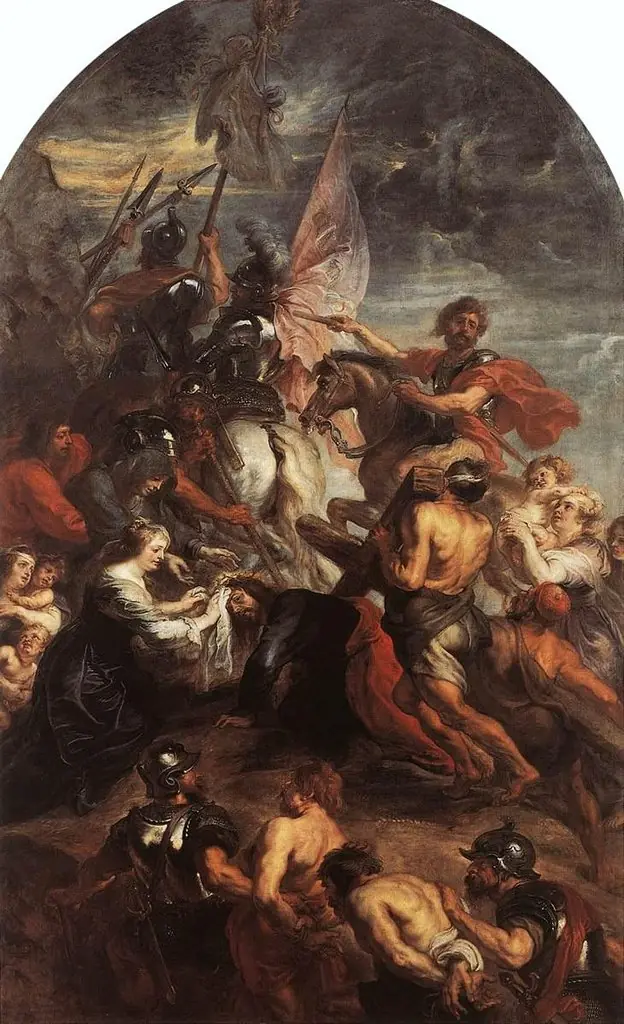 The Road to Calvary
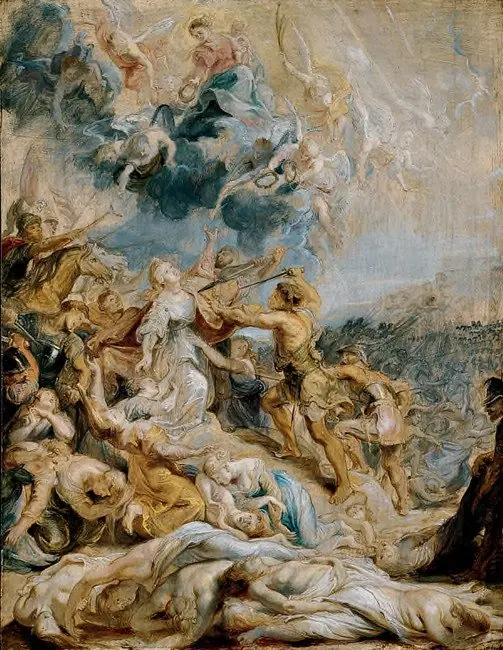 Martyrdom of St. Ursula
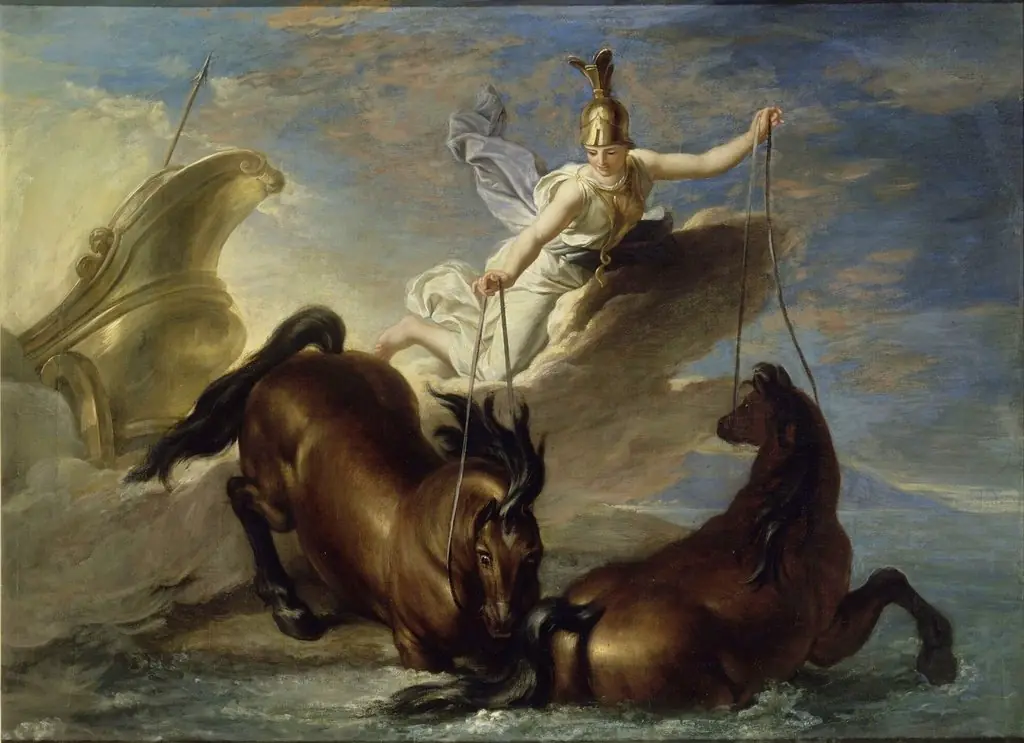 Story of Minerva - Minerva Watering her Horses into the Sea
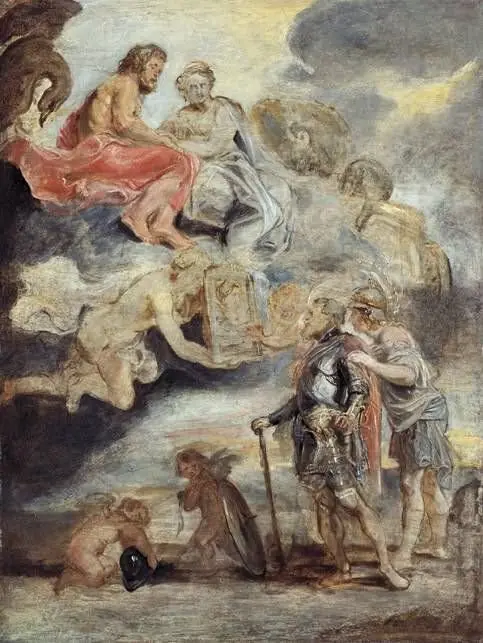 Minerva presents the portrait of Maria de' Medici to King Henry IV of France (sketch)
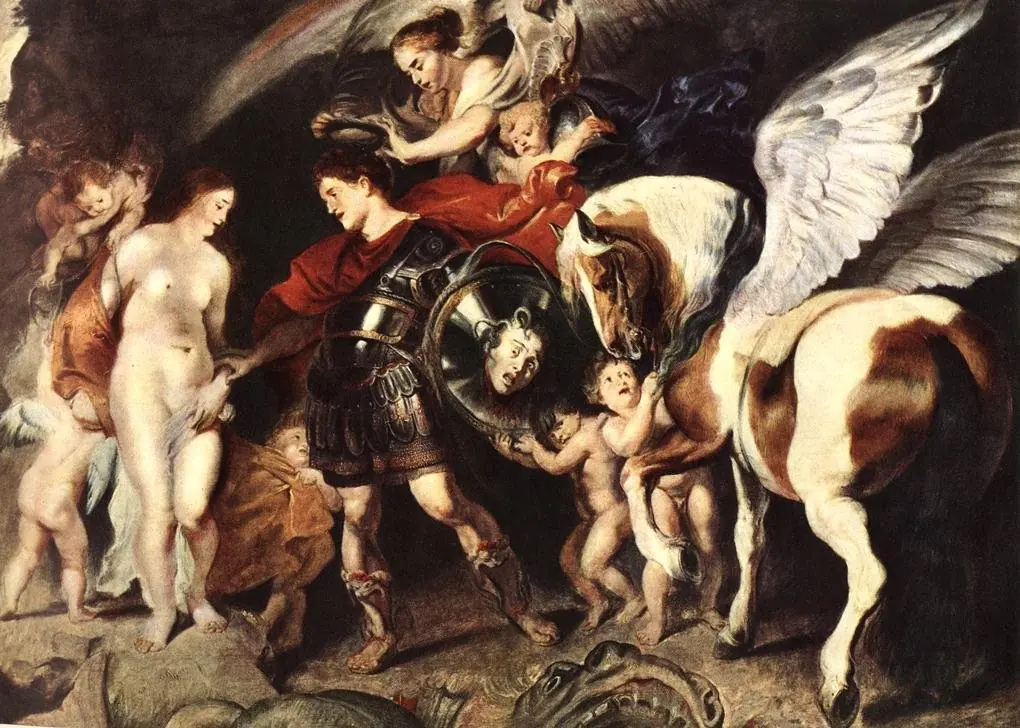 Perseus and Andromeda
 Amfitrita (copie)
 The Triumph of Neptune and Amphitrite
 Triumph of Neptune and Amphitrite
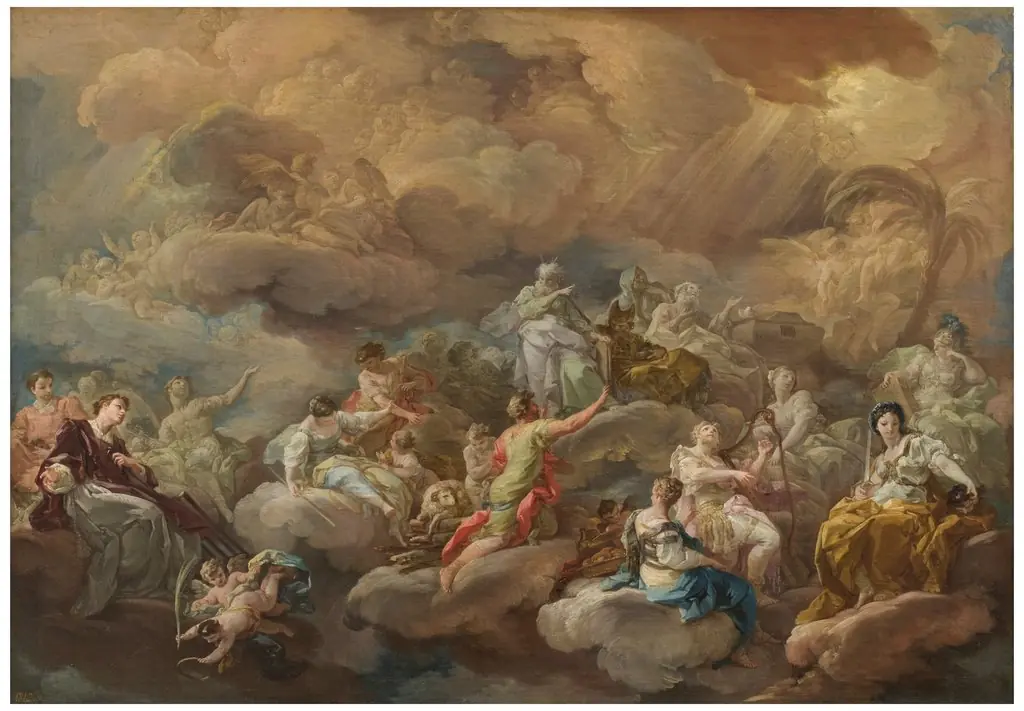 Gloria de santos
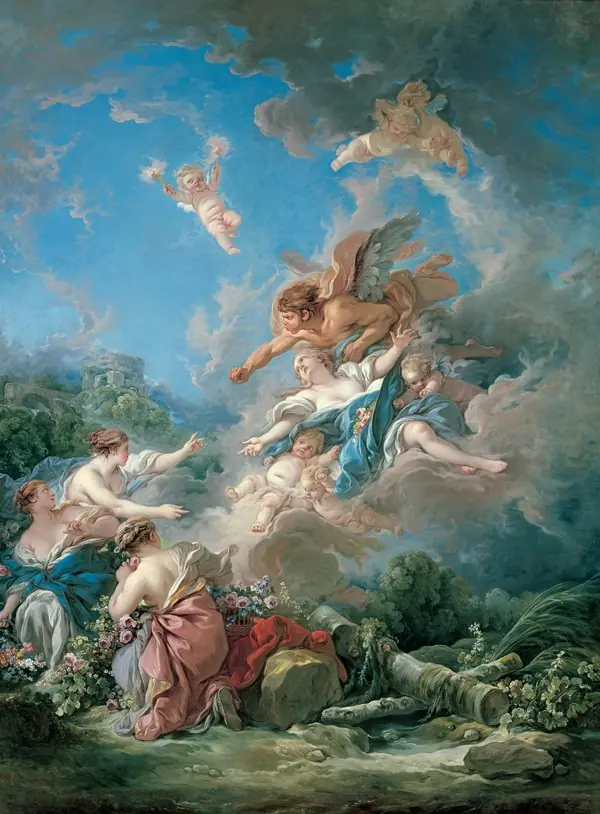 Boreas Abducting Oreithyia