Artwork
Perseus and Andromeda
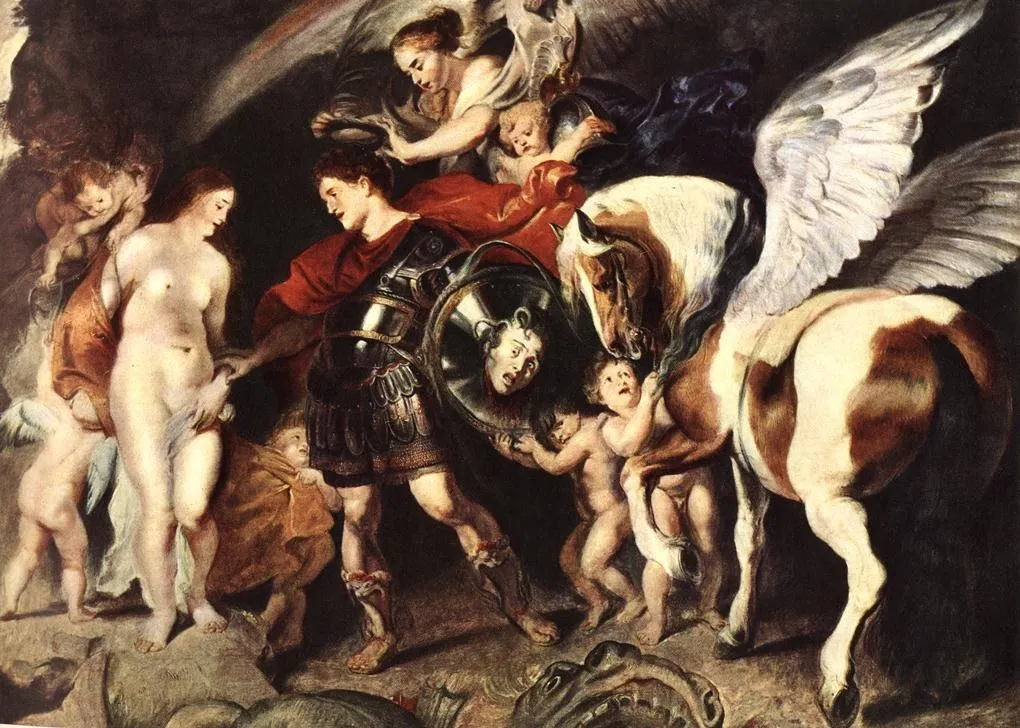
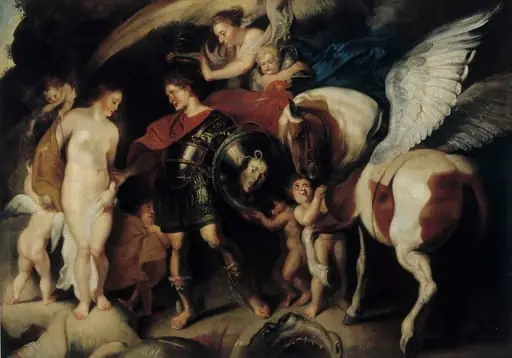
Perseus and Andromeda is an oil painting by the Flemish Baroque painting artist Peter Paul Rubens. It dates from 1622 and is held in the collection of the Hermitage Museum.
About this work
Subject & Meaning
Two additional putti free Andromeda, who is shown nude and modestly covering herself, from the rock to which she was bound; the defeated monster lies below.
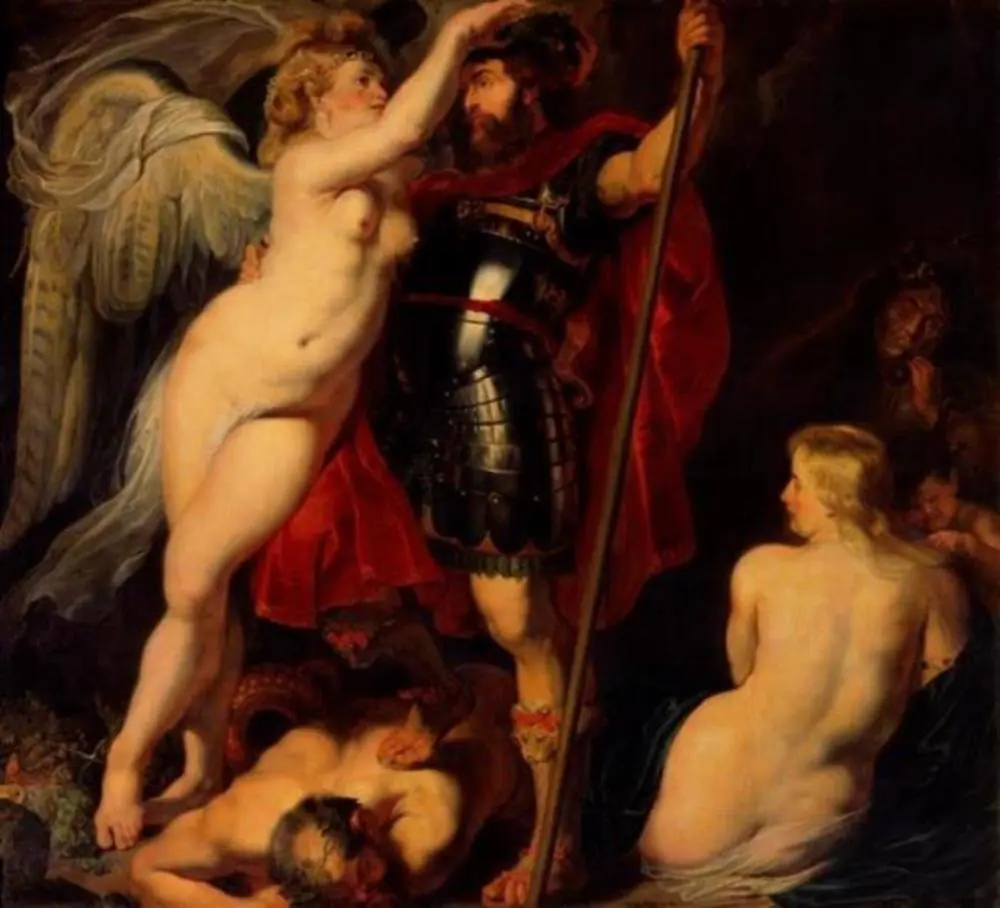
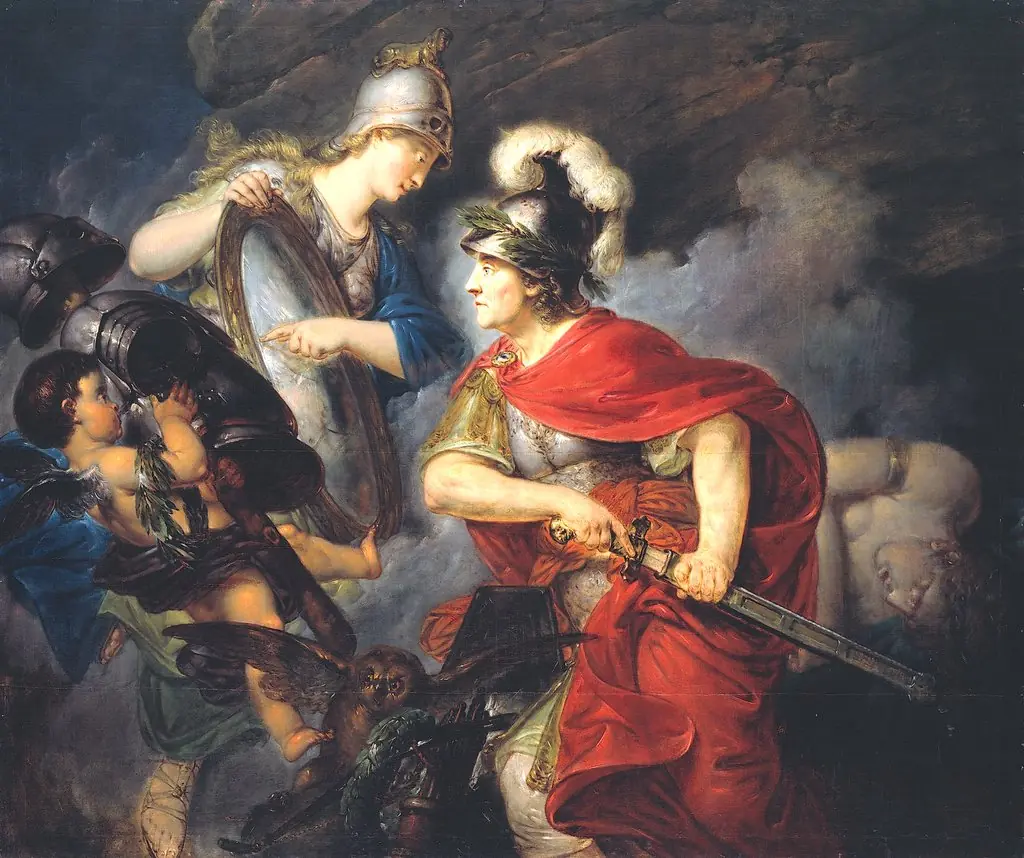
The painting illustrates the moment after Perseus has rescued Andromeda from the sea monster Cetus, drawing from Ovid’s Metamorphoses. Perseus stands centrally in armor, crowned by the winged Victory who places a laurel crown on his head, while he holds a shield bearing the Gorgon’s head. Three putti attend him: one bears the shield, another his helmet, and the third restrains the winged horse Pegasus.
Two additional putti free Andromeda, who is shown nude and modestly covering herself, from the rock to which she was bound; the defeated monster lies below. The composition emphasizes the union of hero and maiden, symbolizing triumph of virtue over chaos and the birth of their love.
Technique & Style
Executed in oil paint, the work is described as oil on canvas although one catalogue notes oil on panel. Measuring roughly 99.5 cm high by 132–139 cm wide, the painting shows Perseus at the centre flanked by three putti who bear his shield, helmet and the winged horse Pegasus, while Victory crowns him above and two putti liberate Andromeda from the rock, with the defeated sea‑monster Cetus below. The composition is lit from the lower left, creating diagonal lines of perspective that link the figures’ gestures and the flowing drapery of Perseus’ purple cape and Victory’s blue robe.
These elements give the picture a Baroque dynamism, dramatic chiaroscuro and a rich, saturated palette typical of Rubens’ mature mythological works.
History & Provenance
Perseus and Andromeda is an oil painting by Peter Paul Rubens dated to 1622, produced in Flanders. The work is documented as certainly later than 1619. The painting is believed to have remained in Rubens' house in Antwerp until his death; an engraving from 1684 depicting the facade of that house shows the painting visible through a second-floor window.
The canvas subsequently surfaced at auction in Amsterdam in 1738. Approximately thirty years later, in 1768, it was acquired in Dresden, and in the summer of 1769 the Hermitage Museum purchased it from the collections of Heinrich von Brühl. It is now displayed in the Rubens Hall on the second floor of the Hermitage Museum in Saint Petersburg.
Perseus and Andromeda, painted by Peter Paul Rubens in 1622, is held by the Hermitage Museum in Saint Petersburg. The painting measures 99.5 by 139 cm and is displayed in the Rubens Hall on the second floor of the museum. The work is believed to have remained in Rubens' house in Antwerp until his death; an 1684 engraving of the house's facade depicts the painting visible through a second-floor window.
The painting was auctioned in Amsterdam in 1738 and subsequently appeared in Dresden thirty years later. In the summer of 1769, the Hermitage Museum acquired the work from the collections of Heinrich von Brühl.
Overview
Peter Paul Rubens's oil painting, "Perseus and Andromeda," created in 1622, depicts a pivotal moment from the ancient Greek myth. This work, executed by the Flemish master, captures the hero Perseus after his triumph over the Gorgon, as he prepares to rescue Andromeda. The canvas is a significant piece within the collection of the Hermitage Museum in Russia, where it is currently displayed.
Artist & collection
Artist
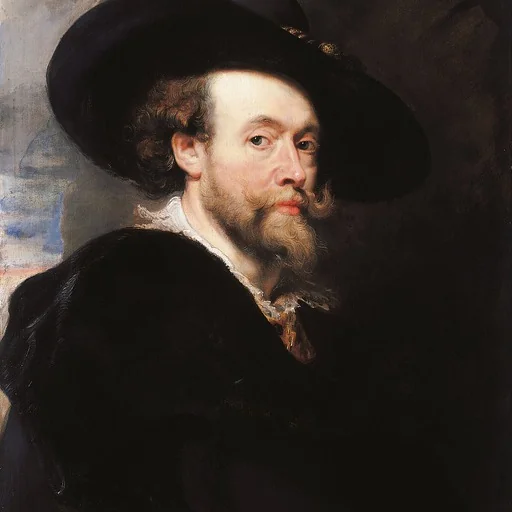
Sir Peter Paul Rubens ( ROO-bənz; Dutch:; 28 June 1577 – 30 May 1640) was a Flemish artist and diplomat.