Artwork
Landscape with a Rainbow
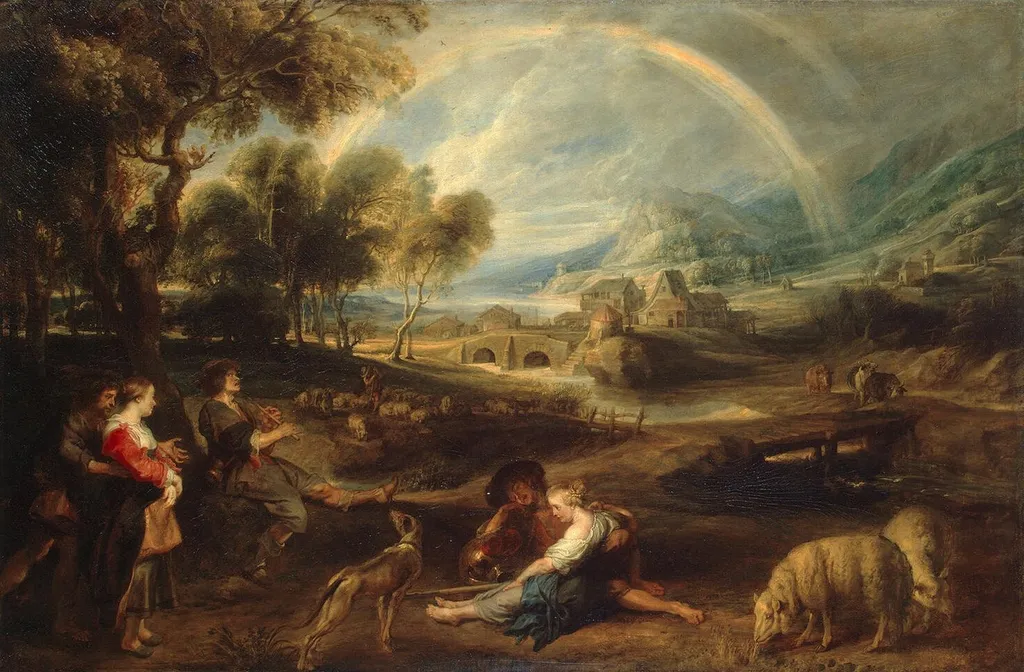
Landscape with a Rainbow is an oil painting by the Flemish Baroque painting artist Peter Paul Rubens. It dates from 1632 and is held in the collection of the Hermitage Museum.
About this work
Overview
The work is celebrated for giving nature the leading role, blending observed scenery with imaginative arrangement to create a lyrical vision of rural harmony.
Landscape with a Rainbow is an oil painting by the Flemish master Peter Paul Rubens, created circa 1636. Measuring 135.6 by 235 centimeters, the work is a sweeping panoramic vision of the countryside surrounding Het Steen, Rubens's country estate located between Brussels and Antwerp. The painting forms a pendant to A View of Het Steen in the Early Morning, with both works painted for the artist's own pleasure to decorate his home. Today, the painting resides in the Wallace Collection in London, separated from its companion piece, which is held by the National Gallery. The work is celebrated for giving nature the leading role, blending observed scenery with imaginative arrangement to create a lyrical vision of rural harmony.
Subject & Meaning
The painting depicts a late summer afternoon on the Het Steen estate, capturing a working landscape where peasants gather harvest, cattle are driven home, and ducks bathe in a stream. A milkmaid carrying a pitcher and women in colorful garments animate the foreground, while a cart piled with hay moves along a rising path. Crowning the composition is a luminous double rainbow that arcs across the cloudy sky, unifying the scene. Beyond its pastoral beauty, the rainbow carries profound spiritual and political symbolism. In the biblical tradition, it signifies God's covenant with humanity after the flood, representing reconciliation and peace following turmoil. For Rubens, who had actively sought to bring peace to the Netherlands through his diplomatic career, this emblem of hoped-for stability over a tranquil Flanders held deeply personal resonance, suggesting that divine grace permeates the ordinary rhythms of country life.
Technique & Style
Executed in oil on an oak panel, the painting demonstrates Rubens's sophisticated handling of paint and composition. The palette relies on earthy browns and olive greens, punctuated by touches of orange and blue in the sky and the vivid red, blue, and white accents of the women's garments. Rubens uses smooth blending to render the atmospheric sky, while applying looser, more textured strokes for the foliage and figures. Light breaks through the stormy clouds, illuminating parts of the landscape and casting long shadows that suggest the day's end, while leaving the left foreground in deep shadow. The composition unfolds horizontally, guided by a gentle diagonal paralleling the road and stream. Overlapping planes create a powerful sense of depth, opening into a wide panorama dotted with villages and leading to a soft blue horizon. The rainbow itself is painted with subtle gradations of color, appearing as a mist of light rather than a hard band, a significant technical achievement in capturing a fleeting atmospheric phenomenon.
History & Provenance
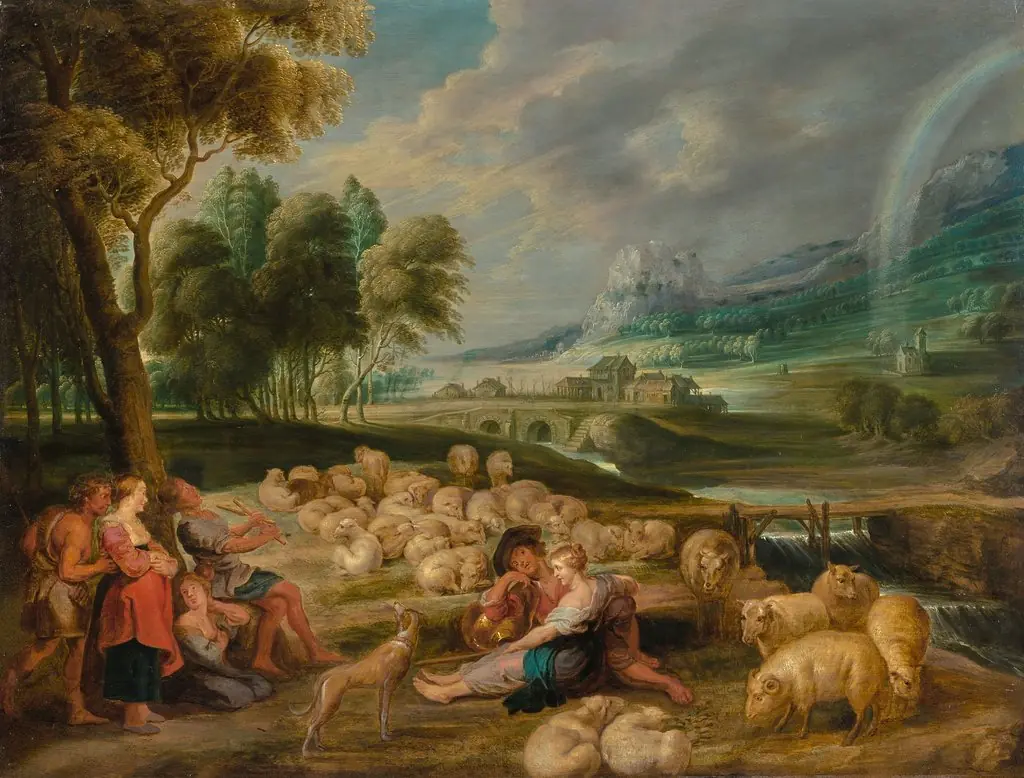
Rubens painted Landscape with a Rainbow and its pendant at Het Steen, likely positioning them on opposite walls of the same room with a window between them, so that actual sunlight matched the illumination depicted in each work. The paintings remained in the artist's possession until his death in 1640. Briefly separated, they were reunited by the late seventeenth century in an important collection in Madrid before moving to Genoa in the early eighteenth century. Brought to London in 1803, the pair were offered to the nation unsuccessfully by the dealers Irvine, Champernowne, and Buchanan. They were separated permanently when A View of Het Steen in the Early Morning was acquired for Sir George Beaumont, who later bequeathed it to the National Gallery. Landscape with a Rainbow was sold by Arthur Champernowne to the plantation owner George Watson Taylor. At Taylor's 1823 sale, it was acquired by Horatio Walpole, the 3rd Earl of Orford, and displayed at Wolterton Hall, Norfolk. When the painting came up at the Orford sale of 1856, an agent for Sir Charles Eastlake attempted to buy it for the National Gallery to reunite the pair, but was decisively outbid by the 4th Marquess of Hertford, who paid the vast sum of 4,550 pounds. The work ultimately entered the Wallace Collection in London. A separate version of the composition, originally on panel, was owned by Prince Richelieu, later given to Count Brühl, and purchased for the Hermitage Museum in 1769, where it was transferred to a canvas support in 1869.
Context
Landscape with a Rainbow belongs to a crucial phase in Rubens's late career. In 1635, the fifty-eight-year-old artist purchased the Het Steen estate, a purchase made possible by the wealth and status he had accumulated as a successful painter and diplomat. Retreating there in the summer months with his second wife, Helene Fourment, and their young family, he increasingly withdrew from courtly politics and diplomatic missions to concentrate on landscapes painted purely for his own enjoyment. According to his nephew Philip Rubens, the artist devoted his time to observing and painting the countryside at different times of day. These late landscapes are not topographical records but composite views that blend actual scenery with imaginative arrangement, reflecting his personal attachment to his land and his pride in the prosperity of his native Flanders.
Legacy
The painting provided a crucial clue to the future direction of landscape painting, displaying clear similarities to the later work of Romanticists like J.M.W. Turner and John Constable. By treating the landscape as the primary subject rather than a mere background for religious or mythological events, Rubens elevated the genre, weaving human figures, animals, and weather into a single, breathing organism. The enduring cultural value of the work and its pendant was highlighted in 2021, when the Wallace Collection hosted the exhibition Rubens: Reuniting the Great Landscapes. For this event, A View of Het Steen in the Early Morning was restored by the National Gallery, a process that removed discolored varnish and revealed the depth and vibrancy of Rubens's original colors, allowing the separated companion pieces to be experienced together for the first time in over two hundred years.
Artist & collection
Artist
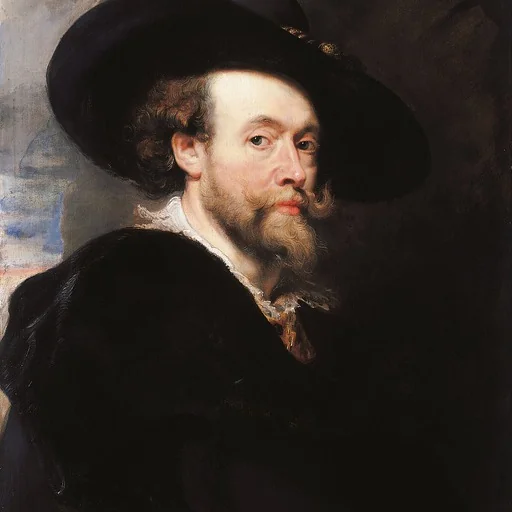
Sir Peter Paul Rubens ( ROO-bənz; Dutch:; 28 June 1577 – 30 May 1640) was a Flemish artist and diplomat.

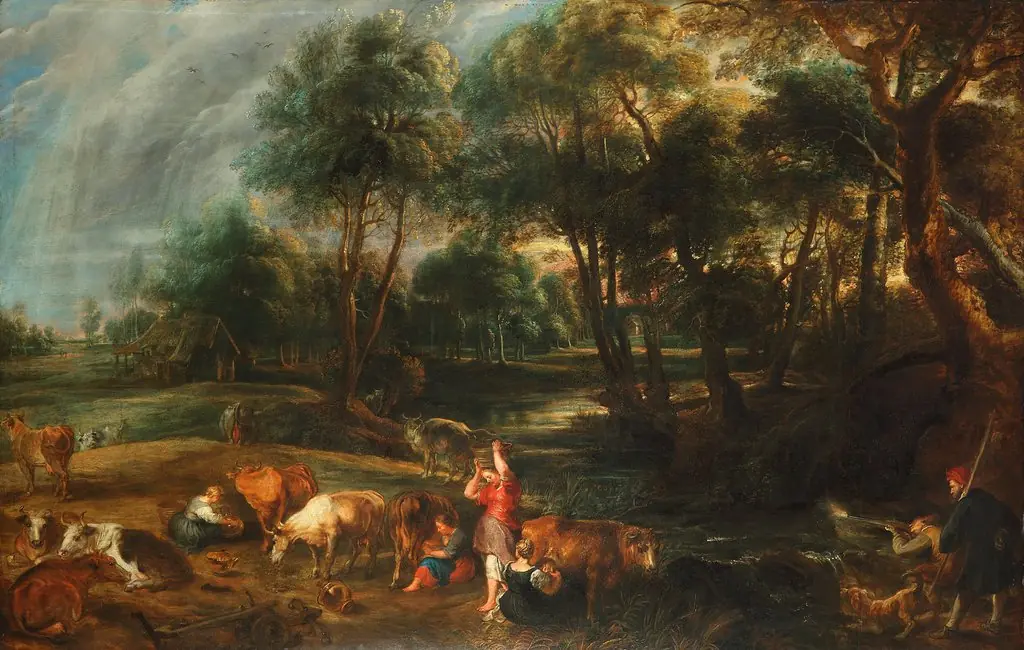 Landscape with Cows and Wildfowlers
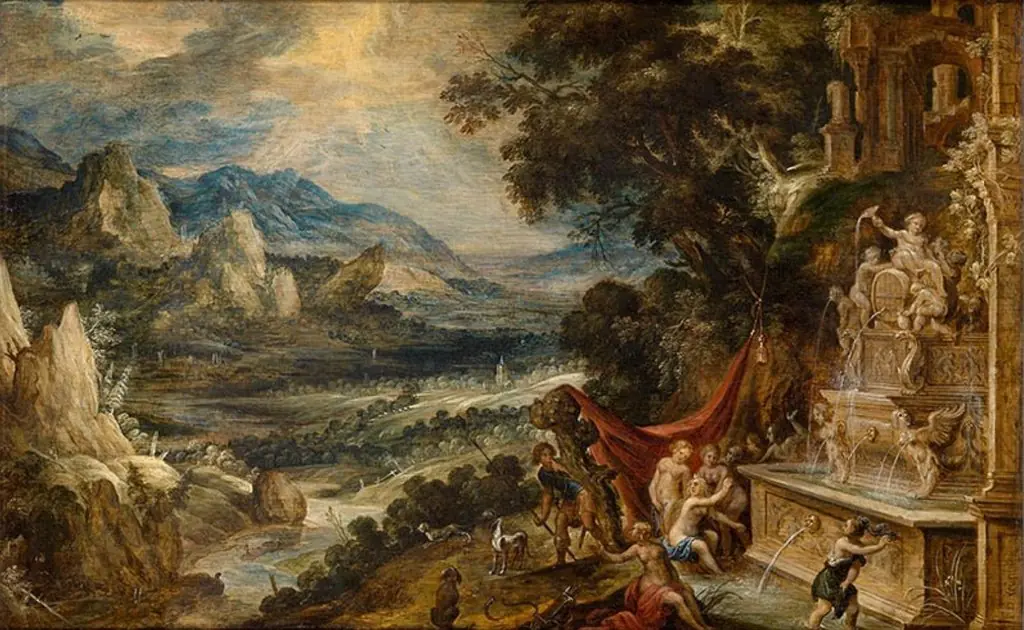 Landscape with Diana and Actaeon
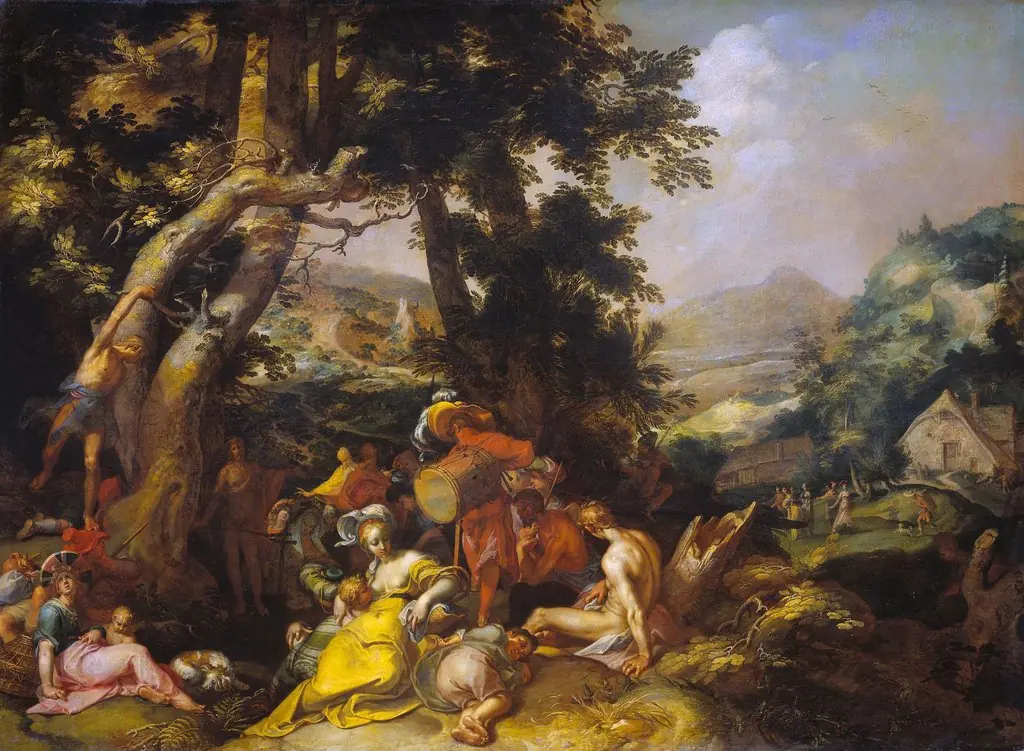 Landscape with the Ministry of John the Baptist
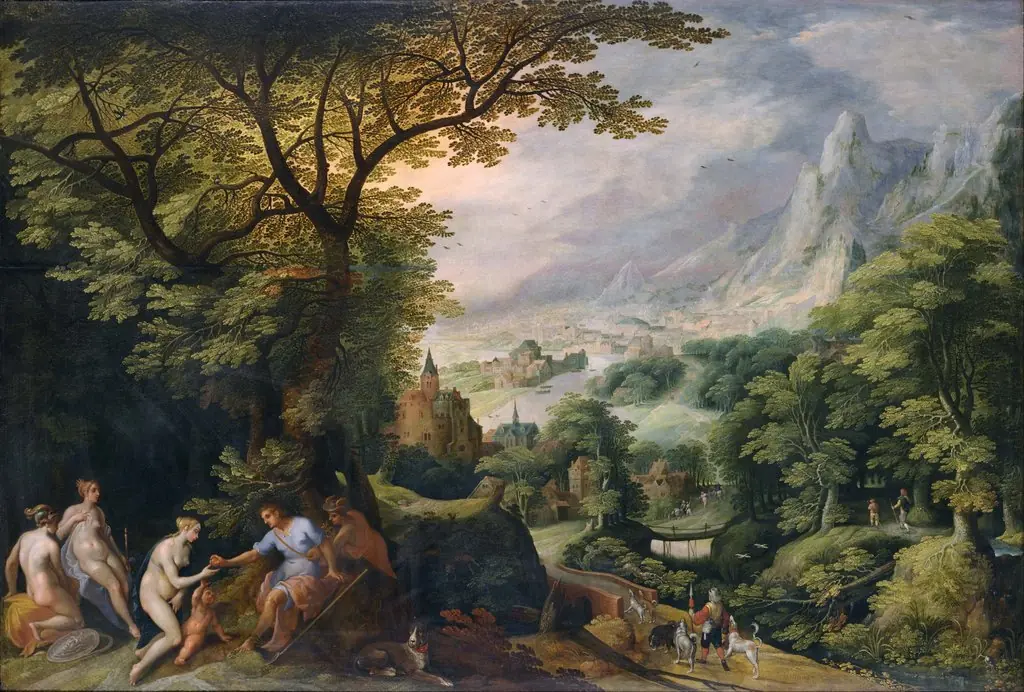 Landscape with the Judgement of Paris
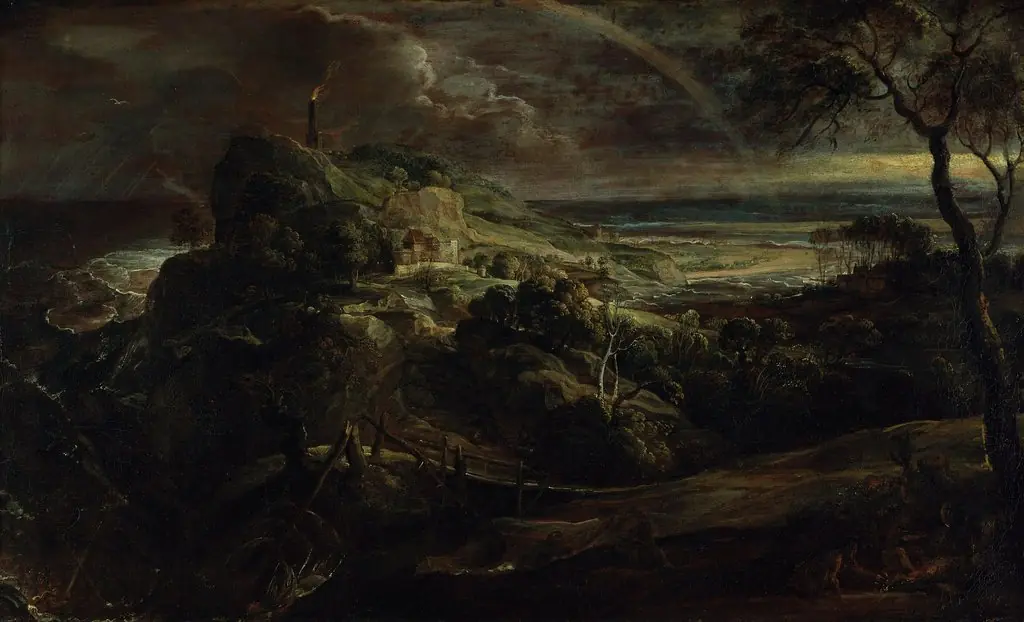 Landscape with the Shipwreck of Paul
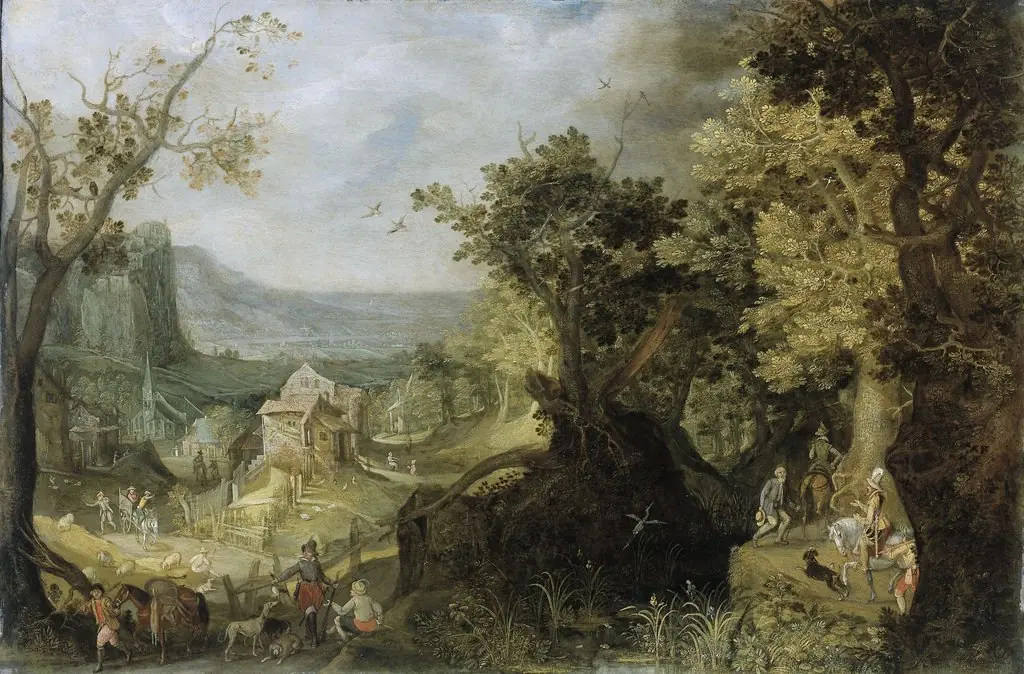 Wooded Landscape
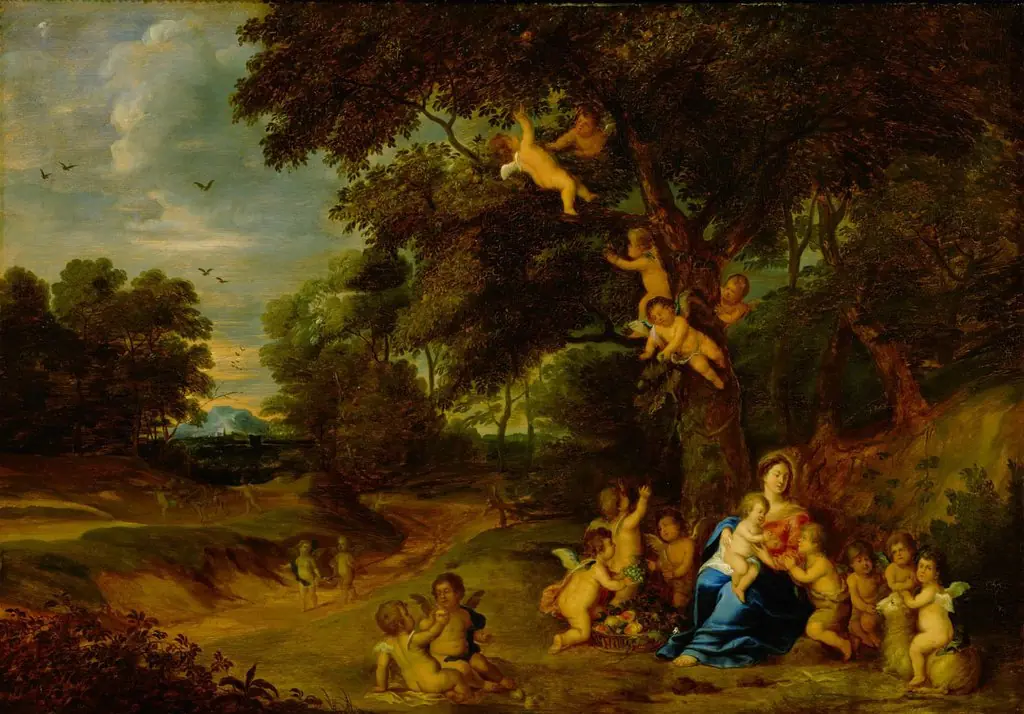 Madonna and Child, St John the Baptist as a Boy and Angels in a Woodland Landscape
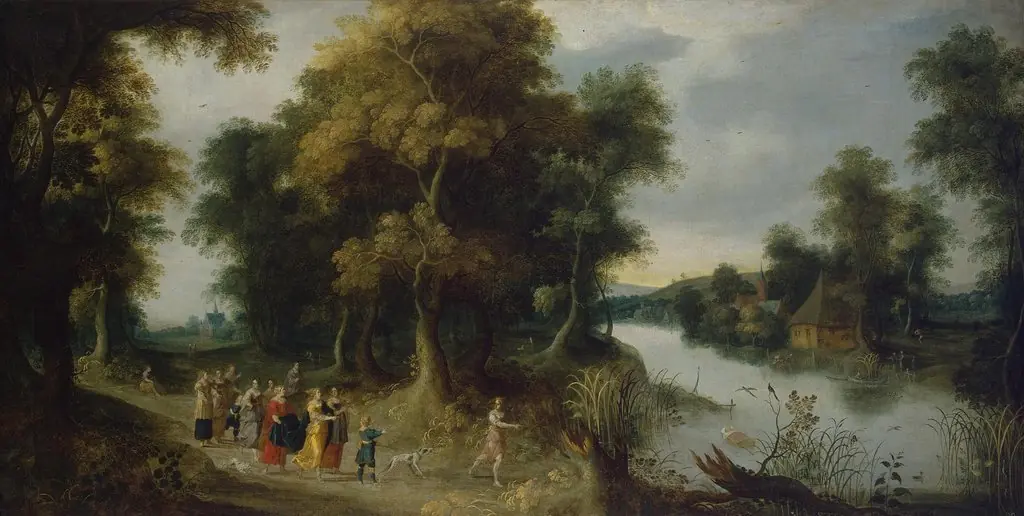 Finding of Moses
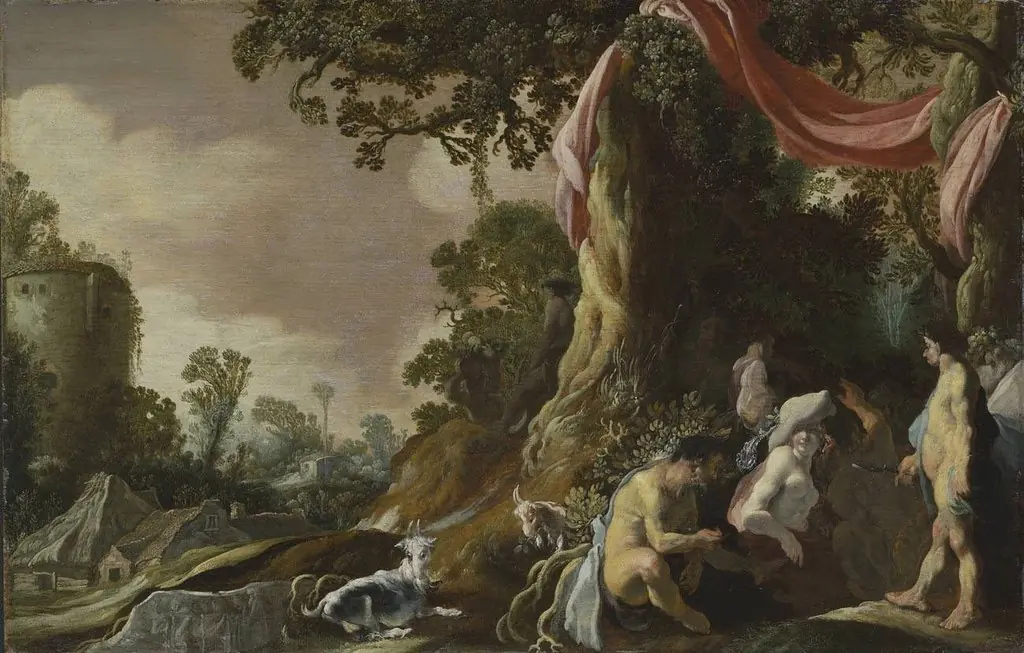 Bucolic scene (shepherd scene ?)
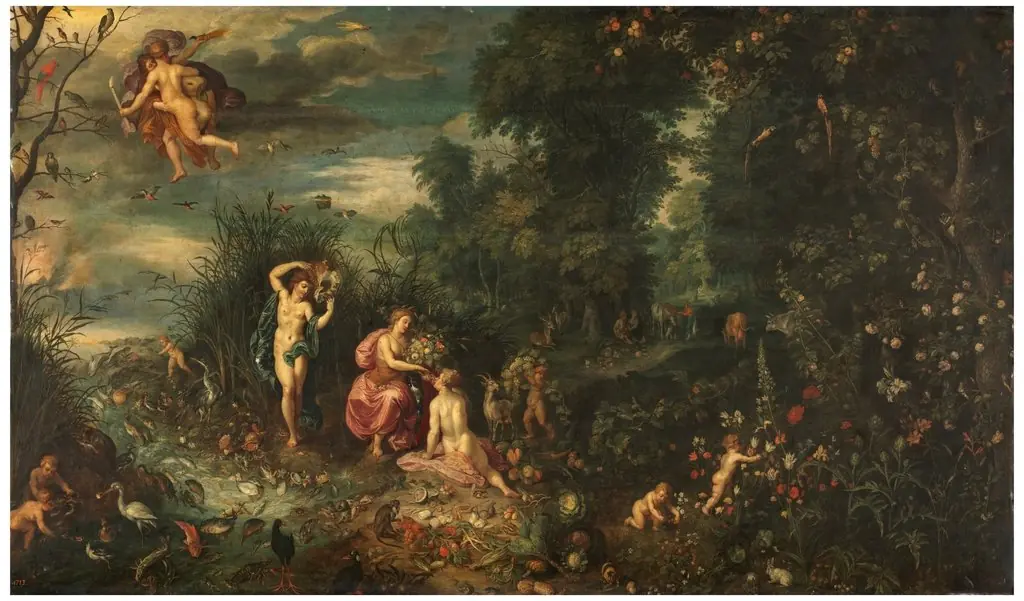 Abundance and the Four Elements