Artwork
Landscape with Tower
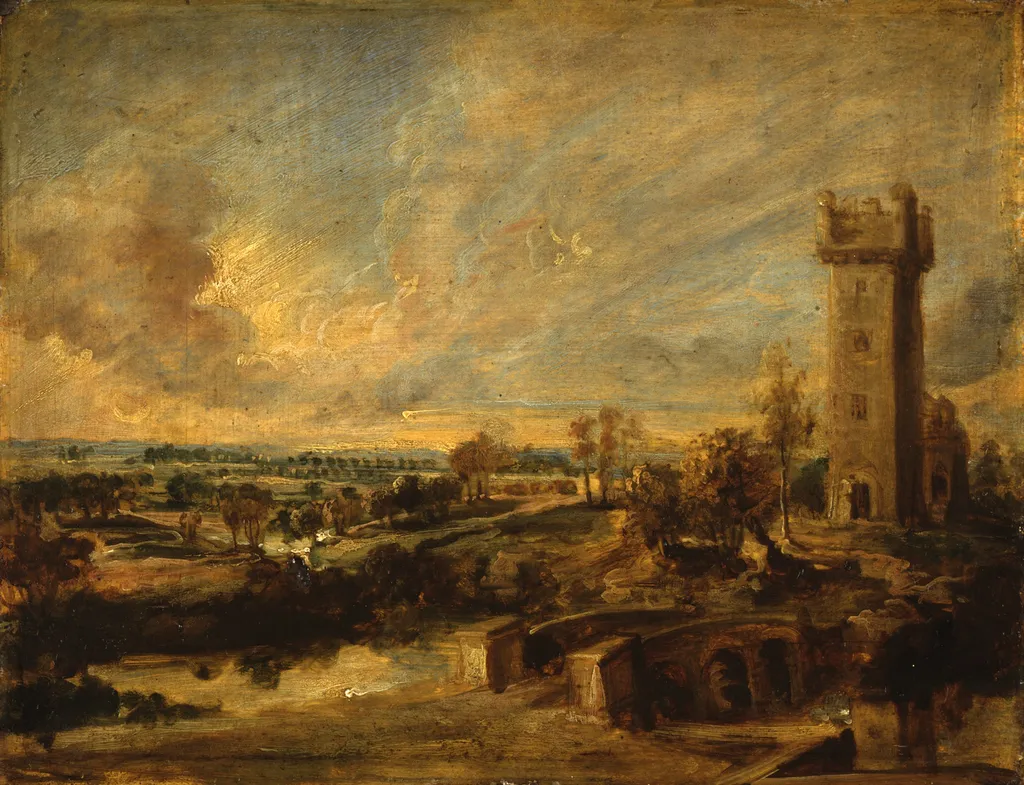
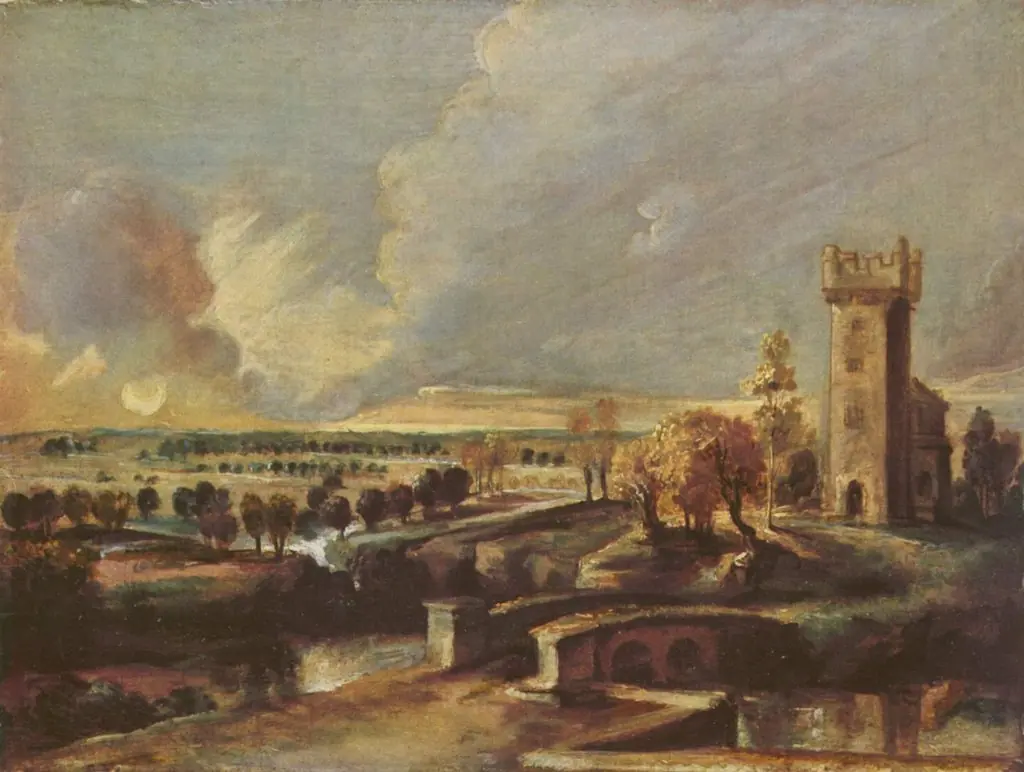
Landscape with Tower is an oil painting by the Flemish Baroque painting artist Peter Paul Rubens. It dates from 1640 and is held in the collection of the Gemäldegalerie Berlin.
About this work
Subject & Meaning
The luminous, golden heavens carry symbolic overtones, representing divine benevolence and harmony that bathe the countryside in grace.
The composition is defined by a striking asymmetry. A tall, fortress-like tower with crenellations and arched openings rises on the right side of the canvas, acting as a visual anchor and a sentinel of stone that suggests a shaped, watched, and protected land. The structure is identified as Elewijt Castle. To the left, undulating fields, scattered trees, and a multi-arched stone bridge open toward a distant horizon. The sky occupies more than half the panel, functioning as the emotional heart of the scene. The luminous, golden heavens carry symbolic overtones, representing divine benevolence and harmony that bathe the countryside in grace. Rather than a symbol of oppression, the tower participates in this harmonious natural order. The painting evokes a mood of peace, nostalgia, and gratitude, capturing a memory of a real place transformed by emotion rather than serving as a strict topographical record.
Technique & Style
Rubens executed the painting in oil on a small oak panel, a traditional Netherlandish support whose smooth surface facilitated fluid brushwork and delicate tonal blending. The wood grain remains subtly visible beneath the paint, adding warmth and texture. The application of paint is loose, sketchlike, and atmospheric rather than highly detailed, suggesting it may have been an oil sketch painted quickly from nature and later refined. Rubens applied thin layers of pigment alla prima, achieving luminosity through the juxtaposition of contrasting hues. The palette is dominated by warm browns, ochres, and muted greens, enlivened by touches of brighter yellow where light breaks through the clouds. The sky features sweeping, energetic diagonal strokes of gold, amber, and pale blue, while dark shadows in the foreground and beneath the bridge provide strong contrasts. The overall finish captures the fleeting effects of light and weather with remarkable expressive intensity.
History & Provenance
Created circa 1640, Landscape with Tower was painted during the last decade of Rubens's life, following his purchase of the Het Steen estate near Mechelen in 1635. The painting was not a commission; rather, Rubens painted his landscapes for his own pleasure, relishing the artistic challenges they presented. The work later passed through notable collections, including those of Henry Hope and Francis Pelham-Clinton-Hope, the 8th Duke of Newcastle. It is currently housed in the Gemäldegalerie Berlin. The painting forms part of a group of late landscapes that Rubens focused on with renewed vigor while residing at his country estate, observing the land at different times of day up to the horizon.
Context
Before Rubens's time, landscape painting was relatively new, and landscapes were often treated merely as backdrops for other subjects. Rubens's direct engagement with nature marked a significant shift, elevating the genre to new heights. Having achieved triumph as a court painter and diplomat, Rubens retreated to his estate at Steen, where he devoted himself to painting the countryside he loved. His late landscapes blend observation with poetic invention, creating spaces that feel both real and idealized. These works reflect his fascination with changing light and weather, as well as his delight in the textures of earth, foliage, and architecture. Landscape with Tower demonstrates Rubens's remarkable versatility, diverging from his bustling mythological and historical scenes to manifest a similarly deft handling of the natural world.
Legacy
Landscape with Tower stands as a testament to Rubens's meditation on land, time, and the tranquility he sought in his final years. By compressing his interests into a small but intensely expressive panel, Rubens contributed significantly to the broader body of Baroque landscape painting. His approach to capturing the fleeting effects of light and atmosphere, and his ability to blend observation with poetic invention, questioned the relationship between fine art and the natural world. The painting remains a vital example of how Rubens expanded the boundaries of the landscape genre, influencing the trajectory of naturalistic and atmospheric landscape painting in the centuries that followed.
Own this work as a print
Artist & collection
Artist
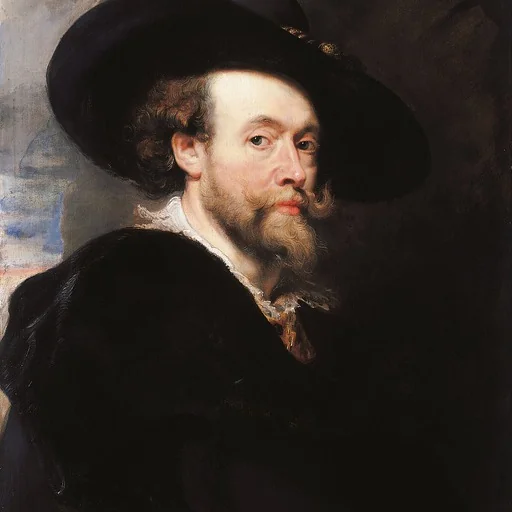
Sir Peter Paul Rubens ( ROO-bənz; Dutch:; 28 June 1577 – 30 May 1640) was a Flemish artist and diplomat.

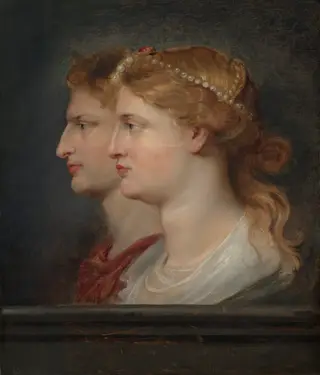
- Landscape with an Avenue of Trees
 Landscape with the Tower of Castle "Steen"
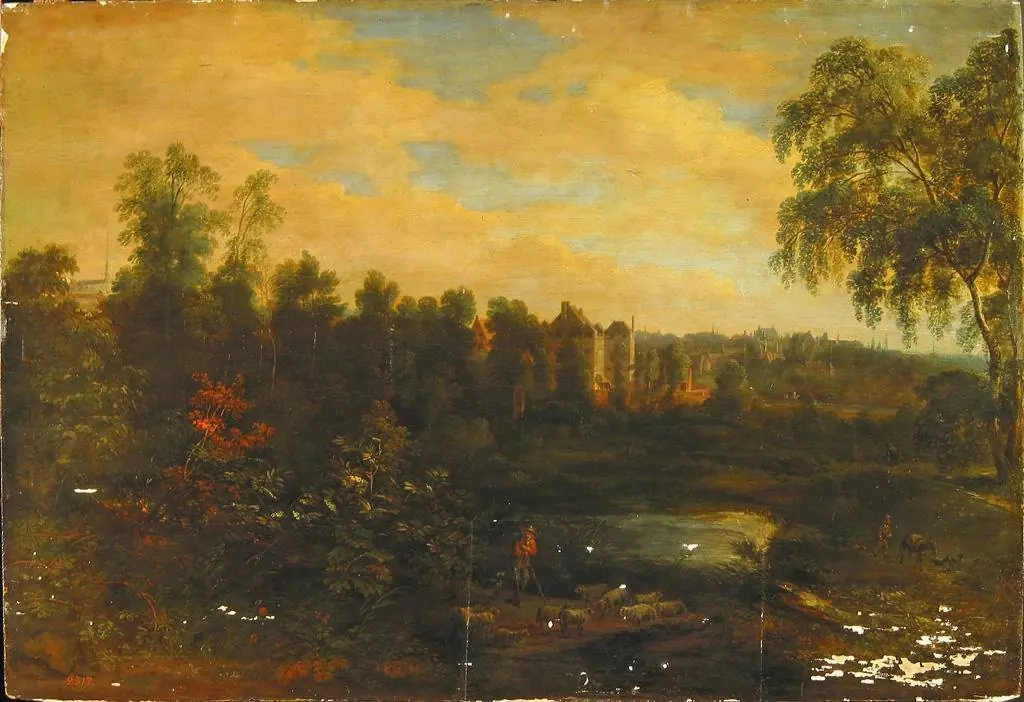 Landscape near Brussels
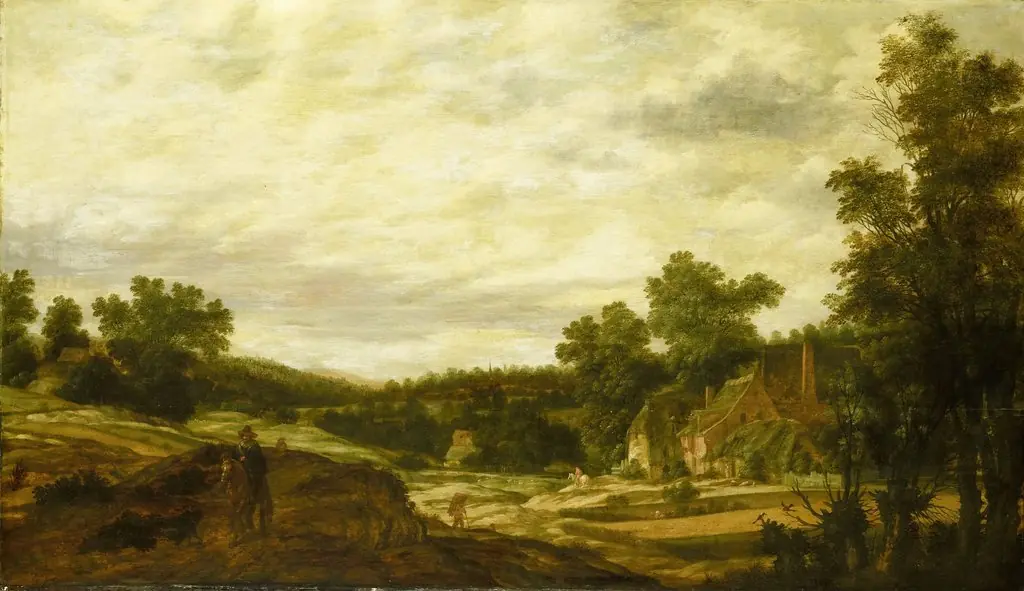 Hilly landscape
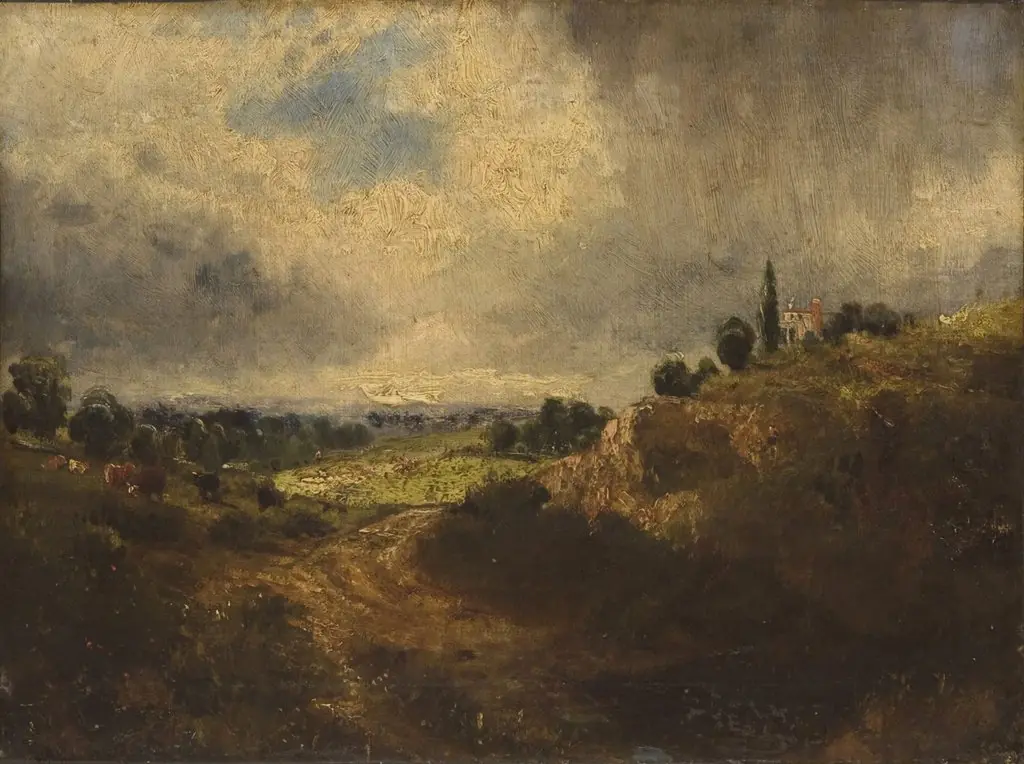 Branch Hill Pond, Hampstead Heath
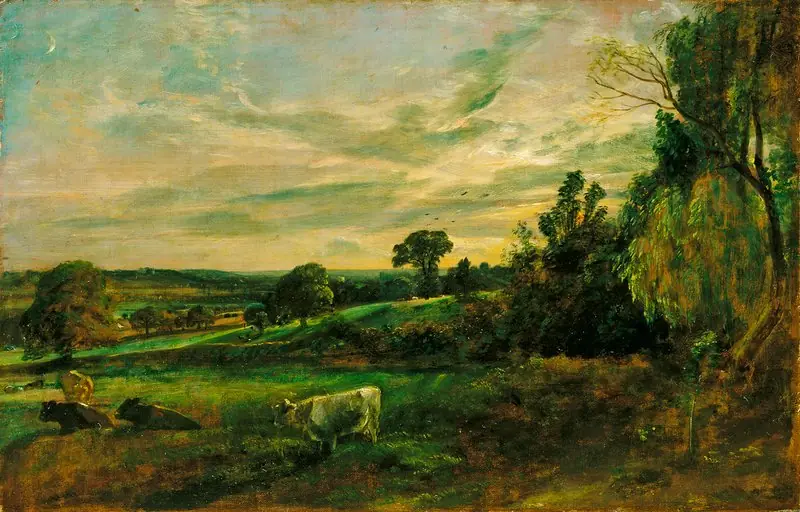 Summer Evening: View near East Bergholt Showing Langham Church, Stratford Church and Stoke-by-Nayland Church
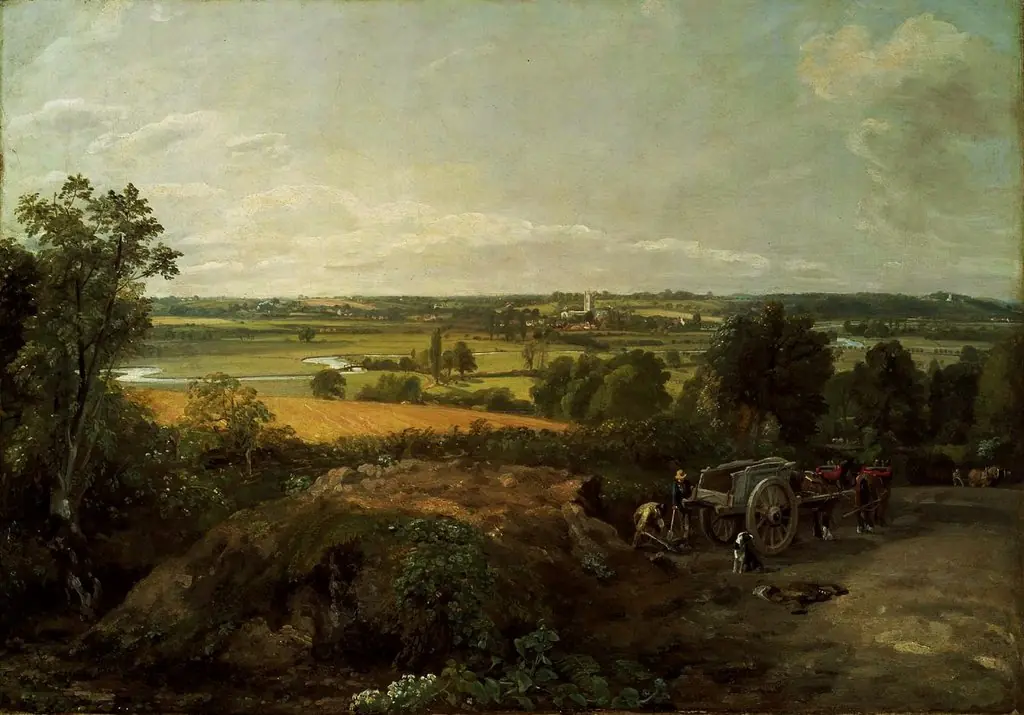 Stour Valley and Dedham Church
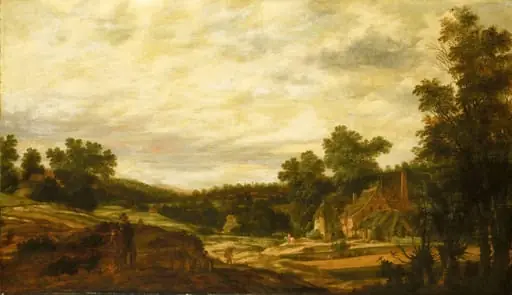 Hilly landscape
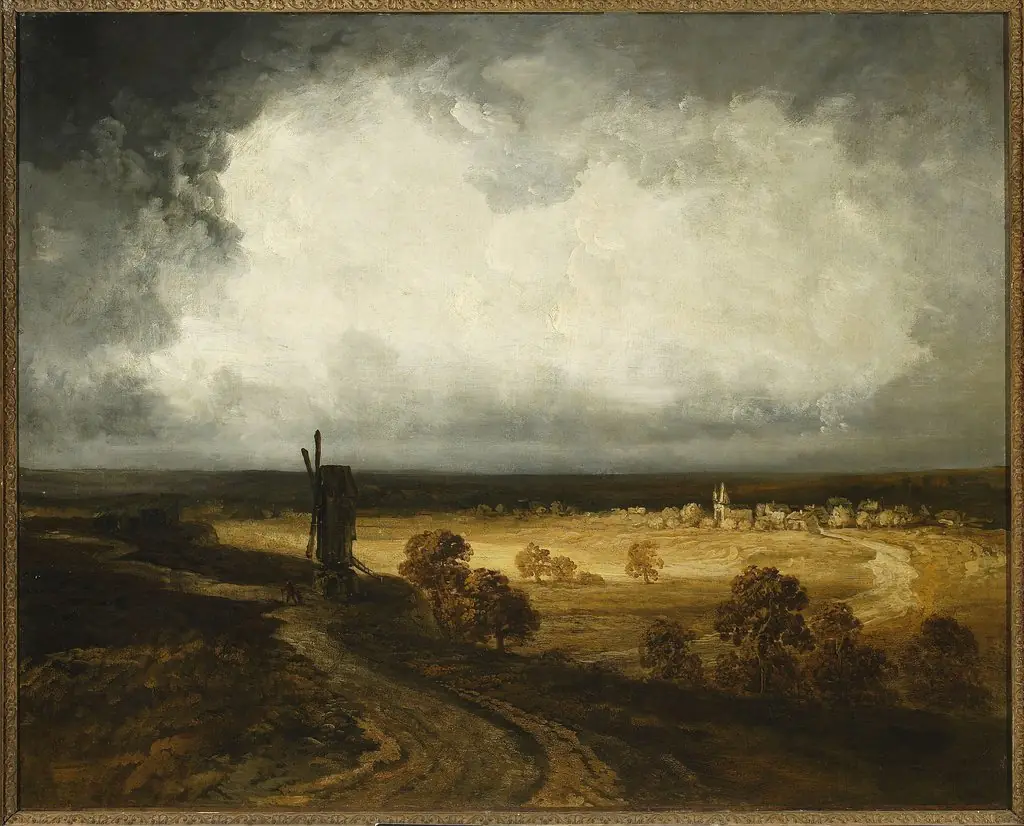 Windmills at Montmartre
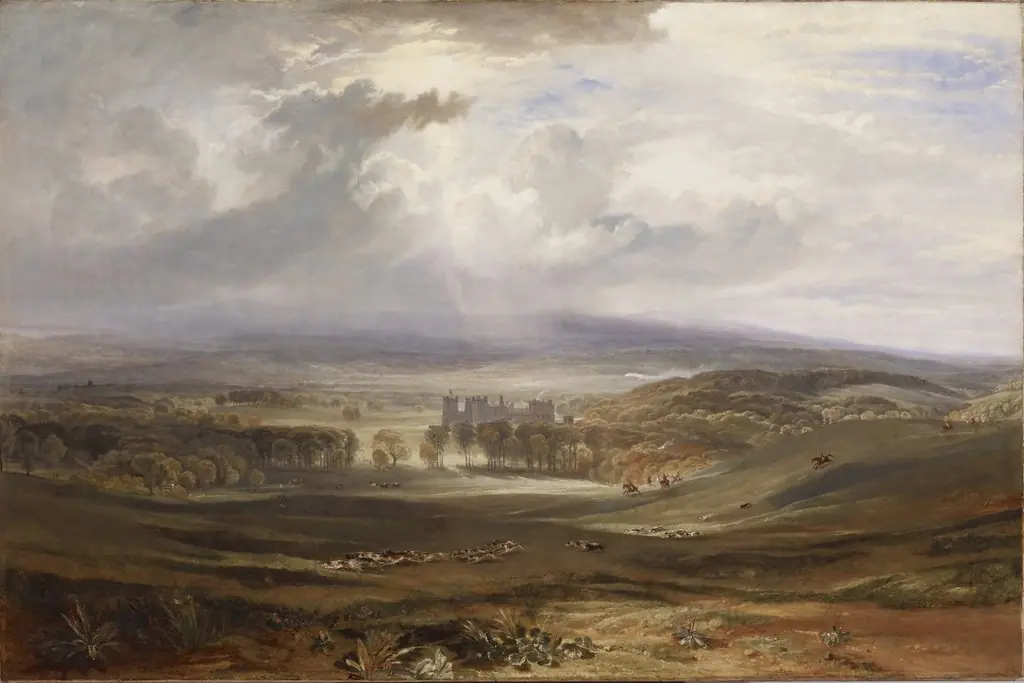 Raby Castle, the Seat of the Earl of Darlington
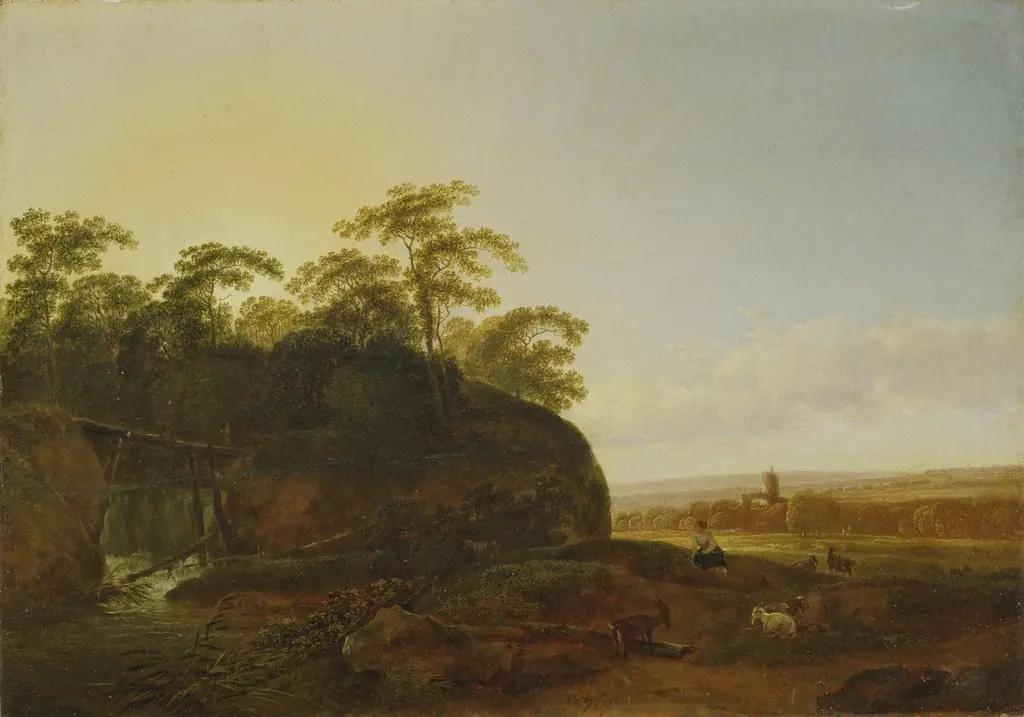 Landscape with Goats
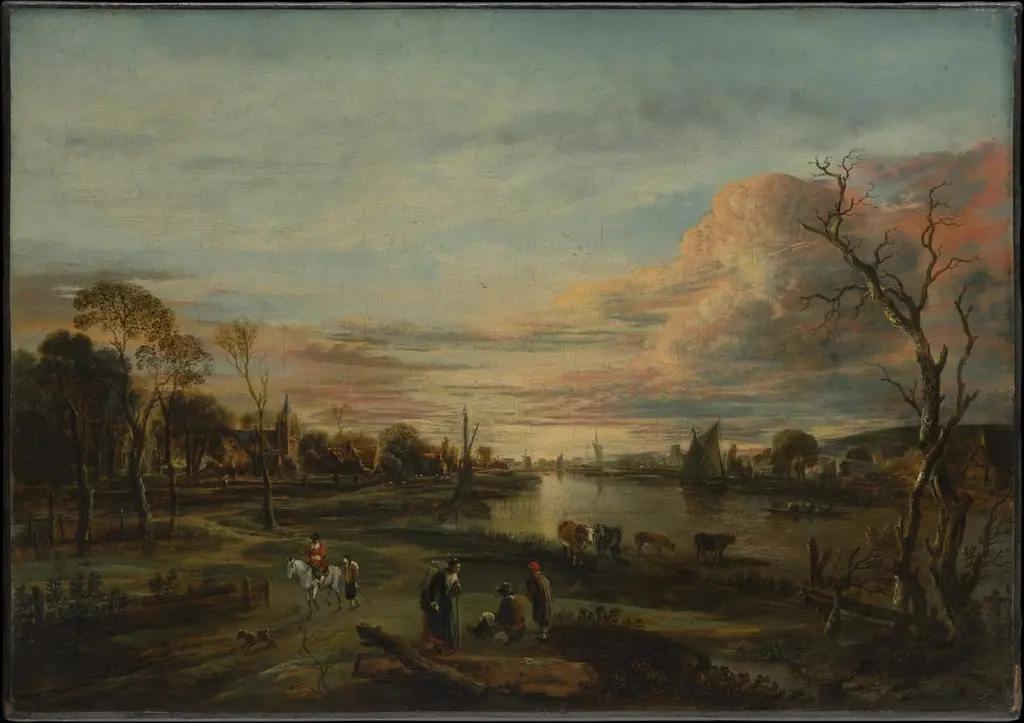 Landscape at Sunset