Artwork
Miracle of Saint Ignatius of Loyala (study)
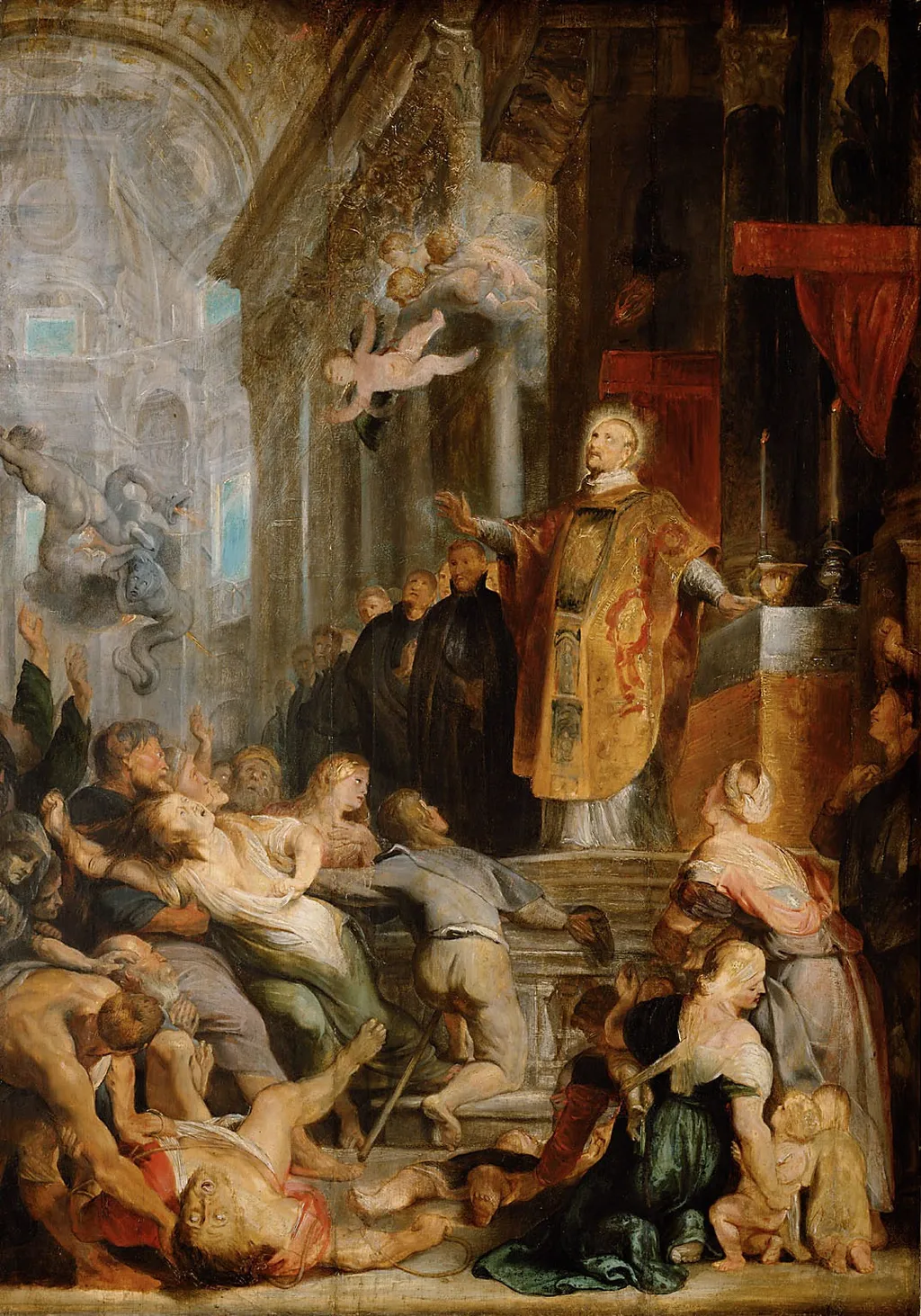
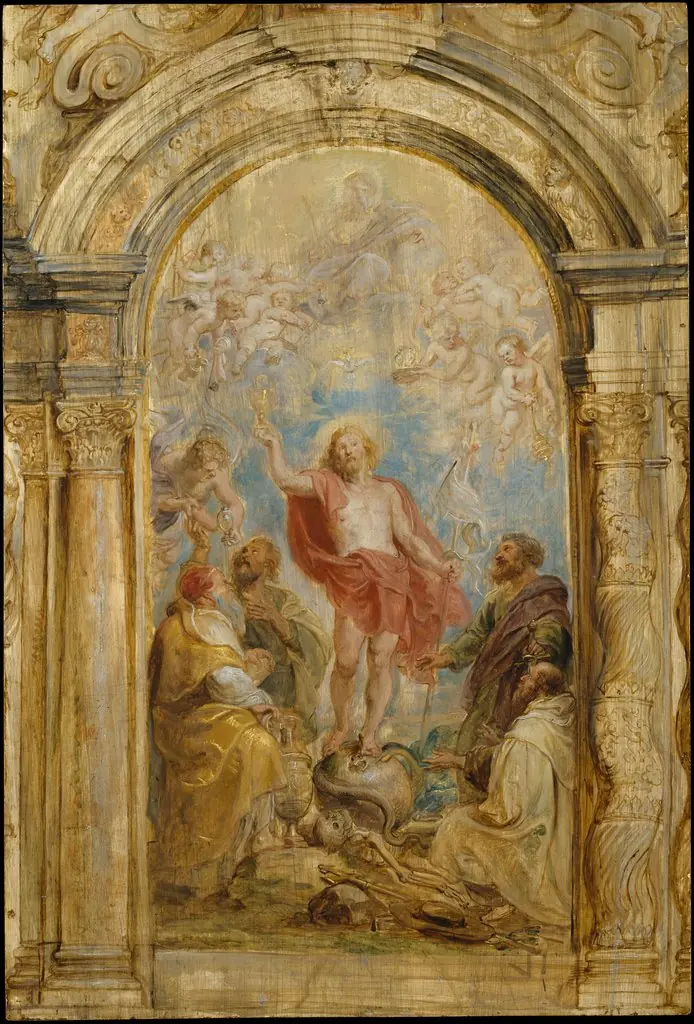
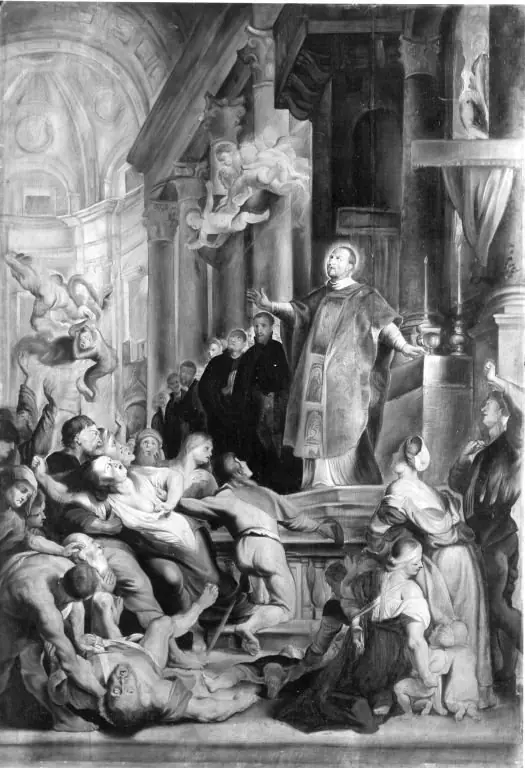
Miracle of Saint Ignatius of Loyala (study) is an oil painting by the Flemish Baroque painting artist Peter Paul Rubens. It dates from 1615 and is held in the collection of the Kunsthistorisches Museum.
About this work
Subject & Meaning
Its iconographic focus is the saint himself, identified as the main subject, with the imagery centered on the miraculous event associated with his veneration.
The study depicts the Miracle of Saint Ignatius of Loyola, presenting the Jesuit founder as its central subject. Rendered in oil on oak panel, the work belongs to the religious genre and serves as a preparatory study for a larger composition on the same theme. Its iconographic focus is the saint himself, identified as the main subject, with the imagery centered on the miraculous event associated with his veneration.
As a study, the painting functions as a focused exploration of the saint's figure and the narrative moment, distilling the religious symbolism central to Jesuit visual culture into a more intimate format before translation to a full-scale work.
Technique & Style
Executed in 1615, this religious study by Peter Paul Rubens utilizes oil paint applied to an oak panel support. The work measures 105.5 cm in height and 74 cm in width. As a preparatory piece depicting Ignatius of Loyola, the composition focuses on the miraculous elements associated with the saint, rendered through the artist's characteristic handling of the medium on wood.
History & Provenance
The painting was created by Peter Paul Rubens in 1615, executed in oil on oak panel, and depicts Ignatius of Loyola. According to available records, the work is held in the collection of the Kunsthistorisches Museum, where it is currently located. No additional details regarding its commission, earlier ownership, or chain of custody prior to its acquisition by the museum are documented in the available sources.
The work is classified as a religious painting and measures 105.5 cm in height by 74 cm in width.
Overview
Created in 1615, this oil study by Peter Paul Rubens belongs to the Flemish Baroque period and is held in the Kunsthistorisches Museum. The work presents a theatrical interior of a church, centering on a priest in a gold vestment whose illuminated presence dominates the composition.
Context
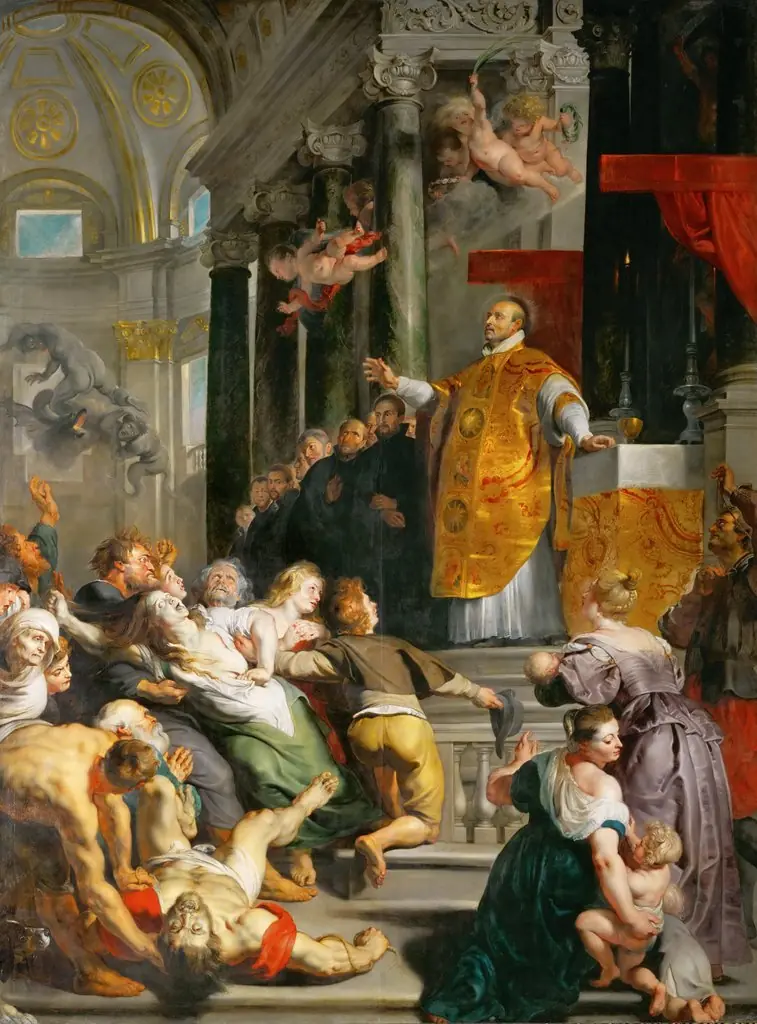
Rubens, a leading Flemish artist and diplomat, frequently drew on religious and classical sources. This piece exemplifies his ability to fuse dynamic movement with theological themes, a hallmark of the Baroque era’s emphasis on emotional engagement.
Artist & collection
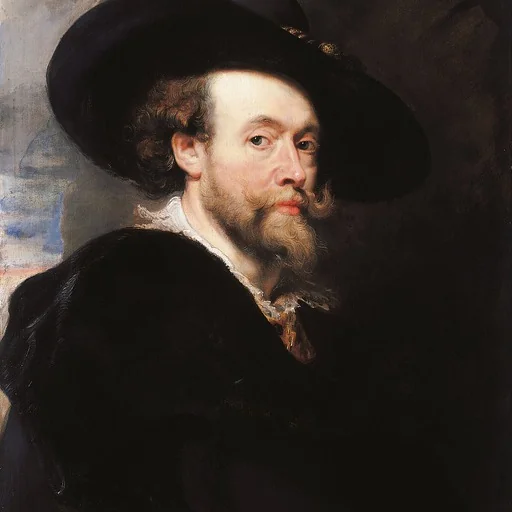
Artist
Sir Peter Paul Rubens ( ROO-bənz; Dutch:; 28 June 1577 – 30 May 1640) was a Flemish artist and diplomat.