Artwork
Statue of Charles V in a niche
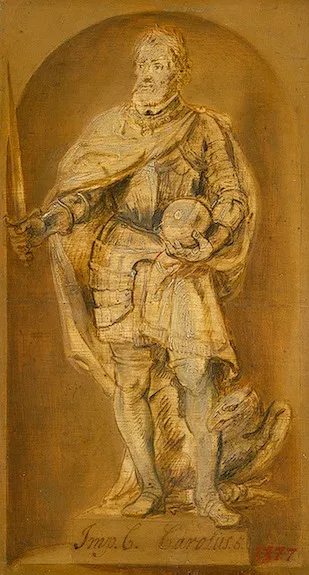
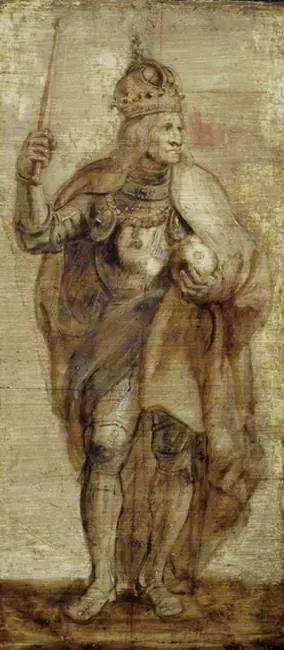
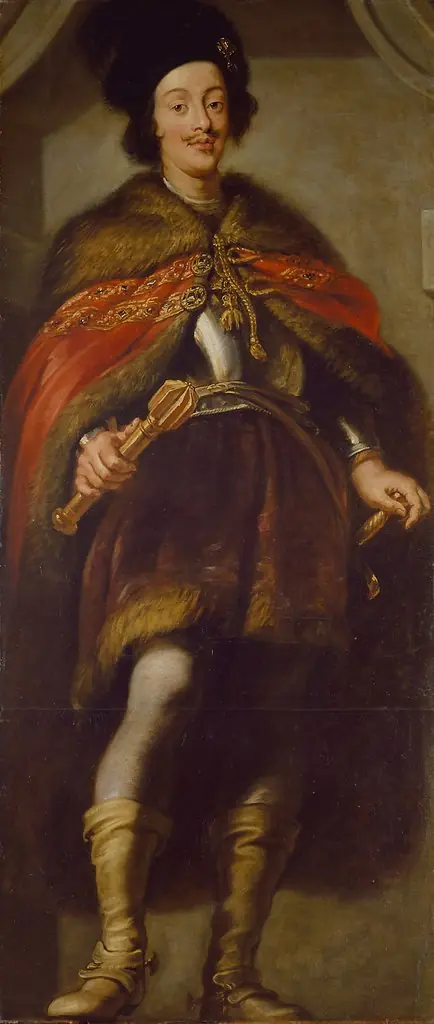
Statue of Charles V in a niche is an oil painting by the Flemish Baroque painting artist Peter Paul Rubens. It dates from 1634 and is held in the collection of the Hermitage Museum.
About this work
Subject & Meaning
The painting portrays the Holy Roman Emperor Charles V wearing regalia that signify imperial authority, including an orb and a sword; these attributes underscore his role as a universal ruler and reinforce the political symbolism of the portrait. The work was created in 1634 in Flanders and later entered the collection of Catherine II of Russia, eventually finding a permanent home in the Hermitage Museum.
Technique & Style
The work is an oil painting executed on oak panel, depicting Charles V with an orb and sword. It measures 39 cm in height and 21.5 cm in width, and was created in Flanders in 1634. The painting belongs to the portrait genre and was originally owned by Catherine II of Russia before entering the Hermitage Museum collection.
History & Provenance
The painting, created in 1634 on an oak panel, entered the museum's holdings as part of the acquisition by Catherine II of Russia.
The work was commissioned as a portrait of Charles V and created in 1634 in Flanders. It entered the collection of Catherine II of Russia before being acquired by the Hermitage Museum, where it remains on display. The painting is executed in oil on oak panel and depicts the emperor holding an orb and a sword.
Peter Paul Rubens's Statue of Charles V in a niche is held in the collection of the Hermitage Museum. The painting, created in 1634 on an oak panel, entered the museum's holdings as part of the acquisition by Catherine II of Russia. The work depicts the Holy Roman Emperor holding an orb and sword. Its current location is confirmed within the Hermitage Museum in Saint Petersburg.
Overview
Created in 1634, this oil painting by Peter Paul Rubens portrays a sculptural representation of Emperor Charles V positioned within an architectural niche. The composition emphasizes the ruler’s authority through regal attire, a crown, and the traditional symbols of power, a scepter and an orb, set against a deep, shadowed background that enhances the figure’s three‑dimensional presence.
Artist & collection
Artist
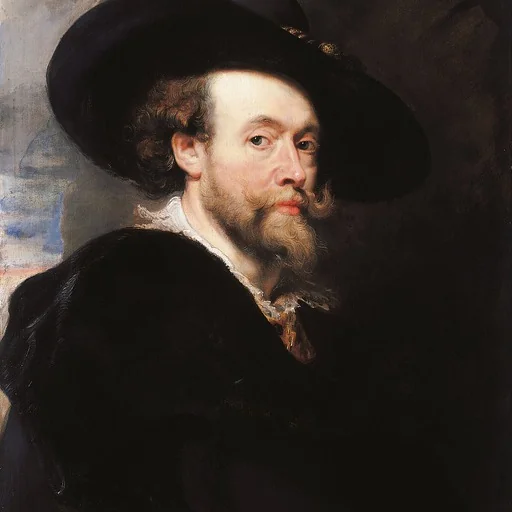
Sir Peter Paul Rubens ( ROO-bənz; Dutch:; 28 June 1577 – 30 May 1640) was a Flemish artist and diplomat.