Artwork
The Meeting of Abraham and Melchizedek
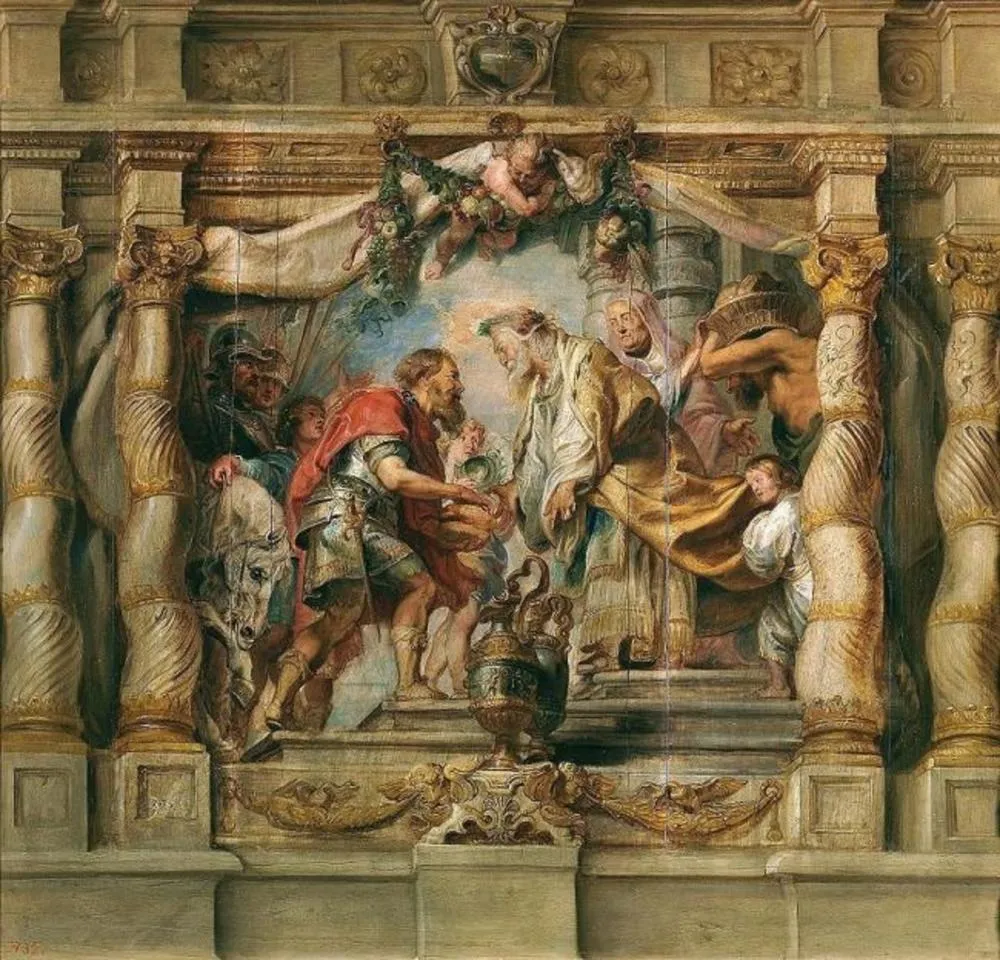
The Meeting of Abraham and Melchizedek is an oil painting by the Flemish Baroque painting artist Peter Paul Rubens. It dates from 1625 and is held in the collection of the Museo del Prado.
About this work
Subject & Meaning
The scene portrays the patriarch Abraham encountering the priest-king Melchizedek of Salem, who is traditionally shown offering bread and wine in blessing.
The painting depicts the biblical episode of the Meeting of Abraham and Melchizedek, drawn from the Book of Genesis. The scene portrays the patriarch Abraham encountering the priest-king Melchizedek of Salem, who is traditionally shown offering bread and wine in blessing. The work belongs to the genre of religious art, using this Old Testament encounter as its main subject.
Iconographically, the composition incorporates martial elements, with figures wearing body armor and a combat helmet, suggesting Rubens's characteristic blending of classical and biblical imagery. The presence of armor within a priestly encounter underscores themes of spiritual authority alongside temporal power.
Symbolically, the meeting represents the moment of tithing and divine blessing, a subject rich with Eucharistic resonance in Christian interpretation, as Melchizedek's offering of bread and wine prefigures the sacrament. The painting thereby conveys both a narrative of covenant and a typological meditation on priesthood and sacrifice.
Technique & Style
Executed in 1625, this religious painting by Peter Paul Rubens utilizes oil paint applied to a wooden panel support. The work measures 65.5 cm in height and 68 cm in width. Visually, the composition incorporates detailed renderings of military equipment, specifically depicting body armor and combat helmets within the scene.
These material and dimensional attributes define the physical presence of the artwork held in the Museo del Prado.
History & Provenance
The Meeting of Abraham and Melchizedek is an oil painting on panel created in 1625 by Peter Paul Rubens. It entered the collection of Ferdinand VII of Spain before being acquired by the Museo del Prado, where it remains on display in the Royal Palace of Madrid. The work measures 65.5 cm by 68 cm and depicts the biblical encounter between Abraham and Melchizedek.
The Meeting of Abraham and Melchizedek by Peter Paul Rubens (1625) is housed in the Museo del Prado, Royal Palace of Madrid, with accession number P00968. It was painted for Ferdinand VII of Spain and has been part of the museum's collection since his reign. The work has been displayed in exhibitions focusing on Rubens' religious paintings and Spanish royal patronage, though specific exhibition titles are not detailed in the sources.
Context
Scholarship on the work highlights its dynamic composition and mastery of chiaroscuro, reflecting Rubens' mature style and his engagement with Counter-Reformation themes. The painting's depiction of armor and ritual exchange resonates with early‑17th‑century diplomatic symbolism, situating it within the broader trajectory of Rubens' diplomatic artworks. Its provenance through the Spanish court underscores its political significance, linking the artist's religious subjects to the patronage networks of European monarchs.
Overview
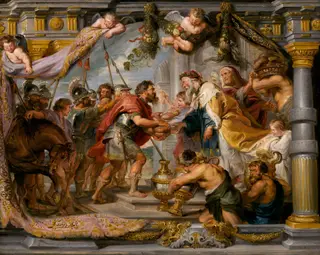
Created in 1625, this oil painting by Peter Paul Rubens portrays the biblical encounter between Abraham and Melchizedek. Executed in the vigorous Flemish Baroque idiom, the work combines a dramatic narrative with a richly rendered interior, populated by figures in elaborate dress and armor.
Artist & collection
Artist
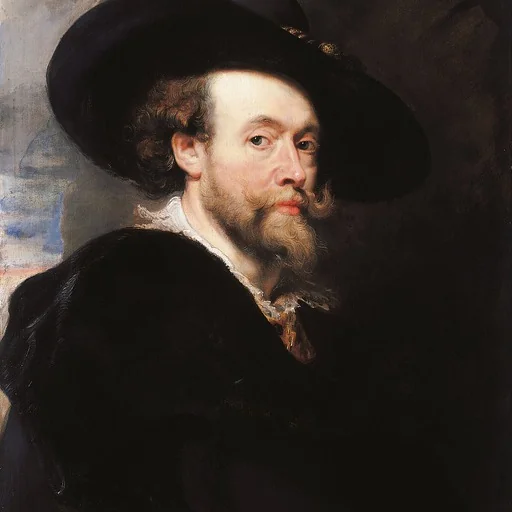
Sir Peter Paul Rubens ( ROO-bənz; Dutch:; 28 June 1577 – 30 May 1640) was a Flemish artist and diplomat.

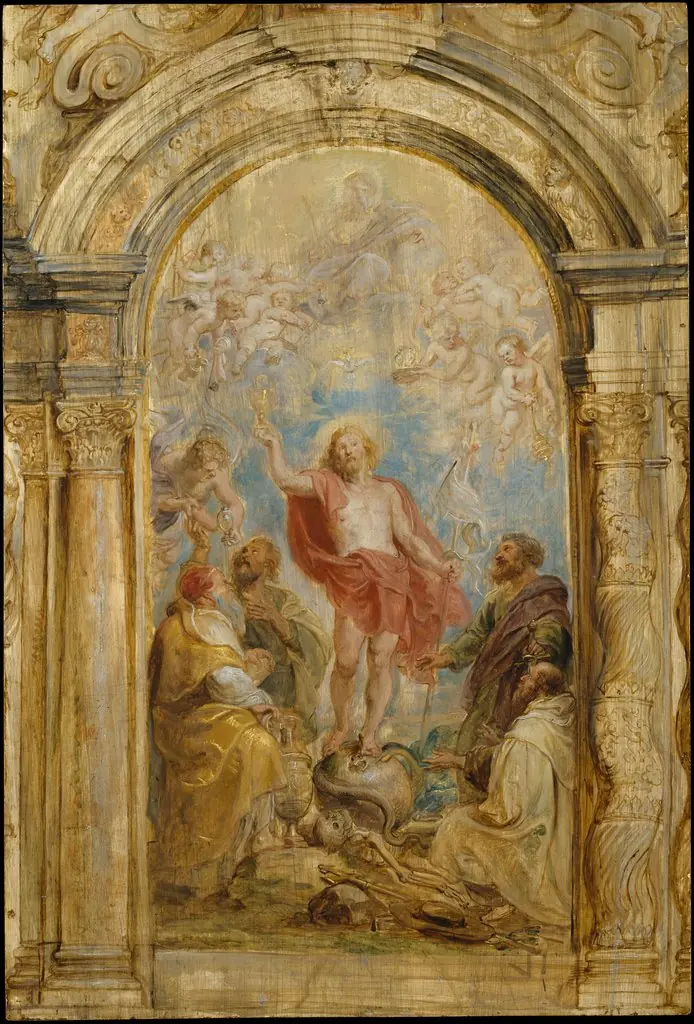
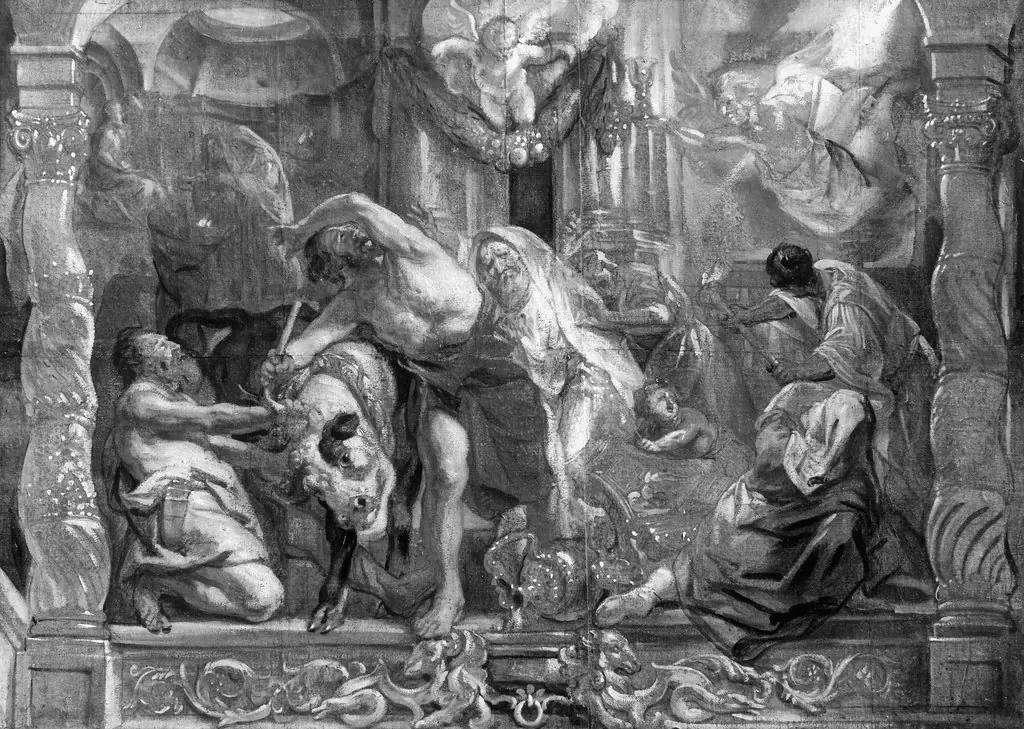 Triumph of the Lord's Supper over the bloody sacrifice of paganism
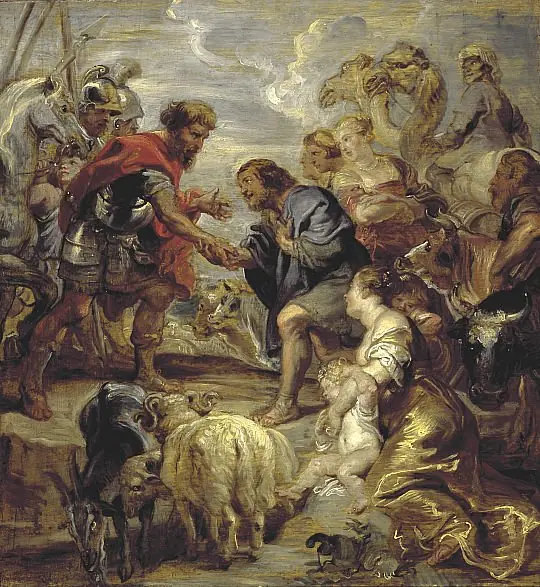 The Reconciliation of Jacob and Esau
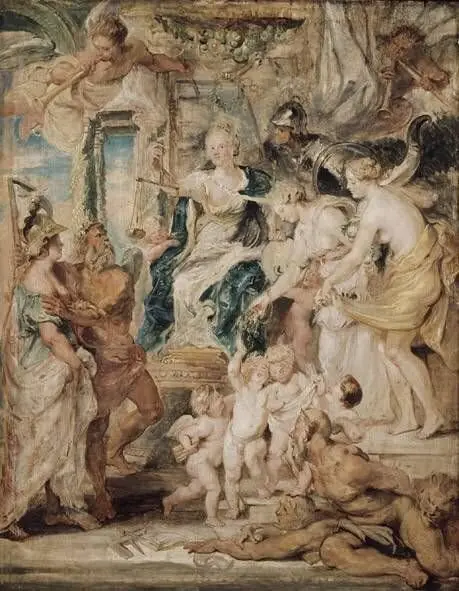 The Felicity of the Regency
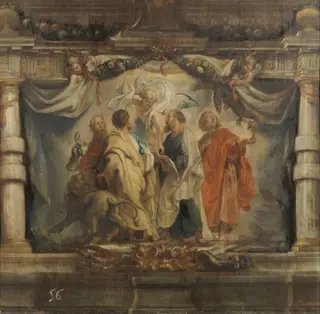 Los cuatro evangelistas
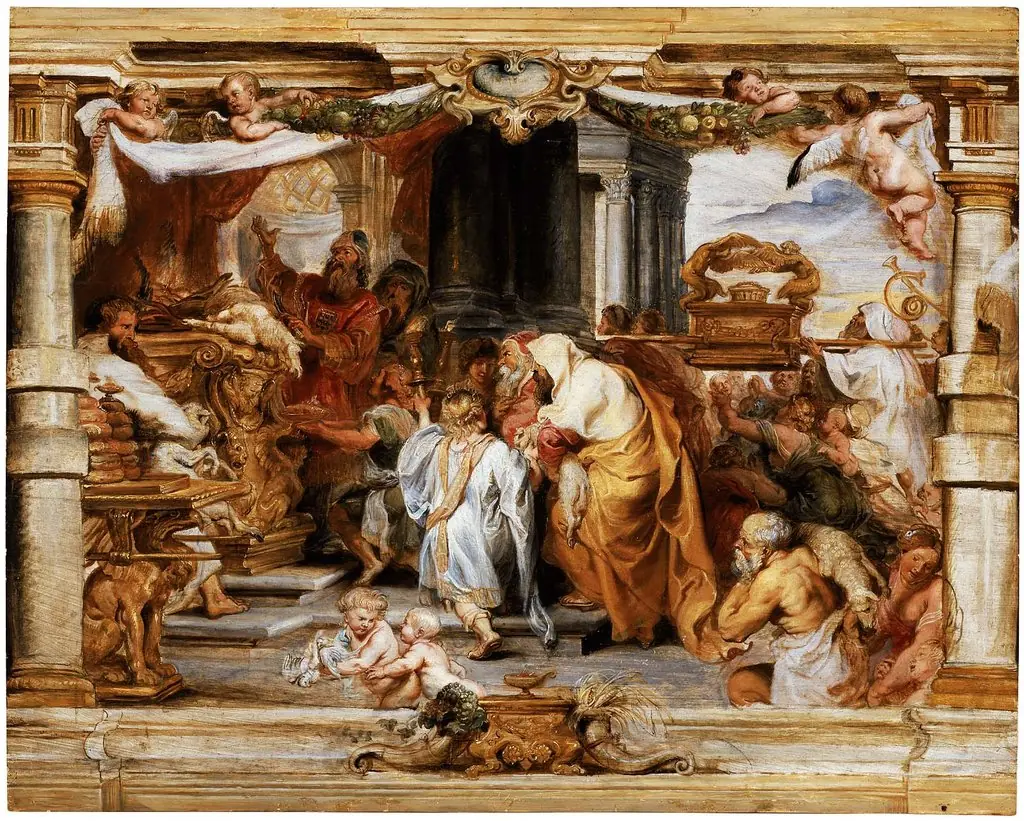 The Sacrifice of the Old Covenant
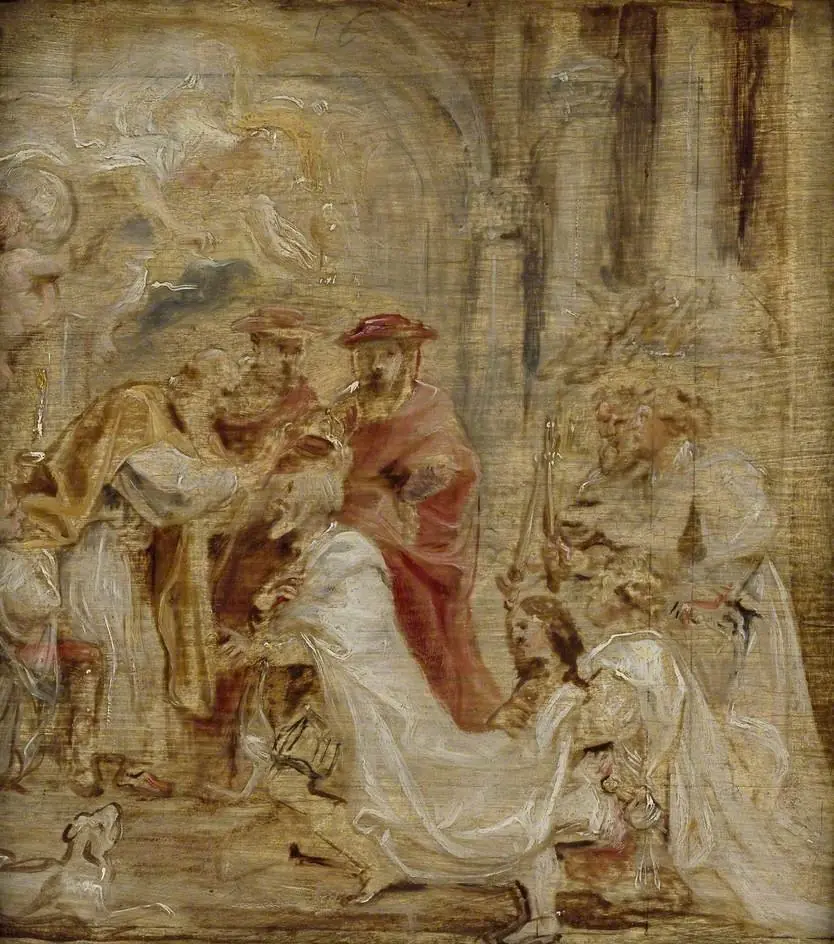 The Coronation of Henri IV
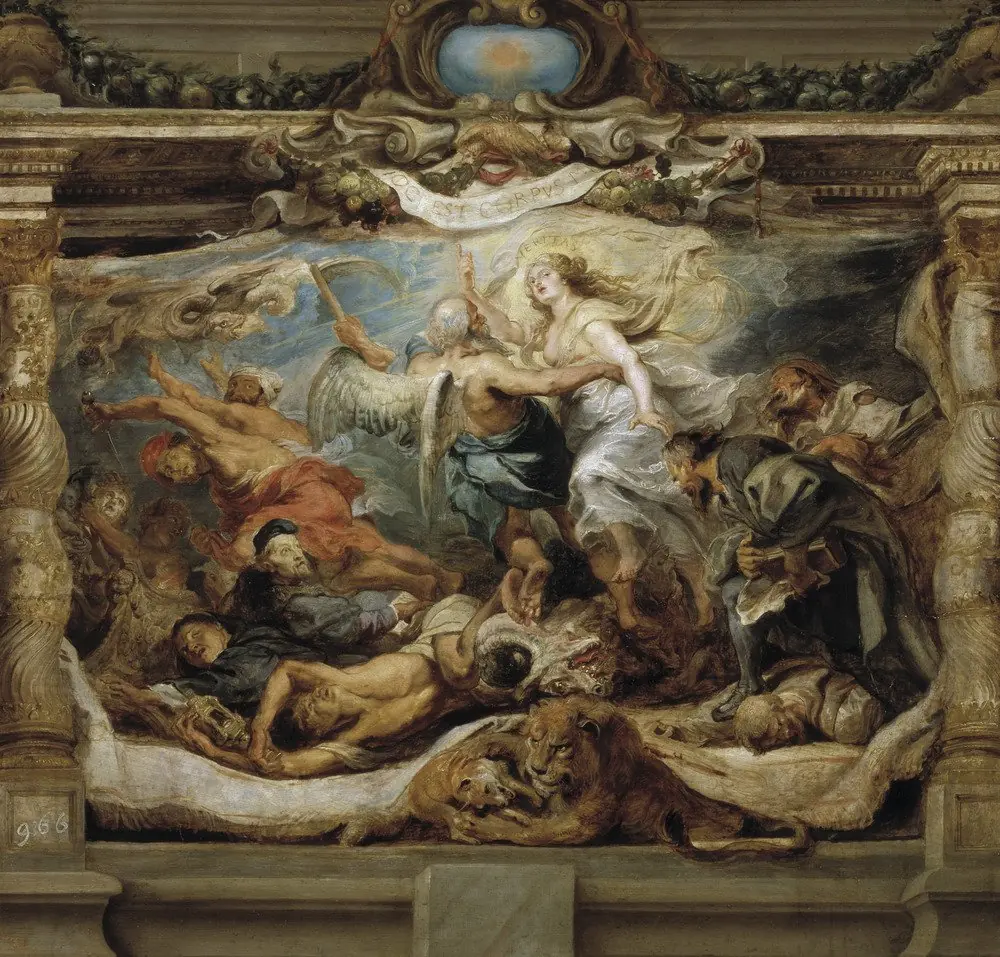 The Victory of Truth over Heresy
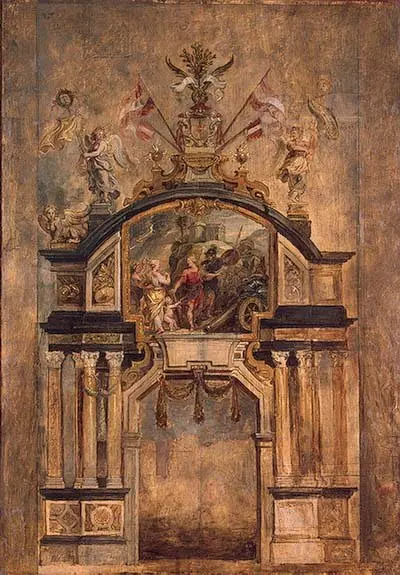 Arch of Hercules, the Right Side (Hercules Prodicius, pars anterior)