Artwork
The Triumph of the Church
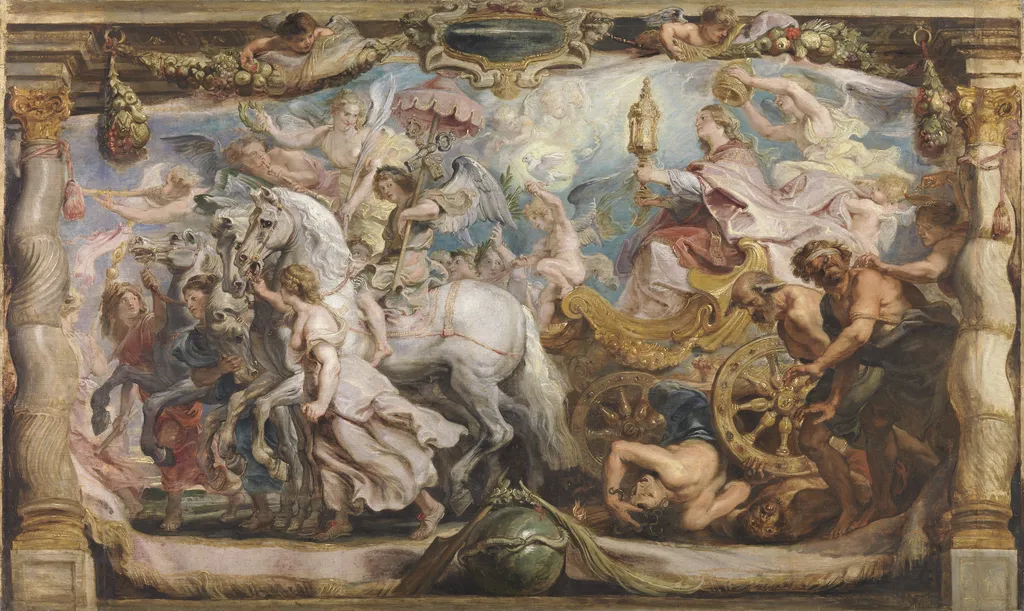
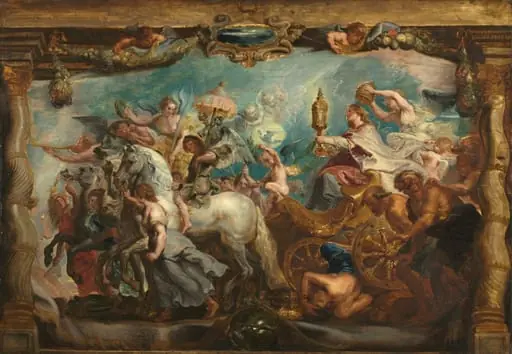
The Triumph of the Church is an oil painting by the Flemish Baroque painting artist Peter Paul Rubens. It dates from 1625 and is held in the collection of the Museo del Prado.
About this work
This painting shows a big religious theme. Rubens painted it around 1625. It’s an allegory, meaning it tells a story without showing real people.
The work is small for its bold idea. It’s only 63.5 cm tall and 105 cm wide. Still, it packs a lot of meaning into a tight space.
See how Rubens painted his church triumphs over chaos. Check out the Museo del Prado next.
Subject & Meaning
Below, symbolic elements include an ouroboros, a globe, a steering wheel, an oak branch, and fruit garlands, while two cherubs unfurl a tapestry.
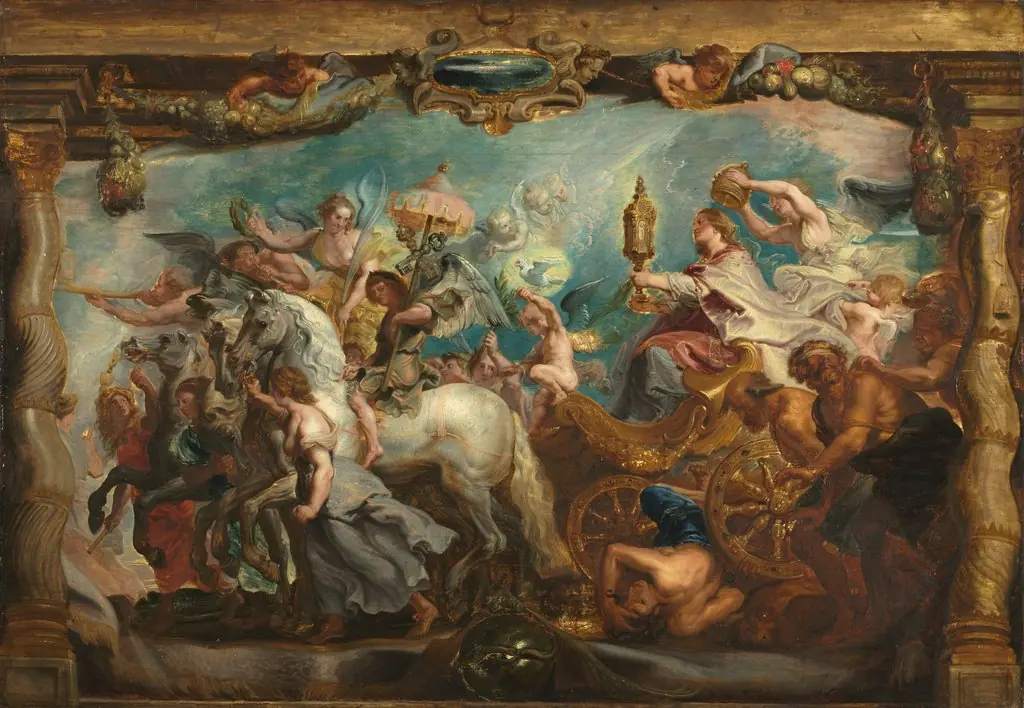
The Triumph of the Church depicts a triumphant allegory of the Catholic Church overcoming heresy and disorder, symbolized by dark, chained figures representing Fury, Discord, and Hatred. The composition centers on a gilded carriage bearing a matron holding a Eucharistic custodia, crowned by an angel and supported by papal symbols, surrounded by angels playing trumpets and bearing laurel and palm. Below, symbolic elements include an ouroboros, a globe, a steering wheel, an oak branch, and fruit garlands, while two cherubs unfurl a tapestry. The scene is framed by a colonnade and a painted tapestry within the painting, reflecting Baroque theatricality. These elements collectively represent the Church's divine authority and triumph over Protestant heresies during the Counter-Reformation, as commissioned by Isabel Clara Eugenia for tapestry models celebrating the Eucharist.
Technique & Style
The Triumph of the Church is an oil-on-panel painting executed around 1625 by Peter Paul Rubens, measuring 63.5 cm in height and 105 cm in width. The composition employs a trompe-l'œil device typical of Baroque practice: a painted architectural setting with a Solomonic colonnade frames a fictive tapestry in which the allegorical scene unfolds. The palette and chiaroscuro contrasts are flattened in anticipation of the tapestry medium, yet the handling remains rich in detail and narrative incident. Rubens orchestrates a dynamic triumphal procession led by a quadriga of white horses, with allegorical figures embodying virtues and vices rendered in vivid motion. The central matron representing the Church advances atop the chariot, holding the Eucharist beneath a papal tiara, while beneath the wheels lurk symbolic antagonists, Fury, Discord, and Hatred, being trampled. The surface shows Rubens’s characteristic bravura brushwork and precise modeling of drapery and flesh.
History & Provenance
The Triumph of the Church was painted by Peter Paul Rubens around 1625 as one of six modello panels created to guide a set of monumental Eucharistic tapestries. The series was commissioned by Infanta Isabel Clara Eugenia, daughter of Philip II of Spain and governor of the Spanish Netherlands, between 1622 and 1625. The modelli were intended for display during Corpus Christi at the Convent of Las Descalzas Reales in Madrid. The tapestries were woven in Brussels between 1627 and 1632 in the workshop of Jan II Raes, then installed in the Spanish court. The Triumph of the Church was likely a central work in the cycle; the resulting tapestry is the largest surviving in the set and the most thematically complex. The painting entered the Museo del Prado in Madrid, where it remains in the permanent collection. The Triumph of the Church is held in the Museo del Prado in Madrid, where it forms part of the museum's collection of six surviving modellos by Peter Paul Rubens. While specific inventory numbers are not provided in the available records, the work is documented as an oil-on-panel painting measuring 63.5 cm by 105 cm. The painting was originally commissioned around 1622-1625 by Isabel Clara Eugenia to serve as a design for a monumental tapestry destined for the Convent of Las Descalzas Reales. In 2014, the Museo del Prado hosted a significant exhibition that displayed these original panels alongside some of the resulting tapestries, following a delicate restoration process of the paintings.
Context
The Triumph of the Church occupies a central place in Rubens’s Eucharistic cycle, conceived as modelli for monumental tapestries celebrating Catholic doctrine during the Counter-Reformation. Commissioned by Infanta Isabel Clara Eugenia between 1622 and 1625, the series was designed to affirm sacramental Eucharist and condemn heresy, aligning with the visual propaganda of the Spanish Netherlands and Brussels tapestry workshops. Scholarship emphasizes the work’s allegorical density and theatrical staging, structured as a fictive tapestry framed by a painted architecture. The composition’s dynamic movement, quadriga, angelic trumpets, and the Church as triumphant matron, embodies Rubens’s mature Baroque language, where religious narrative merges with imperial iconography. Restoration and exhibition at the Museo del Prado in 2014 renewed attention to the model’s technical finish and preparatory function, underscoring its status as an autonomous work rather than a mere sketch.
Artist & collection
Artist
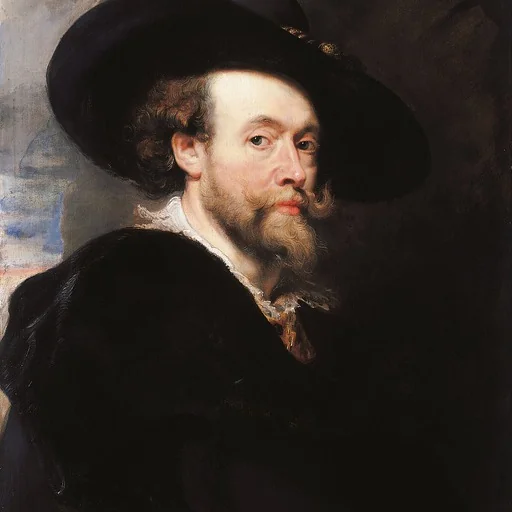
Sir Peter Paul Rubens ( ROO-bənz; Dutch:; 28 June 1577 – 30 May 1640) was a Flemish artist and diplomat.

 The Triumph of the Church
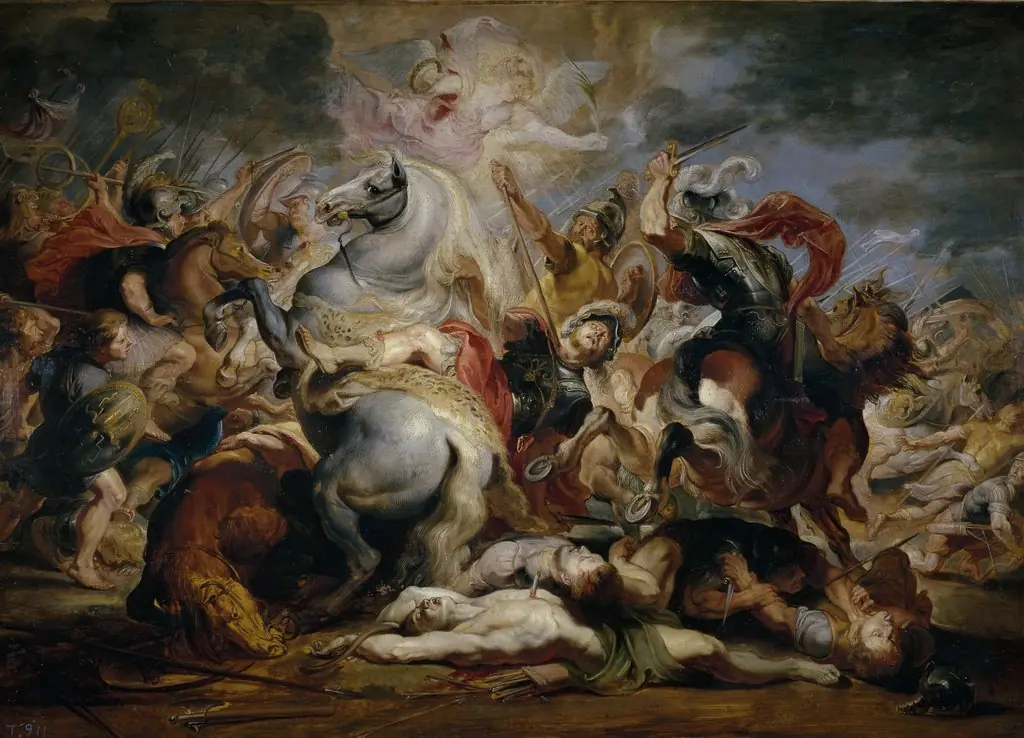 The Death of the Consul Decius
 The Fall of Phaeton
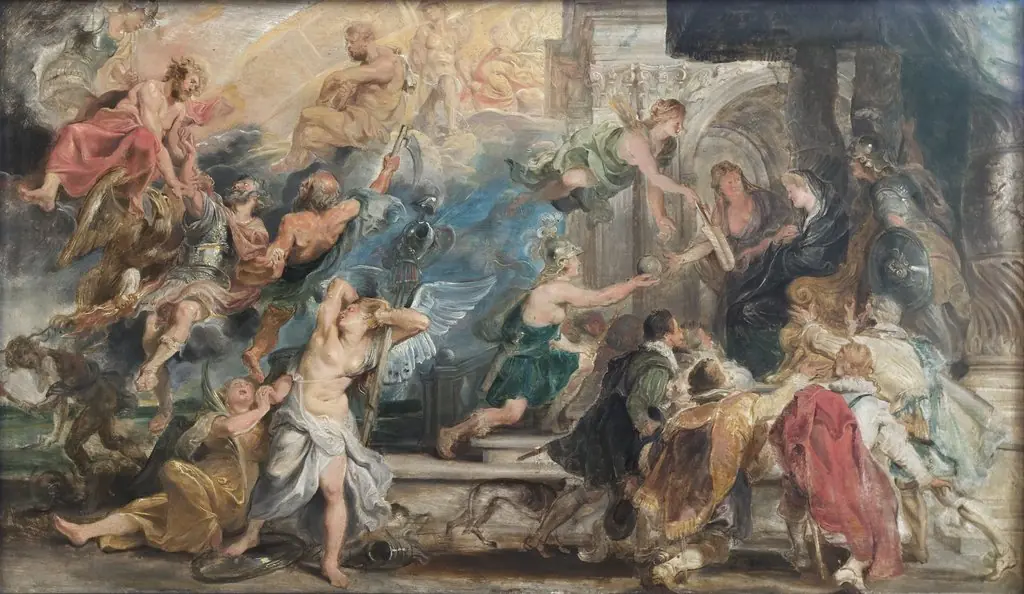 The Apotheosis of Henri IV
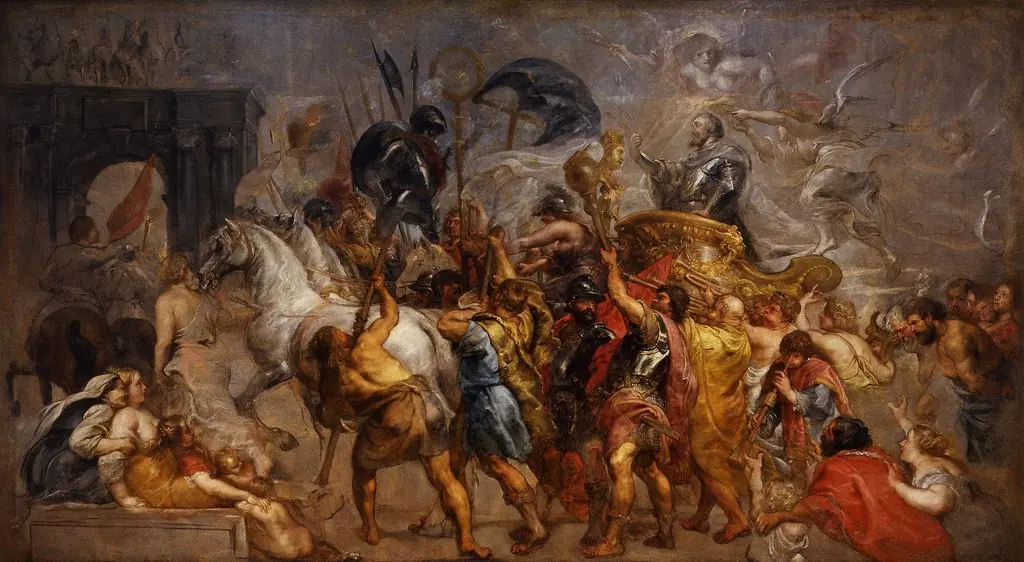 The Triumphal Entry of Henry IV into Paris
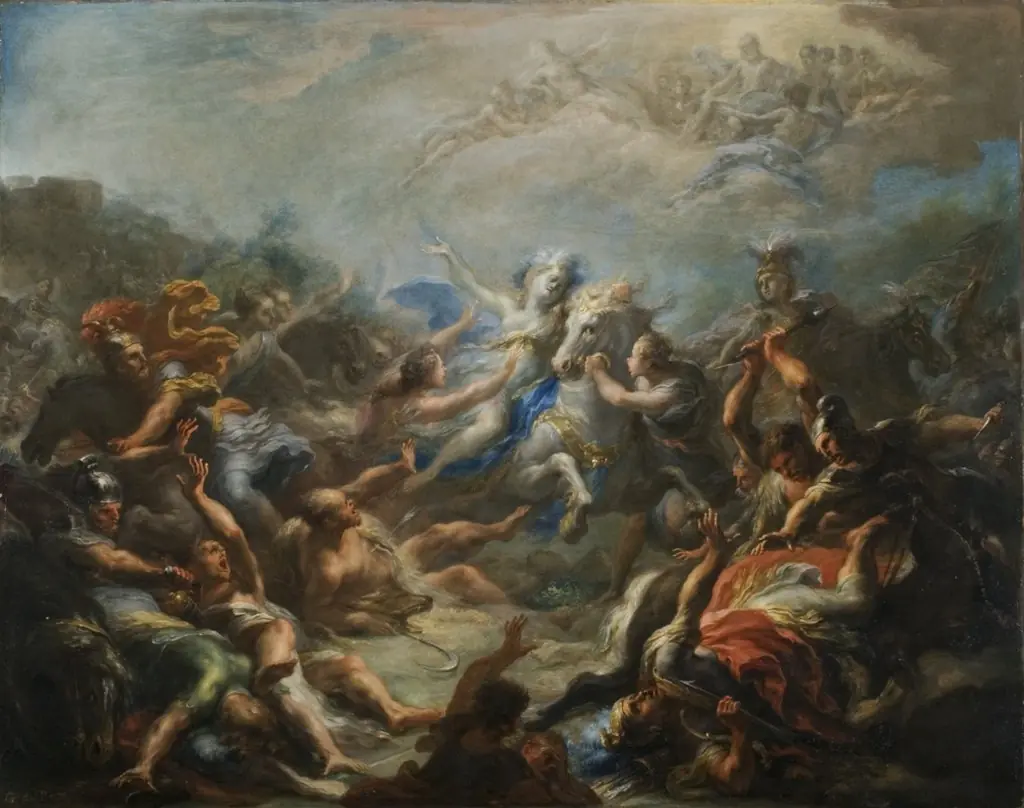 Camillia at War from Virgil's Aeneid
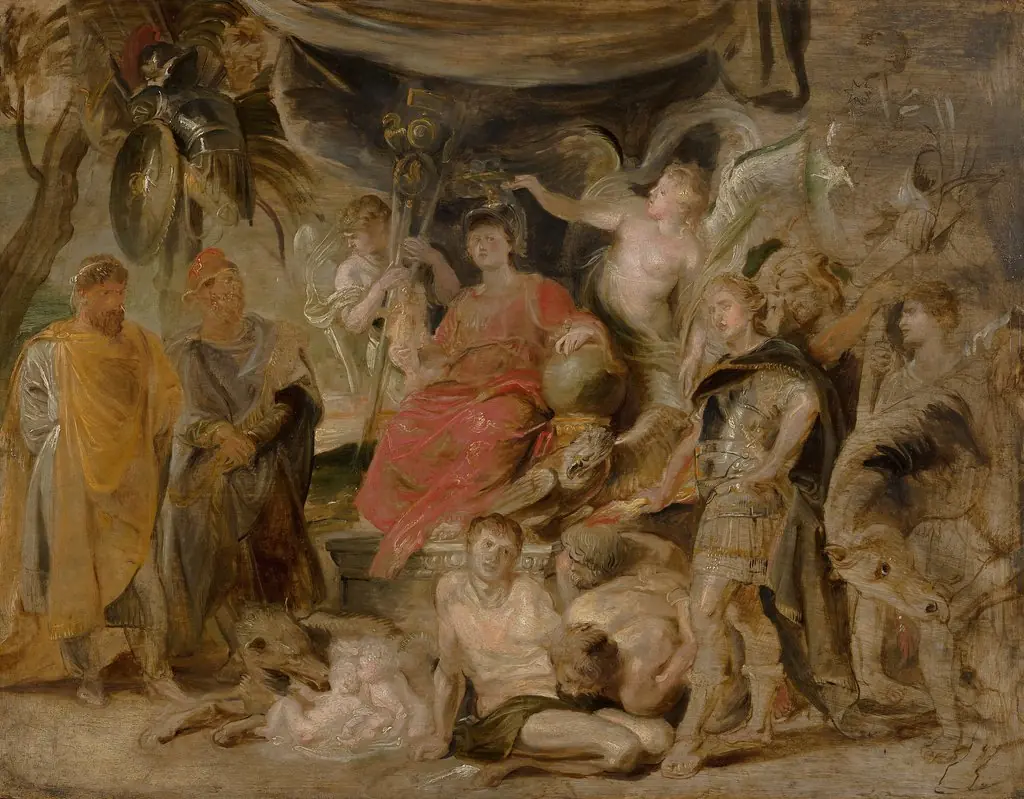 The Triumph of Rome: The Youthful Emperor Constantine Honouring Rome
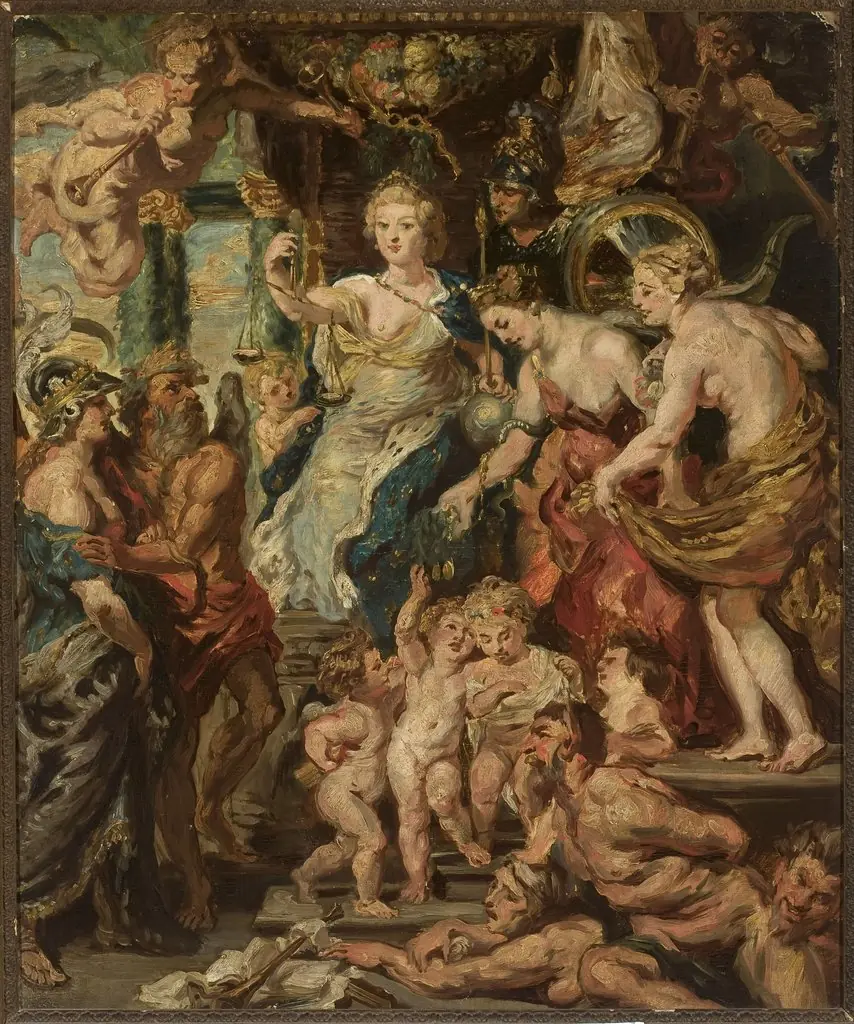 Apotheosis of Maria Medici
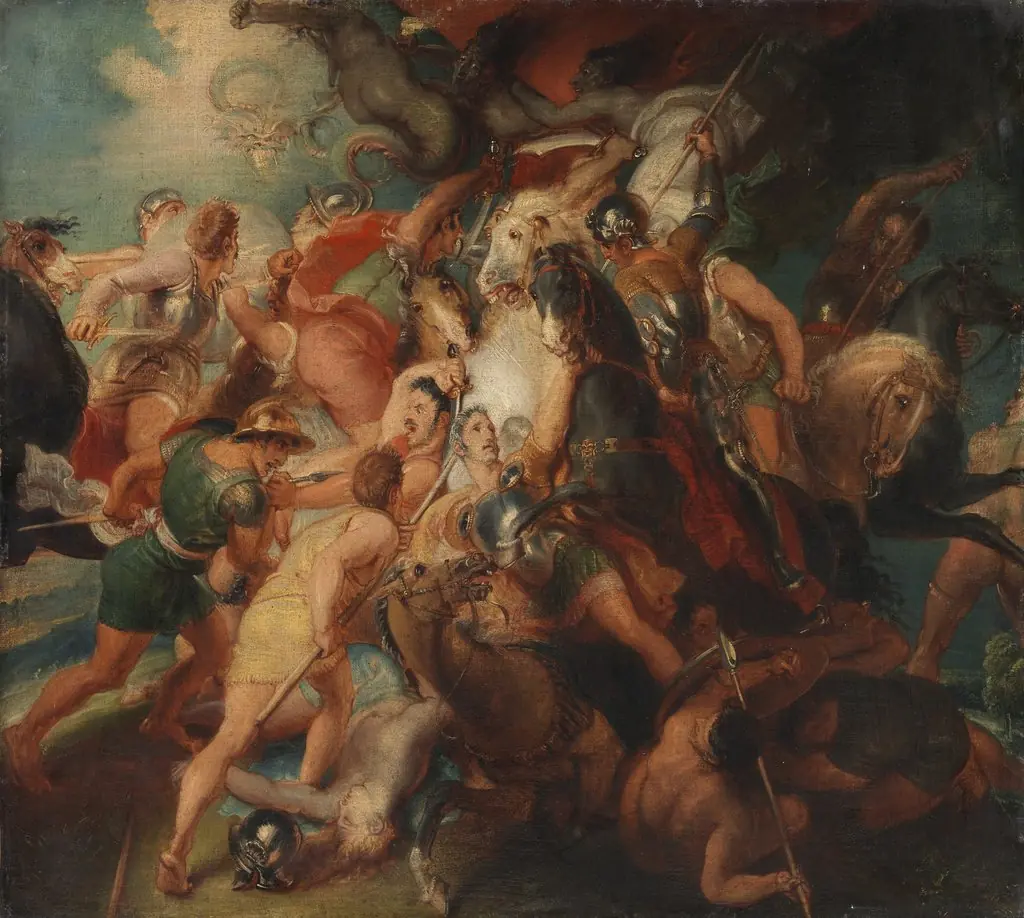 The Horrors of War, Sketch for Burghley House Mural
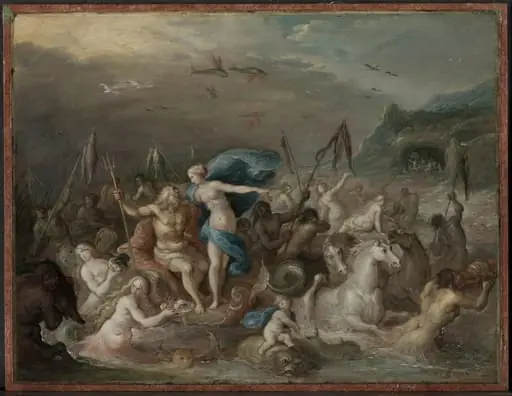 The Triumph of Neptune and Amphitrite
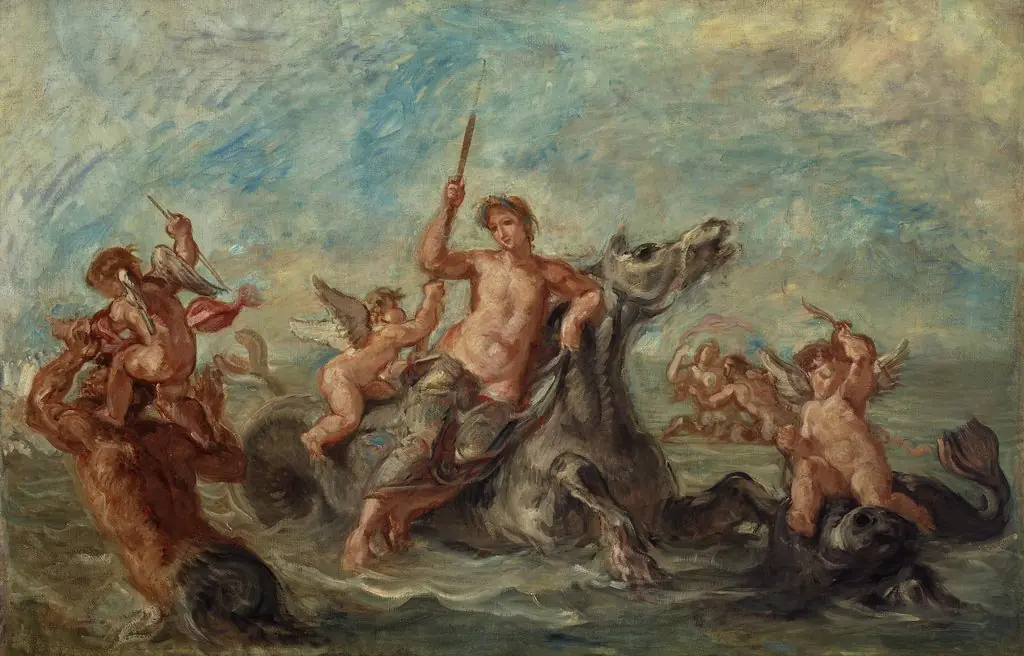 The Triumph of Amphitrite
- The Triumph of the Church