Artwork
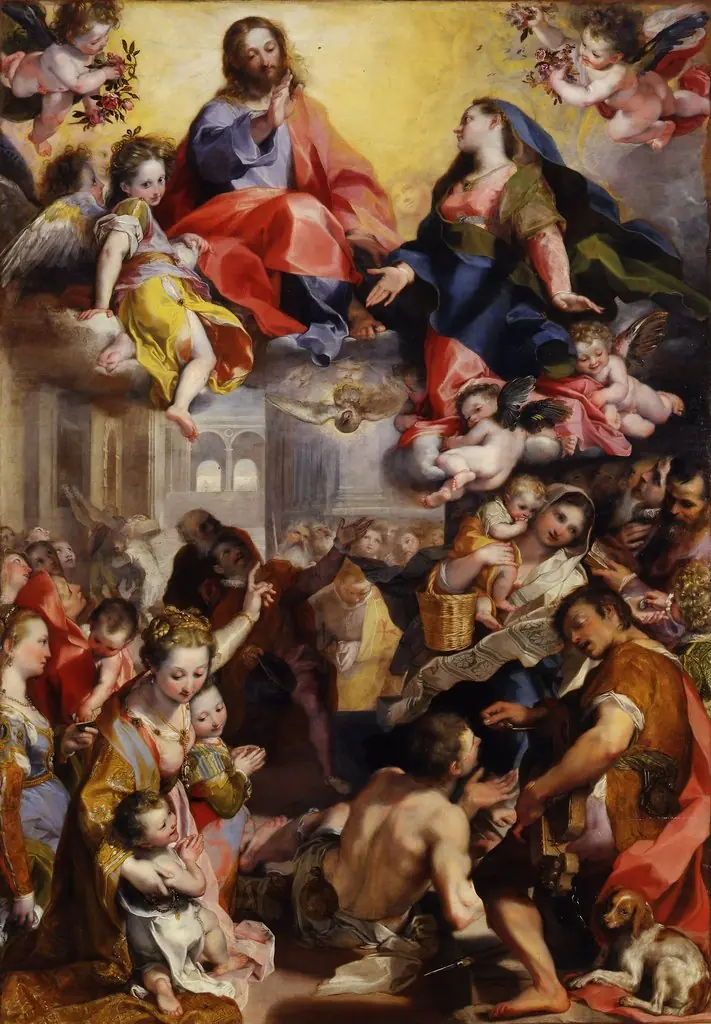
The Virgin and Child Enthroned with Saints by Peter Paul Rubens
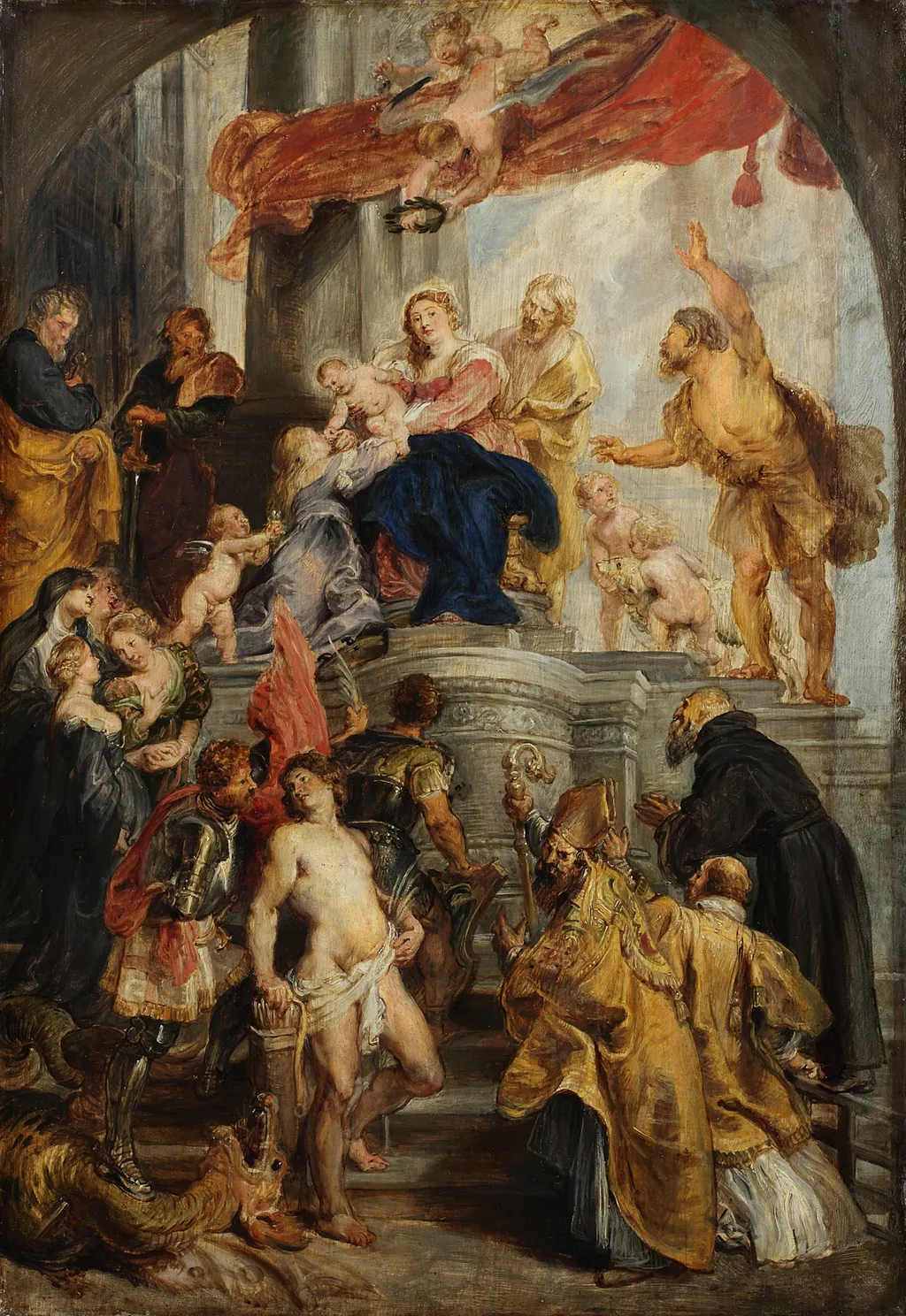
The Virgin and Child Enthroned with Saints by Peter Paul Rubens is an oil painting by the Flemish Baroque painting artist Peter Paul Rubens. It dates from 1628 and is held in the collection of the Gemäldegalerie Berlin.
About this work
History & Provenance
The work’s early history is sparse; it is first documented in the Sanssouci Picture Gallery inventories, indicating continuous court ownership in Potsdam.
Painted in 1628, The Virgin and Child Enthroned with Saints entered the Prussian royal collection under Wilhelm II and is today held in the Gemäldegalerie Berlin.
The work’s early history is sparse; it is first documented in the Sanssouci Picture Gallery inventories, indicating continuous court ownership in Potsdam. The painting’s dimensions (80 × 56 cm) align with the inventory entries, confirming its presence in Berlin by the time of the gallery’s establishment.
The Virgin and Child Enthroned with Saints is held in the collection of the Gemäldegalerie Berlin, specifically within the Sanssouci Picture Gallery at Sanssouci Palace. The work, created in 1628, is an oil painting on panel depicting the Madonna and Child surrounded by saints. While the painting is currently part of the Berlin state collections, historical records indicate it was previously owned by Wilhelm II. The provided sources do not list specific inventory numbers or a detailed exhibition history for this work.
Context
Scholarship on Peter Paul Rubens' The Virgin and Child Enthroned with Saints highlights its significance within the artist's mature religious oeuvre, produced during his Antwerp period and reflecting Counter-Reformation ideals of divine authority and papal relevance. The work, created in 1628, exemplifies Rubens' synthesis of Venetian colorism and Northern realism, particularly in its dynamic composition and emotive rendering of the Madonna and Child enthroned among saints. Its provenance to Wilhelm II and subsequent placement in the Gemäldegalerie Berlin underscores its enduring institutional recognition, while its classification as a pivotal example of 17th-century religious painting continues to inform studies of Rubens' influence on Baroque ecclesiastical art.
Overview
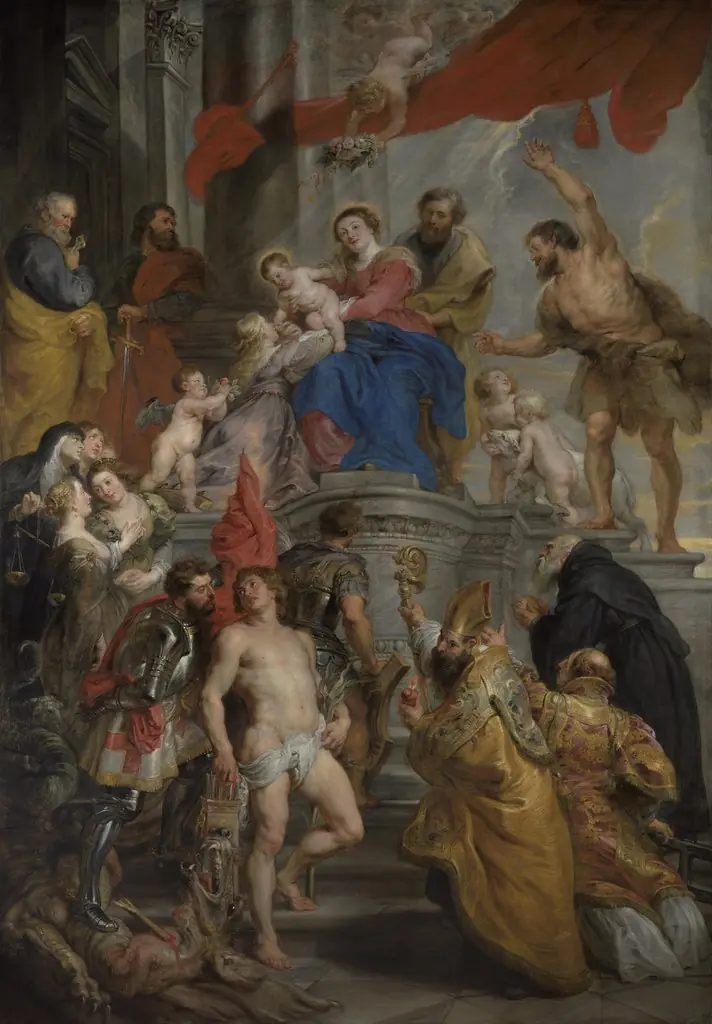
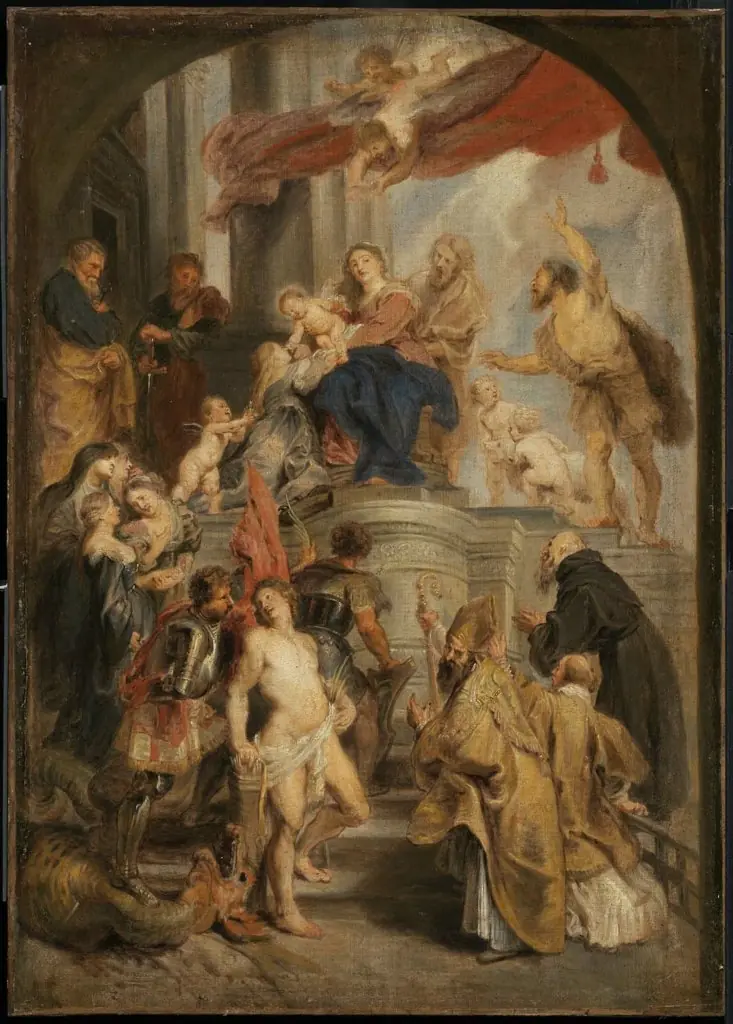
Created in 1628, this oil painting by Peter Paul Rubens depicts the Virgin Mary seated on an elevated throne, holding the infant Jesus. The central figures are surrounded by a crowded assembly of saints, angels, and armored warriors, all rendered with the vigorous movement and rich palette typical of Rubens’s Flemish Baroque approach. The work is part of the collection of the Gemäldegalerie in Berlin.
Subject & Meaning
The composition presents the traditional Christian motif of the Virgin and Child, elevated to a regal setting. Flanking the throne are numerous holy figures, including saints and martial angels, whose gestures and gazes direct attention toward the sacred duo. The inclusion of both clothed and nude youths, as well as armored men, underscores the painting’s synthesis of divine grace and earthly valor, reflecting Counter‑Reformation ideals of devotional immediacy.
Technique & Style
Rubens employs a dynamic arrangement of bodies, using diagonal lines and overlapping forms to generate a sense of motion. Warm golds, deep reds, and softened flesh tones dominate the palette, while chiaroscuro modeling gives depth to the figures. The brushwork combines vigorous, fluid strokes with meticulous detailing, characteristic of Rubens’s mature Baroque style that emphasizes sensuality and theatricality.
Own this work as a print
Artist & collection
Artist
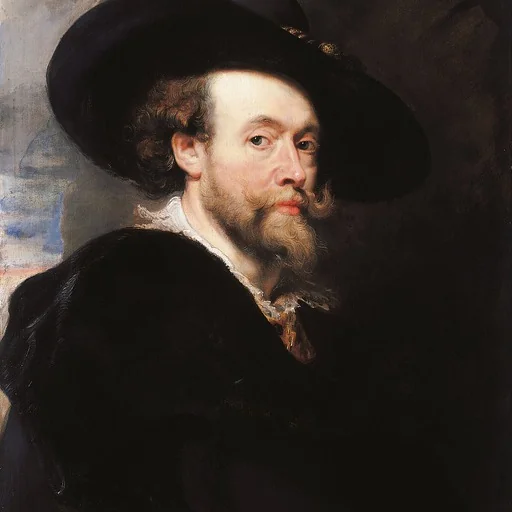
Sir Peter Paul Rubens ( ROO-bənz; Dutch:; 28 June 1577 – 30 May 1640) was a Flemish artist and diplomat.

 Virgin and Child Adored by Saints
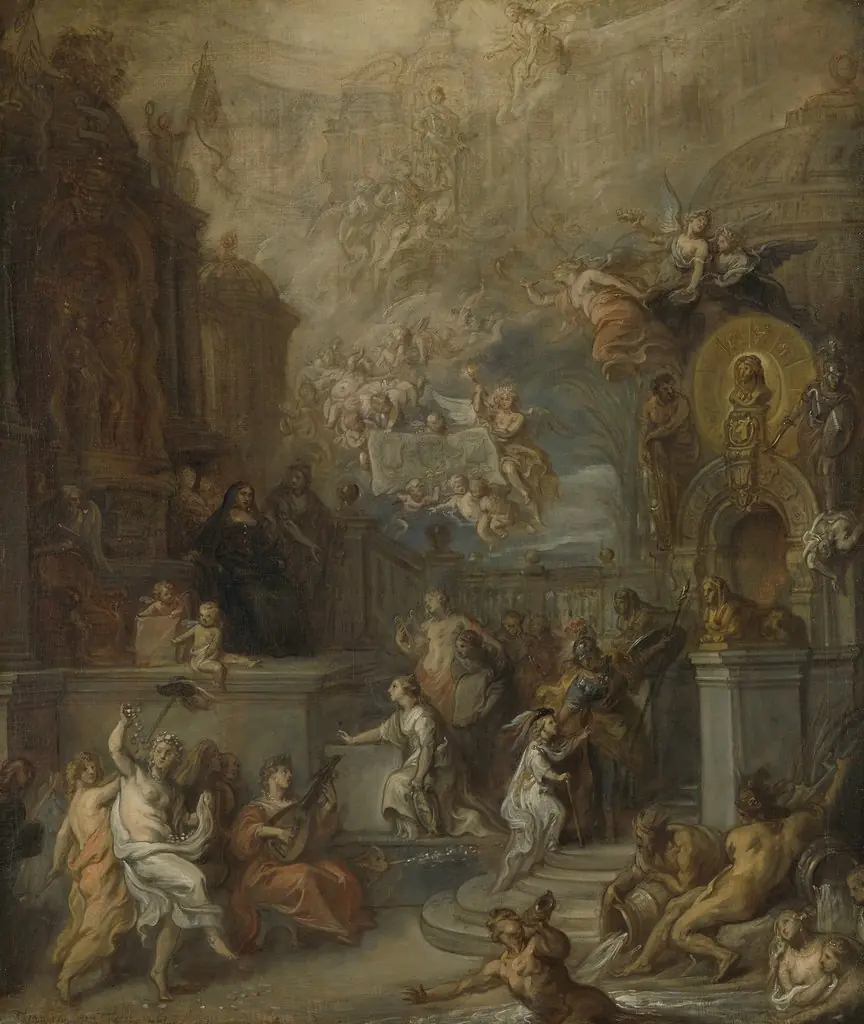 Allegory of William III's leavetaking from Alamia van Solms after the transferral of the regency to the statesgeneral
 Allegory of the Farewell of William III from Amalia van Solms following the transfer of Regency to the States General
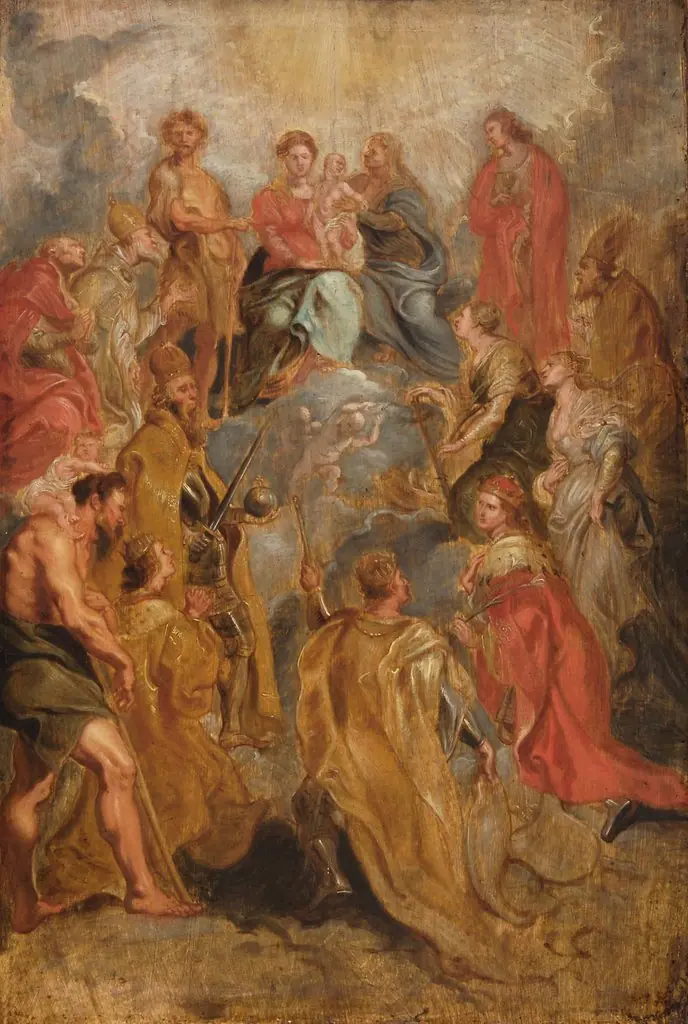 Madonna and Child with Saint Anne
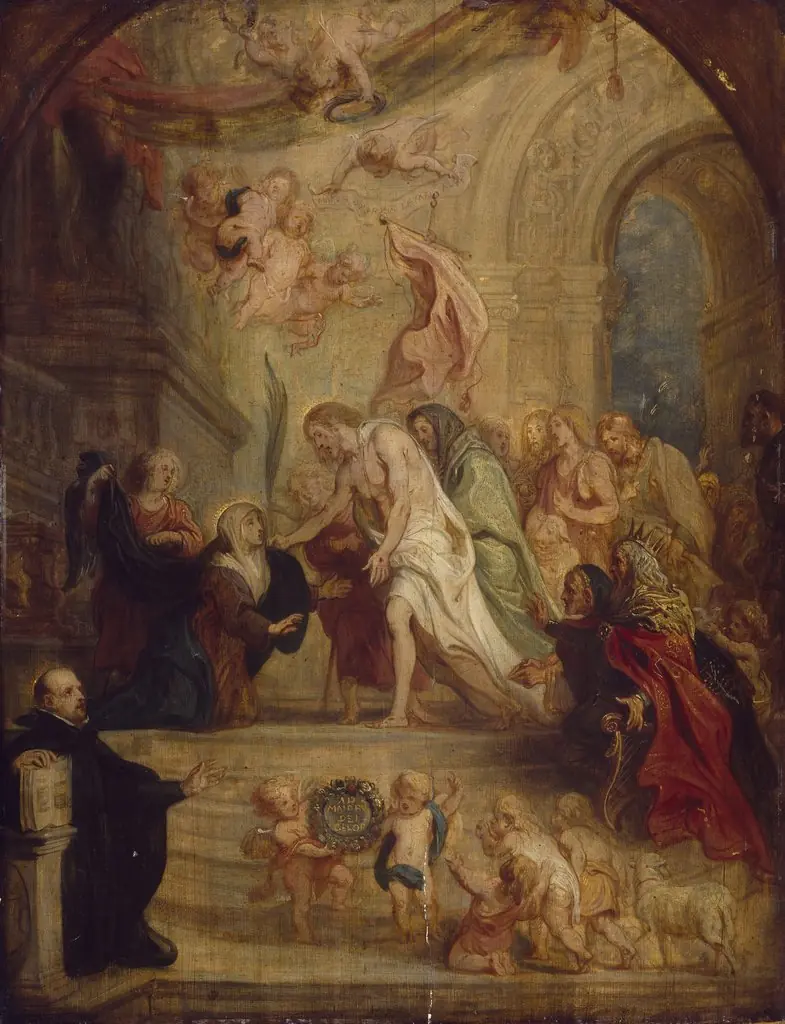 The Resurrected Christ Appearing to his Mother
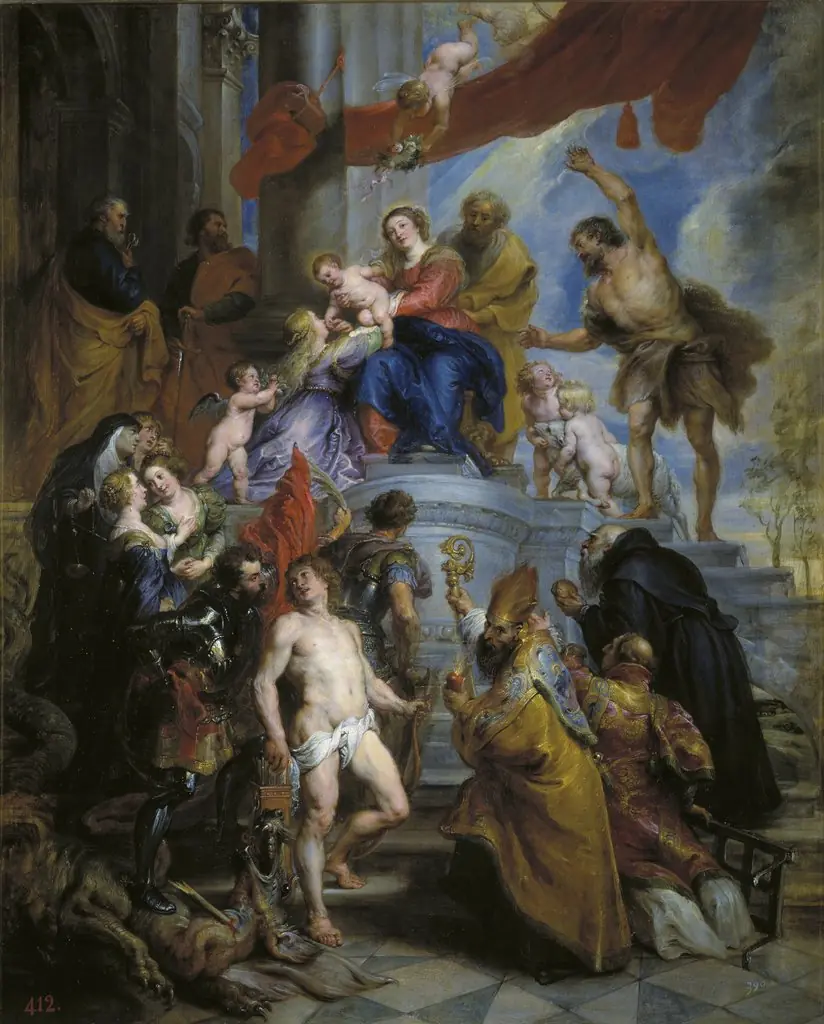 The Holy Family surrounded by Saints
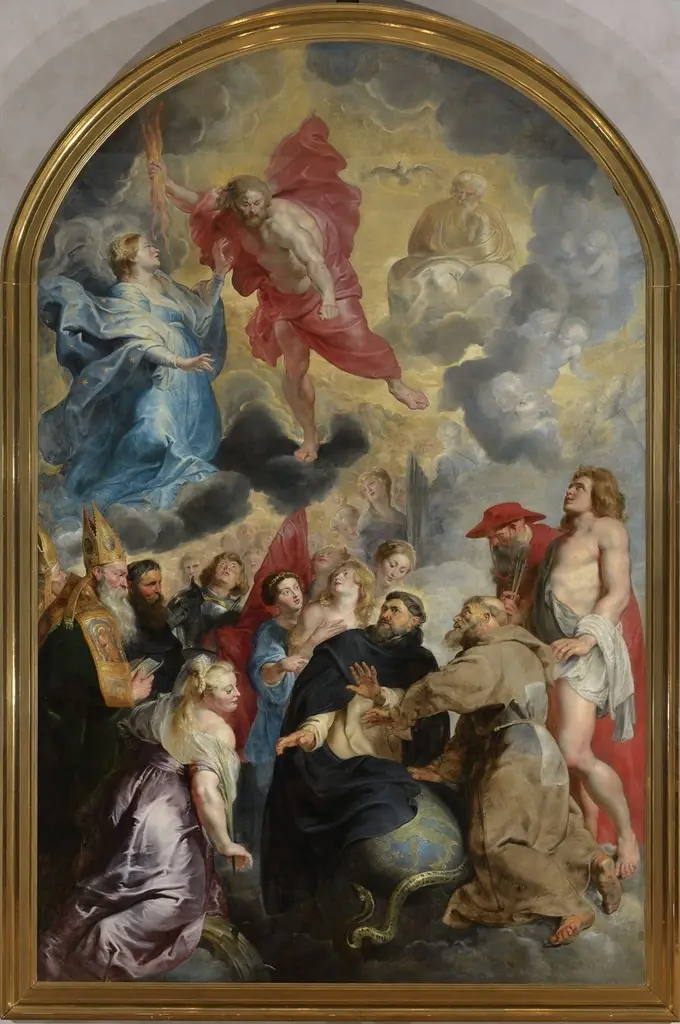 Saint Dominic and Saint Francis Protecting the World from the Wrath of Christ
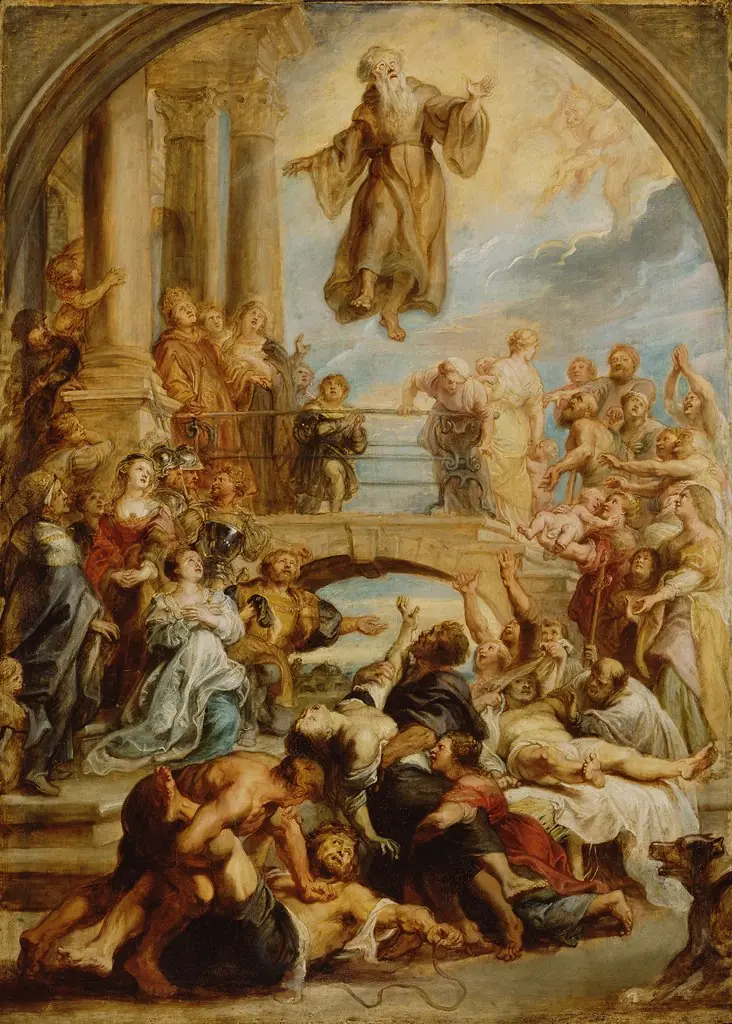 The Miracles of Saint Francis of Paola
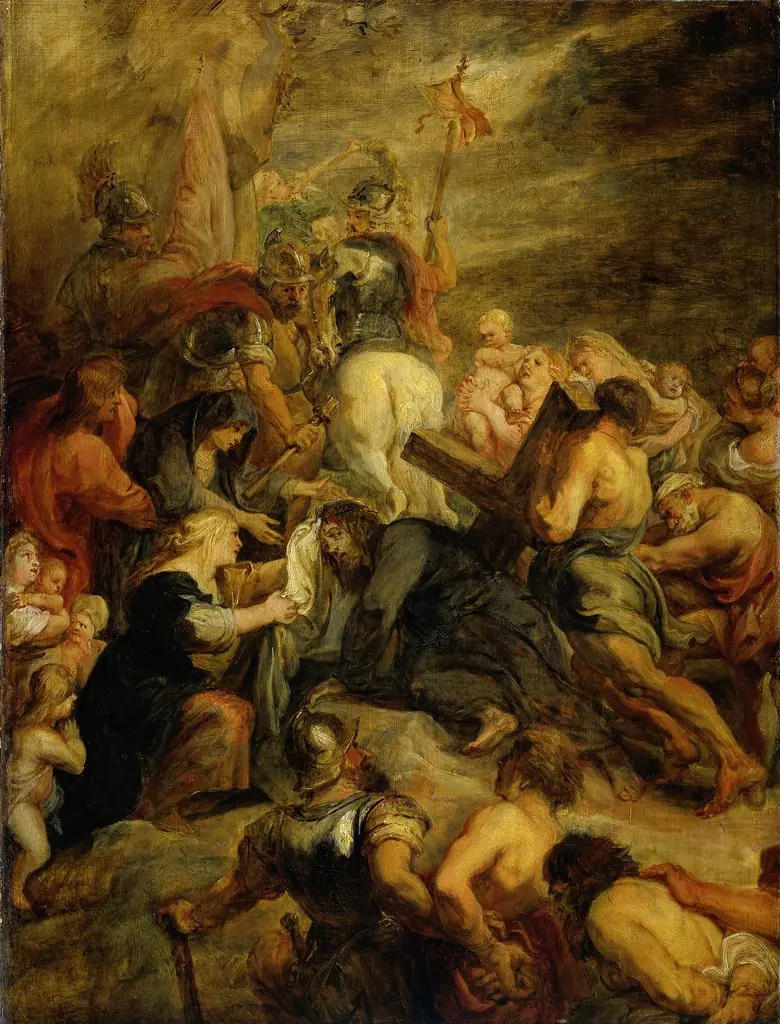 The carrying of the cross
 Madonna of the people