Artwork
Portrait de la Mère des Anges Suireau
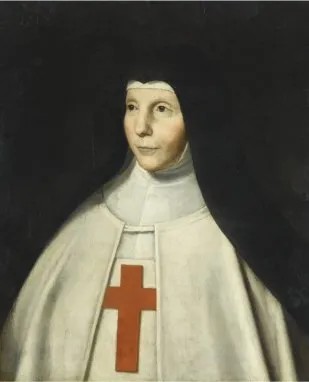
Portrait de la Mère des Anges Suireau is an oil painting by the Caravaggisti artist Philippe de Champaigne. It dates from 1648 and is held in the collection of the Palace of Versailles. Painted around 1648, this oil portrait depicts Mother des Anges Suireau, a nun of the Convent of the Visitation in Paris.
About this work
Overview
It resides today in the Palace of Versailles, part of a broader collection of devotional and aristocratic portraiture assembled under Louis XIV.
Painted around 1648, this oil portrait depicts Mother des Anges Suireau, a nun of the Convent of the Visitation in Paris. Created by Philippe de Champaigne, a Flemish-born artist active in France, the work reflects his role as a leading portraitist of religious figures during the mid-17th century. It resides today in the Palace of Versailles, part of a broader collection of devotional and aristocratic portraiture assembled under Louis XIV.
Subject & Meaning
The sitter is identified as a member of the Visitation Order, a Catholic congregation founded by Saint Francis de Sales and Saint Jane Frances de Chantal. Her white habit and red cross signify her vows of humility and devotion. The direct gaze and restrained expression convey quiet contemplation, aligning with the order’s emphasis on inner spirituality over external display. The portrait functions as both personal record and spiritual testament.
Technique & Style
Champaigne employs a restrained palette dominated by white, gray, and deep brown, with the red cross serving as the sole accent. The background is uniformly dark, isolating the figure through strong tonal contrast. Brushwork is precise yet unadorned, favoring clarity of form over theatricality.
This approach reflects his alignment with French classicism, tempered by the naturalism learned from Caravaggio’s followers, though without overt drama.
History & Provenance
Commissioned during Champaigne’s tenure as a favored painter of French religious communities, the portrait likely originated in the Convent of the Visitation. It entered the royal collection in the late 17th century, possibly through royal patronage or acquisition by Louis XIV’s circle. Its presence at Versailles underscores the monarchy’s interest in associating itself with pious institutions and their visual culture.
Context
In mid-17th century France, religious portraiture was increasingly valued as a means of expressing piety and institutional identity. Champaigne’s depictions of nuns and clergy were part of a broader trend where monastic communities sought to document their members with dignity. The portrait aligns with the Counter-Reformation’s emphasis on personal devotion and the visibility of holy life, even as it avoids overt mysticism.
Legacy
The portrait exemplifies Champaigne’s ability to merge psychological realism with spiritual gravity, influencing later French portraiture of religious figures. While not widely exhibited, it remains a key example of how monastic identity was visually constructed during the reign of Louis XIV. Its preservation in Versailles ensures its continued role in understanding the intersection of faith, gender, and power in early modern France.
Artist & collection
Artist
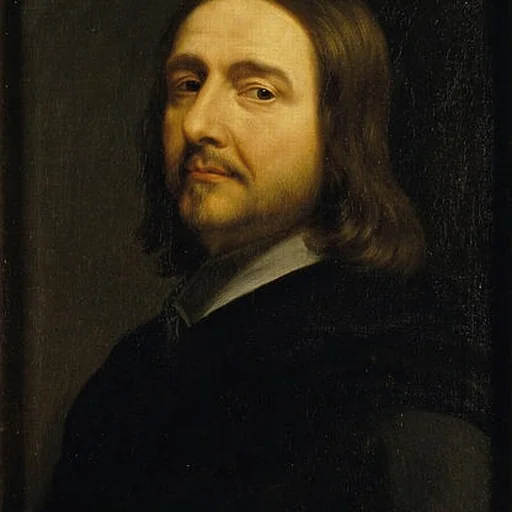
Philippe de Champaigne (French pronunciation:; 26 May 1602 – 12 August 1674) was a Brabant-born French Baroque era painter, a major exponent of French Baroque painting.

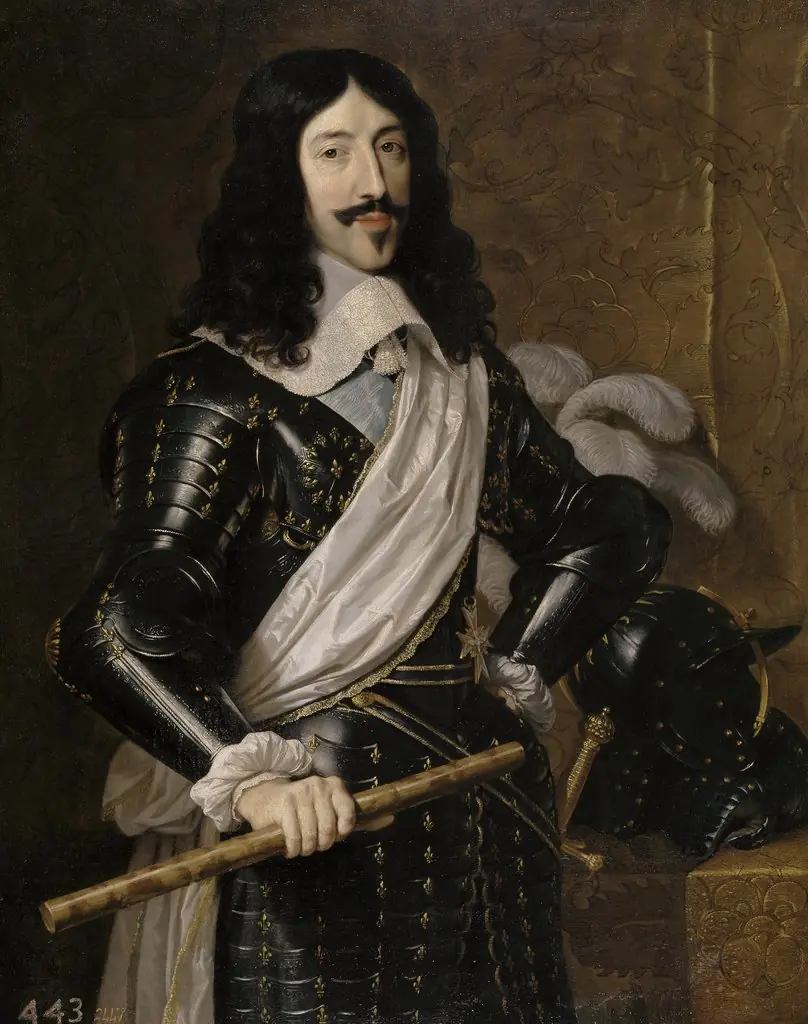
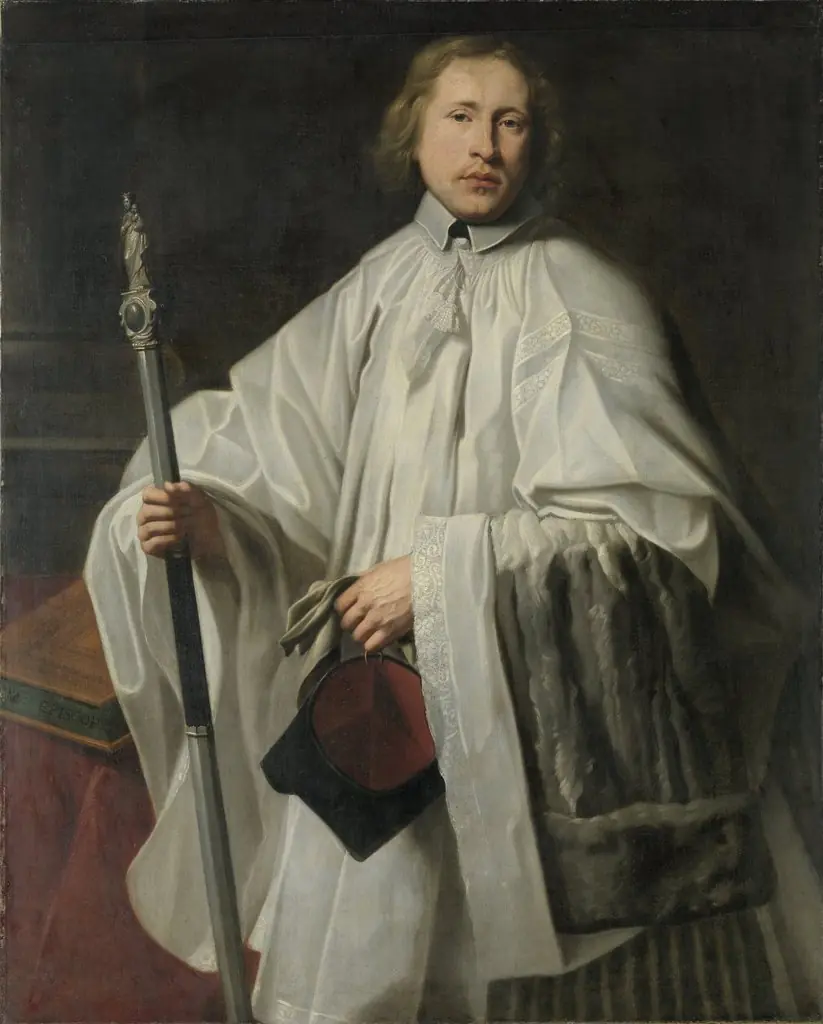
- Agnès Arnauld, abbesse of Port-Royal-des-Champs Abbey
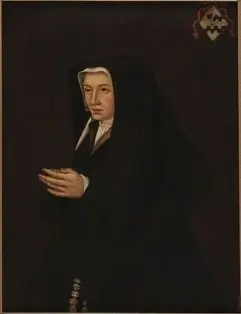 Portrait of Beatrix van Slingeland (1485-1555). Wife of Cornelis de Witt
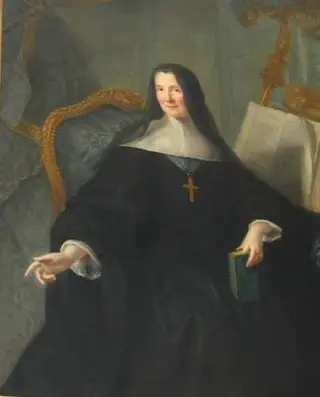 Anne de Clermont-Chaste de Gessans (?-1789), last abbess of Chelles Abbey
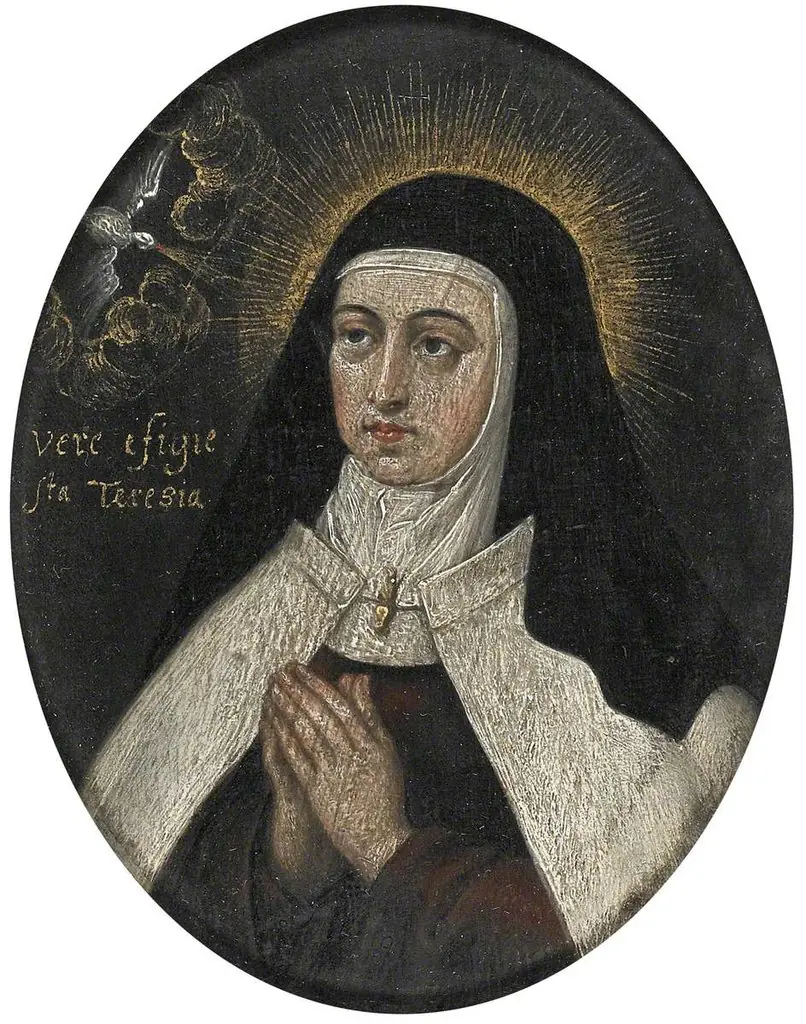 Saint Teresa of Ávila (1515–1582)
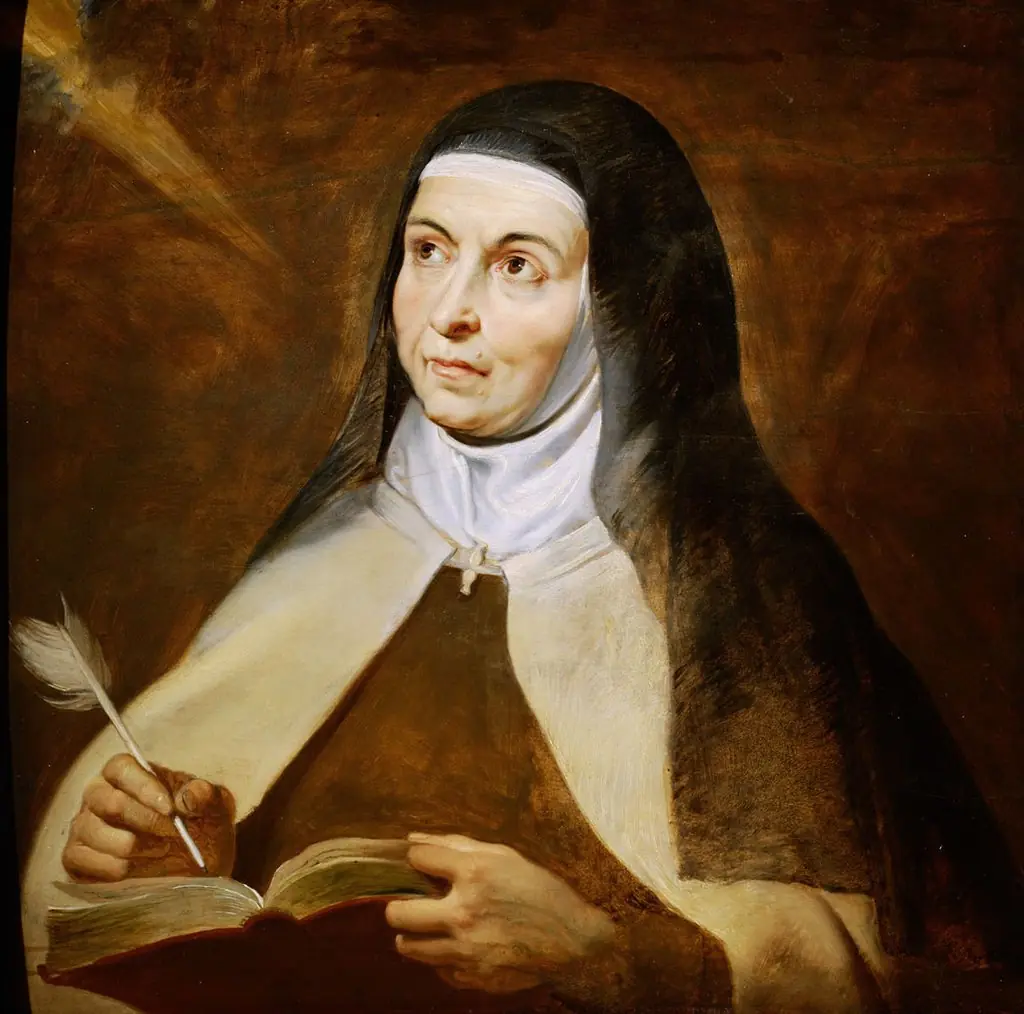 Theresa of Avila
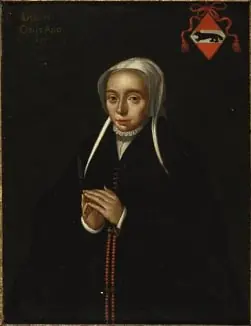 Lidewij van Beveren (1522-1557)
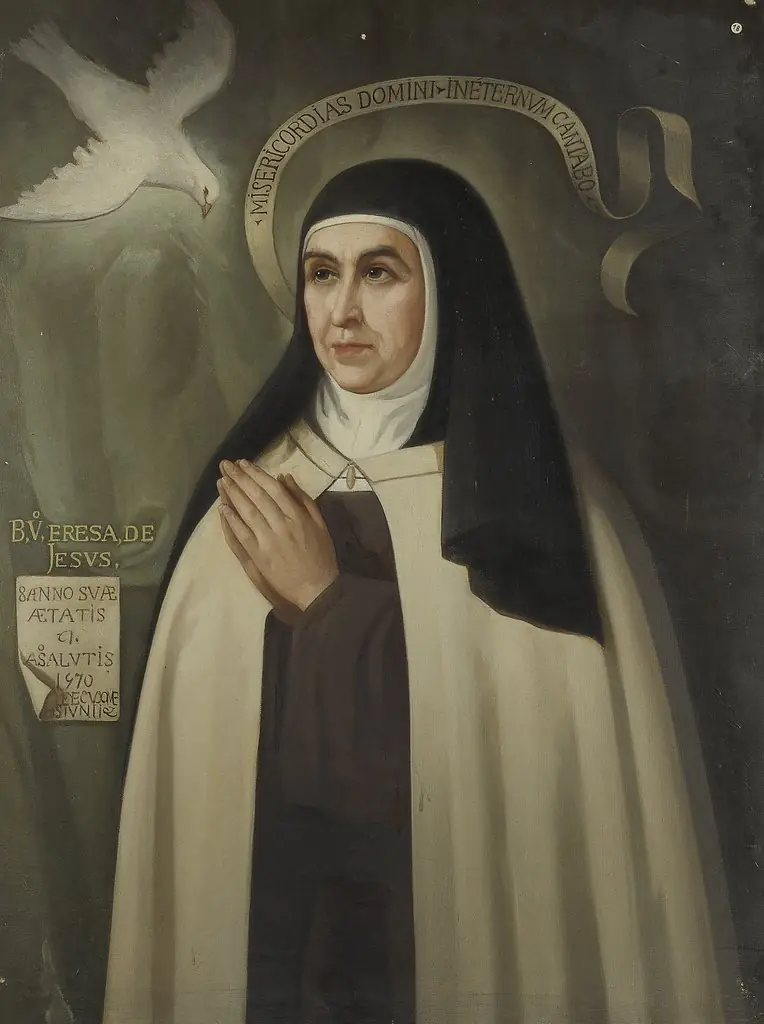 Saint Teresa of Ávila
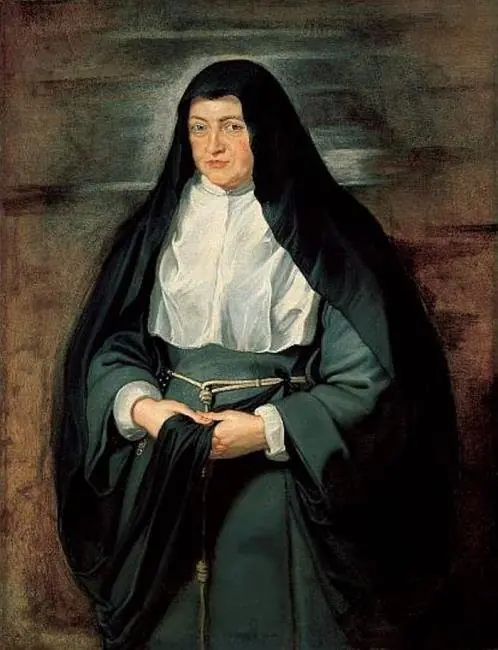 Portrait of Archduchess Isabella Clara Eugenia, Spanish Regent of the Low Countries, as a Nun
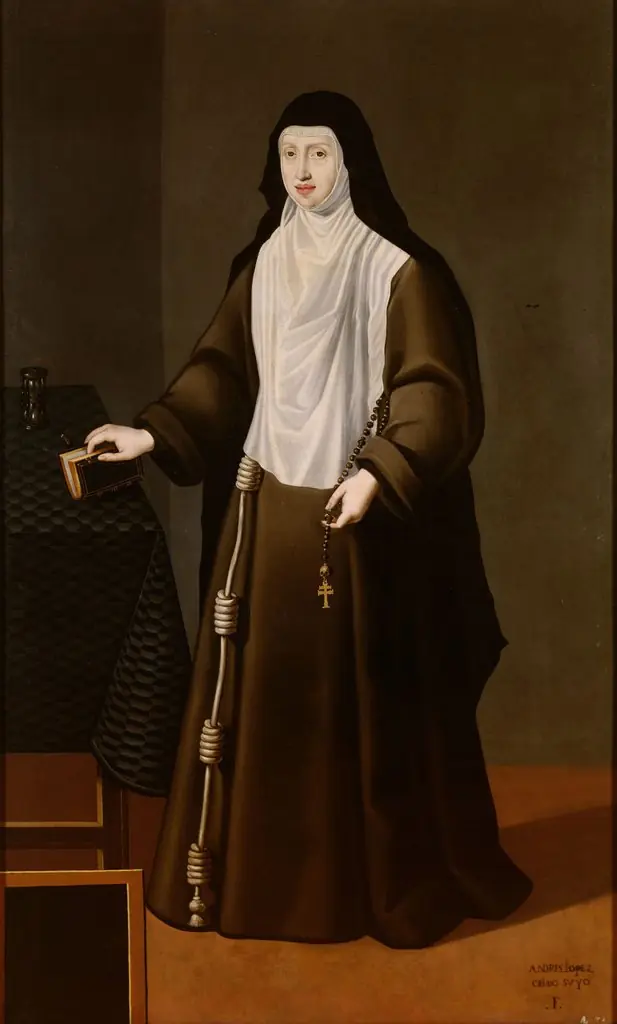 Erzherzogin Margarete (1567-1633), Tochter von Maximilian II. als Nonne in ganzer Figur
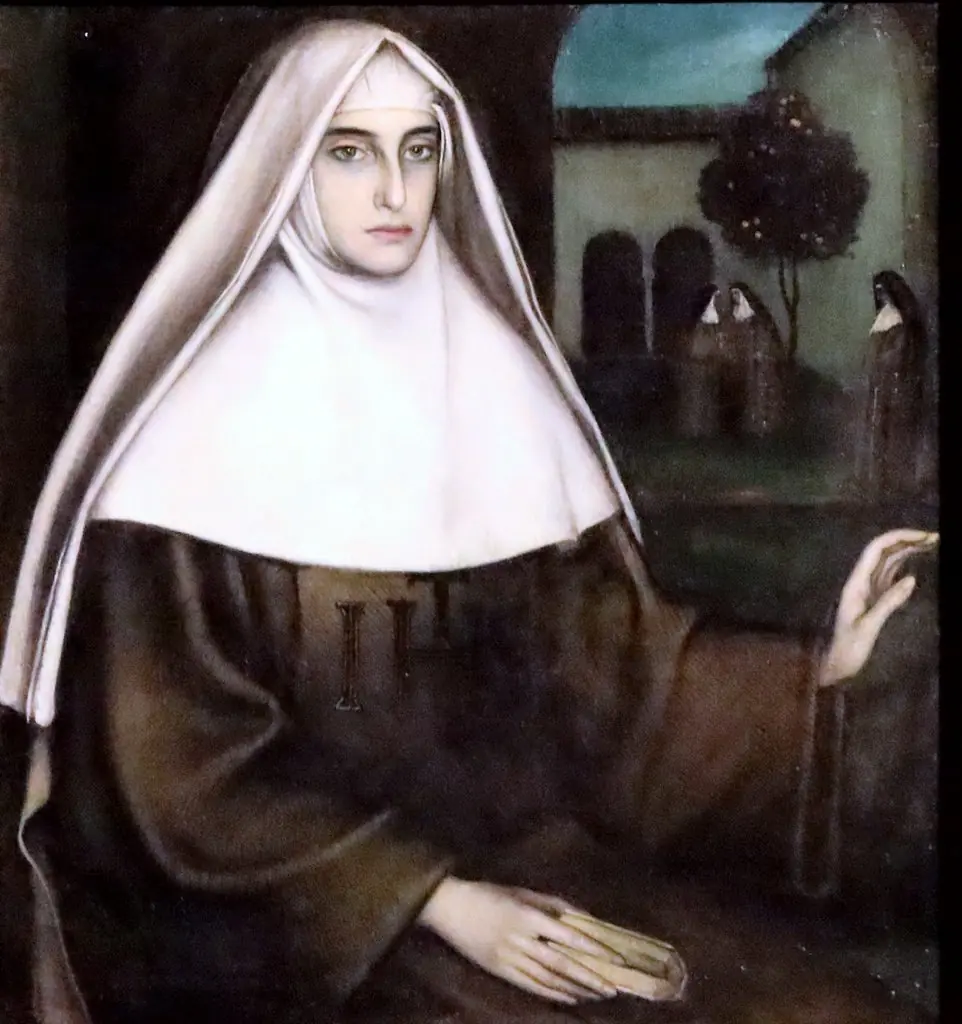 La novícia (Museu Nacional d'Art de Catalunya, inv 024157-004)
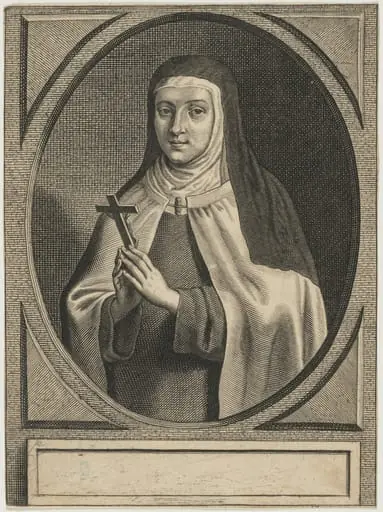 Portrait of a Nun Holding Crucifix
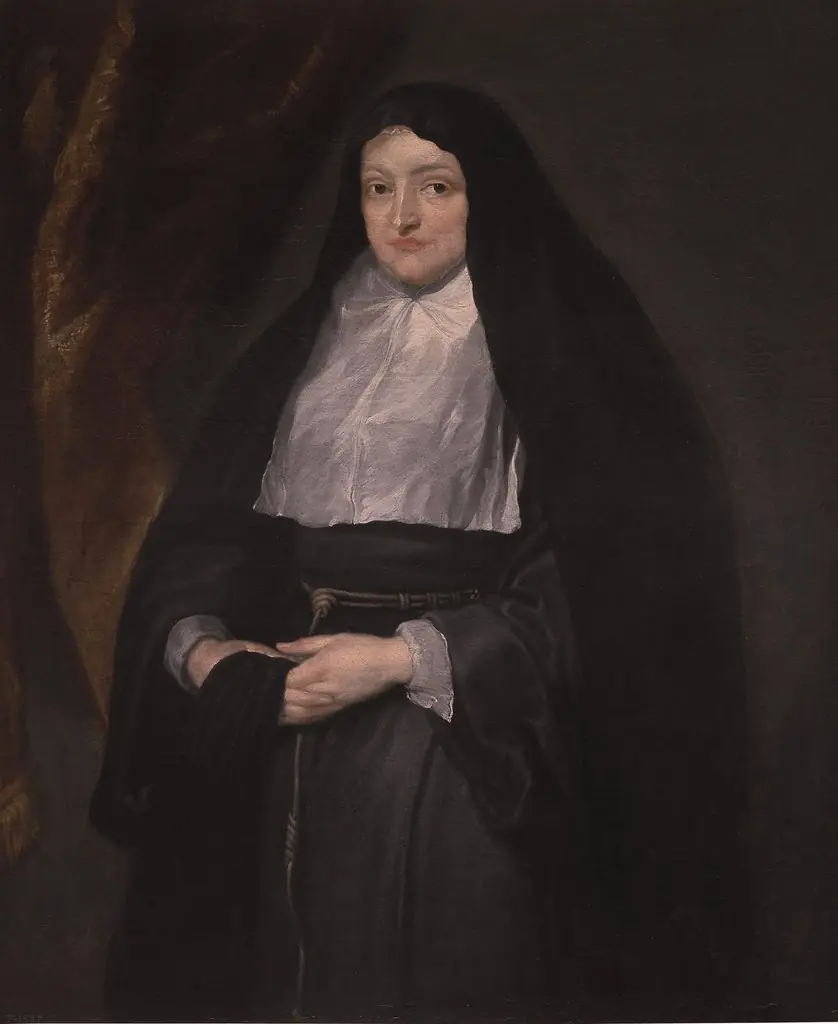 Portrait of Isabel Clara Eugenia as a nun