Artwork
Merrymakers in an Inn
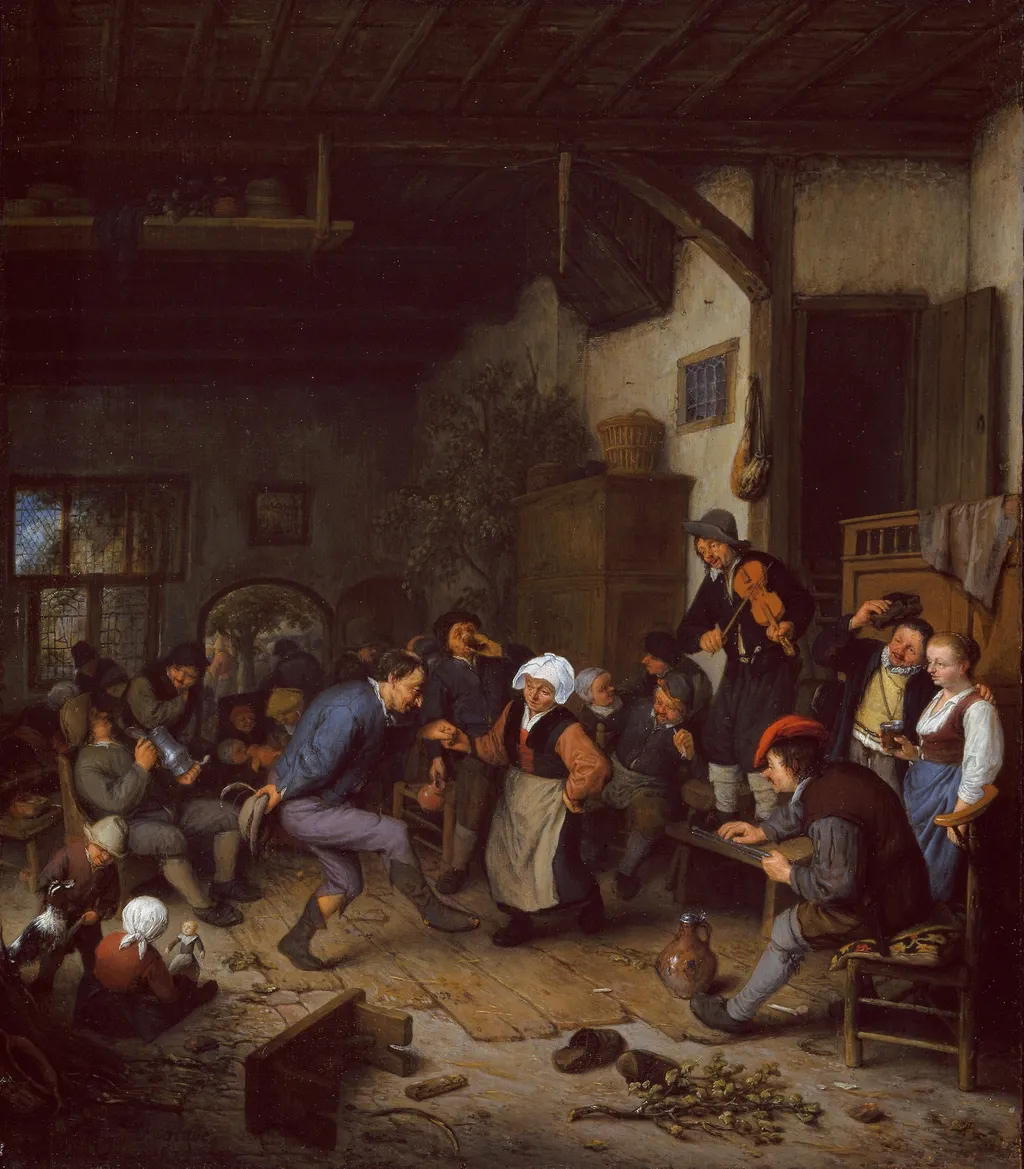
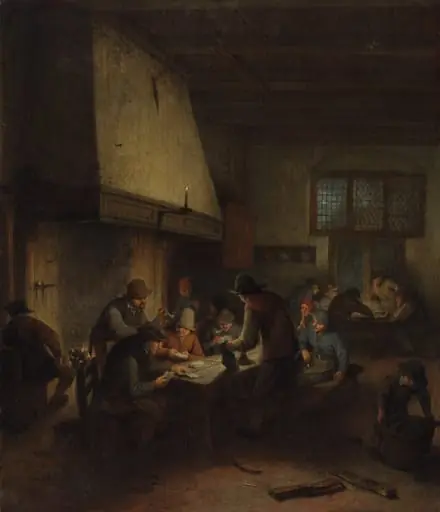
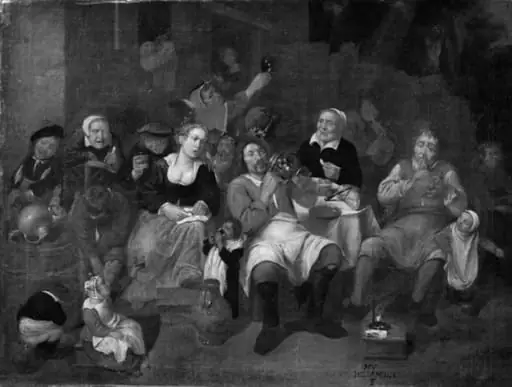
Merrymakers in an Inn is an oil painting by the Dutch Golden Age artist Adriaen van Ostade. It dates from 1674 and is held in the collection of the Art Institute of Chicago.
About this work
Overview
Executed in oil paint, the work showcases the artist's mature style, characterized by earthy tones, dynamic brushwork, and a keen observation of rustic life.
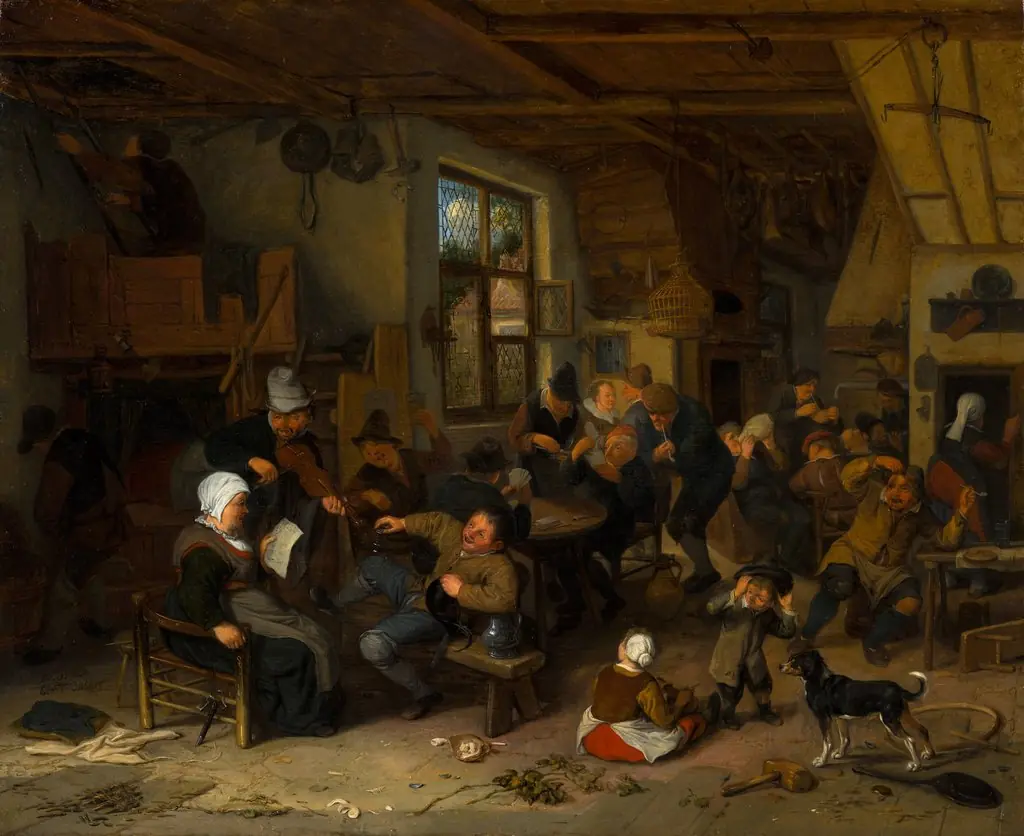
Merrymakers in an Inn, painted by Adriaen van Ostade in 1674, is a genre scene depicting a lively interior gathering of peasants. The composition centers on a crowded room defined by rough wooden walls and a low ceiling, creating an intimate yet chaotic atmosphere. Van Ostade arranges the figures to emphasize social interaction and movement; a man in a black hat plays the violin, drawing the attention of surrounding onlookers who lean in or gesture animatedly.
Other figures are engaged in drinking, conversation, or observing the musicians, with a woman in a white cap standing prominently within the group. Executed in oil paint, the work showcases the artist's mature style, characterized by earthy tones, dynamic brushwork, and a keen observation of rustic life. Created during the late Dutch Golden Age, this painting reflects van Ostade's enduring focus on the daily amusements of the lower classes.
By 1674, the artist had long established his reputation for such scenes, moving away from the rougher, more caricatured depictions of his early career toward a slightly more refined, though still earthy, portrayal of peasant merriment. The work stands as a testament to his ability to capture the noise, warmth, and vitality of 17th-century Dutch tavern culture.
Subject & Meaning
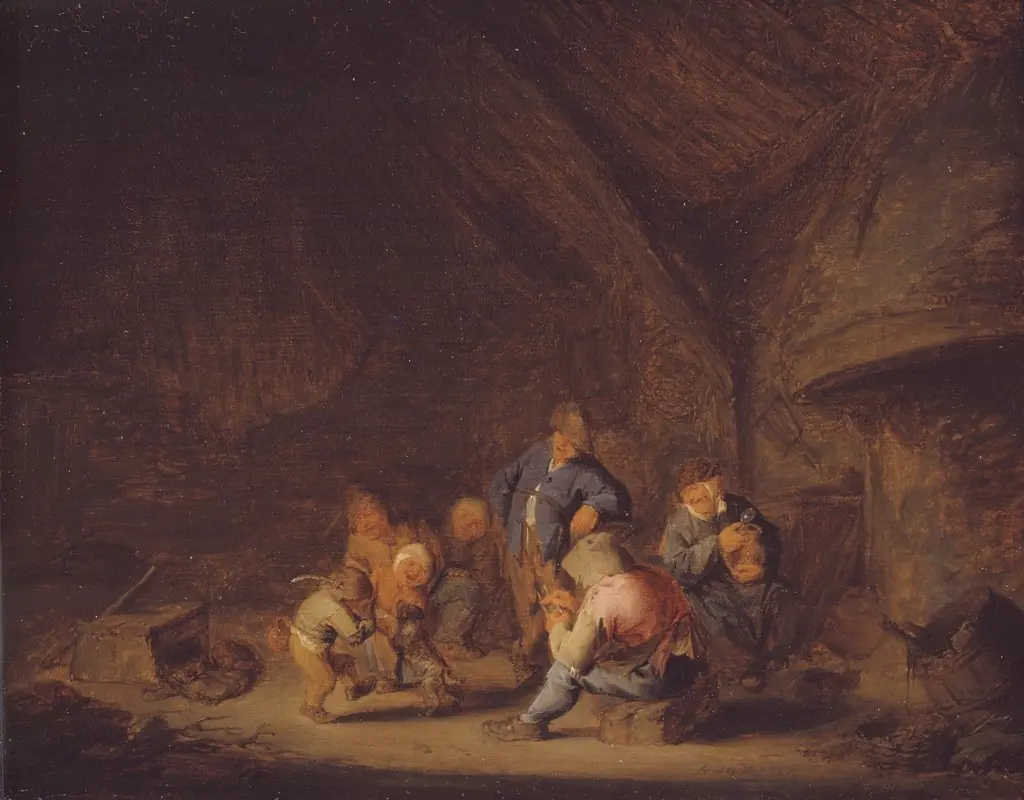
The canvas captures a lively gathering of townsfolk within a cramped, timber‑walled room. Figures in period dress are shown drinking, conversing, and making music, while a child with a dog and wandering chickens add a touch of domestic disorder. The scene conveys the convivial atmosphere of communal leisure in a 17th‑century inn.
Technique & Style
Van Ostade employs a strong contrast of light and shadow, allowing certain faces to glow under a dim source while others recede into darkness. This chiaroscuro effect heightens the sense of depth and animates the crowded space, rendering textures, from rough walls to scattered food, with tactile realism.
History & Provenance
Created toward the end of van Ostade’s career, the painting entered the Art Institute of Chicago’s holdings through acquisition in the early 20th century. Its provenance traces a typical path for Dutch genre works, moving from private collections in Europe to an American museum context, where it remains on display.
Own this work as a print
Artist & collection

Artist
Adriaen van Ostade (baptized as Adriaen Jansz Hendricx 10 December 1610 – buried 2 May 1685) was a Dutch Golden Age painter of genre works, showing the everyday life of ordinary men and women.