Artwork
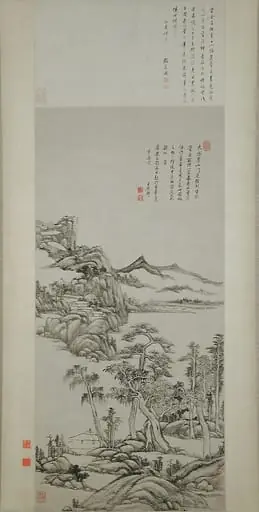
清 祁豸佳 倣倪瓚冬林亭子圖 軸|Pavilion amongst Wintry Trees after Ni Zan
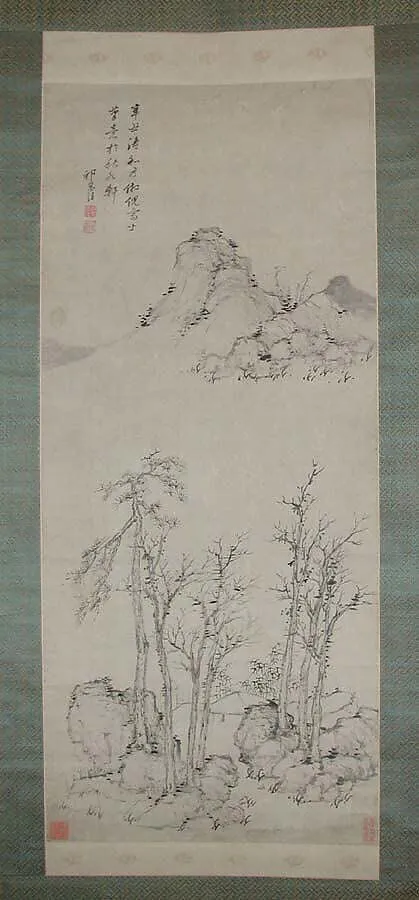
清 祁豸佳 倣倪瓚冬林亭子圖 軸|Pavilion amongst Wintry Trees after Ni Zan is an ink painting by the Baroque artist Qi Zhijia. It dates from 1661 and is held in the collection of the Metropolitan Museum of Art.
About this work
Subject & Meaning
The work, executed in ink on paper in 1661 in China, functions as a landscape painting that evokes the scholarly ideal of seeking solitude amid seasonal change.
The hanging scroll presents a solitary pavilion nestled among bare, snow‑laden trees, a motif identified in the title as a pavilion amidst wintry trees. By modeling his composition on the late Yuan painter Ni Zan, Qi Zhijia aligns the image with a tradition that emphasizes quiet retreat and contemplative engagement with nature. The work, executed in ink on paper in 1661 in China, functions as a landscape painting that evokes the scholarly ideal of seeking solitude amid seasonal change. Its austere visual language reflects the literati preference for understated representation of natural settings.
Technique & Style
The work is a hanging scroll executed in ink on paper, a traditional Chinese format that allows for vertical display and mounting. Its dimensions are recorded as 116 cm in height and 50.8 cm in width, giving it an elongated vertical proportion typical of literati landscape scrolls. The painting belongs to the landscape genre and is dated 1661.
Stylistically, the title indicates that Qi Zhijia modeled the composition on Ni Zan, the Yuan-dynasty master famed for spare, dry-brush wintry landscapes with empty pavilions and bare trees. Adopting this model implies a restrained, monochrome ink handling and a sparse, atmospheric arrangement rather than dense or colorful treatment.
History & Provenance
Created in 1661 by the Qing dynasty artist Qi Zhijia, this hanging scroll depicts a landscape executed in ink on paper. The work is titled 'Pavilion amongst Wintry Trees after Ni Zan,' indicating it was produced as an interpretation or homage to the style of the earlier master Ni Zan. While the specific circumstances of its commission and its ownership history prior to entering its current institution remain undocumented in the available records, the piece is firmly dated to the mid-seventeenth century.
It is currently held in the collection of the Metropolitan Museum of Art in New York, where it is cataloged as a Chinese landscape painting measuring 116 cm in height and 50.8 cm in width.
The hanging scroll Pavilion amongst Wintry Trees after Ni Zan by Qi Zhijia is held in the collection of the Metropolitan Museum of Art in New York. The work, executed in ink on paper in 1661, is classified within the museum's holdings of Chinese landscape paintings. While the specific accession number is not detailed in the available records, the painting remains a part of the institution's permanent collection dedicated to Asian art.
Context
The hanging scroll created in 1661, ink on paper, is classified as a landscape painting and bears the title "Pavilion amongst Wintry Trees after Ni Zan", directly referencing the style of Ni Zan. The work was produced in China and is part of the Metropolitan Museum of Art's collection, recorded with dimensions 116 cm by 50.8 cm. Its presence in a major museum underscores its relevance to the study of Qing‑era landscape painting and its continuity with earlier masters.
Overview
"Pavilion amongst Wintry Trees after Ni Zan" is a landscape painting by Qi Zhijia, created in 1661. Rendered in ink on paper as a hanging scroll, the work presents a serene winter scene. It features a sparse composition of bare trees and a distant mountain, executed with a monochromatic palette. This piece is a reinterpretation of an earlier work by the renowned Yuan dynasty painter Ni Zan.
Artist & collection


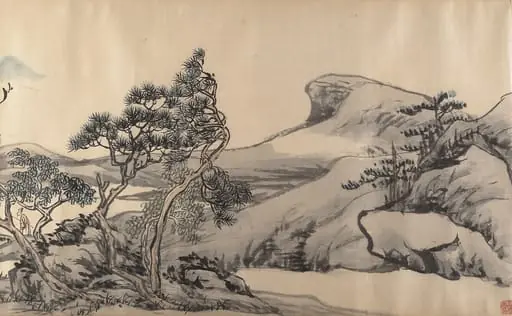
 明 傳蔣嵩 冬景山水圖 卷|Winter landscape
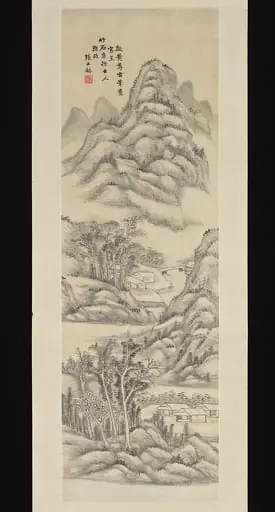
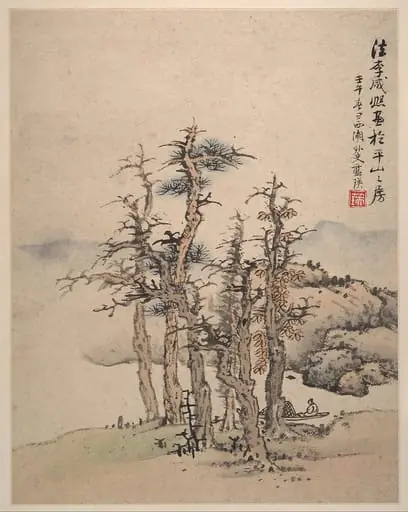 明 藍瑛 仿宋元山水圖 冊|Landscapes after Song and Yuan masters
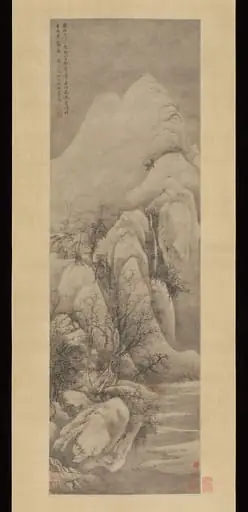
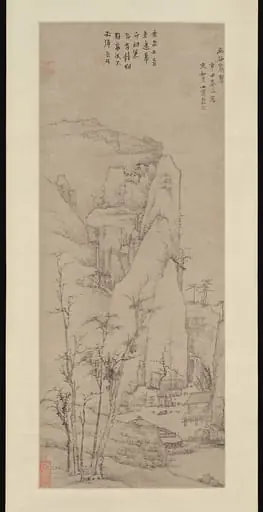 清 倣弘仁 幽谷泉聲圖 軸|The Sound of Spring in a Lonely Valley
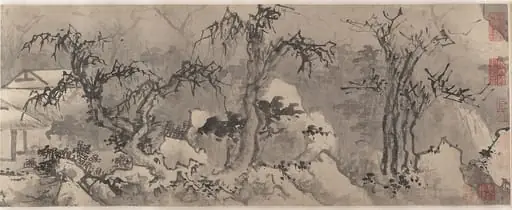
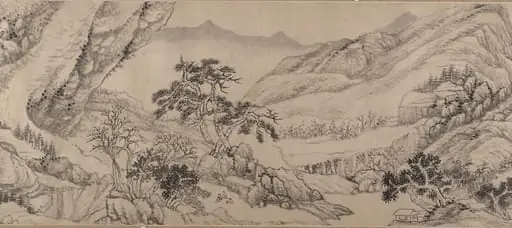 清 柳堉 山水圖 卷|Traveling Amid Streams and Mountains
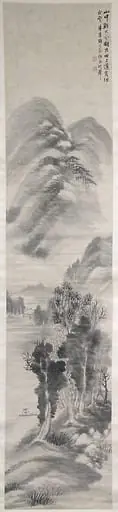 清 胡遠 四季山水圖 四條屏|Landscapes of the Four Seasons
 清 王原祁 倣黃公望高克恭山水圖 軸|Landscape in the Styles of Huang Gongwang and Gao Kegong