Artwork
Madonna Enthroned
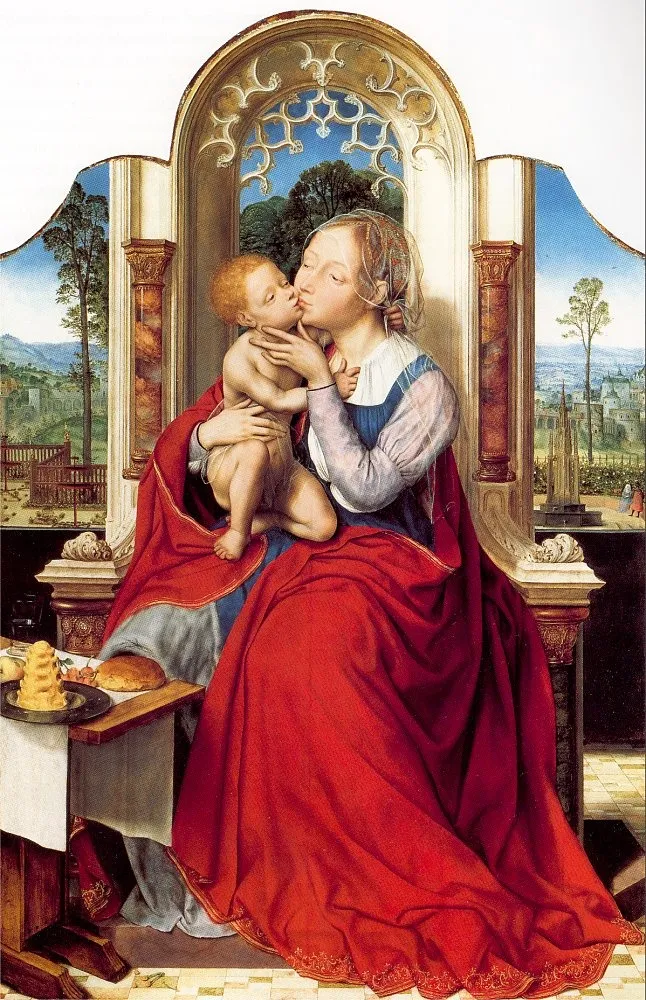
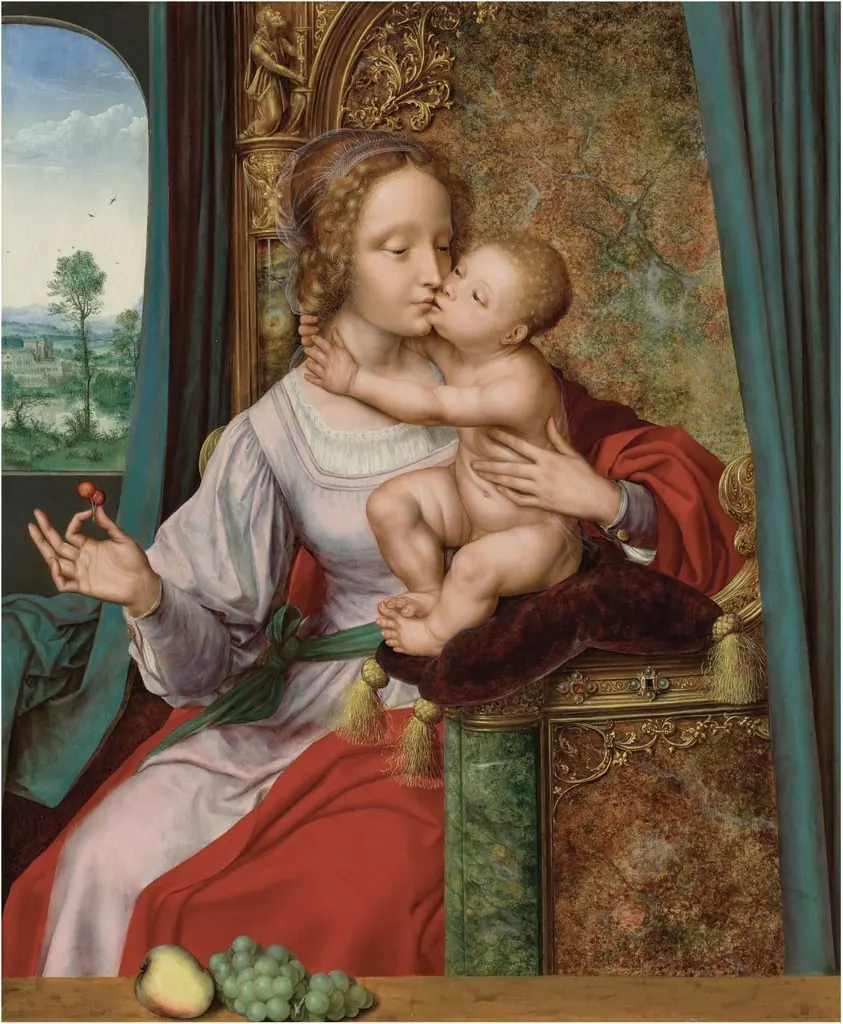
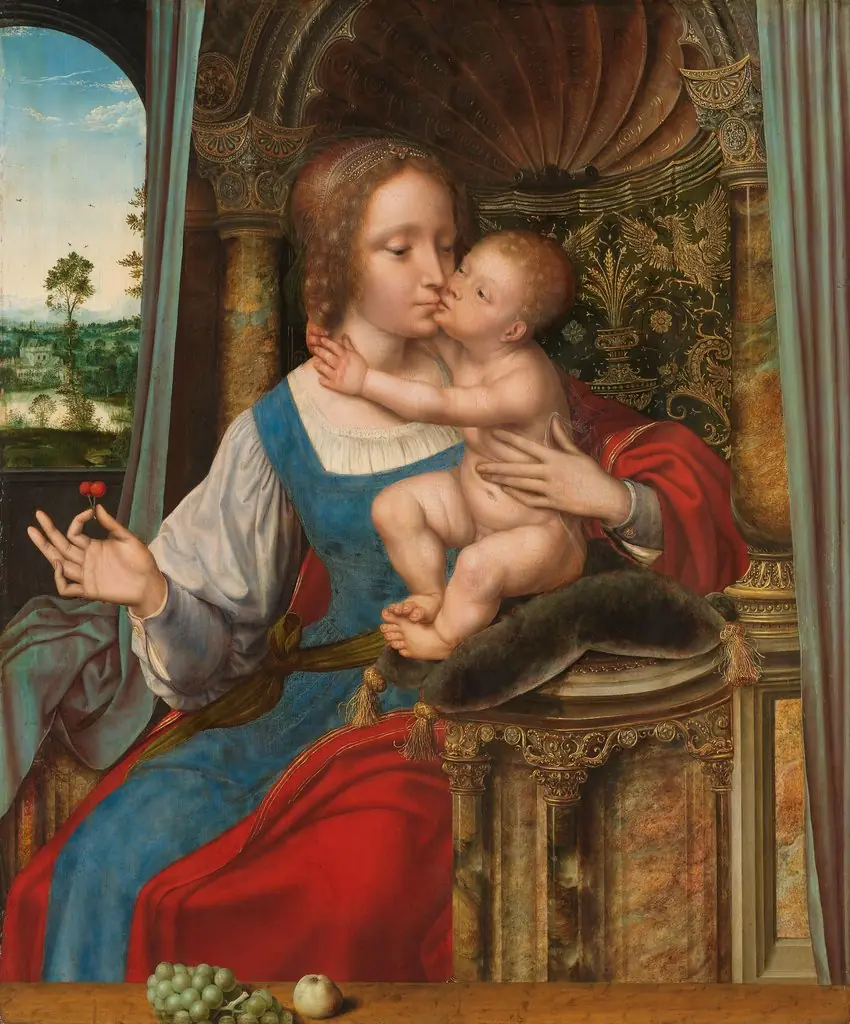
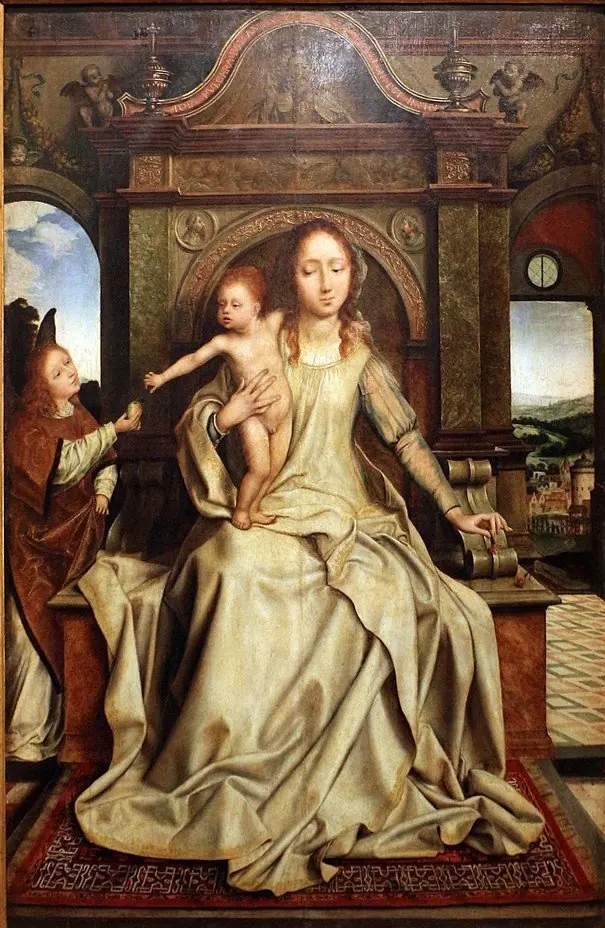
Madonna Enthroned is an oil painting by the Northern Renaissance artist Quinten Metsys. It dates from 1520 and is held in the collection of the Gemäldegalerie Berlin.
About this work
Overview
Madonna Enthroned is a religious painting created by the Flemish Renaissance artist Quinten Metsys around 1520.
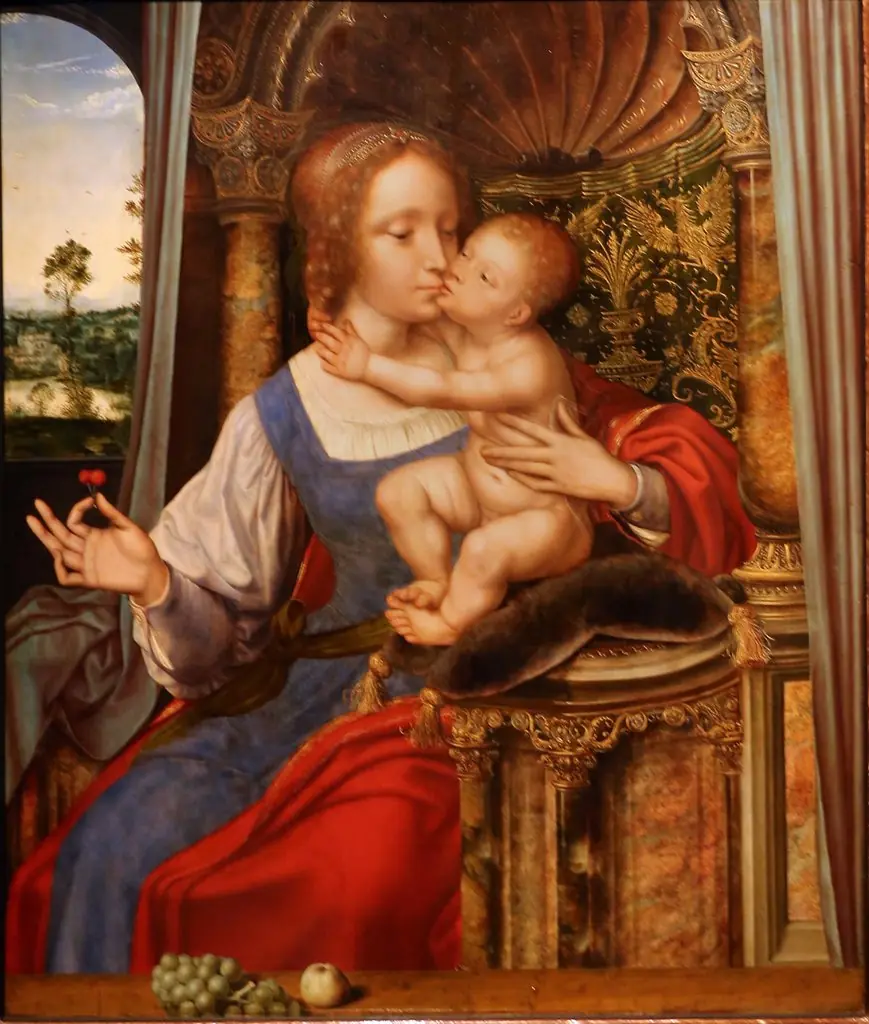
Madonna Enthroned is a religious painting created by the Flemish Renaissance artist Quinten Metsys around 1520. Executed in oil on an oak panel, the work measures 135 cm in height and 90 cm in width. Also known as the Butter Madonna, the painting depicts the Virgin and Child seated within an ornate architectural throne and belongs to Metsys's mature period, during which he produced several intimate variations of the Virgin and Child. The work is currently held in the Gemaldegalerie in Berlin.
Subject & Meaning
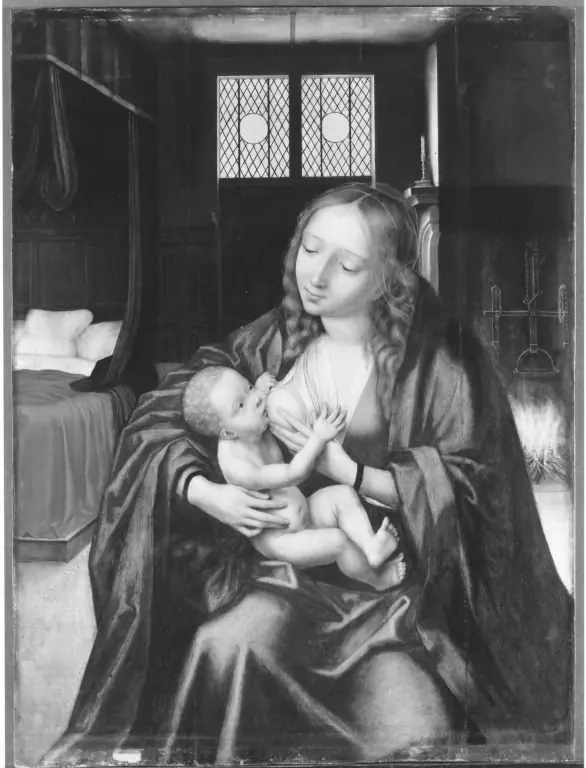
The painting portrays the Virgin Mary seated on a stone throne, holding the nude Christ Child on her lap. She supports his body with her right hand while touching his face with her left, and the infant reaches toward her in a reciprocal gesture. The throne is an elaborate Gothic structure with ornate tracery and columns, framing the figures symmetrically and alluding to Mary's status as the Queen of Heaven. A landscape with trees, buildings, and distant mountains is visible through side openings in the architecture. To the left, a small table holds a round loaf, a plate of fruit, and a white cloth. The Virgin wears a voluminous red mantle with gold trim over a blue dress and white sleeves, with a transparent veil covering her hair. The saturated colors, particularly the dominant reds and deep blues, emphasize the solemn and regal nature of the scene.
Technique & Style
Metsys executed the work in oil paint on an oak panel, employing a smooth surface that allows for precise detail in the rendering of fabrics, architecture, and distant landscape elements. The composition is symmetrical and frontal, with the architectural throne framing the central figures. Light falls evenly across the scene, modeling faces and drapery with soft shadows. Metsys's handling of the drapery demonstrates his characteristic combination of crisp folds and soft tonal gradations. This approach reflects his synthesis of the Flemish tradition of meticulous naturalism with Italianate elements, specifically the solidity of figures and the sfumato device absorbed from Leonardo da Vinci, which he softened to retain the characteristically Northern brilliance of color.
History & Provenance
The painting dates to approximately 1520, though some sources suggest a timeframe extending to 1525 or 1530. It is identified as the Butter Madonna, a work from the 1520s that entered the collection of the Gemaldegalerie in Berlin, where it remains today. The broader context of Metsys's Madonna compositions from this period reveals a significant provenance history for related works, particularly the Madonna of the Cherries. That composition achieved such fame that it was featured in Willem van Haecht's 1628 painting of The Gallery of Cornelis van der Geest, which depicts the collector refusing an offer from Archduke Albert VII of Austria to purchase the Metsys work.
Context
Quinten Metsys, born in Leuven around 1465, became the leading master of Antwerp after entering the painter's guild in 1491. Early in his career, he painted in the style of earlier Netherlandish masters such as Jan van Eyck and Hans Memling, whose influence is evident in the established conventions of the enthroned Madonna composition. By the 1520s, Metsys had begun incorporating Italianate elements into his art, bridging Northern precision with Italian compositional ideas. His home in Antwerp housed an impressive collection of paintings, visited by Albrecht Durer in 1520. Metsys was the founding figure of the Antwerp School of painting, and his religious works were highly regarded by his contemporaries for combining Flemish naturalism with the monumentality and softness of Italian Renaissance models.
Legacy
Metsys's religious paintings, particularly his Madonna compositions, left a lasting impact on the Antwerp School and its later masters, including Peter Paul Rubens and Anthony van Dyck. The enthroned Madonna represents one of the most traditional compositions in Netherlandish painting, and Metsys's late versions demonstrate how the aging master worked within these established conventions while introducing innovative elements. His synthesis of Northern detail and Italianate softness influenced the trajectory of Antwerp painting. The fame of his Madonna works endured for centuries, as documented in the 1628 depiction by Willem van Haecht, where such paintings were shown as prized centerpieces of elite Kunstkammer collections, admired by regents and collectors alike.
Artist & collection
Artist
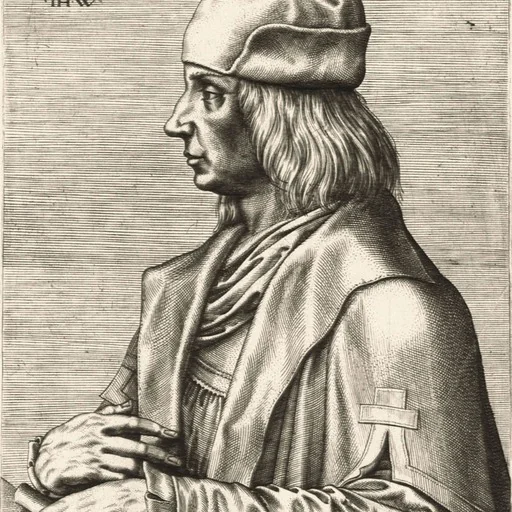
Quentin Matsys (UK: MAT-sysse, US: MAHT-sysse; also Massys or Metsys; Flemish: Quinten Matsijs; 1466–1530) was a Flemish painter in the Early Netherlandish tradition.