Artwork
Colonna Madonna
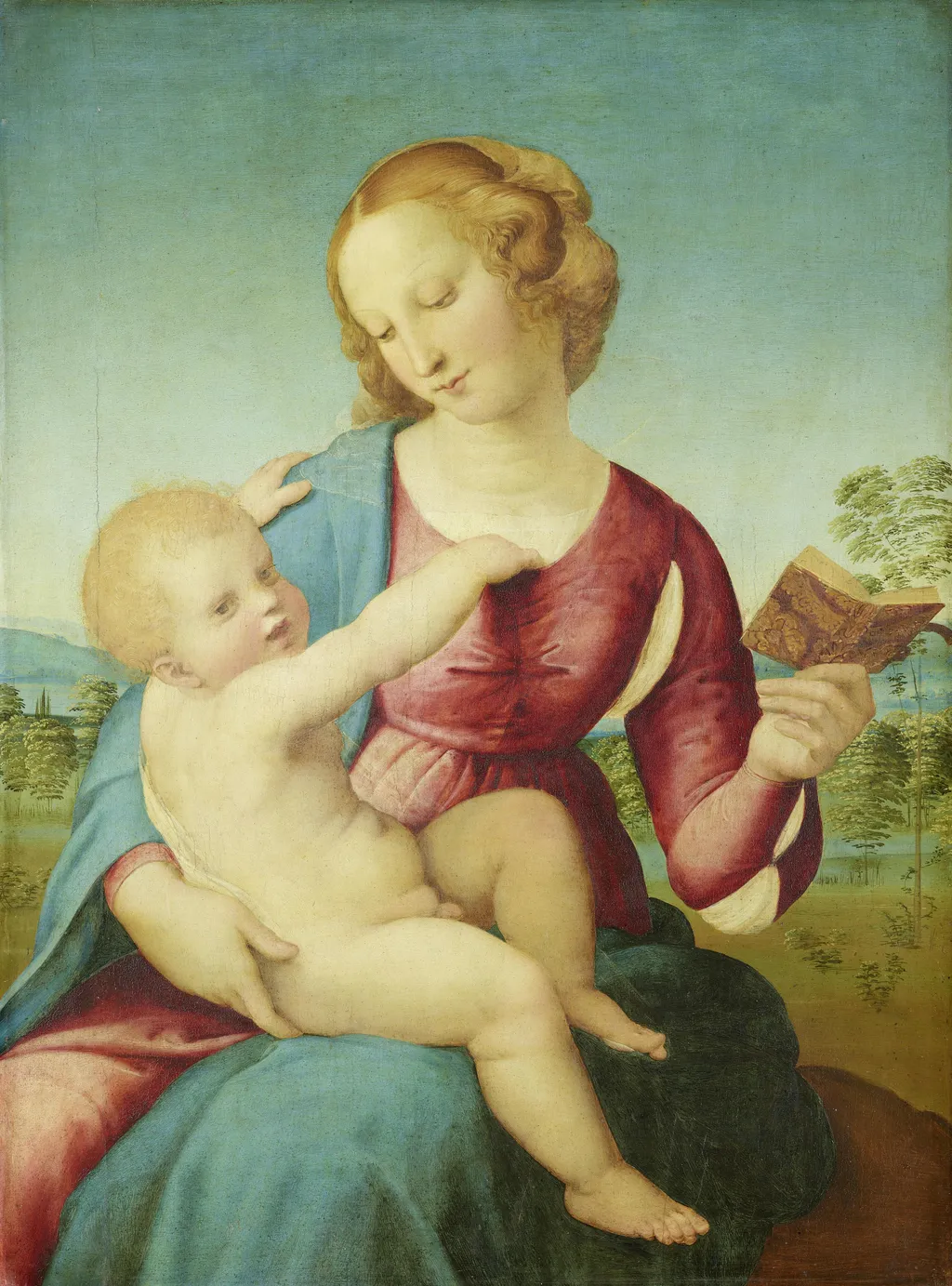
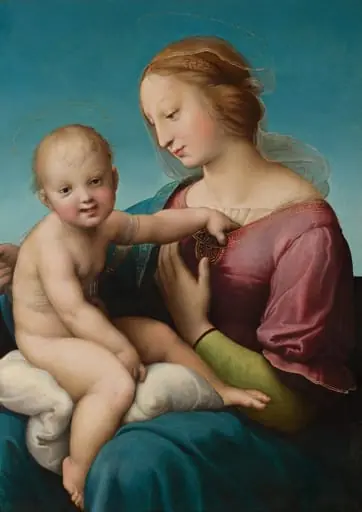
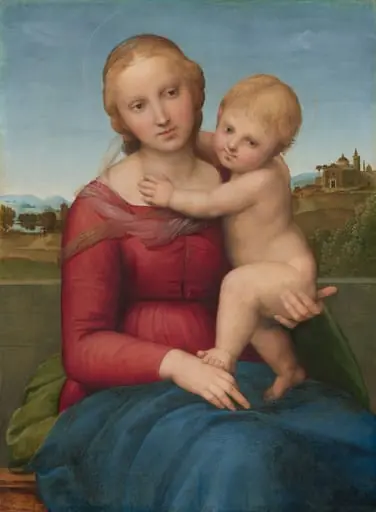
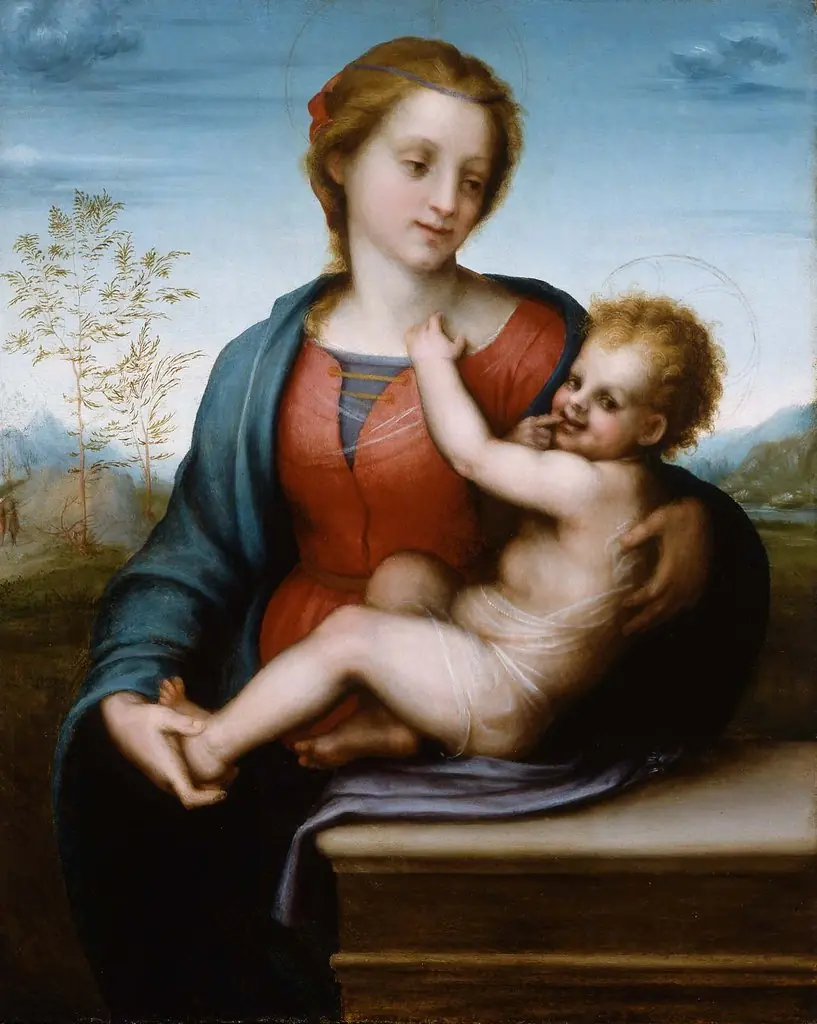
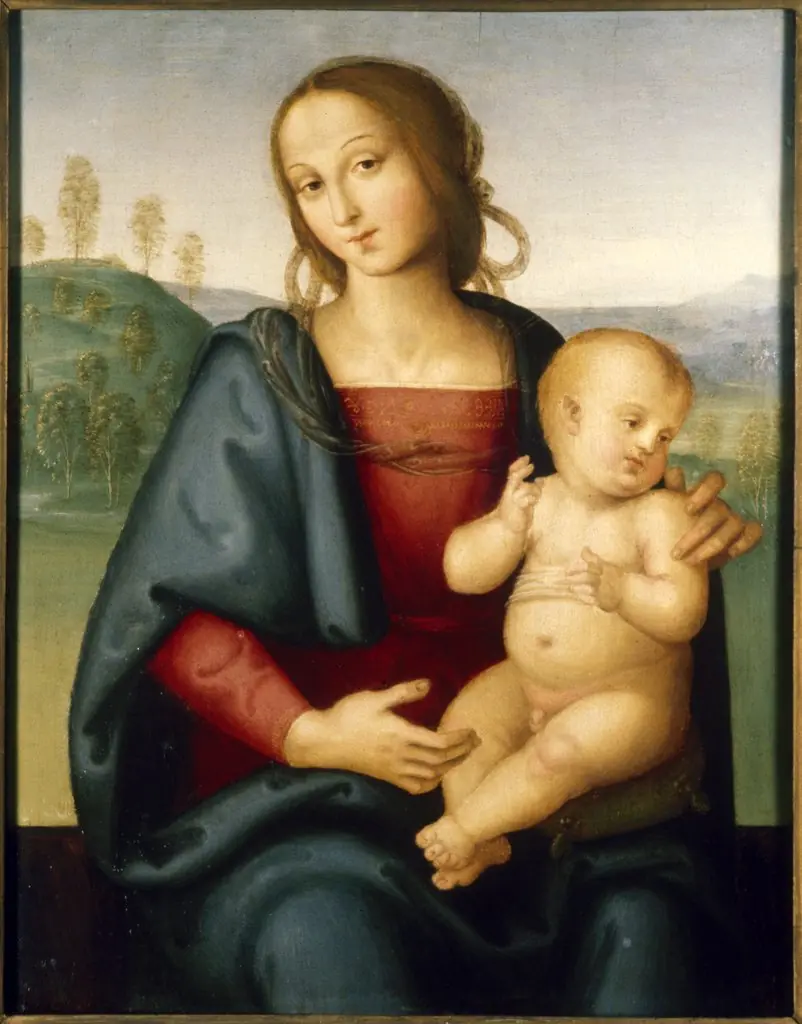
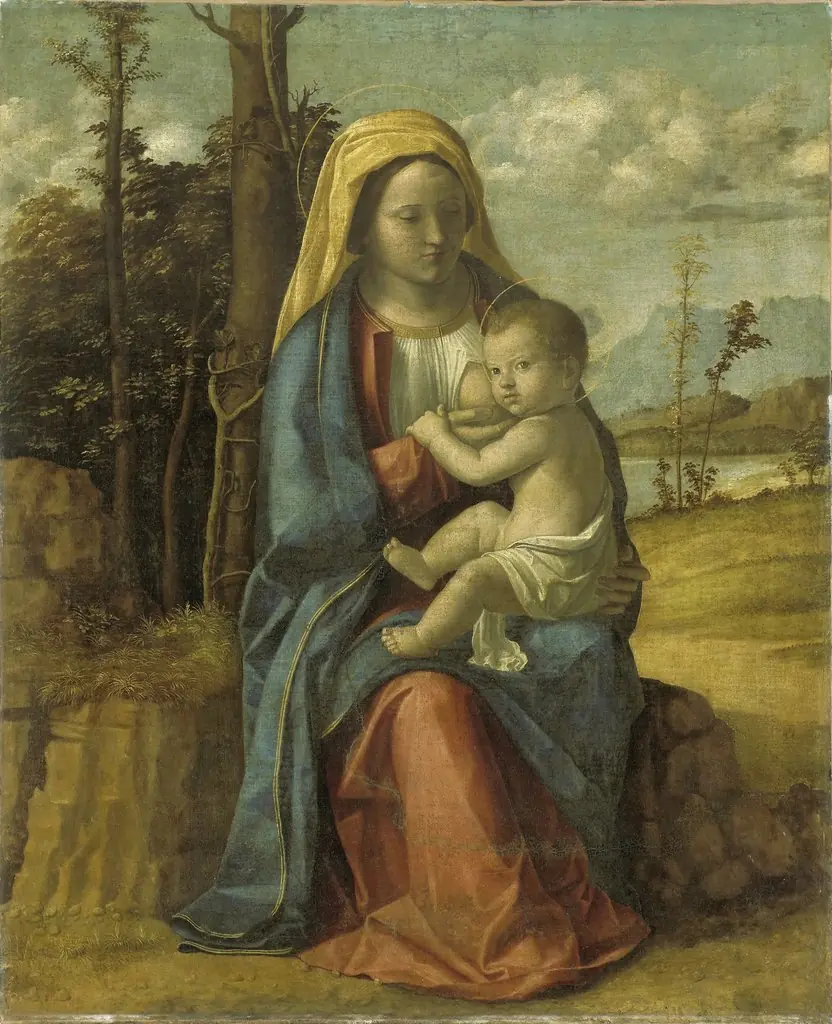
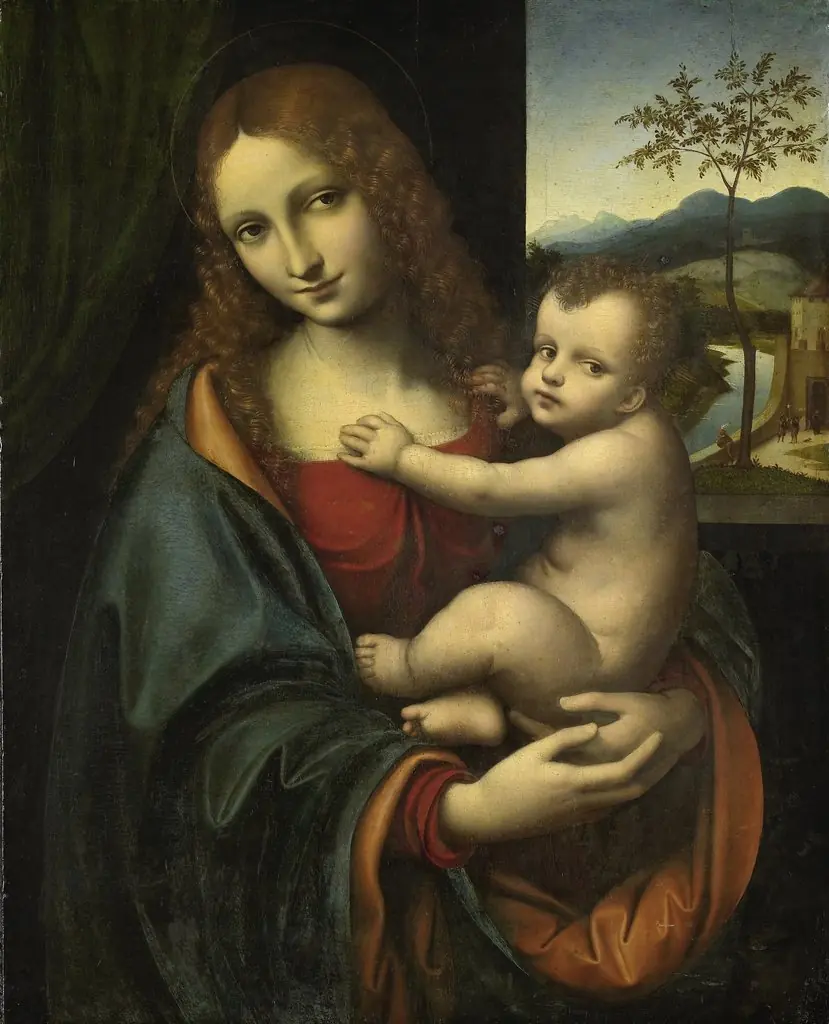
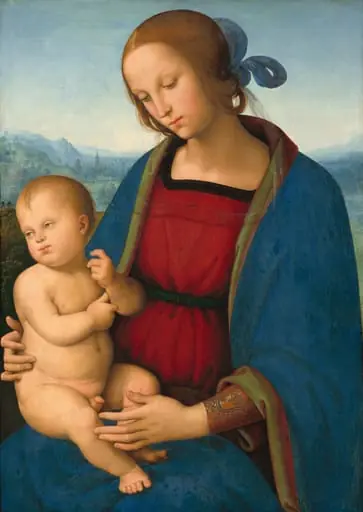
Colonna Madonna is a paint painting by the High Renaissance artist Raphael. It dates from 1500 and is held in the collection of the Gemäldegalerie Berlin. Created around 1507–1508, the work depicts the Virgin Mary cradling the infant Jesus.
About this work
This painting shows the Virgin Mary holding the Christ Child. It’s an oil work on wood by Raphael. He painted it around 1507, late in his time in Florence.
Raphael used soft lighting to shape faces and folds. The background is calm and plain. Mary’s quiet gaze feels warm and close.
See more of his gentle Madonnas by looking up Raphael.
Subject & Meaning
Mary holds an open book, symbolizing the Biblical prophecy of Jesus's fate, while her gaze turns tenderly toward the child who interrupts her reading.
The Colonna Madonna depicts the Virgin Mary seated with the Christ Child on her lap, representing the Madonna leggente (Madonna reading) iconography. Mary holds an open book, symbolizing the Biblical prophecy of Jesus's fate, while her gaze turns tenderly toward the child who interrupts her reading. The infant grasps the neckline of her dress with one hand and looks directly at the viewer with the other resting on her shoulder.
This interaction, combined with the mother's diverted attention, is interpreted as a prelude to the Madonna del lacte (Madonna of the Milk), emphasizing the humanity of both figures. The composition features a refined landscape background and utilizes bright, intense colors, with Mary portrayed with notably blond hair.
Technique & Style
The Colonna Madonna is an oil painting executed on a poplar panel, which was later transferred to canvas. Created circa 1507–1508 during Raphael's Florentine period, the work measures 77 cm in height and 56 cm in width. The composition depicts the Virgin Mary seated in a half-length view, wearing a contemporary red dress and blue mantle while holding a book.
Her blond hair is notably lighter than in the artist's earlier works. The Child Jesus sits on her lap, grasping the neckline of her dress with one hand while turning to face the viewer. A refined landscape featuring woods, hills, and a distant sky forms the background.
The colors are described as intense and bright, though some scholars suggest the light tonality may indicate the painting was not fully completed.
History & Provenance
The Colonna Madonna was created by Raphael around 1507–1508 during his late Florentine period, as confirmed by multiple sources.
The work entered the Colonna family collection, with documented ownership by the Salviati and later the Duchessa Maria Colonna Lante della Rovere, before being acquired by the Prussian state in 1827 for the Königliches Museum in Berlin.
During World War II, the painting was moved for protection first to the Flakturm Friedrichshain, then to the Kaiseroda-Merkers mine in Thüringen, where it was captured by American forces and later transferred to the Wiesbaden Art Collecting Point.
It was returned to Berlin in 1956 and remained on display at the Museum Dahlem until 1997, after which it has been exhibited in the new Gemäldegalerie at the Kulturforum since 1998.
Provenance records indicate the work was never owned by any entity outside the Colonna family prior to 1827, and no evidence supports claims of Vasari-identified alternative attributions or collaborative execution by assistants as primary creation factors.
The painting is executed in oil on poplar panel, measuring 77 cm in height and 56 cm in width, and depicts the Virgin Mary reading with the Christ Child seated on her lap, holding a book.
The Colonna Madonna is held in the Gemäldegalerie, Staatliche Museen zu Berlin, with inventory number 179.
It entered the Prussian royal collection in 1827 after purchase by the Prussian state from the Colonna family via the Duchessa Maria Colonna Lante della Rovere, having previously belonged to the Salviati family. During World War II the painting was evacuated and stored in the Kaiseroda-Merkers salt mine, then transferred by U.S. forces to the Wiesbaden collecting point, before returning to Berlin in 1956. It was exhibited in Museum Dahlem from 1956 to 1997 and has been on view in the Gemäldegalerie’s current building at the Kulturforum since 1998.
Context
Scholarly discussion of the Colonna Madonna has long situated it within Raphael’s late Florentine period, aligning its compositional traits with contemporaneous works such as the Bridgewater Madonna and the Madonna d’Orléans. German and French sources note that the painting’s iconography, Mary reading while the Christ Child turns toward the viewer, echoes the Madonna leggente tradition, emphasizing the humanity of the figures rather than overt theological symbolism. Some early twentieth-century scholars entertained the possibility that Vasari’s mention of a Madonna begun by Raphael and completed by Ridolfo Ghirlandaio referred to this work, but this hypothesis has been widely rejected; later technical studies of comparable compositions have confirmed single-handed execution by Raphael.
The painting’s reception in the nineteenth century was shaped by its acquisition for the Royal Museum in Berlin in 1827, which secured its place in a major European collection. Nineteenth- and early twentieth-century critics, including Hubert Du Manoir, emphasized the tender interaction between Virgin and Child as a hallmark of Raphael’s mature style, while later German catalogues occasionally raised the question of workshop assistance without consensus.
Legacy
The Colonna Madonna has been recognized as a significant example of Raphael's late Florentine style, representing a specific stage in a series of digital compositions that includes the Bridgewater Madonna and the Madonna d'Orléans. While some 19th-century scholars speculated about assistant involvement or attempted to link the work to a Madonna mentioned by Vasari, modern research generally upholds Raphael's sole authorship and rejects these alternative attributions. The painting's historical prestige was notably affirmed by Prince Albert, husband of Queen Victoria, who regarded it as Raphael's finest work.
This high esteem led to the creation of a porcelain replica in 1858, which Prince Albert presented to the Queen as a Christmas gift. The work's journey from royal collections in Florence and Rome to its acquisition by the Prussian state in 1827 further cemented its status within major European public holdings.
Overview
Created around 1507–1508, the work depicts the Virgin Mary cradling the infant Jesus. Executed in oil on a poplar panel, the composition reflects Raphael’s mature phase in Florence, shortly before his move to Rome. The painting now belongs to the Gemäldegalerie in Berlin and is distinct from the similarly named Colonna Altarpiece held in New York.
Own this work as a print
Artist & collection
Artist
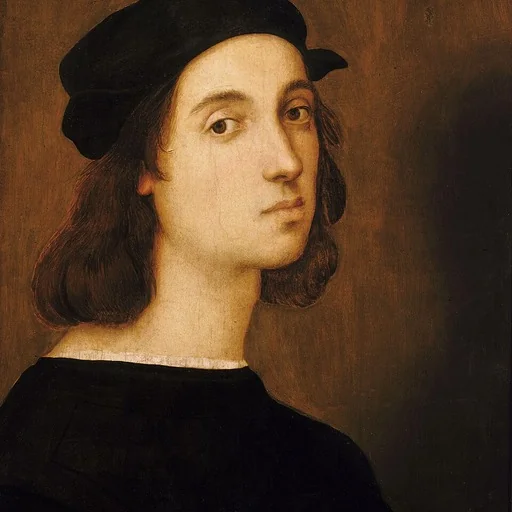
Raphael was born Raffaello Sanzio in Urbino on April 6, 1483, the son of Giovanni Santi, a painter and poet attached to the ducal court.