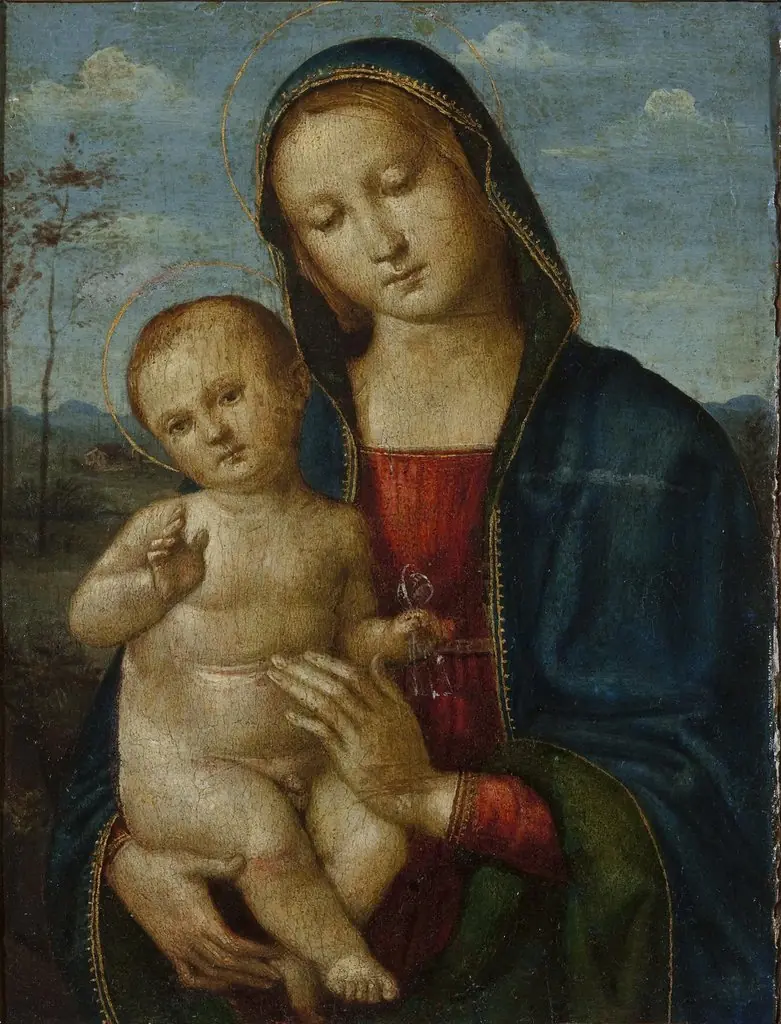
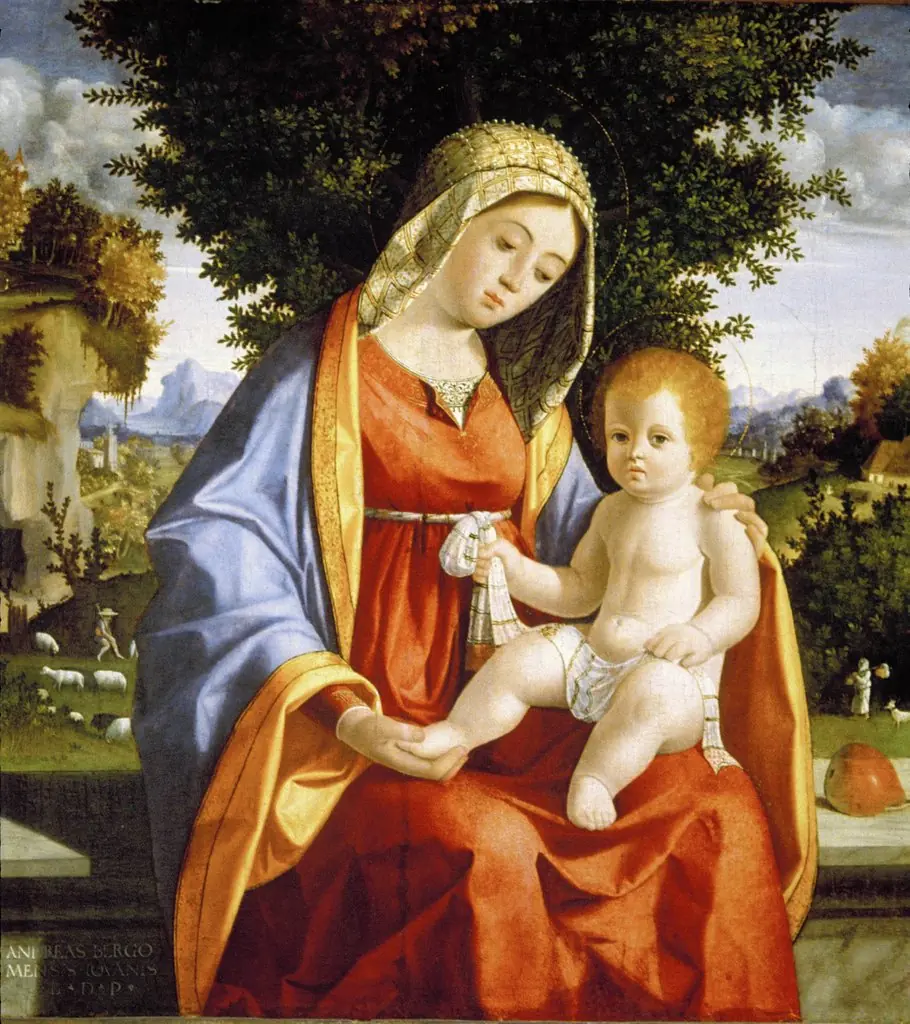
Artwork
Madonna and Child (The Conestabile Madonna)
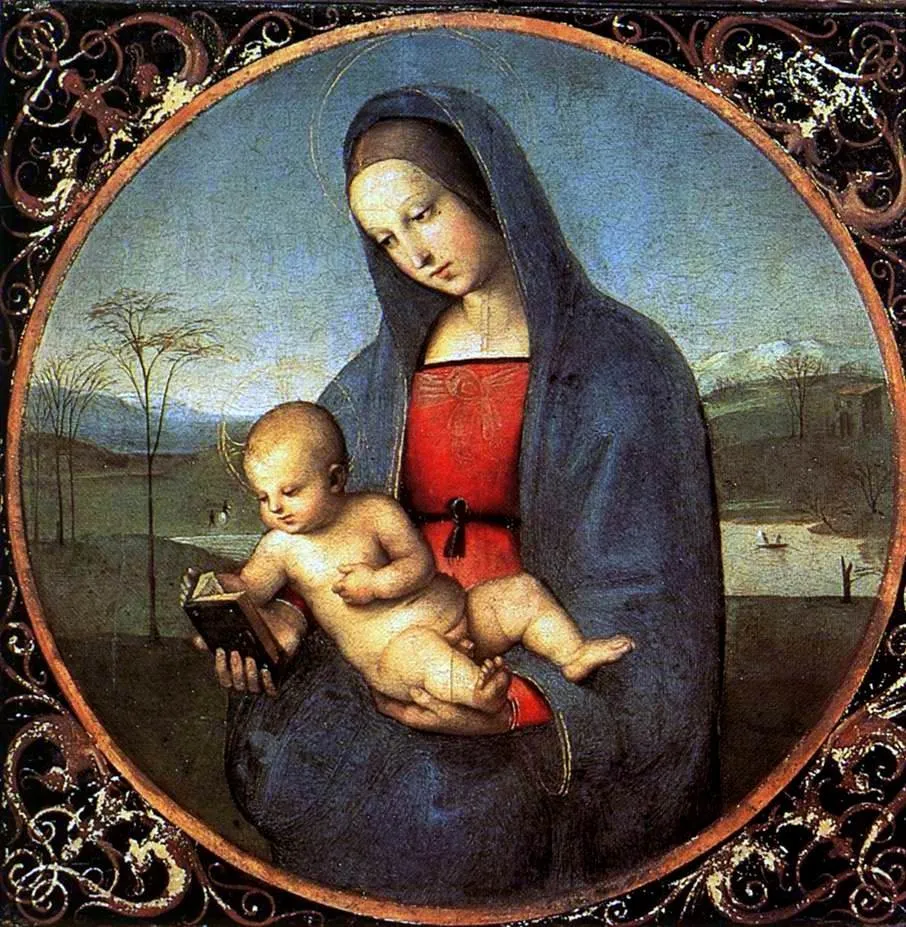
Madonna and Child (The Conestabile Madonna) is a tempera painting by the High Renaissance artist Raphael. It dates from 1504 and is held in the collection of the Hermitage Museum.
About this work
The Conestabile Madonna is a painting by Raphael. It's a work from the Italian Renaissance.
The painting is small and was executed around 1504. This was a notable time for the artist, who was active during this period. The work is also known as Madonna and Child.
You can learn more about the artist who created this work, the artist: Raphael.
Subject & Meaning
This backdrop, characterized by muted natural tones contrasting with Mary's traditional red dress and blue mantle, reflects the artistic influence of Perugia.
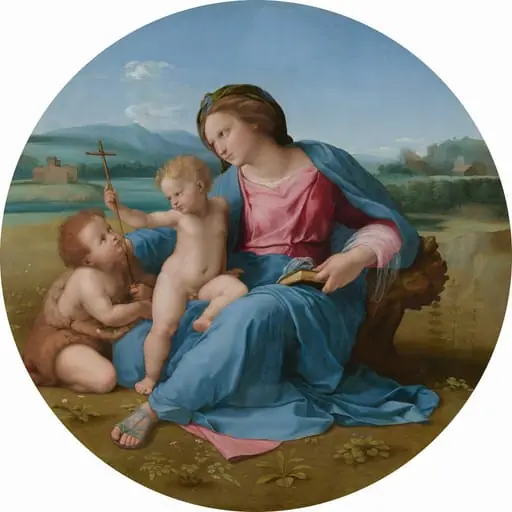
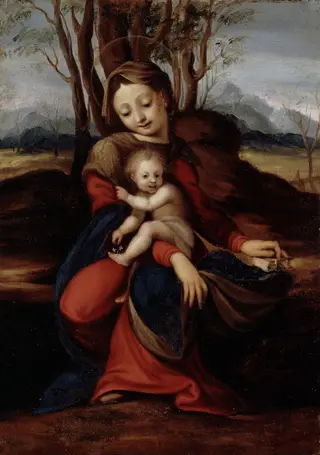
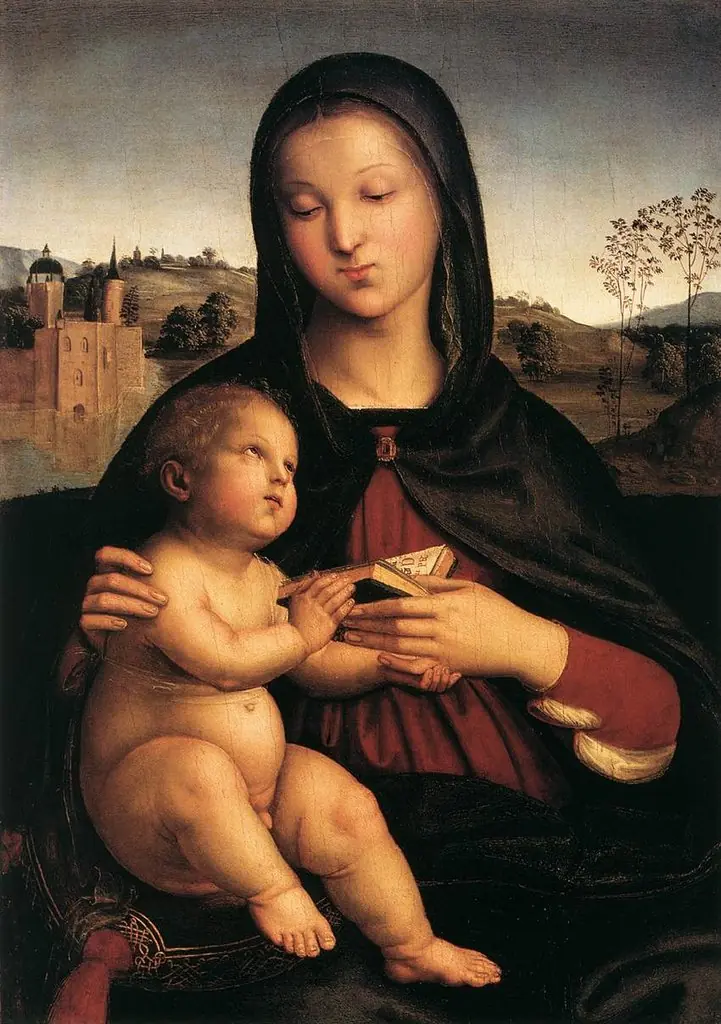
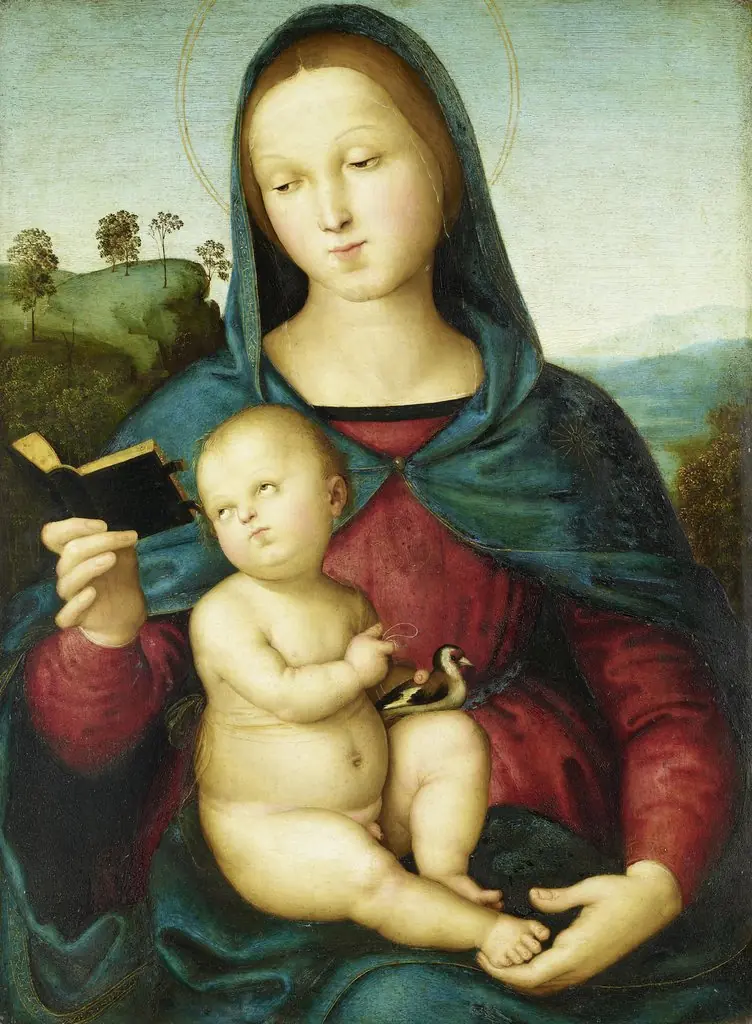
The work depicts the Virgin Mary holding the Christ Child, with both figures focused on a book held by Mary. This book is interpreted as the Bible or a breviary, symbolizing the Holy Scriptures that foretell Christ's tragic destiny. The composition originally differed; an underdrawing revealed during the painting's transfer from wood to canvas in the 19th century shows Mary initially offering a pomegranate or apple to the child. In Christian iconography, the pomegranate serves as a specific symbol of the Passion.
The figures are set against a serene landscape featuring rolling hills, a body of water, and distant snow-capped mountains. This backdrop, characterized by muted natural tones contrasting with Mary's traditional red dress and blue mantle, reflects the artistic influence of Perugia. The contemplative expressions of the figures and the harmonious integration with the landscape evoke a lyrical sense of innocence alongside a melancholic awareness of future events.
Technique & Style
The Conestabile Madonna is a small tondo painting executed in tempera on wood, later transferred to canvas in 1881, measuring 17.5 cm by 18 cm. Raphael originally designed it as a square panel but altered it to a circular format by adding spandrels, and he later changed the central motif from a pomegranate symbolizing the Passion to a book held by the Virgin, possibly representing a breviary or the Bible. The work depicts the Virgin Mary reading with the Christ Child attentively looking at the text, set against a gently rendered landscape of rolling hills, snow-capped mountains, and a still body of water, with muted natural tones contrasting the blue and red of the Madonna’s garments. The frame, though traditionally thought to be part of Raphael’s original design, appears to have been made independently of the painting, consisting of unrelated decorative pieces with inconsistent proportions and a putty-filled hole in the lower frieze that may have once held a candle.
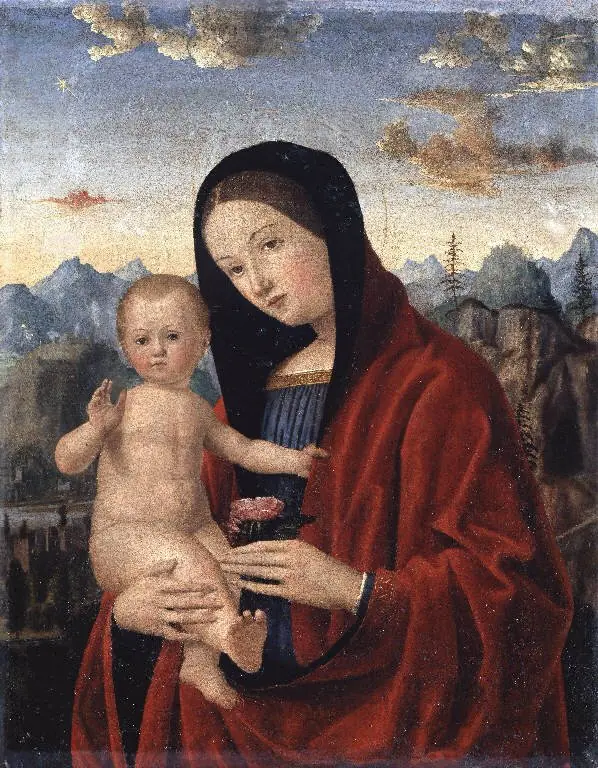
The painting’s composition shows early stylistic traits of Raphael’s High Renaissance period, with fluid lines and harmonious integration of figures and background, and it shares symbolic and compositional links with later works such as The Bridgewater Madonna and Berto di Giovanni’s Virgin and Child with a Pomegranate.
History & Provenance
The Conestabile Madonna was painted by Raphael in 1504, likely in Umbria before his departure for Florence. A family memorandum indicates the work was once owned by Alfano di Diamante, uncle of Domenico di Paris Alfani, though no commission is documented. By the early seventeenth century it belonged to the Alfani family in Perugia, and it subsequently passed to the Conestabile della Staffa, also of Perugia, from whom the painting takes its name.
In 1869 Count Conestabile offered the work to the Hermitage through the Russian collector Count G.S. Stroganoff. Empress Maria Alexandrovna, wife of Tsar Alexander II, expressed interest in acquiring it. The Hermitage director purchased the painting in 1871 for 310,000 francs, a sale that provoked considerable protest in Italy.
It entered the imperial collection and, following Maria Alexandrovna's testament, was permanently transferred to the Hermitage Museum in St. Petersburg in 1880.
The Conestabile Madonna is held by the Hermitage Museum in St. Petersburg, Russia. Tsar Alexander II purchased the painting in 1871 and presented it to his consort, Empress Maria Alexandrovna. It entered the Hermitage collection in 1880 under the terms of Maria Alexandrovna's will, after being exhibited at the museum as imperial property. The work was transferred from its original wood panel to canvas in 1881.
Context
The Conestabile Madonna was painted by Raphael around 1504 during his early Umbrian period before his move to Florence. Recent scholarship places its creation in 1504, correcting earlier estimates of 1500–1502. The work was originally executed on wood in a square format but was later transferred to canvas in 1871; underdrawings revealed Raphael had initially depicted the Virgin holding a pomegranate, a symbol of the Passion, instead of a book.
The painting, now housed in the Hermitage Museum, features Mary reading a book while the Christ Child gazes at it, set against a landscape blending winter and spring elements. Its small size (17.5 cm x 18 cm) and tondo format, with spandrels added to convert it to circular form, reflect Raphael’s compositional revisions. The frame, described as independently crafted and stylistically disjointed, was likely added later.
Provenance traces the work from the Alfani family in Perugia to the Conestabile della Staffa, then to Tsar Alexander II, who acquired it in 1871, before its donation to the Hermitage in 1880. The attribution to Raphael is unanimous, and the painting is regarded as a pivotal early work that influenced later Madonnas, including Berto di Giovanni’s Virgin and Child with a Pomegranate.
Legacy
The Conestabile Madonna exerted quiet but lasting influence through its compositional innovations and symbolic flexibility. Its original underdrawing revealed an early version with the Virgin holding a pomegranate, a motif later echoed in Berto di Giovanni’s Virgin and Child with a Pomegranate, confirming its role as a prototype. The painting’s tondo format, achieved by painting spandrels and converting a square panel to canvas in 1871, demonstrated Raphael’s experimental approach to sacred imagery.
Art historians note its stylistic resonance with later works such as The Bridgewater Madonna and a Vienna drawing that merges pomegranate and book symbolism. The work’s journey from Perugia to the Hermitage, facilitated by Tsar Alexander II’s acquisition in 1871, cemented its status as a cornerstone of Russian imperial collections. Today, its understated intimacy and technical ingenuity continue to inform studies of High Renaissance devotional art, particularly in how Raphael balanced narrative detail with compositional harmony.
Overview
Created around 1504, the Conestabile Madonna is a modestly sized tondo by Raphael, executed in tempera. The work presents the Virgin Mary and the infant Christ seated together, engaged in reading, set against a tranquil outdoor backdrop. Currently it is part of the collection of the Hermitage Museum in St. Petersburg.
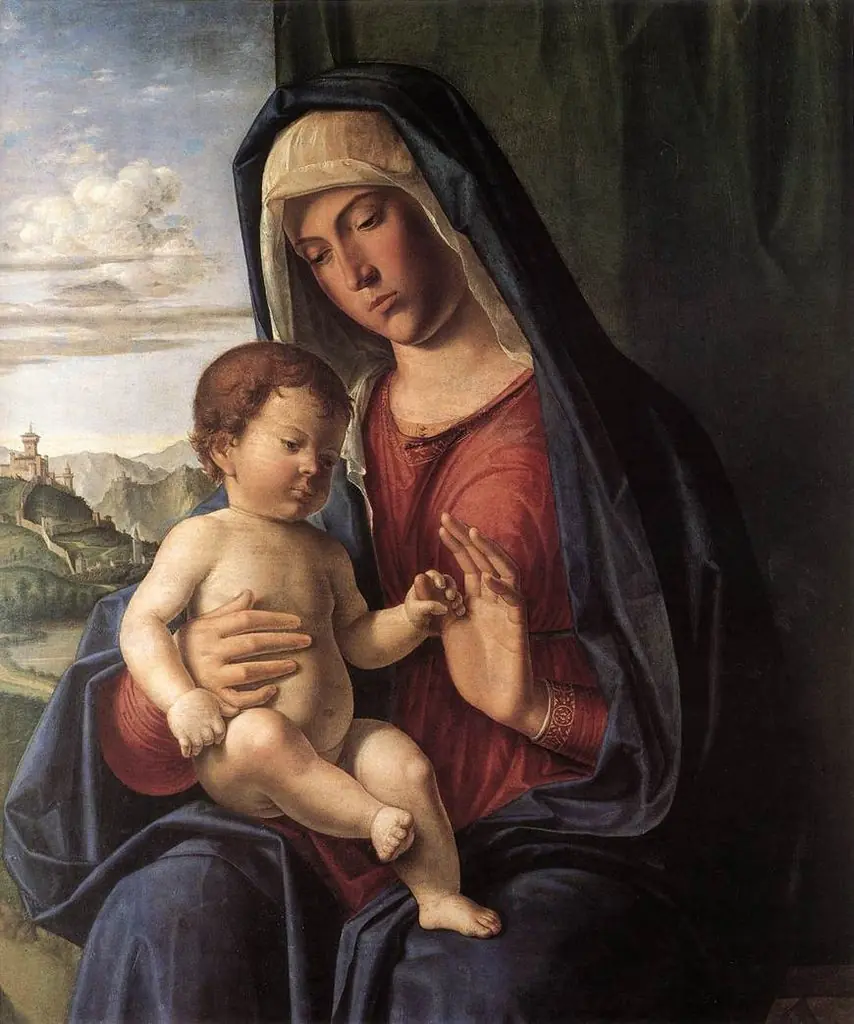
Artist & collection
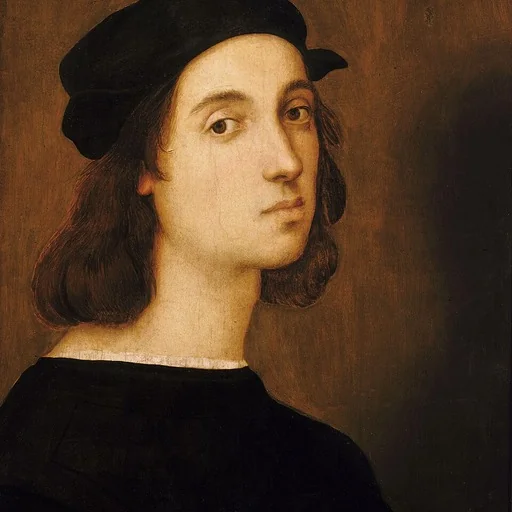
Artist
Raphael was born Raffaello Sanzio in Urbino on April 6, 1483, the son of Giovanni Santi, a painter and poet attached to the ducal court.