Artwork
Madonna of the Rose
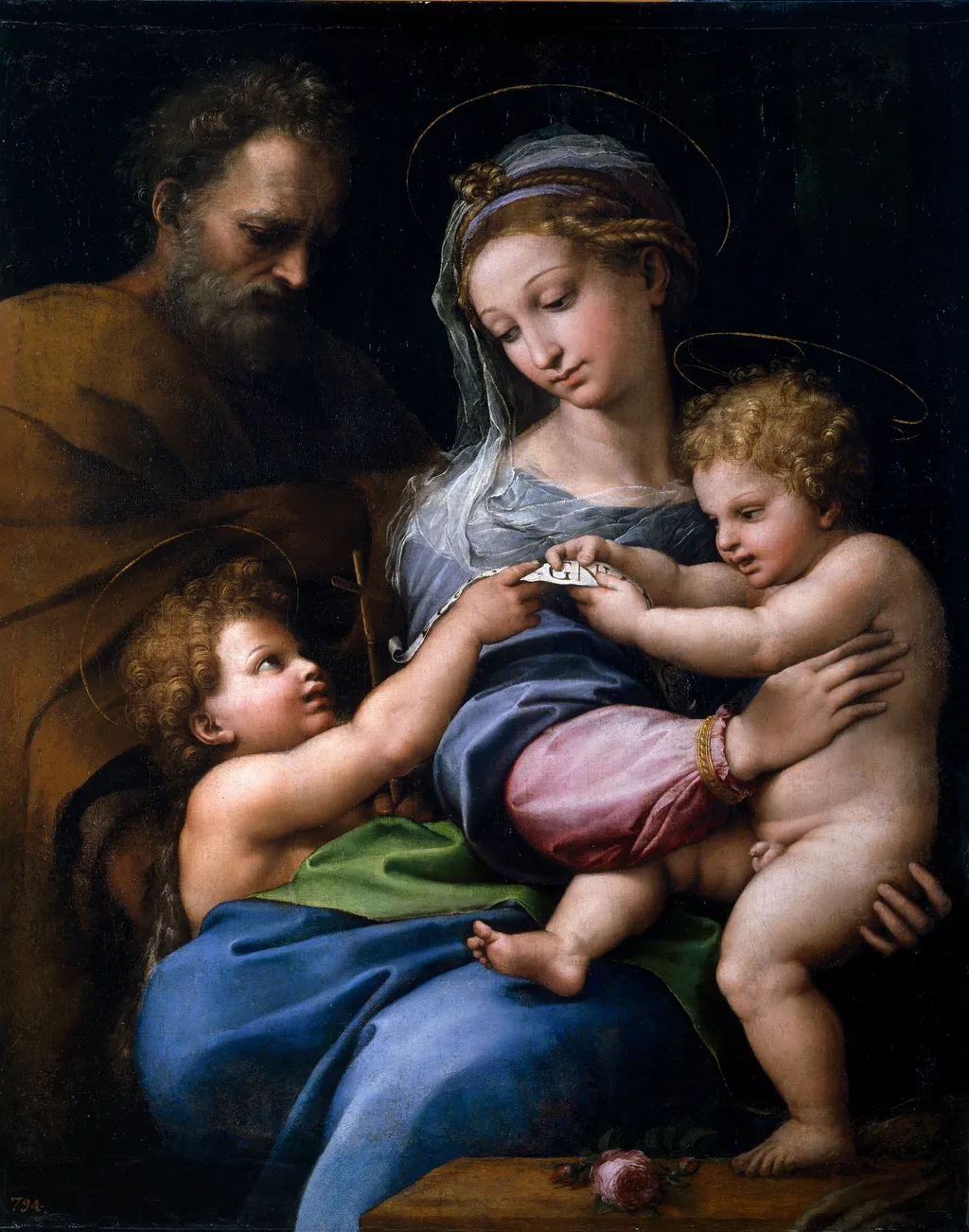
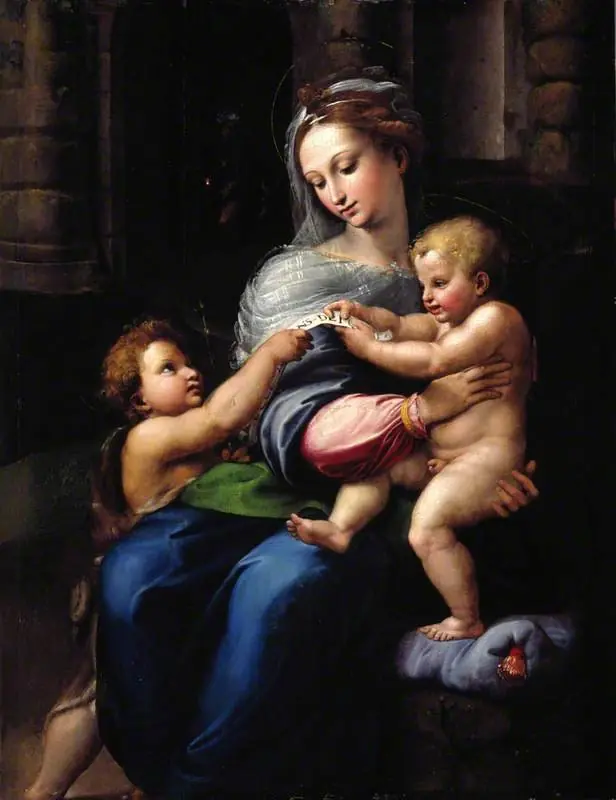
Madonna of the Rose is an oil painting by the High Renaissance artist Raphael. It dates from 1517 and is held in the collection of the Museo del Prado.
About this work
Subject & Meaning
The painting depicts the Holy Family alongside the infant Saint John the Baptist, adhering to Christian iconography of the Madonna and Child.
The painting depicts the Holy Family alongside the infant Saint John the Baptist, adhering to Christian iconography of the Madonna and Child. The Virgin Mary supports the Christ Child, who receives a scroll from John inscribed with "Ecce Agnus Dei" ("Behold the Lamb of God"). This Latin phrase symbolically references Christ's future Passion and sacrificial death, akin to the paschal lambs of Jewish tradition.
While the adults gaze sadly, foreseeing this suffering and John's eventual martyrdom, the children appear playful and unaware of their fates.
The work's popular title derives from a rose resting on a ledge in the foreground, yet technical analysis indicates both the flower and the lower section of the canvas were later additions, likely from the nineteenth century. The composition arranges the figures in a tight triangular grouping, with Joseph partially visible in the shadows, emphasizing the intimate yet prophetic nature of the scene.
Technique & Style
The Madonna of the Rose is executed in oil on wood panel, measuring 103 by 84 cm. Originally painted on a wooden support, the panel was transferred to canvas during its wartime removal to Paris in the early nineteenth century, a process to which the rose and the entire lower strip are attributed as later additions by an unknown hand rather than to Raphael himself. Recent technical examinations at the Museo del Prado have confirmed the original panel support, overturning earlier assumptions that the work had always been on canvas.
Stylistically, the composition is closely framed around the figures, with only Joseph's upper body, the Christ Child's back, and the Virgin's knees fully visible, organizing the holy group within a triangular structure. The composition derives from Leonardo's Madonna of the Yarnwinder, and its handling of color and light recalls Raphael's Pearl Madonna in the same museum. The paint surface is highly refined: flesh tones are built up in a delicately thin layer, blues are glazed over the Virgin's pink sleeve, and the shadows and hair approach the transparency seen in the Pearl Madonna, though the lower drapery folds are somewhat rigid and may reflect intervention by a collaborator such as Giulio Romano.
History & Provenance
The Madonna of the Rose is an oil-on-panel work by Raphael dated to around 1517–1518, with the commission and early ownership undocumented. The earliest secure notice of the panel places it at the monastery of El Escorial in 1667, recorded by Francisco de los Santos, prior of San Lorenzo. Hypotheses about its earlier route to Spain include ownership by Thomas Howard, Earl of Arundel, whose collection contained a version engraved by Wenceslaus Hollard in 1642, or acquisition by the Spanish ambassador Alonso de Cárdenas for Luis de Haro, marquis of Carpio.
A possible earlier Spanish reference appears in a 1633 mention by Vicente Carducho of a damaged Raphael in his workshop.
During the Peninsular War the panel was taken to France and entered the Musée Napoléon in Paris. It was returned under the Treaty of Paris and entered the Museo del Prado in 1837, where the rose and the lower strip were later additions, probably made when the panel was transferred to canvas in Paris.
The Madonna of the Rose is held in the Museo del Prado in Madrid, where it has been part of the collection since 1837. In 2022 the work was included in an exhibition at the National Gallery in London.
Context
The Madonna of the Rose occupies a contested but celebrated place within Raphael scholarship. Attribution to Raphael himself has long been debated: while some scholars maintain the design is his but the execution largely fell to his workshop, possibly Giulio Romano or Giovan Francesco Penni, others now accept the painting as autograph, citing the refinement of the flesh tones, drapery, and Virgin's sleeve. The figure of Saint Joseph has been singled out since the nineteenth century as stylistically inconsistent with the master, and a recent AI-based analysis similarly concluded that Joseph was added by another hand.
The composition draws on Leonardo's Madonna of the Yarnwinder, encountered by Raphael during Leonardo's final Roman stay (1513–1516), and is linked stylistically to Raphael's late Holy Family paintings such as the Pearl Madonna (Prado) and the Aldobrandini Madonna (National Gallery), reflecting his engagement with Leonardo and Fra Bartolomeo in his final years. The rose and lower strip are now considered nineteenth-century additions made during the panel's transfer to canvas, likely when the work was taken to Paris under Napoleon.
The composition's popularity is evidenced by numerous early copies, including one by Giulio Romano (c. 1517–1518, Scottish National Gallery) and another by Daniele da Volterra (1530, Galleria Doria-Pamphilj), underscoring its dissemination across sixteenth-century Europe.
Legacy
The painting's disputed authorship and 16th-century workshop execution have made it a focal point of scholarly debate, a debate revived by artificial-intelligence analysis that questioned Raphael's hand. Its influence spread through countless copies, from Giulio Romano's early replica to later interpretations by Daniele da Volterra and other followers, demonstrating the work's lasting impact on devotional imagery. The work's visibility in major exhibitions, including a 2022 showing at the National Gallery, has cemented its reputation as an emblem of High Renaissance Marian devotion and continues to shape its legacy in art history.
Overview
The painting known as Madonna of the Rose, executed in oil paint between approximately 1518 and 1520, is housed in the Museo del Prado in Madrid. This work depicts the Virgin Mary and Child, though specific details of its composition have been altered over time. Its authorship remains a subject of scholarly discussion, with the involvement of Raphael being debated and the participation of his workshop, particularly Giulio Romano, considered a possibility.
Own this work as a print
Artist & collection
Artist
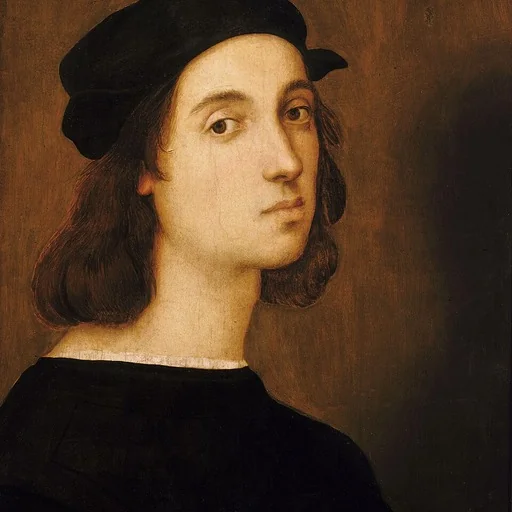
Raphael was born Raffaello Sanzio in Urbino on April 6, 1483, the son of Giovanni Santi, a painter and poet attached to the ducal court.

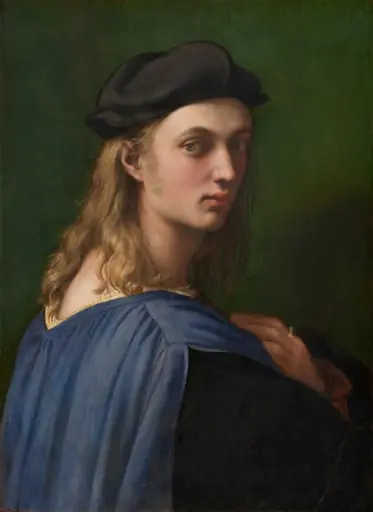
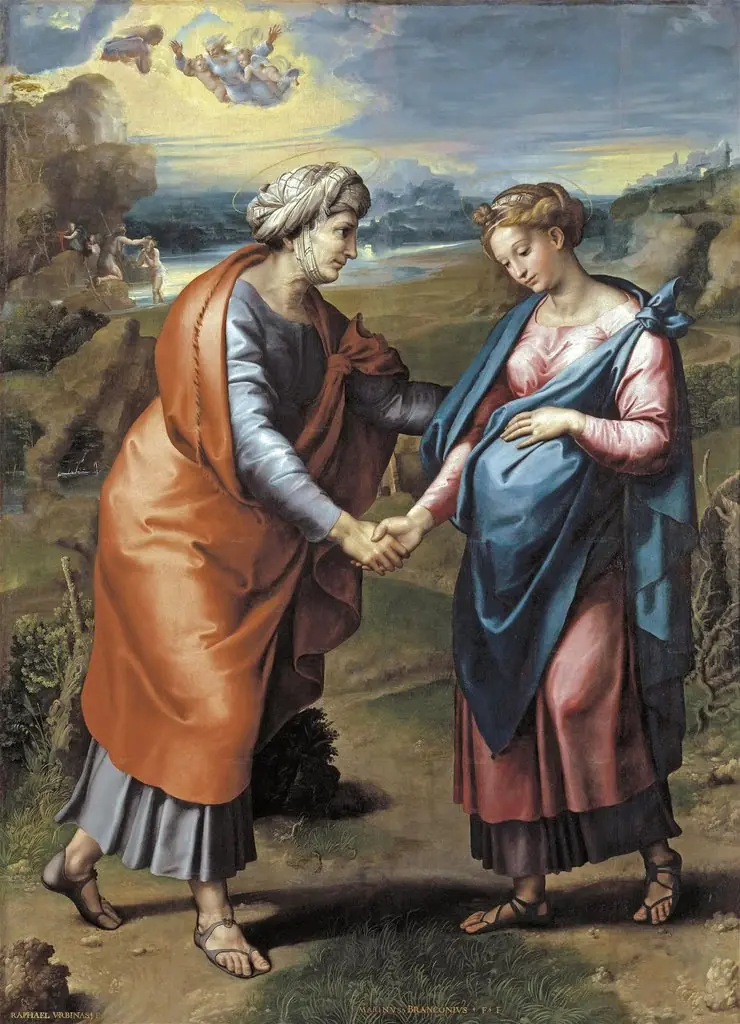
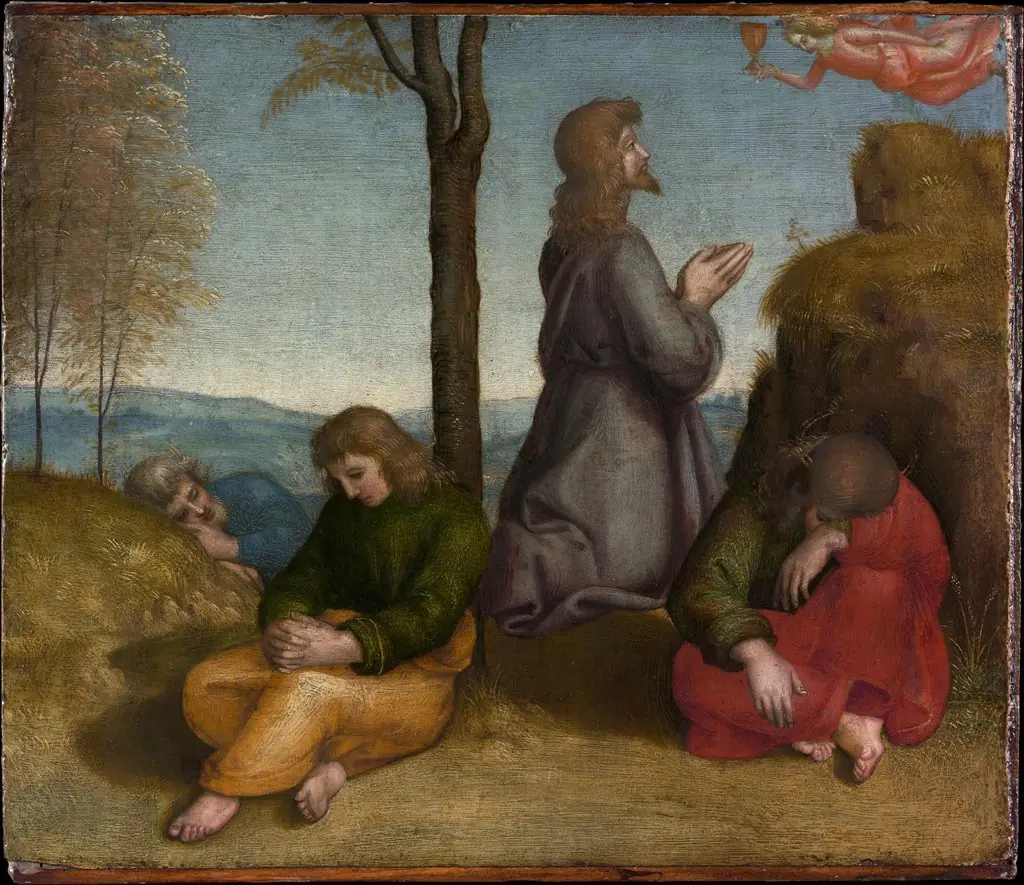
- The Holy Family with Angels
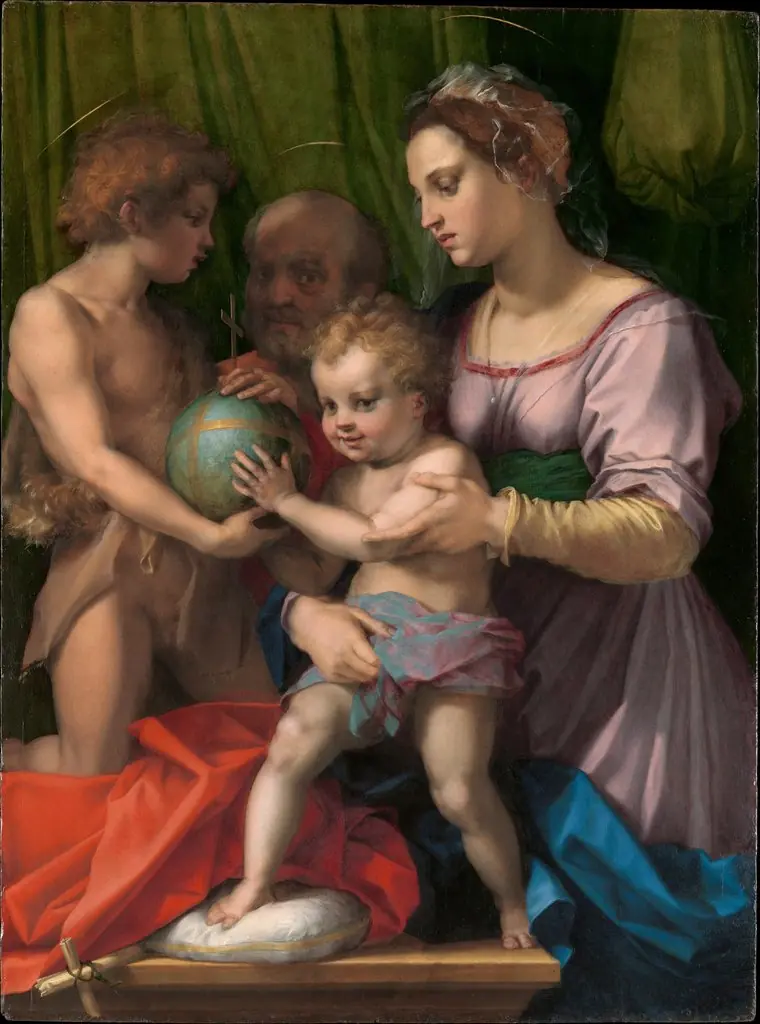 The Holy Family with the Young Saint John the Baptist
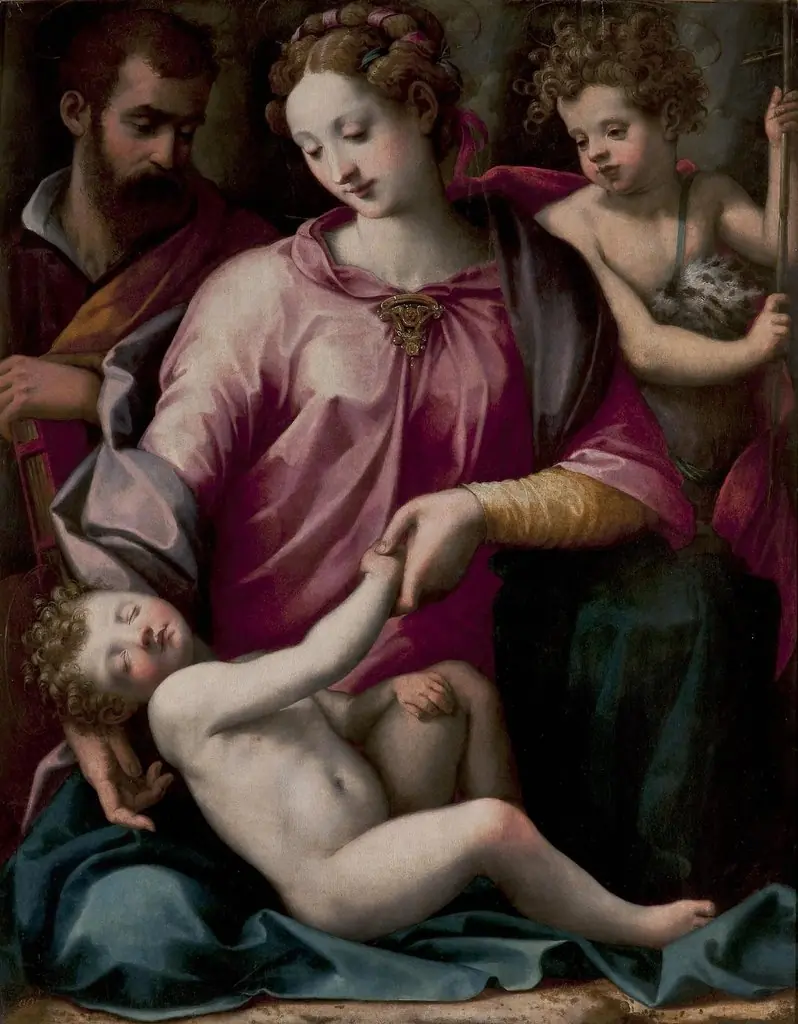 Holy Family with St John the Baptist
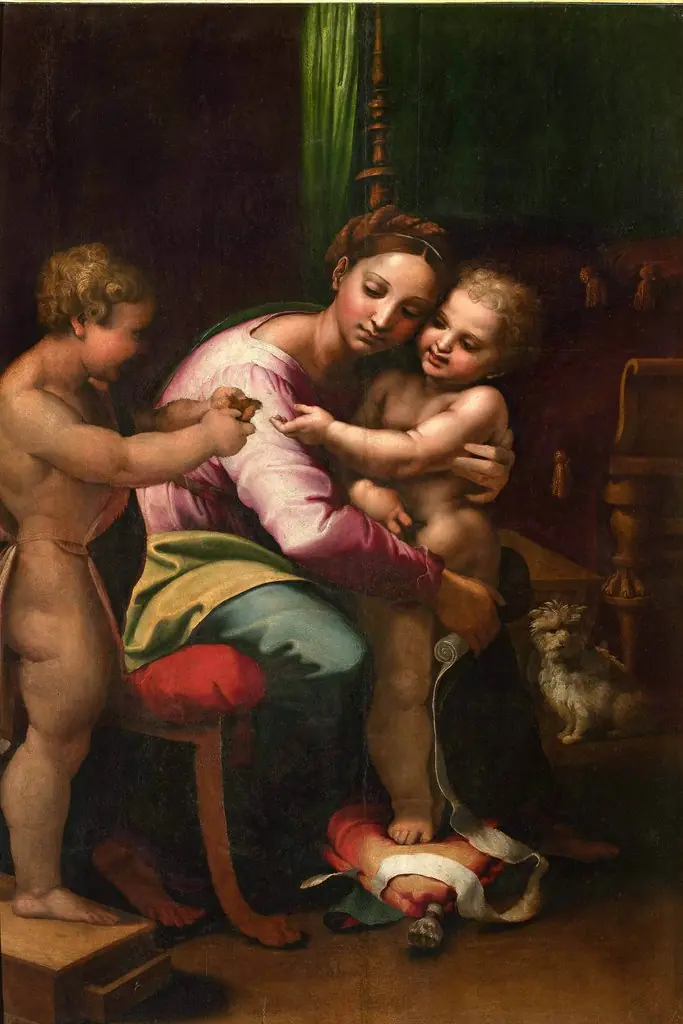 Madonna and Child with The Infant Saint John the Baptist
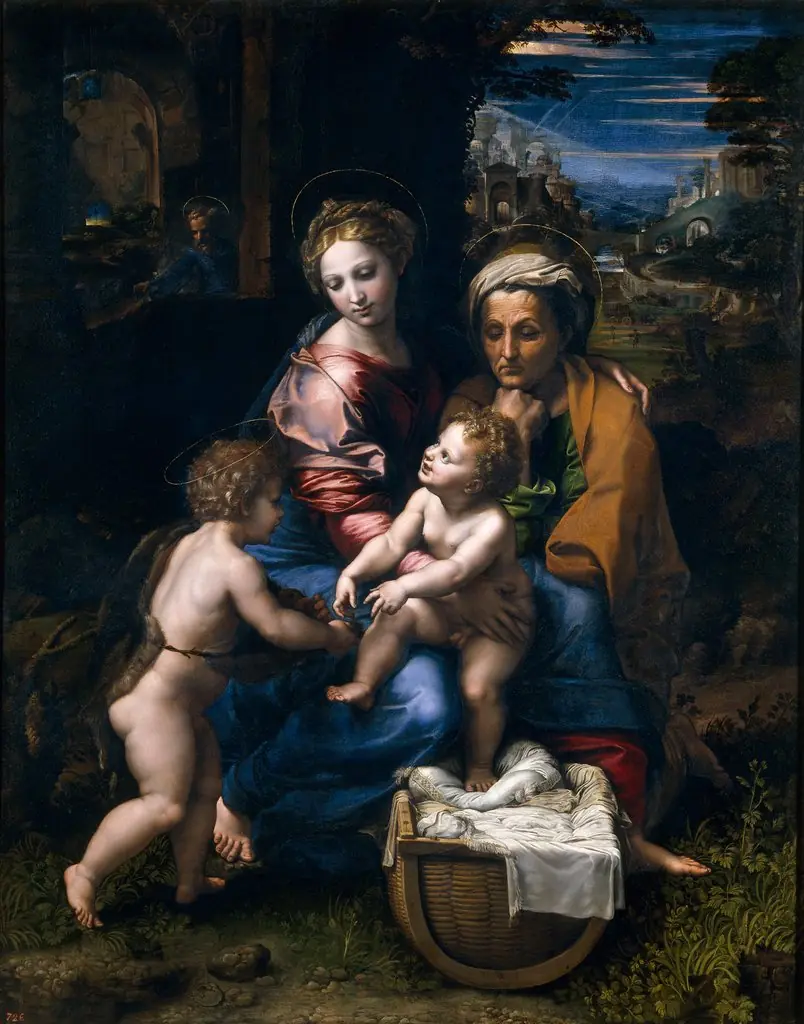 The Holy Family
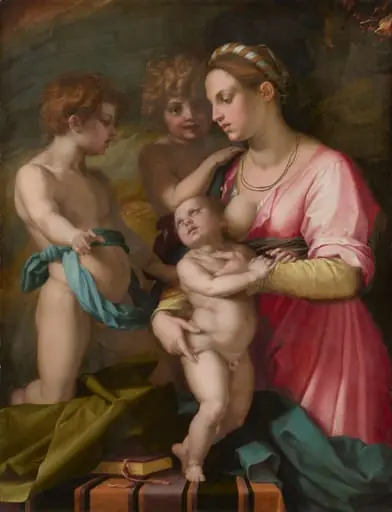 Charity
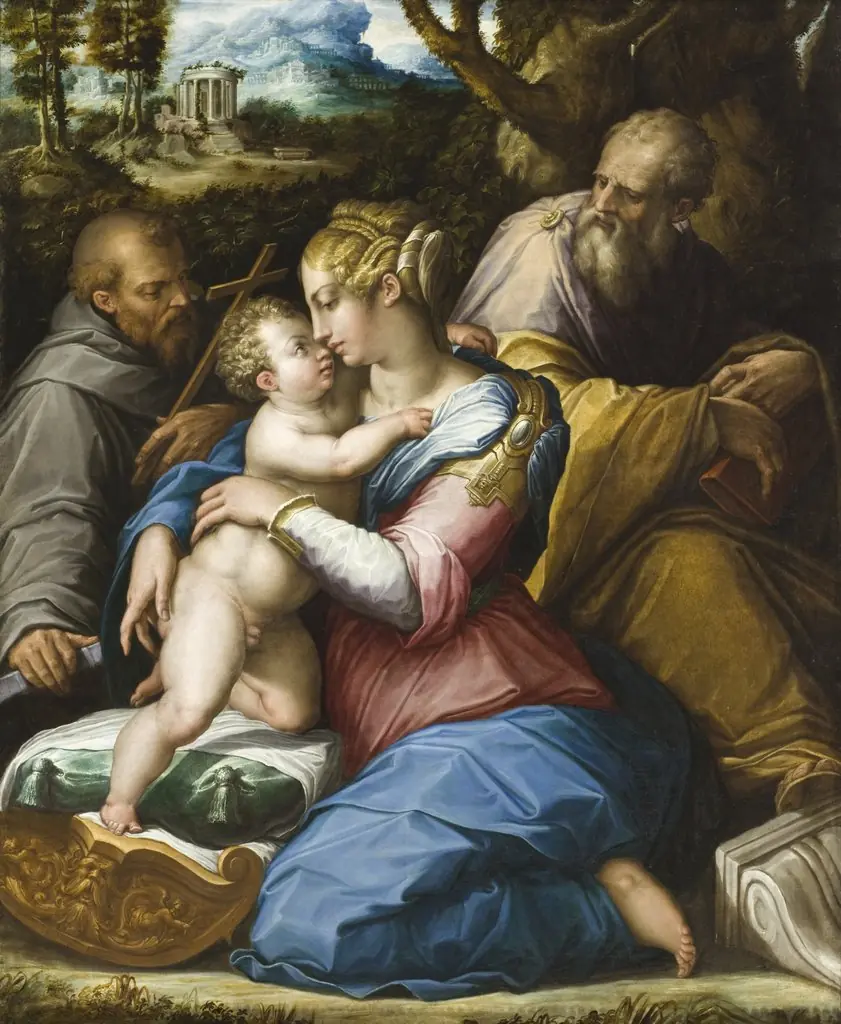 Holy Family with Saint Francis in a Landscape
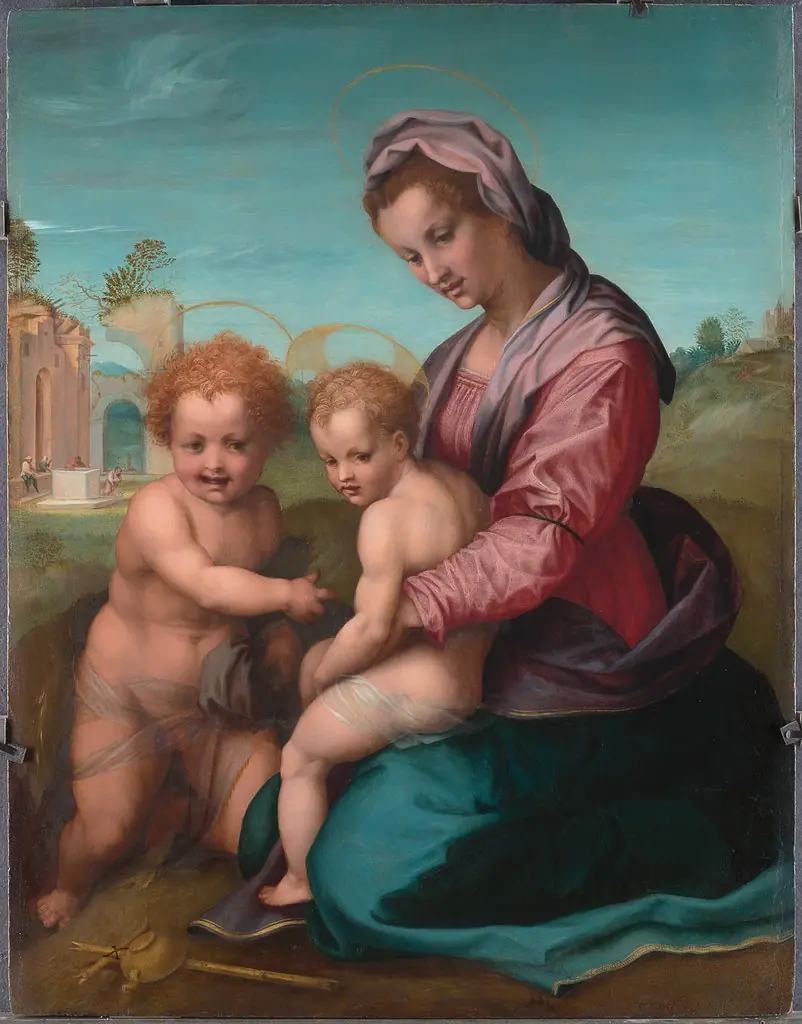 Madonna and Child with John the Baptist
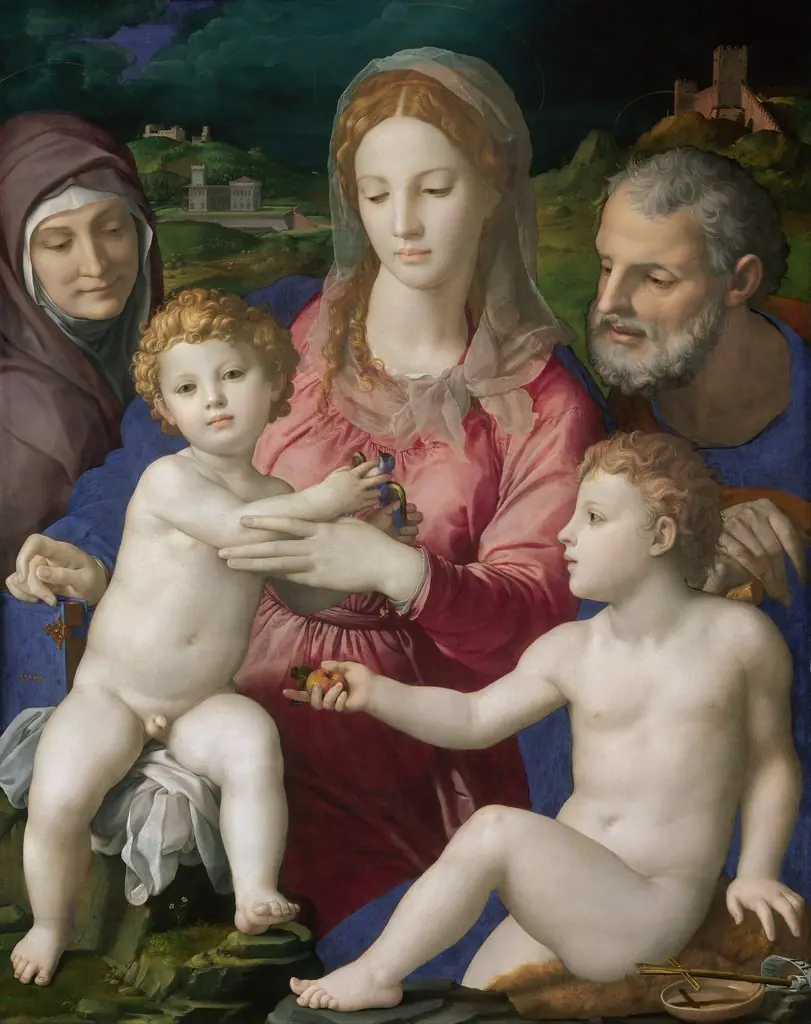 Holy Family with St. Anne and the Infant St. John
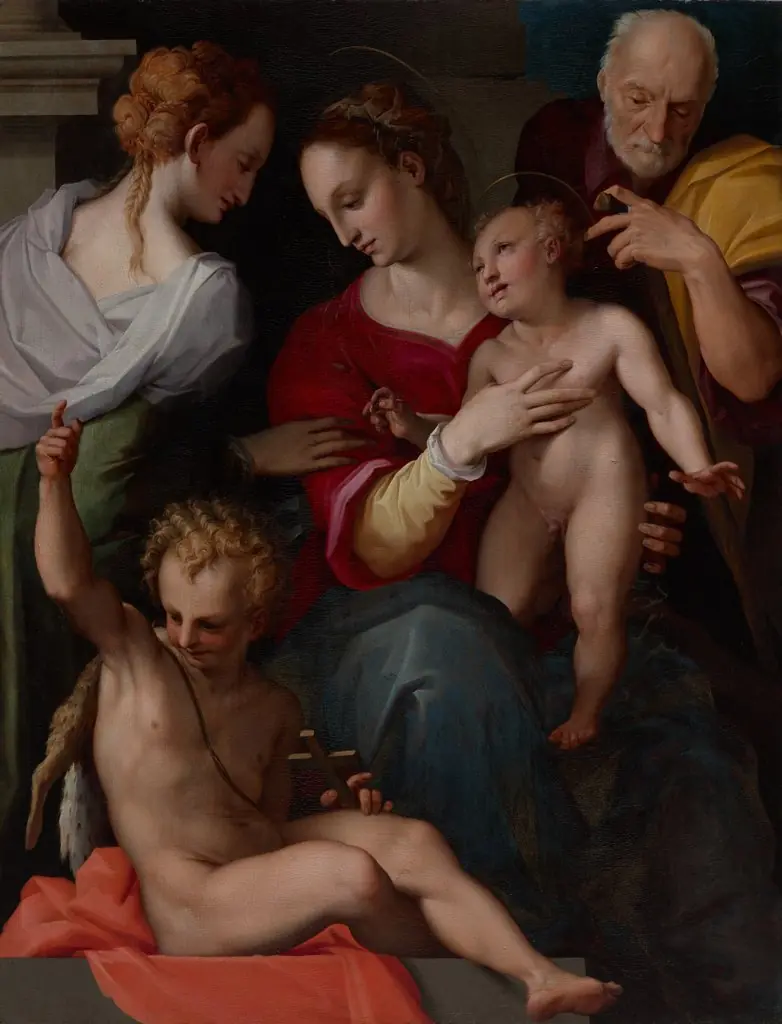 Holy Family with the Mystic Marriage of Saint Catherine
 The Holy Family with the Infant Saint John the Baptist
 The Holy Family with the Infant John the Baptist