Artwork
Evangelist Writing
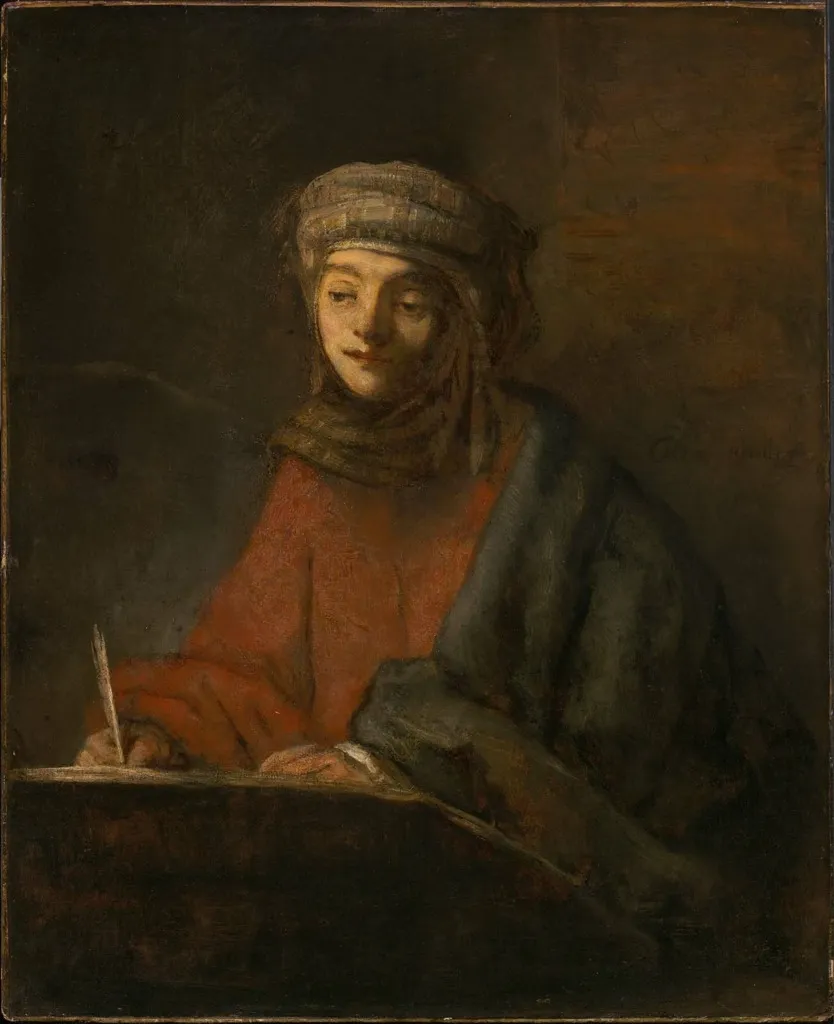
Evangelist Writing is an oil painting by the Dutch Golden Age artist Rembrandt van Rijn. It dates from 1663 and is held in the collection of the Museum of Fine Arts Boston.
About this work
Technique & Style
The surface retains the characteristic handling of his late portraits, with visible impasto in the facial features and delicate glazing in the background.
The work is an oil painting executed on canvas, reflecting Rembrandt’s mature technique of layered brushwork and chiaroscuro to model the figure and suggest depth. The surface retains the characteristic handling of his late portraits, with visible impasto in the facial features and delicate glazing in the background. Formal analysis notes the restrained palette, precise rendering of the sitter’s expression, and the compositional focus on the quill and desk as symbols of scholarly activity.
History & Provenance
The Evangelist Writing is dated to 1663 by the artist’s inscription on the work.
The painting’s early provenance traces to Humphry Ward, who owned it before it passed to Charles Sedelmeyer. By 1900 it was in the Charles Sedelmeyer collection, Paris. It was subsequently acquired by Thomas Emmerson, whose ownership is recorded prior to its arrival at the Museum of Fine Arts, Boston, where it has been held since.
The work has remained in public collections since entering the Museum of Fine Arts, Boston.
The painting Evangelist Writing is held in the collection of the Museum of Fine Arts, Boston. It is part of the Charles Sedelmeyer collection within the museum's holdings. The work measures 104.5 cm in height and 84.5 cm in width.
Prior to its current location, the painting was owned by Thomas Emmerson, Charles Sedelmeyer, and Humphry Ward. The provided sources do not contain information regarding specific exhibition history or accession numbers for this work.
Legacy
Evangelist Writing (1663) by Rembrandt Harmensz. van Rijn entered multiple private collections before being acquired by Charles Sedelmeyer, later passing through the holdings of Humphry Ward and Thomas Emmerson before entering the Museum of Fine Arts Boston. The work’s provenance reflects its circulation among European art dealers and collectors in the late nineteenth century. Its display at the Museum of Fine Arts Boston allows continued public engagement with Rembrandt’s late portraiture, contributing to scholarly reassessments of his graphic output and influence on subsequent interpretations of biblical narrative in painting.
Overview
Created in 1663 by Rembrandt van Rijn, this oil painting portrays a solitary figure absorbed in the act of writing. The work belongs to the collection of the Museum of Fine Arts in Boston and exemplifies the artist’s mature period during the Dutch Golden Age.
Subject & Meaning
The composition centers on a man seated at a desk, quill poised above a spread of papers. He is dressed in a red robe with a white collar, a patterned cap, and a dark cloak draped over his shoulders, suggesting a scholarly or clerical role, possibly an evangelist engaged in transcription.
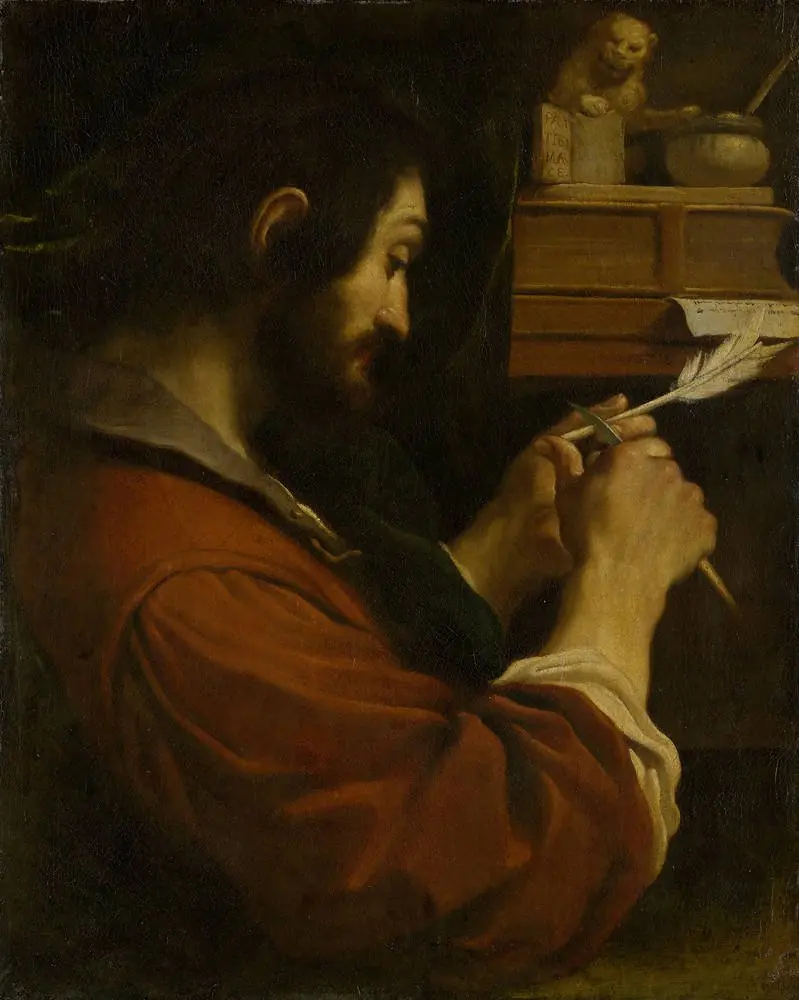
Artist & collection

Artist
Rembrandt Harmenszoon van Rijn, known mononymously as Rembrandt, was a Dutch Golden Age painter, printmaker, and draughtsman.


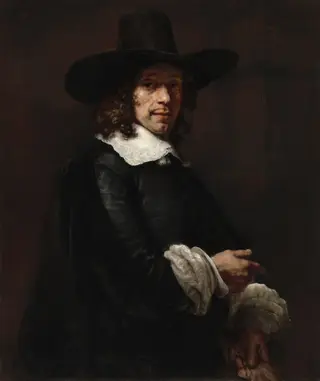
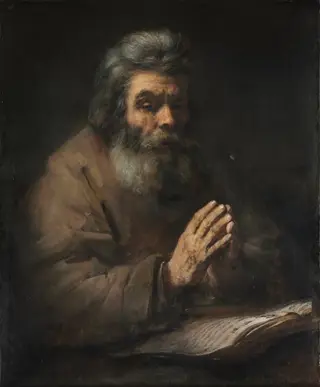 An Elderly Man in Prayer
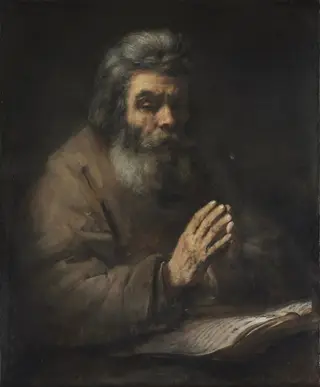 An Elderly Man in Prayer
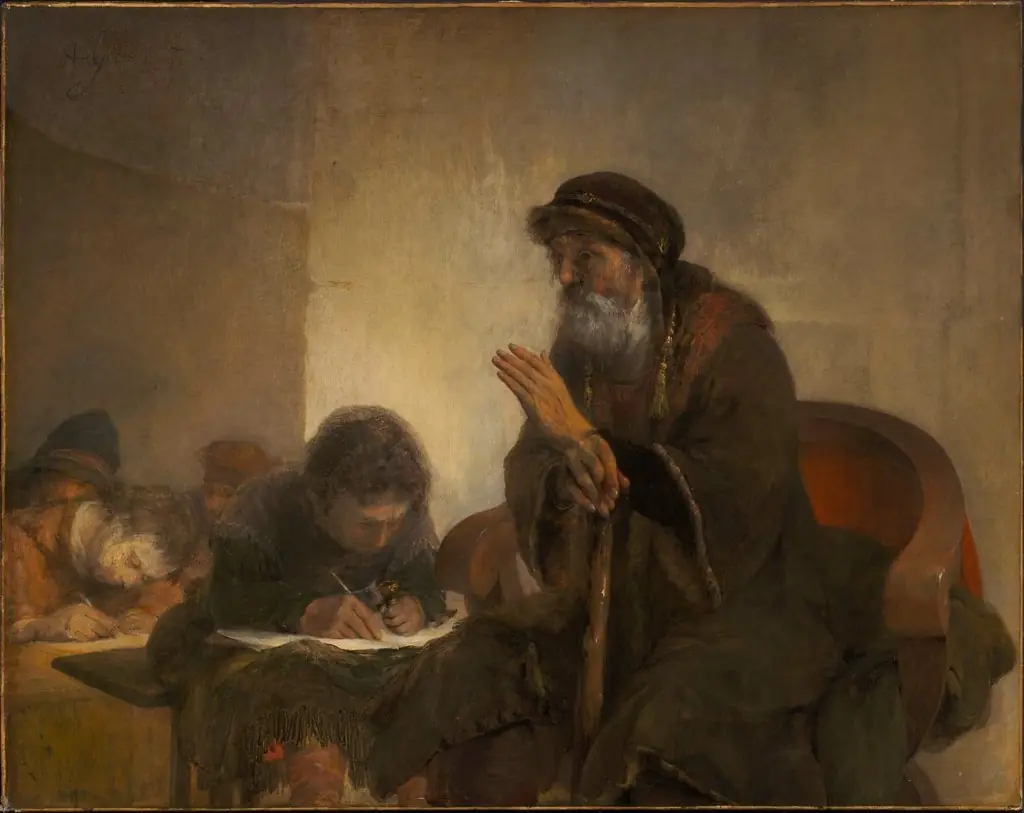 Homer Dictating to Scribes
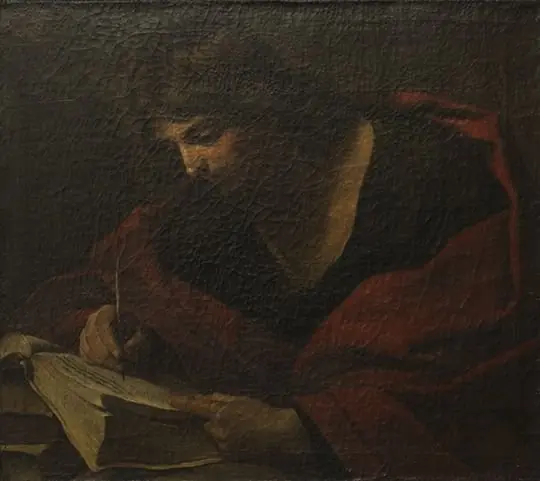 Apostel Johannes
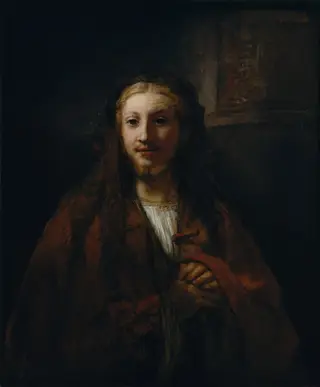 Christ with a Staff
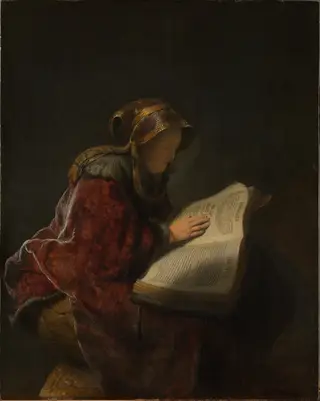 Old Woman Reading, Probably the Prophetess Anna
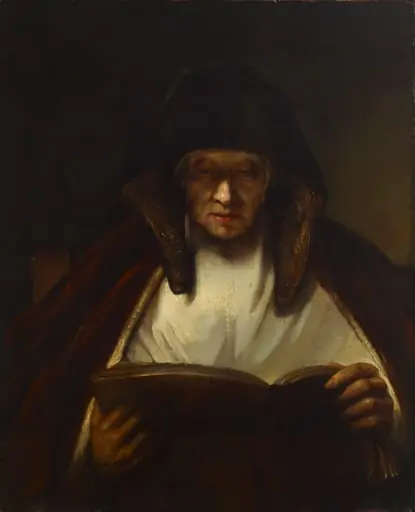 Lukeva nainen
 A Bearded Man Wearing a Hat
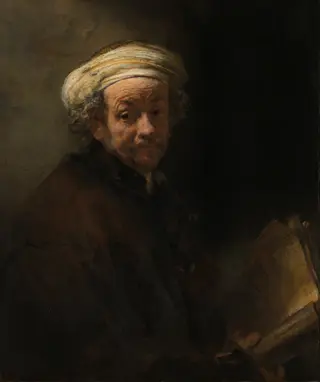 Self-portrait as the Apostle Paul
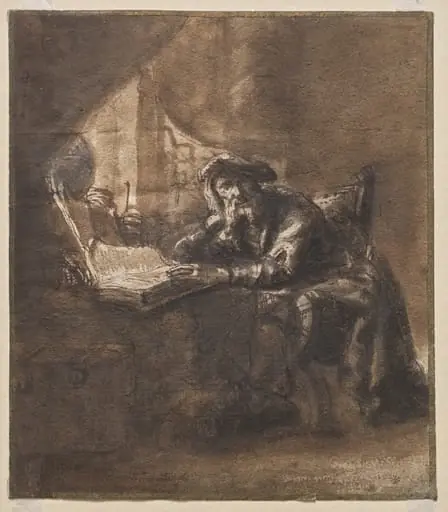 An Old Man Seated at a Table, His Head Resting on His Right Hand (recto)
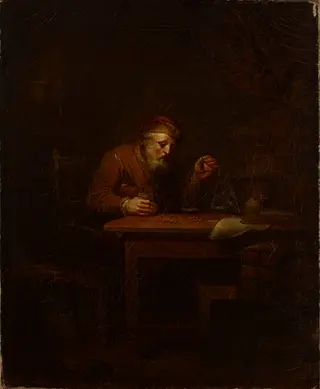 Kultarahoja punnitseva vanhus
- Mark the Evangelist