Artwork
Young Man in a Pearl-trimmed Cap
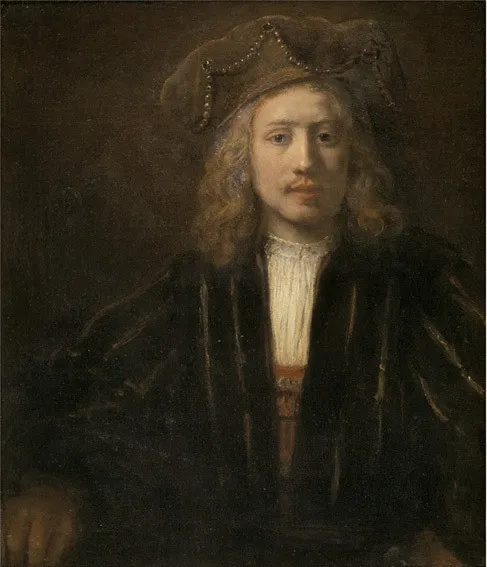
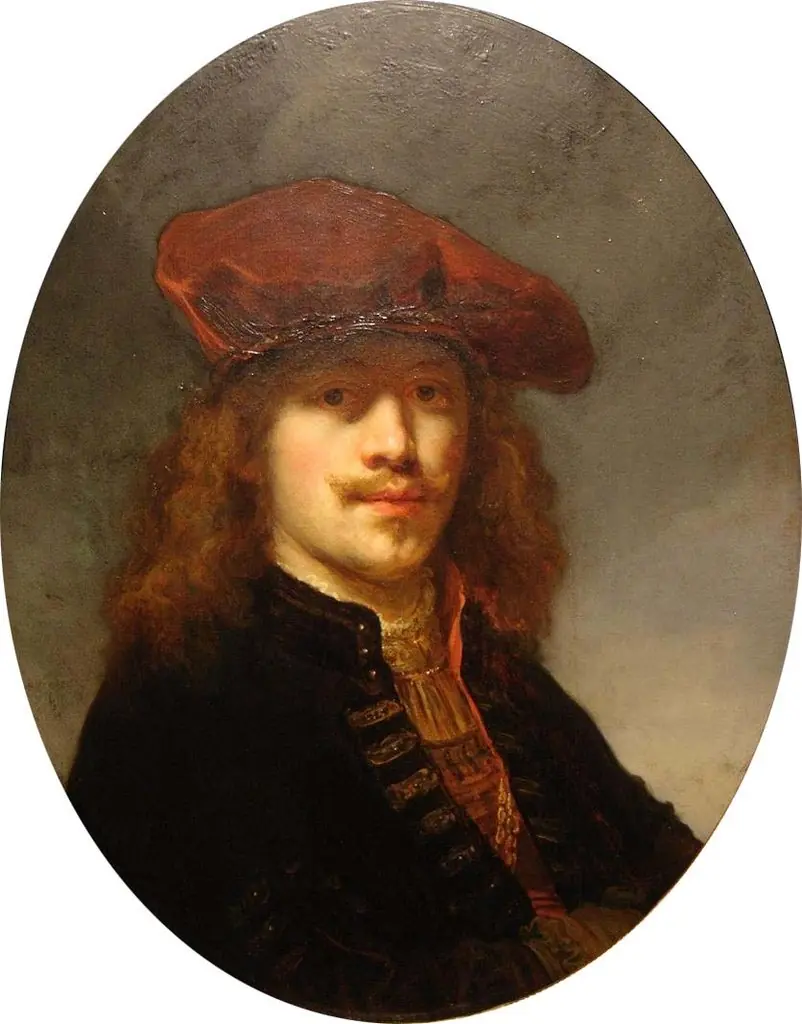
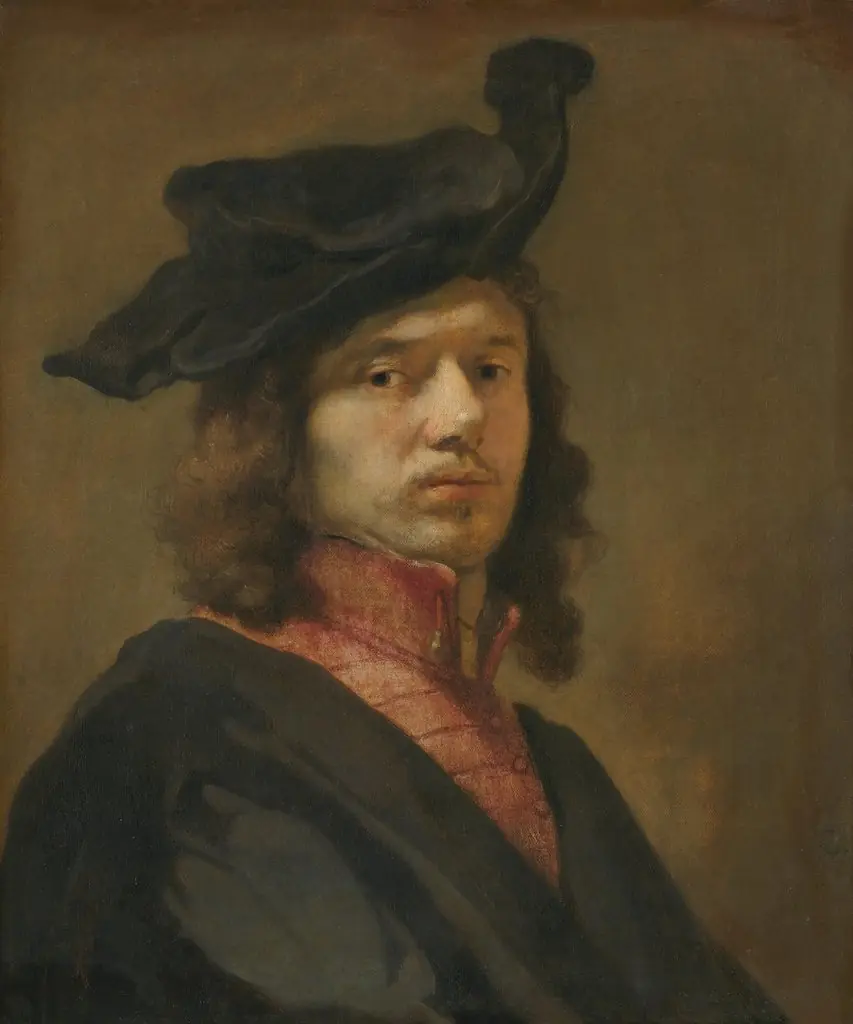
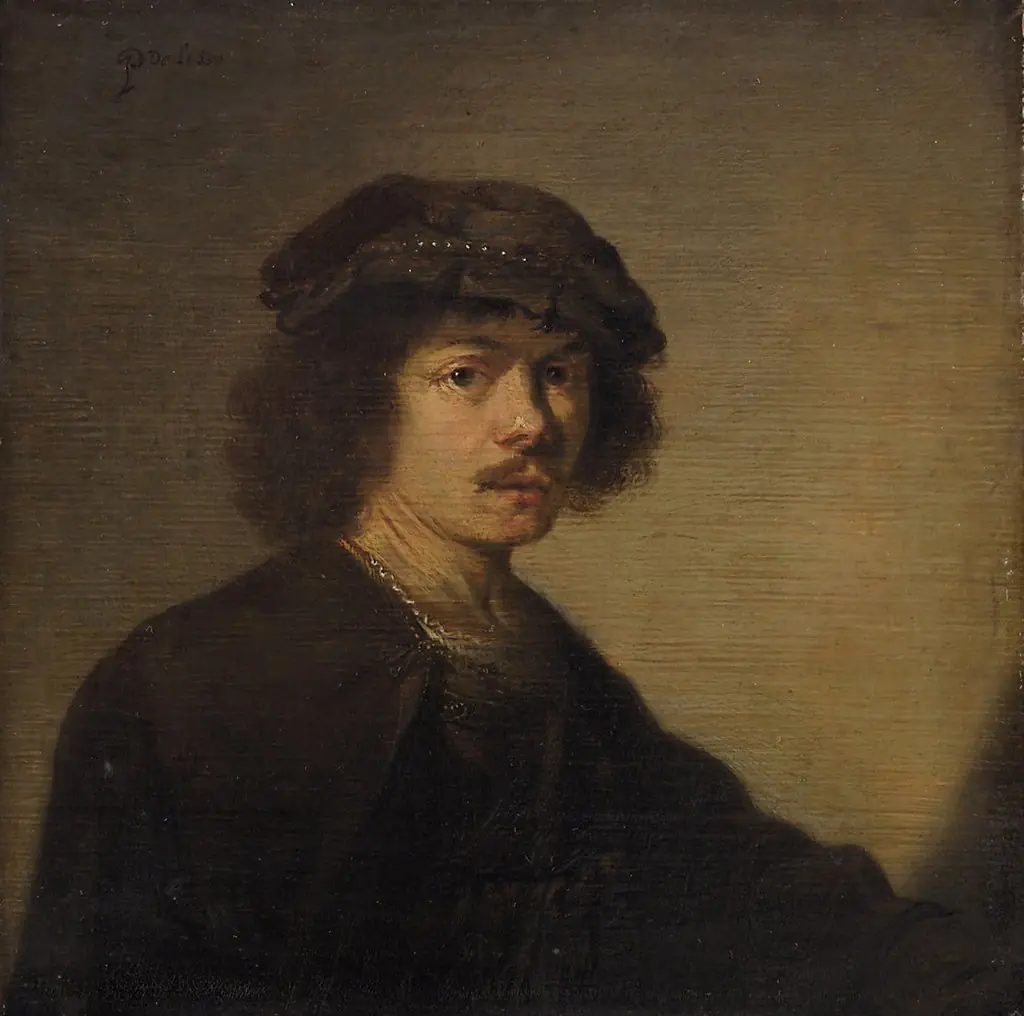
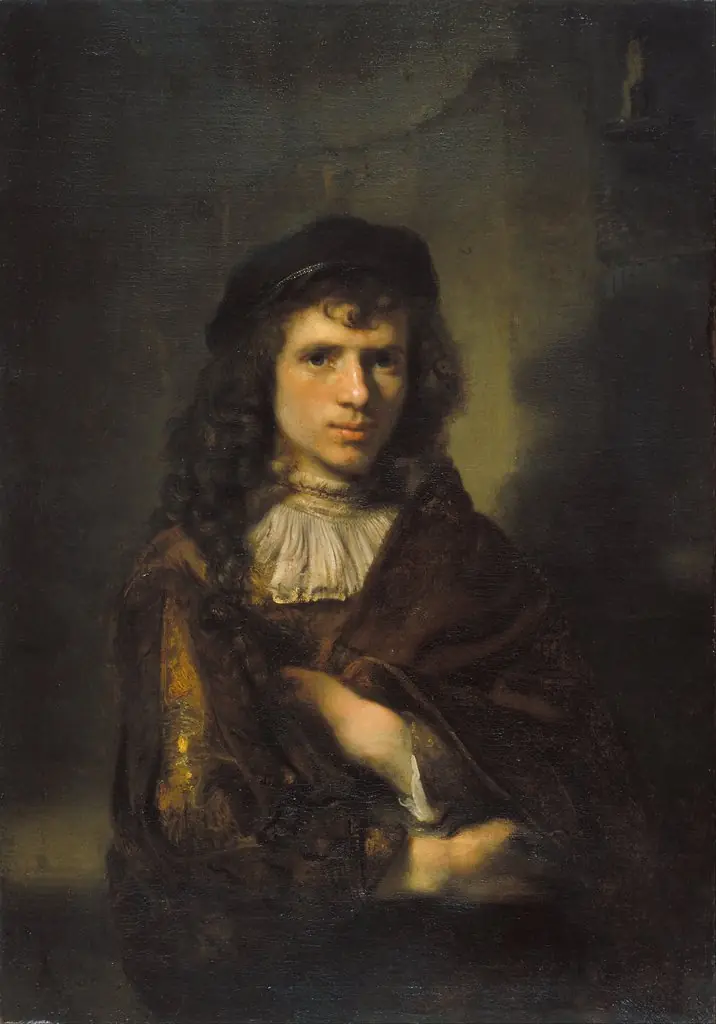
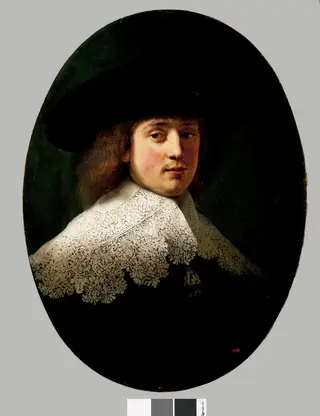
Young Man in a Pearl-trimmed Cap is an oil painting by the Dutch Golden Age artist Rembrandt van Rijn. It dates from 1650 and is held in the collection of the Statens Museum for Kunst.
About this work
Subject & Meaning
The work is classified as a tronie, a genre focused on character study rather than a formal portrait of a specific individual. It depicts a man wearing a beret adorned with pearls. The inclusion of the pearl trim on the cap serves as a distinct visual element within the composition, contributing to the figure's distinctive appearance.
Technique & Style
The handling of the oil medium captures the texture of the garments and the reflective quality of the pearls on the subject's headgear.
Executed in 1650, this work is an oil painting on canvas measuring 77.5 by 66 centimeters. The piece is classified as a tronie, a genre study focusing on facial expression and costume rather than a formal portrait. The composition depicts a male figure wearing a beret distinctively trimmed with pearls.
While attributed to Rembrandt, some assessments associate the creation with his workshop. The handling of the oil medium captures the texture of the garments and the reflective quality of the pearls on the subject's headgear.
History & Provenance
Created in 1650, Young Man in a Pearl-trimmed Cap is an oil painting on canvas attributed to Rembrandt. While some records assign the work directly to the master, other documentation suggests it may have been produced within his workshop. The painting, which depicts a man wearing a beret adorned with pearls, measures 77.5 cm in height and 66 cm in width.
It is currently held in the collection of the Statens Museum for Kunst, where it remains part of the institution's holdings.
The painting is housed in the Statens Museum for Kunst, where it is catalogued under inventory number KMS1856. Its exhibition record includes display in the 2011 exhibition Rembrandt: The Master and His Workshop.
The work is classified as a tronie, painted in oil on canvas in 1650, measuring 77.5 cm by 66 cm.
Context
The painting is classified as a tronie, a genre Rembrandt explored in the 1650s, reflecting his interest in character studies rather than commissioned portraits. Its depiction of a youthful sitter wearing a pearl-trimmed cap aligns with Rembrandt's broader thematic engagement with costume and expression in the mid-17th century. The work has been part of the collection of the Statens Museum for Kunst since its acquisition, contributing to ongoing scholarly discussions about Rembrandt's late portraiture and its influence on Dutch Golden Age art.
Art historians have examined the technical execution and symbolic elements in relation to his broader oeuvre, particularly in the context of his workshop practices and stylistic evolution.
Overview
Created circa 1650 by Rembrandt van Rijn, a central figure of the Dutch Golden Age, this oil painting portrays a young man in a distinctive cap edged with pearls. The work belongs to the collection of Denmark’s Statens Museum for Kunst and exemplifies the artist’s prolific output, which includes roughly three hundred paintings together with numerous etchings and drawings.
Artist & collection

Artist
Rembrandt Harmenszoon van Rijn, known mononymously as Rembrandt, was a Dutch Golden Age painter, printmaker, and draughtsman.