Artwork
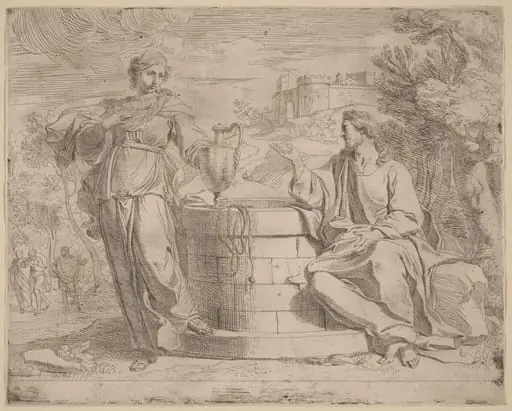
Christ and the Woman of Samaria Among Ruins
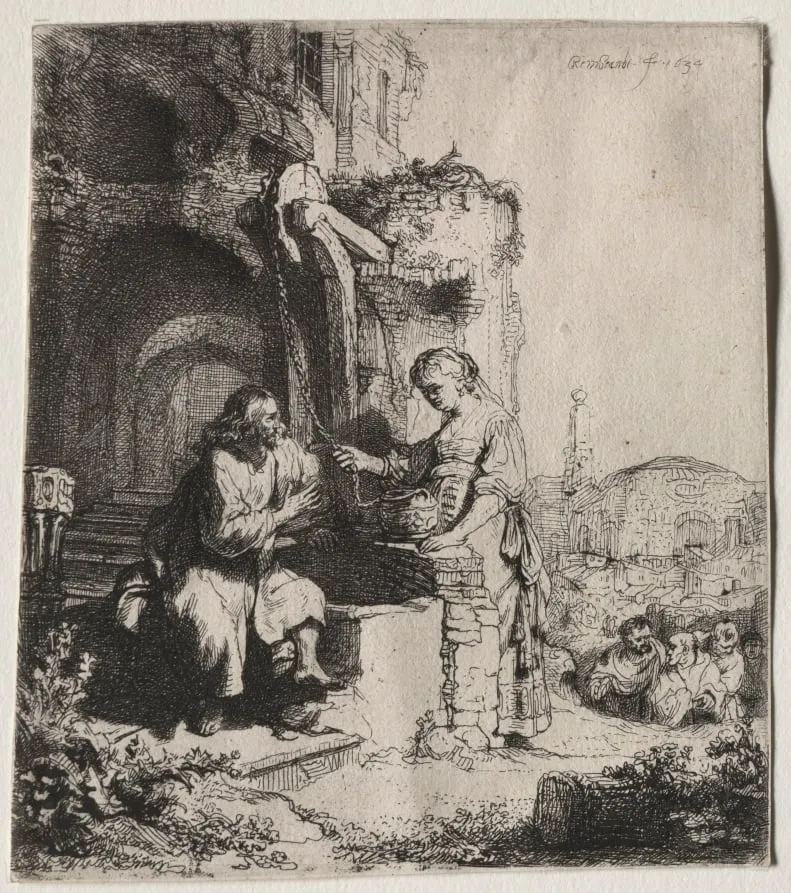
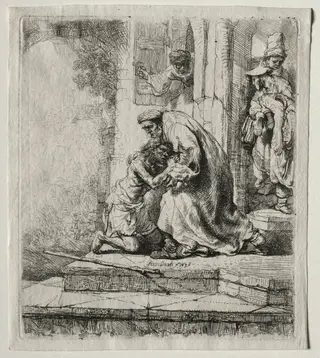
Christ and the Woman of Samaria Among Ruins is a print by the Baroque artist Rembrandt van Rijn. It dates from 1634 and is held in the collection of the Cleveland Museum of Art.
- Accession no.
- 1926.475
- Credit line
- Bequest of Ralph King
About this work
Overview
It resides in the collection of The Cleveland Museum of Art, where it is valued as a refined example of Rembrandt’s early graphic work.
Created in 1634, this ink and wash drawing by Rembrandt van Rijn depicts a biblical encounter between Christ and the Samaritan woman at a well, set amid the remnants of ancient architecture. Though executed with minimal strokes, the work conveys narrative depth and emotional stillness. It resides in the collection of The Cleveland Museum of Art, where it is valued as a refined example of Rembrandt’s early graphic work.
Subject & Meaning
The scene illustrates John 4:7–26, in which Christ speaks to a Samaritan woman, offering living water. The woman’s upward gesture suggests revelation or spiritual awakening, while Christ, seated and leaning on a staff, embodies calm authority. The ruined surroundings may symbolize the decay of old religious structures, contrasting with the renewal offered through their dialogue.
Technique & Style
Rembrandt employs ink wash and pen to build form through subtle gradations of tone rather than outline. Deep shadows anchor the figures, while selective light highlights their faces and gestures. This use of chiaroscuro, though restrained, creates psychological intensity. The sketchlike quality reflects his practice of capturing fleeting moments of human interaction with immediacy.
History & Provenance
The drawing entered the Cleveland Museum of Art’s collection in the 20th century, having passed through several private European holdings since its creation. Its attribution to Rembrandt has been consistently supported by stylistic analysis and comparative study of his other graphic works from the 1630s, a period rich in biblical drawings.
Context
In 1630s Amsterdam, Rembrandt was deeply engaged with biblical narratives, often exploring intimate moments over grand spectacle. This drawing aligns with a broader trend among Dutch artists to depict scripture in everyday, human terms. Ruins as backdrops were common in Northern art, evoking transience and the passage of time.
Legacy
This work exemplifies Rembrandt’s ability to convey spiritual themes through understated means. Its influence is seen in later generations of printmakers who adopted his tonal approach to narrative. Though not widely exhibited, it remains a key reference for understanding his graphic innovation and emotional precision.
Artist & collection

Artist
Rembrandt Harmenszoon van Rijn, known mononymously as Rembrandt, was a Dutch Golden Age painter, printmaker, and draughtsman.