Artwork
The Quacksalver
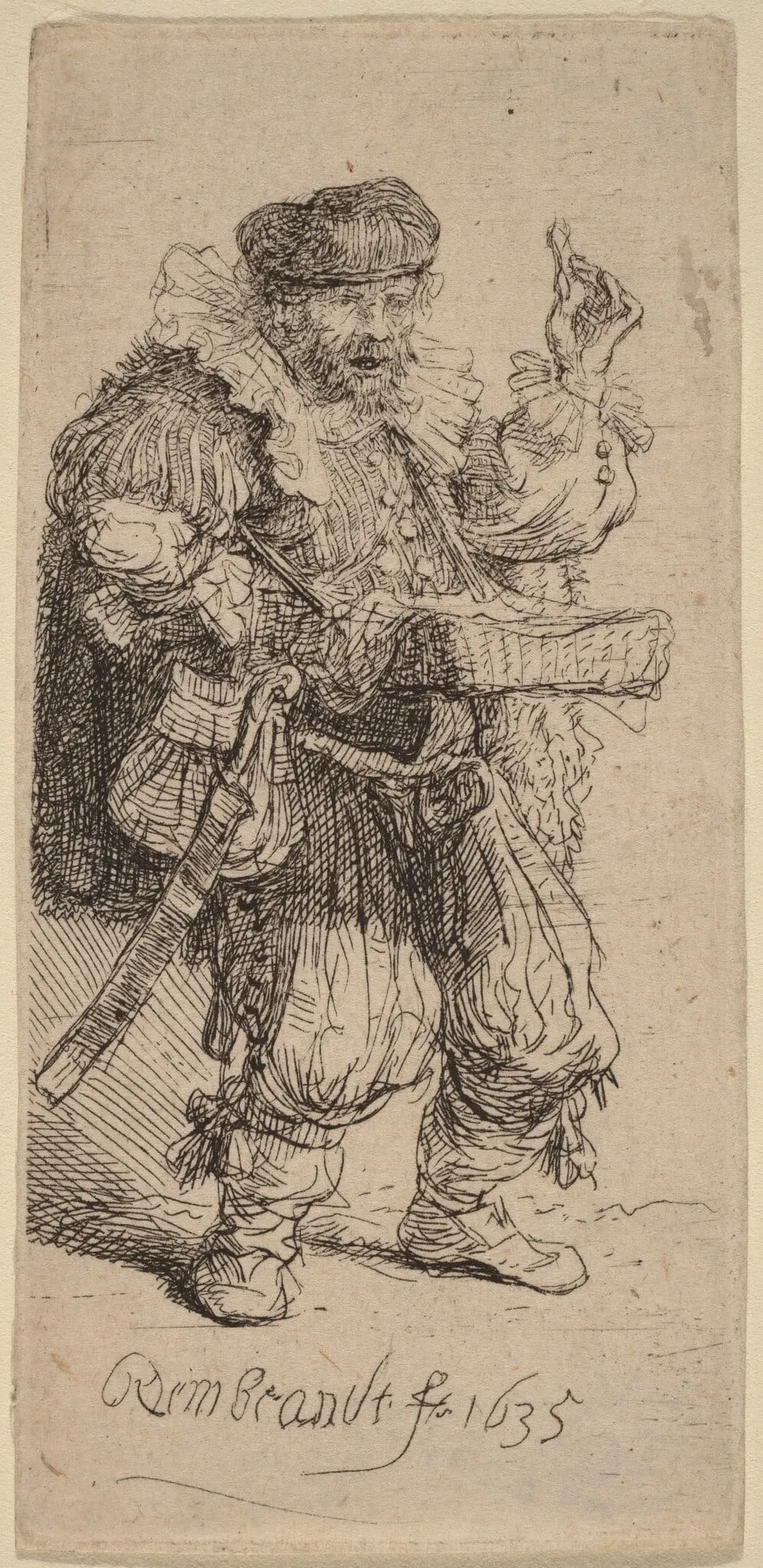
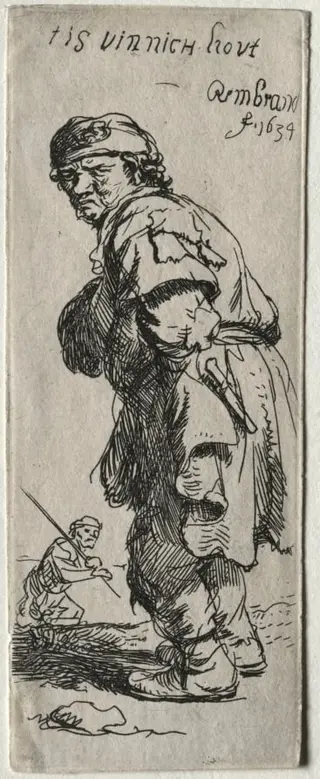
The Quacksalver is an ink print by the Baroque artist Rembrandt van Rijn. It dates from 1635 and is held in the collection of the National Gallery of Art.
About this work
The loose, sketchy style makes the figure feel alive and real, even though it’s just ink on paper.
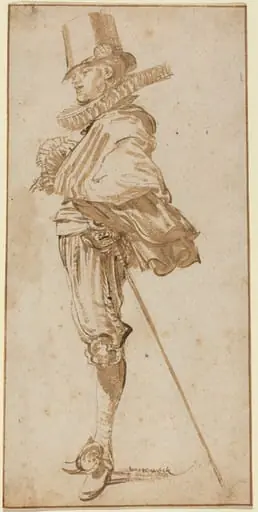
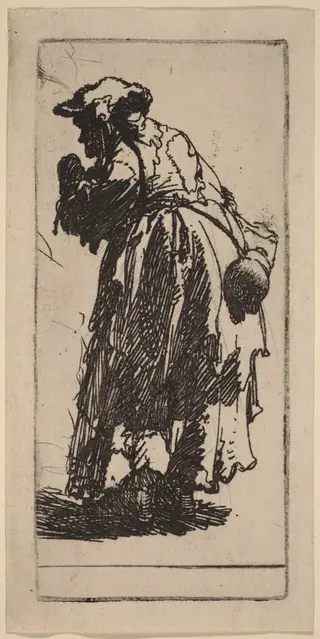
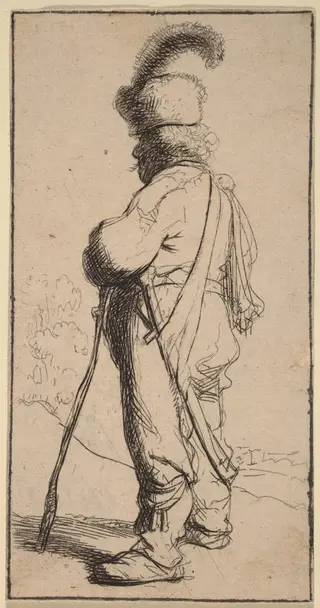
This sketch shows a hunched man in old-fashioned clothes, holding a staff and a small bag. His hat is pulled low, and he looks like he’s walking with a limp. The lines are scratchy and uneven, almost like they were drawn quickly.
The artist signed it “Rembrandt f. 1635,” which means it’s a 17th-century etching. The loose, sketchy style makes the figure feel alive and real, even though it’s just ink on paper.
Want to see more? Check out etching to learn how artists like Rembrandt made prints this way.
Overview
The Quacksalver is an etching by Rembrandt van Rijn created in 1635. The composition depicts a solitary, hunched figure walking from right to left, characterized by old-fashioned attire, a low-pulled hat, and a limp. The subject carries a staff in one hand and a small bag in the other, visual cues identifying him as a charlatan or itinerant medicine seller.
Executed with rapid, scratchy lines, the work demonstrates Rembrandt's mastery of the etching medium to convey movement and texture with economy. The artist signed the plate "Rembrandt f. 1635" in the lower left corner.
This piece belongs to a series of genre scenes Rembrandt produced during his early Amsterdam period, where he frequently explored themes of human frailty, deception, and the lower social strata. The work reflects his interest in capturing the immediacy of the moment and the psychological depth of individual characters through expressive line work rather than detailed finish. It stands as a significant example of his early etchings, showcasing his ability to transform a fleeting observation into a enduring study of human condition.
Subject & Meaning
The composition depicts a hunched, itinerant figure dressed in antiquated attire, clutching a staff and a small bag. His low‑set hat and uneven gait suggest a traveling charlatan or folk healer, a common archetype in Dutch visual culture. The portrayal captures the social marginality of such a person, inviting contemplation of deception and poverty.
Technique & Style
Rembrandt employed traditional copper‑plate etching, using acid to incise lines that vary from fine to vigorous. The resulting marks are intentionally irregular, giving the figure a sense of immediacy and movement. The sketchy, uneven strokes contrast with the controlled precision of later works, reflecting an experimental approach to line and tonal modulation.
History & Provenance
Signed and dated by the artist, the print entered the market shortly after its creation, circulating among collectors of Dutch prints. Surviving impressions are held in several major institutions, confirming its attribution and providing insight into Rembrandt’s early print output during a prolific period of his career.
Artist & collection

Artist
Rembrandt Harmenszoon van Rijn, known mononymously as Rembrandt, was a Dutch Golden Age painter, printmaker, and draughtsman.