Artwork
清 任頤 童子水牛 扇面|Herdboy and Buffalo
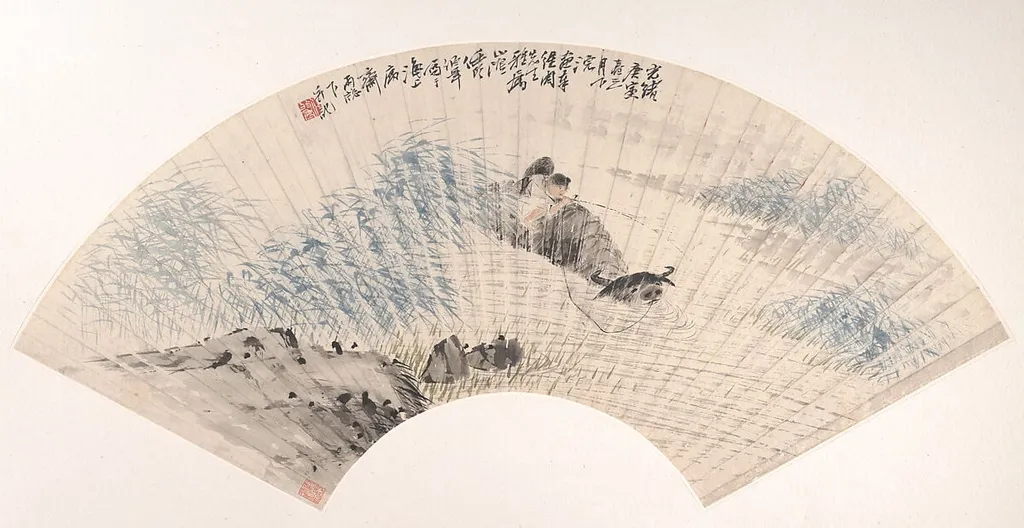
清 任頤 童子水牛 扇面|Herdboy and Buffalo is an ink painting by the Impressionist artist Ren Yi. It dates from 1890 and is held in the collection of the Metropolitan Museum of Art.
About this work
If you like this, look up more works about boys, buffalos, china, boy, water buffalo, they show how everyday life became art.
A boy sits on a water buffalo, holding a thin branch like a whip. The scene is simple, just ink and light color on paper, shaped like a folding fan.
This painting was made in 1890, when artists in China often worked on fans or small album pages. The buffalo’s slow curve and the boy’s relaxed posture feel quiet, almost like a pause in the day.
If you like this, look up more works about boys, buffalos, china, boy, water buffalo, they show how everyday life became art.
Technique & Style
The work is executed in ink and polychrome pigments on alum‑treated paper, a support typical of Chinese folding fans, and the fan leaf is subsequently mounted as an album leaf (1). Its dimensions measure approximately 19.1 cm in height by 54.3 cm in width, indicating a horizontal format suited to narrative composition (2). The surface bears the characteristic delicate brushwork and subtle color washes associated with Ren Yi’s genre scenes, rendering the boy and water buffalo with a lyrical yet naturalistic presence. No condition details are recorded in the available documentation.
History & Provenance
Created in 1890 by the Qing dynasty artist Ren Yi, also known as Ren Bonian, the work titled Herdboy and Buffalo was executed on alum paper using ink and color. The piece originated in China and was initially formed as a folding fan before being mounted as an album leaf. It measures 19.1 centimeters in height and 54.3 centimeters in width.
The Metropolitan Museum of Art currently holds the work in its collection, where it is cataloged as a genre scene depicting a boy and a water buffalo. No specific details regarding the original commission, the identity of the first patron, or the intermediate ownership chain prior to its arrival at the museum are provided in the available records.
Context
Ren Yi (Ren Bonian) painted Herdboy and Buffalo in 1890, a folding fan mounted as an album leaf executed in ink and color on alum paper. The work depicts a boy with a water buffalo, a subject categorized as a genre scene, reflecting everyday rural life in late‑Qing China. Its inclusion in the Metropolitan Museum of Art collection underscores its recognized significance and provides a scholarly reference point for studies of late‑Qing painting and the artist’s synthesis of traditional techniques with contemporary subjects.
The piece exemplifies the genre‑scene tradition that emerged in late‑Qing art, marking a transitional phase toward modern artistic expression.
Overview
Created in 1890 by Ren Yi, a leading figure of the Shanghai School, this work depicts a herdboy seated atop a water buffalo, holding a slender branch. Executed in ink and light color on alum paper, the composition is adapted to the specific format of a folding fan mounted as an album leaf. Ren Yi employs his characteristic spontaneous brushwork, utilizing fluid, calligraphic lines to define the animal's massive, rounded form and the boy's relaxed posture.
The sparse background focuses attention entirely on the interaction between the child and the beast, capturing a moment of rural tranquility. This piece exemplifies Ren Yi's mastery in genre painting during his mature period, where he frequently revitalized traditional subjects through a dynamic, expressive style that bridged academic rigor and popular appeal. The work reflects the late Qing dynasty trend of producing small-scale, portable artworks for private appreciation and the commercial art market in Shanghai.
Subject & Meaning
The painting portrays a common pastoral image in Chinese art: a young herdboy gently guiding a water buffalo. The boy's relaxed posture and the buffalo's unhurried curve suggest a moment of calm within a daily routine. Holding a thin branch, the boy appears to be in control, yet the overall impression is one of harmony between human and animal, reflecting a traditional appreciation for rural life and its simple rhythms.
Artist & collection


- 明 吳彬 翠壁丹楓 扇|Azure Cliff with Red Maples
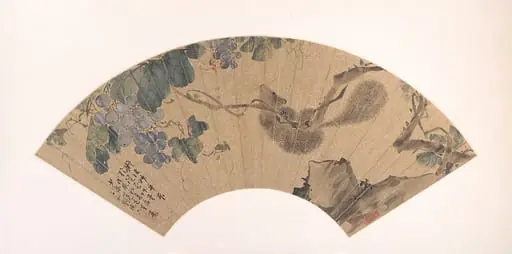 清 劉德六 松鼠葡萄 扇面|Squirrel and Grape
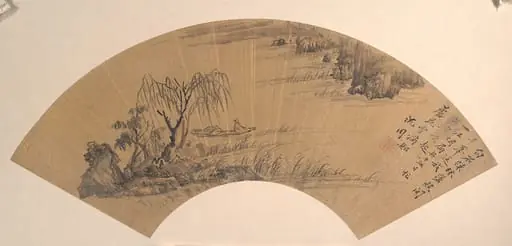 明/清 佚名 倣沈周 山水 扇|Landscape
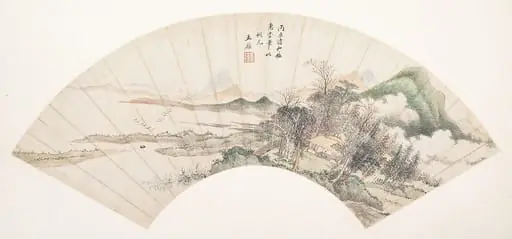 清 佚名 倣王鑑 倣惠崇山水圖 扇|Landscape in the Style of Huichong
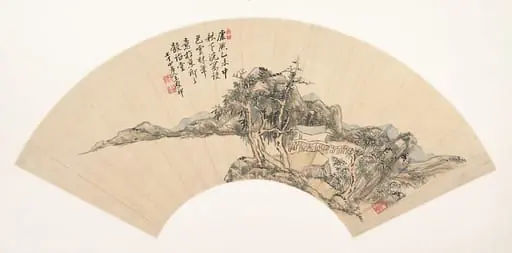 清 倣王原祁 倪雲林筆意山水 扇面|Landscape in the Style of Ni Zan
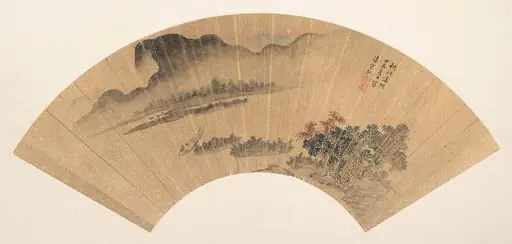 明/清 潘雲馭 秋江落照 扇|Setting Sun on the Autumn River
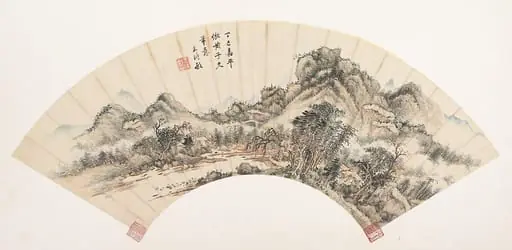 清 王時敏 倣黃子久筆意山水 扇頁|Landscape after Huang Gongwang
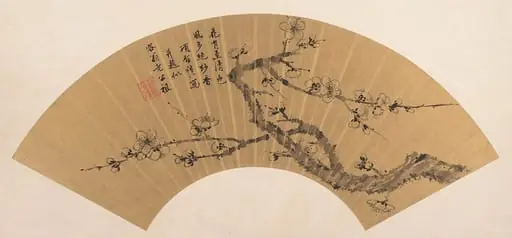 明/清 項聖謨 梅花 扇|Branch of Blossoming Plum
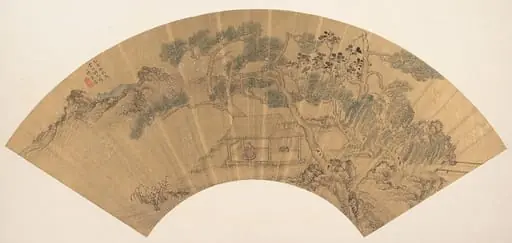 明 陳季淳 山水人物圖 扇頁|Landscape with figure