Artwork
Still Life
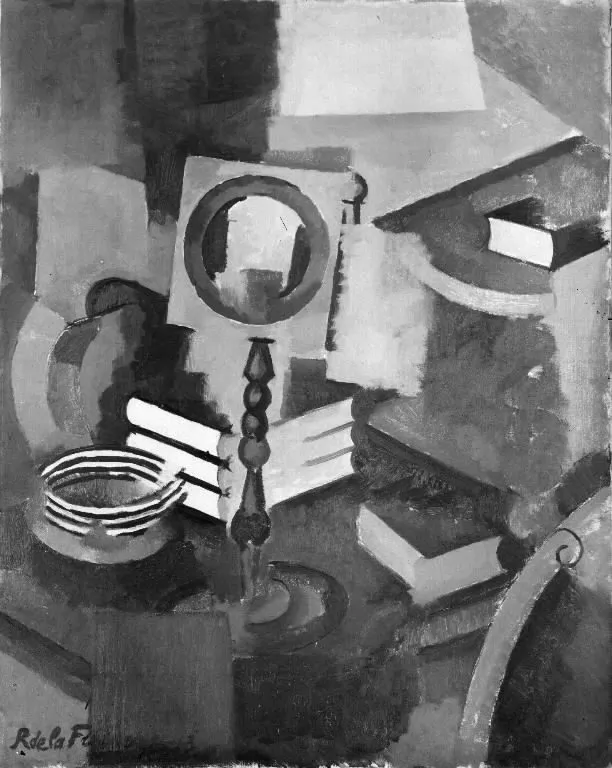
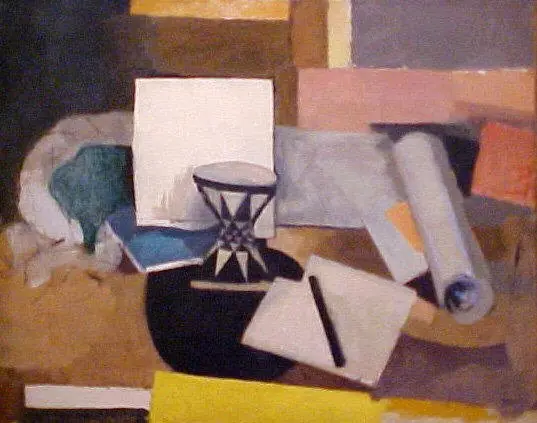
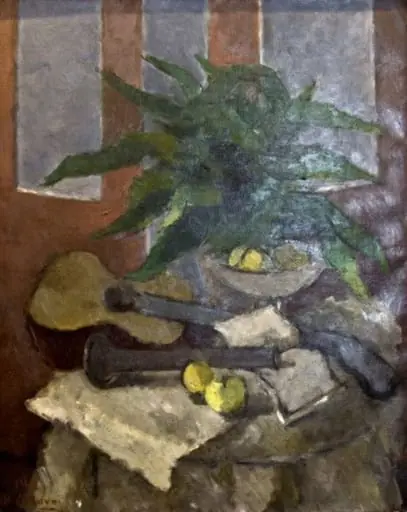
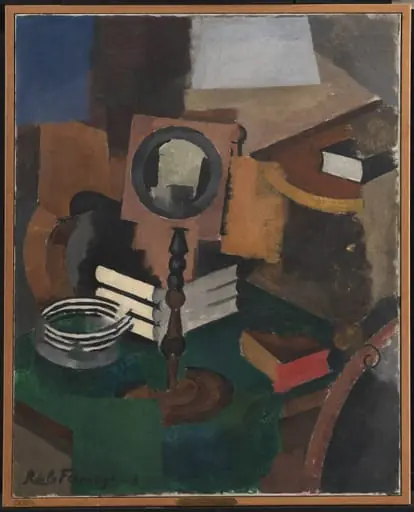
Still Life is an oil painting by the Cubism Synthetic artist Roger de La Fresnaye. It dates from 1913 and is held in the collection of the Statens Museum for Kunst.
About this work
Overview
Still Life is an oil on canvas painting by the French Cubist artist Roger de La Fresnaye, created in 1913.
Still Life is an oil on canvas painting by the French Cubist artist Roger de La Fresnaye, created in 1913. Measuring 92.5 by 73.5 centimeters, the work is held in the collection of the Statens Museum for Kunst in Copenhagen. The painting exemplifies de La Fresnaye's distinctive approach to Cubism during his most innovative period, prior to his service in World War I and the subsequent decline in his health that curtailed his artistic production. As a member of the Section d'Or group from 1912 to 1914, de La Fresnaye developed更全面 synthesized Still Life synthesizes Braque's and Picasso's analytical innovations with a more decorative,Than aelo prismatic sensibility associated with Orphism, positioning the canvas as a significant document of French avant interwar experimentation.
Subject & Meaning
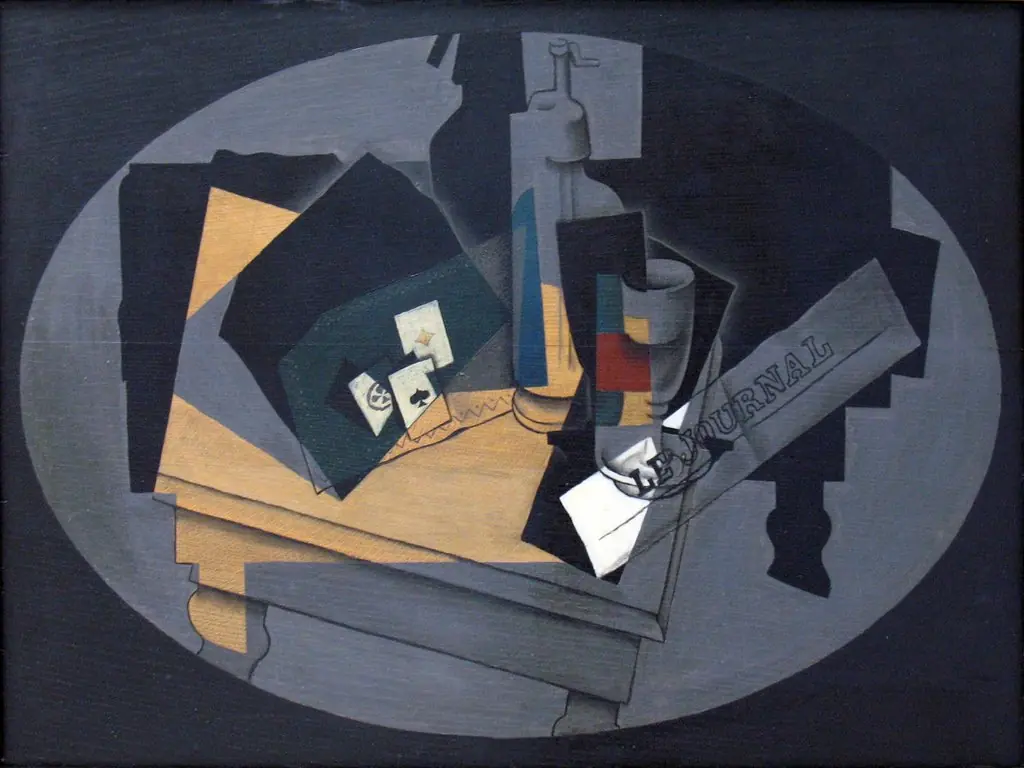
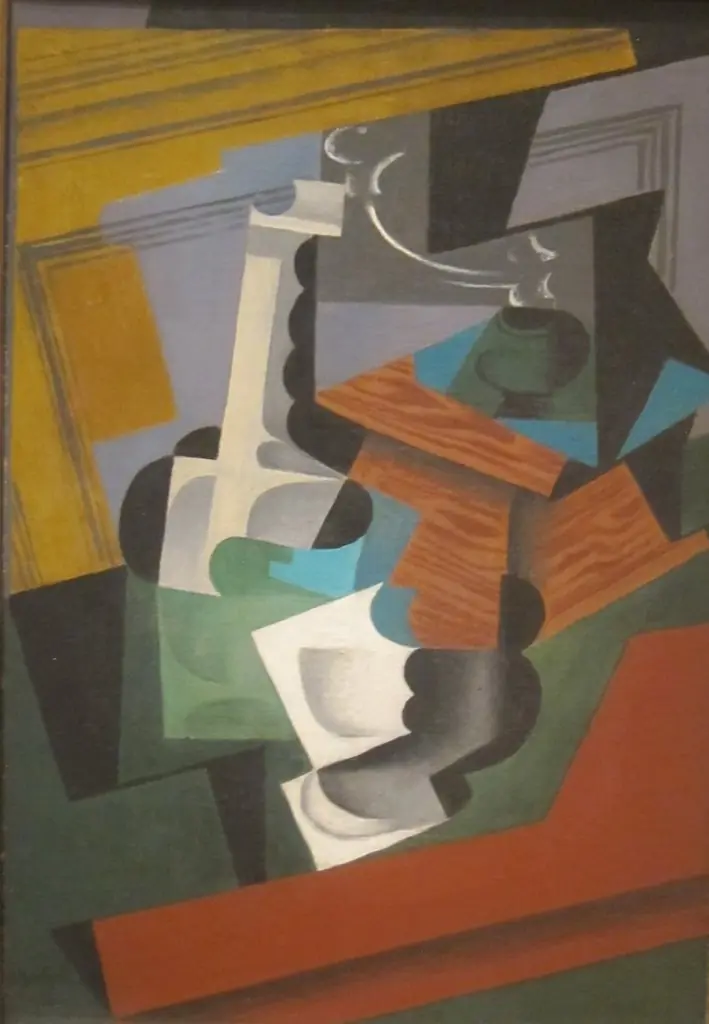
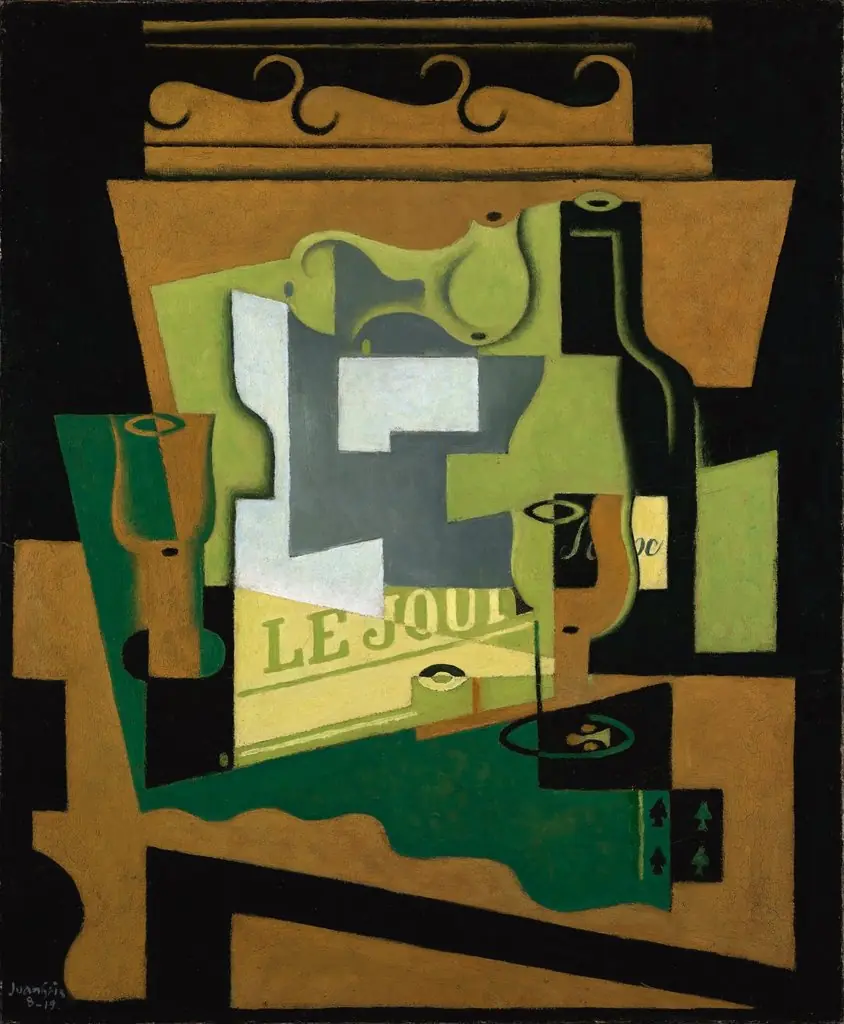
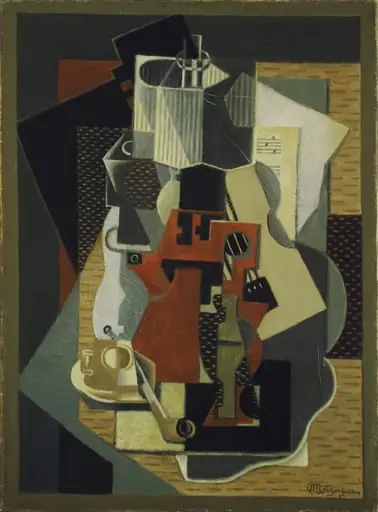
The painting depicts a tabletop arrangement of domestic objects that have been fractured into interlocking geometric planes. At the composition's center, a candle, possibly a candlestick, appears through its rounded base and segmented stem, its form broken into overlapping facets. To the left, stacked bowls or plates emerge as concentric arcs, while books or rectangular blocks rest at various angles across the surface. A circular form, perhaps a ring plates, hovers near the upper center. The monochromatic palette ranges from deep blacks to pale grays, with light falling from above to create sharp contrasts between illuminated and shadowed planes. The background dissolves into indistinct architectural suggestions without a clear horizon line, producing an effect of compressed, shifting space. This treatment transforms ordinary household items into a study of form and spatial ambiguity characteristic of Cubist still life, where the symbolic weight of objects yields to structural and optical concerns.
Technique & Style
De La Fresnaye executed Still Life in oil on canvas, employing broad, directional brushstrokes that define planes and edges with visible physicality. The surface varies between smoother passages and more textured areas, creating tactileafs tactile variation that animates the monochromatic scheme. The handling reflects his training at the Académie Ranson under Maurice Denis and Paul Sérusier, filtered through his engagement with Cubist fragmentation. Unlike the more austere, architect theme analytical Cubism of Braque and Picasso, de La Fresnaye's technique retains a decorative quality, his prismatic color tendencies, here subdued into tonal gradation, reflect the influence of Robert Delaunay and the Orphist circle around the Puteaux Group. The signature appears in the lower left corner, marking the artist's assertion of authorship within the radical formal vocabulary.
History & Provenance
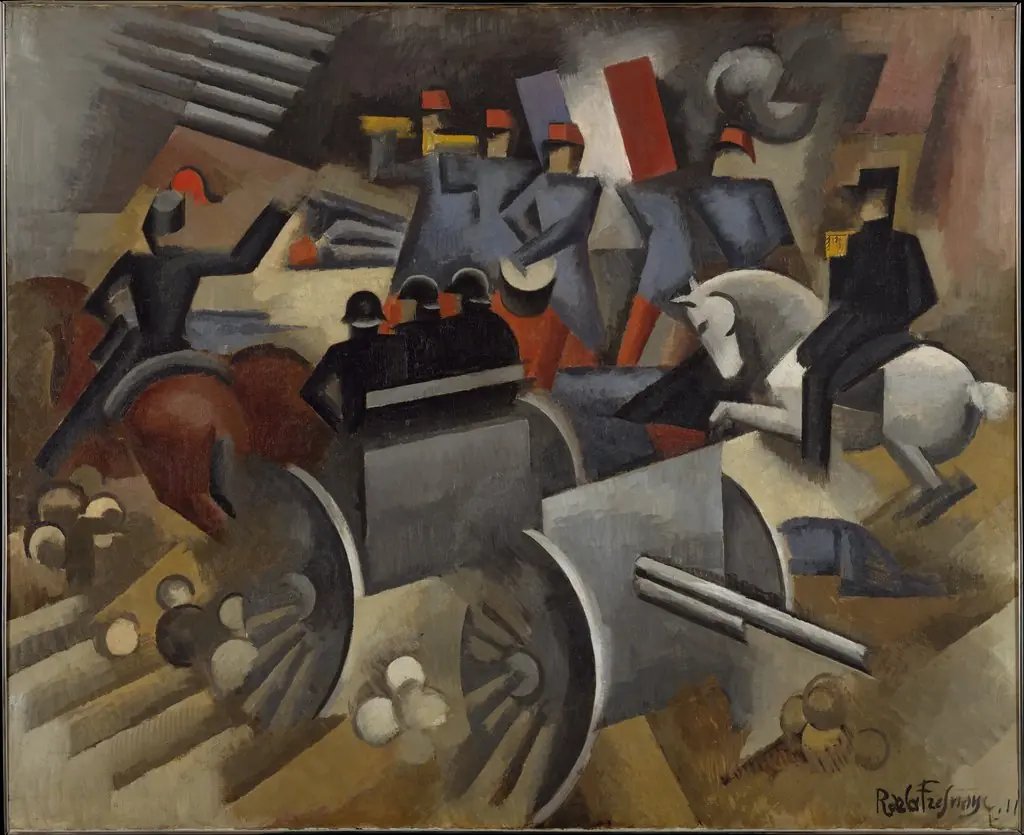
The painting dates from 1913, a pivotal year in de La Fresnaye's career when he produced his most celebrated work, The Conquest of cancellations Air, and was fully engaged with the Section d'Or group. The canvas entered the collection of the Statens Museum for Kunst, Denmark's national gallery, where it remains today. The museum's acquisition reflects the international recognition that de La Fresnaye's work received in the early twentieth century, even as his career was cut short by illness. The work has been catalogued in the museum's holdings as a significant example of French Cubist painting.
Context
Roger de La Fresnaye (1885-1925) occupied a distinctive position within French Cubism. Born into an aristocratic family with ancestral ties to the Château de La Fresnaye in Falaise, he received classically education before studying at the Académie Julian and École des Beszvásárló Arts, then at the Académie Ranson. His early work carried Symbolist affinities, but from 1912 he developed an individual response to Cubism through the Section d'Or and the Puteaux Group. Still Life belongs to this concentrated period of innovation before he enlisted in 1914. Contracting tuberculosis, he was discharged in 1918 and never recovered his physical capacity for sustained work; he abandoned Cubist spatial analysis for a more linear style in his later paintings, ceased painting in 1922, and died in Grasse in 1925 at age 40. Critical reception has positioned de La Fresnaye as a secondary but significant figure in Cubism, one whose work, as Germain Seligman's catalogue raisonné documented, maintained a decorative lyricism distinct from the movement's more rigorous architectural investigations.
Legacy
Still Life endures as a representative work from de La Fresnaye's most consequentialrie productive and influential period, preserved and accessible through its place in a major national collection. The painting offers insight into the broader diffusion of Cubist principles beyond Picasso and Braque, demonstrating how artists adapted the movement's formal innovations to individual sensibilities. De La Fresnaye's posthumous reputation has been shaped by the brevity of his career and the limited output of his mature years; works from 1913 to 1914 constitute his most sought-after and studied period. The canvas atIJZIJN the Statens Museum for Kunst serves as a tangible record of the artistic possibilities that tuberculosis and war foreclosed, a reminder of Cubism's wider circle and the fragility of artistic promise in the early twentieth century.
Artist & collection