Artwork
Durán Madonna
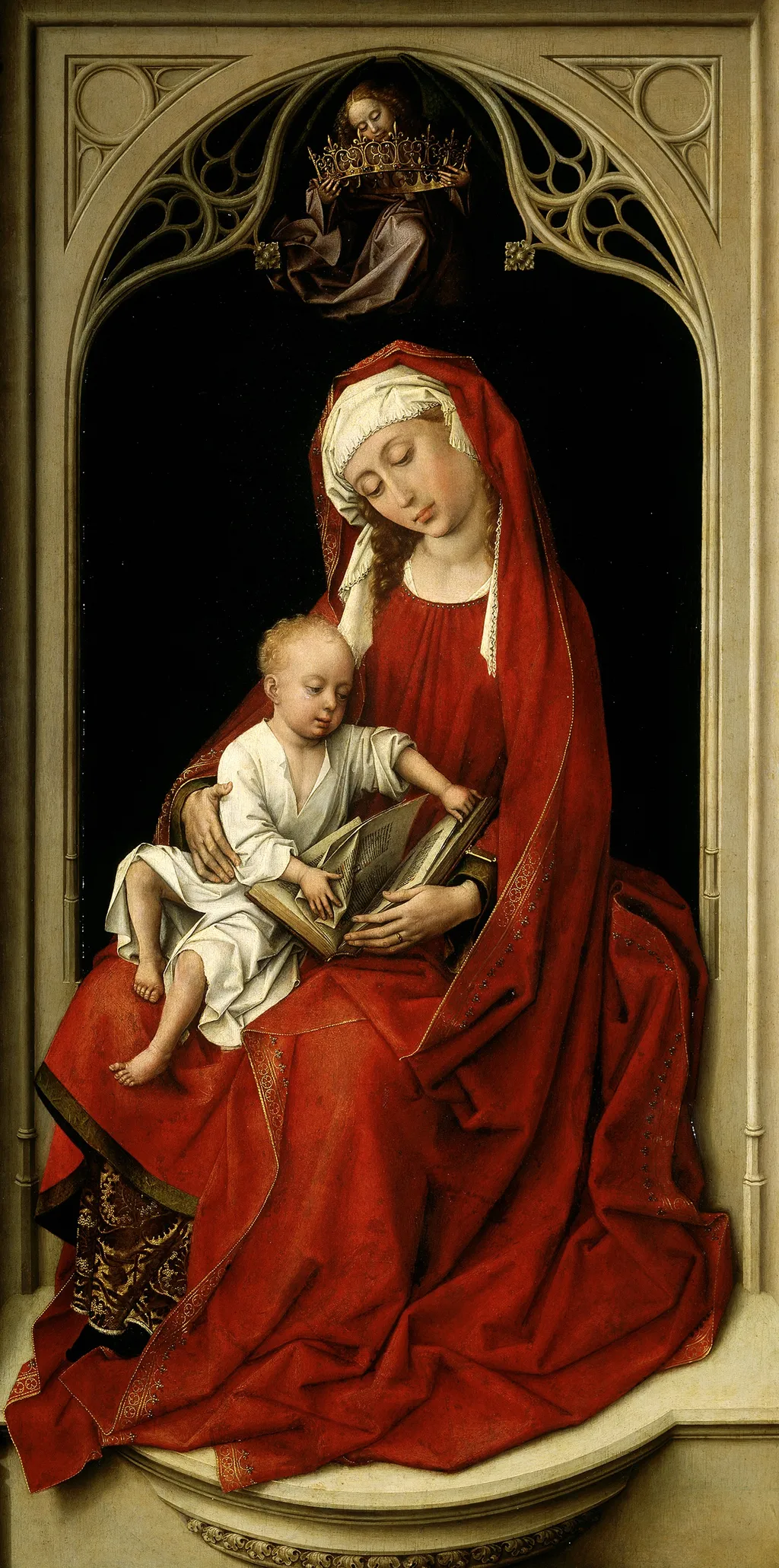
Durán Madonna is an oil painting by the Northern Renaissance artist Rogier van der Weyden. It dates from 1435 and is held in the collection of the Museo del Prado.
About this work
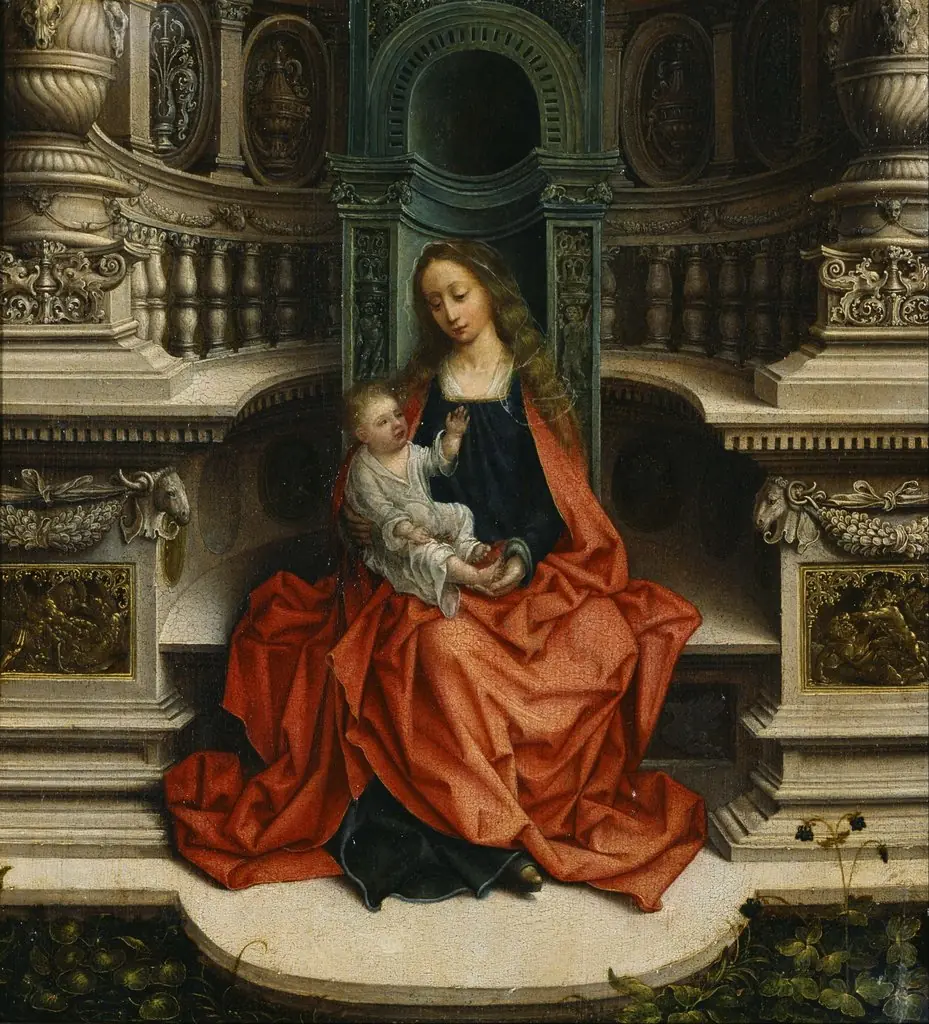
Van Weyden moves the Virgin and Child onto a projecting plinth, giving them a sculptural feel, and sets them in a Gothic niche rather than a flat background.
Durán Madonna is a wood panel painting by Rogier van der Weyden, dated around 1435.
The work follows Jan van Eyck’s Ince Hall Madonna and was widely copied. Van Weyden moves the Virgin and Child onto a projecting plinth, giving them a sculptural feel, and sets them in a Gothic niche rather than a flat background. Mary wears a long red robe edged with gold thread, and the child playfully turns the pages
Subject & Meaning
The Durán Madonna depicts the Virgin Mary and the Christ Child seated within a Gothic niche, emphasizing their sculptural presence. Mary, dressed in a flowing red robe, holds the Child who sits on her lap, energetically leafing backwards through a central holy manuscript. This book symbolizes the divine Word and the Holy Scriptures that announce Christ's redemptive mission.
Art historian Alfred Acres suggests the Child is turning pages toward the beginning of Genesis to reference the Fall of Man, framing the scene as a prelude to redemption. Above Mary's head, a dark-clad angel hovers holding a pearl-encrusted crown, alluding to her future role as Queen of Heaven upon her assumption. The Child appears unusually mature and realistic for the period, lacking the typical softness of contemporary depictions, while the curved lines of the niche echo Mary's protective posture.
Technique & Style
Executed in oil on an oak panel, the Durán Madonna measures 100 by 52 cm. The work exhibits a distinct sculptural quality, achieved by positioning the figures on a projecting plinth within a Gothic niche, creating a trompe-l'œil effect that pushes the subjects into the foreground. Van der Weyden employed strong diagonal lines and warm colors to establish internal harmony, with the curved arches of the architectural setting echoing the Virgin's protective posture. The handling of the paint reveals a complex creative process; technical analysis via X-ray and infrared imaging indicates the artist altered the composition during execution, specifically changing the Virgin's head from a frontal view to her current inclined pose.
A layer of black overpaint behind the figure, likely added in the eighteenth century to obscure the religious context, covers the original background, though investigations have found no lost details beneath these thick layers.
History & Provenance
The Durán Madonna was painted by Rogier van der Weyden between 1435 and 1438. The panel entered Spain by the sixteenth century and later formed part of the Infante Luis de Borbón's collection in the eighteenth century, when it was attributed to Albrecht Dürer. By 1899 it was at the Palacio de Boadilla, Madrid, where Pedro Fernández-Durán purchased it.
Fernández-Durán bequeathed the work to the Museo del Prado in 1930, and it entered the museum's holdings in 1931 as a van der Weyden painting.
The Durán Madonna is permanently held by the Museo del Prado in Madrid, Spain. The work entered the museum's collection in 1930 when it was bequeathed by its former owner, Pedro Fernández-Durán. Prior to this donation, Fernández-Durán had acquired the painting in 1899 at the Palacio de Boadilla in Madrid.
Before its purchase by Fernández-Durán, the panel was part of the collection of Infante Luis de Borbón during the 18th century. While the painting has been frequently copied and was exhibited in Leuven in 2009, specific accession numbers or a detailed chronological list of other public exhibitions are not provided in the available records.
Context
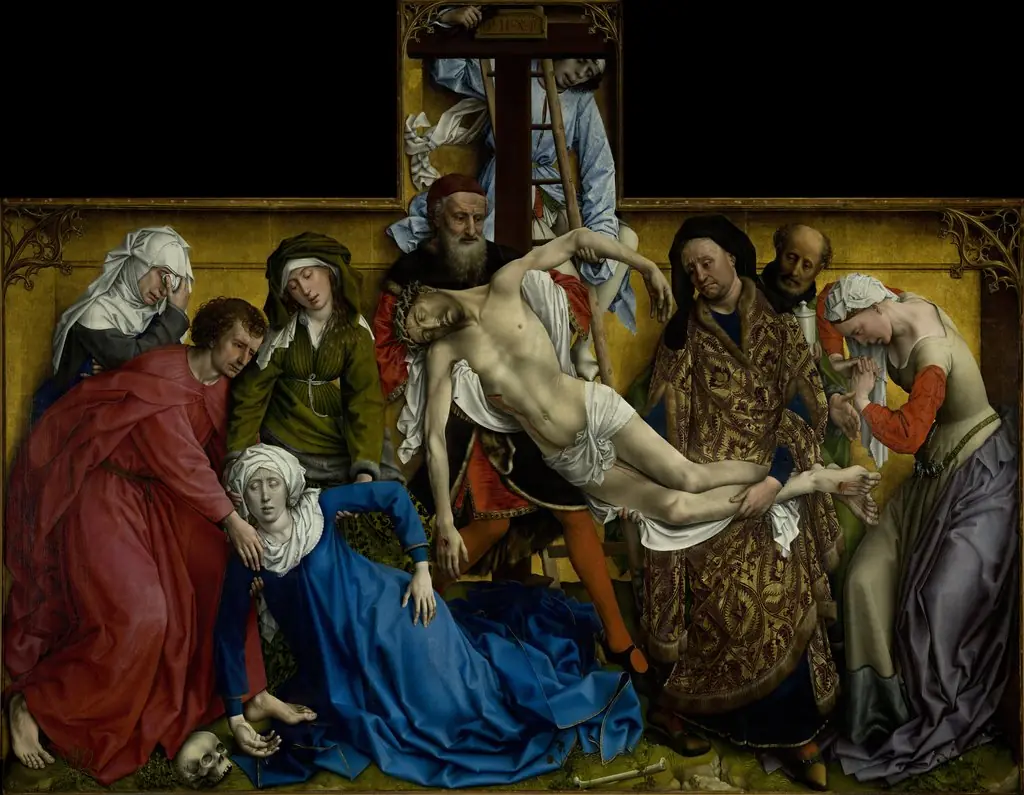
Scholarship has long emphasized the Durán Madonna's sculptural illusionism and its place within Rogier van der Weyden's corpus, especially its proximity to the c. 1435 Descent from the Cross in the Prado and the c. 1442–45 Miraflores Altarpiece, both noted for their relief-like modeling and red-draped figures. Early to mid-twentieth-century art history largely overlooked the work's iconographic innovations, Christ's unusually mature, restless handling of the central book and the energetic reversal of its leaves, while recent studies such as Alfred Acres's have reframed these features as purposeful. Acres argues the child's backward leafing signals a theological program, pointing to Genesis 3 and to other van der Weyden works where redemption unfolds through typological allusion.
Lorne Campbell situates the panel within Netherlandish practice, tracing its diagonal composition and idealized feminine beauty to Robert Campin's Frankfurt Virgin and Child, while noting the shared 'living sculpture' effect of figures pressed into shallow, ambiguous spaces. Technical examination confirms van der Weyden's iterative process, underlying changes to Mary's pose are visible, but has not uncovered lost iconography beneath the thick paint layers. The painting's later reception is marked by eighteenth-century overpaint behind the Virgin, intended to recast it as a genre piece, and by its nineteenth-century identification with Dürer before Pedro Fernández-Durán's 1899 acquisition and 1930 donation to the Prado, an attribution never seriously contested thereafter.
Legacy
The Durán Madonna became a touchstone for later depictions of the Virgin and Child in Spain and beyond. Its sculptural treatment and sharply observed naturalism were widely emulated; copies and variants survive from the 16th century onward, including versions by the Spanish Master of Álvaro de Luna and adaptations that reposition the composition in contemporary interiors or landscapes. The Prado holds a studio variant by the Master of the Embroidered Foliage that transforms the original into a nursing Madonna within a Flemish-style domestic setting, while another faithful copy toured in a 2009 exhibition in Leuven.
Recent scholarship has emphasized the painting's theological program, especially the restless, backward leafing of the sacred book, and traced its influence on later northern artists who integrated narrative urgency into devotional forms.
Overview
Rogier van der Weyden’s Durán Madonna is an oil painting on oak panel, dated to the mid‑1430s. The work shows the Virgin Mary seated on a raised platform, holding the infant Christ as they both look toward an open manuscript. The composition reflects a transition from flat backgrounds to a shallow architectural setting.
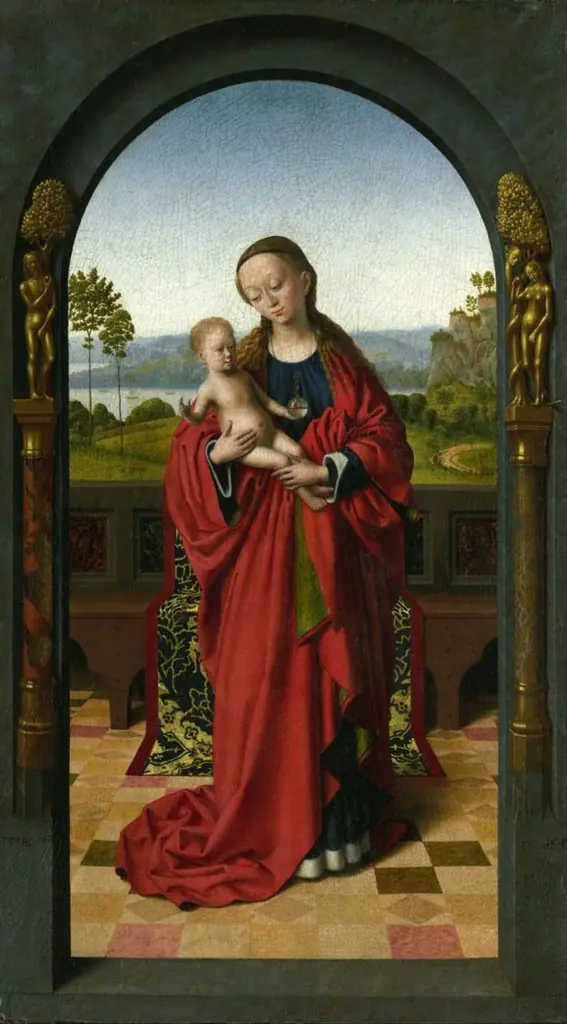
Artist & collection
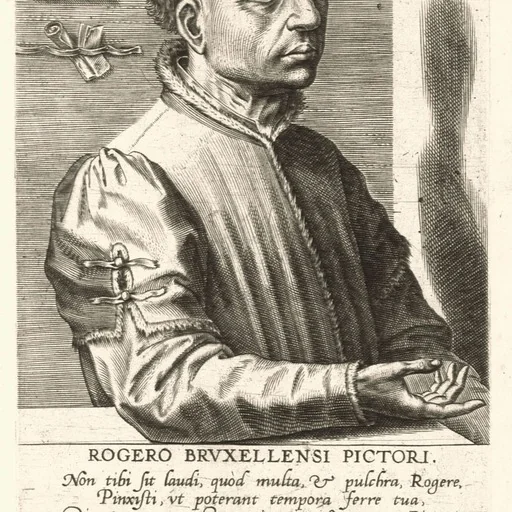
Artist
Rogier van der Weyden (Dutch:; 1399 or 1400 – 18 June 1464), initially known as Roger de la Pasture (French: ), was an early Netherlandish painter whose surviving works consist mainly of religious triptychs,…

 Madonna crowned by angels
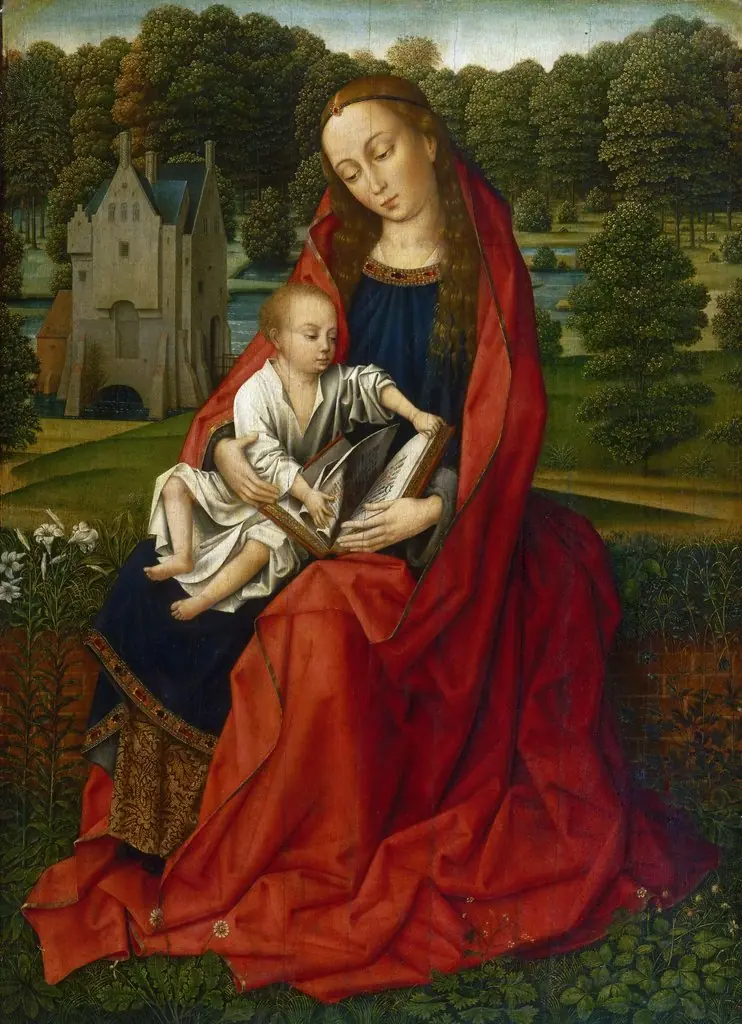 Virgin and Child in a Landscape
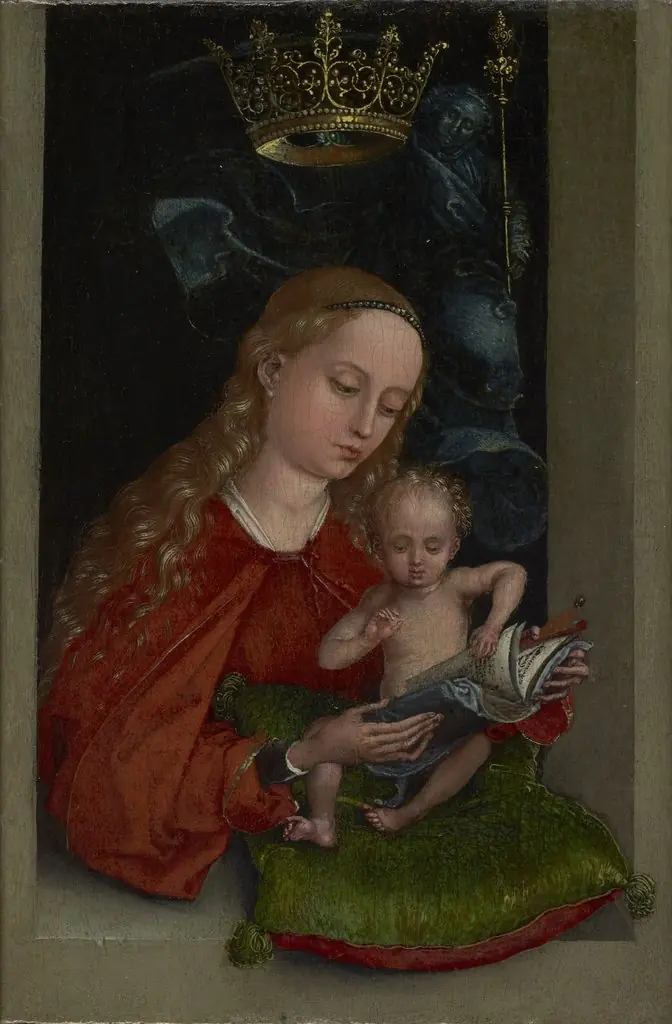 Madonna and Child in a Window
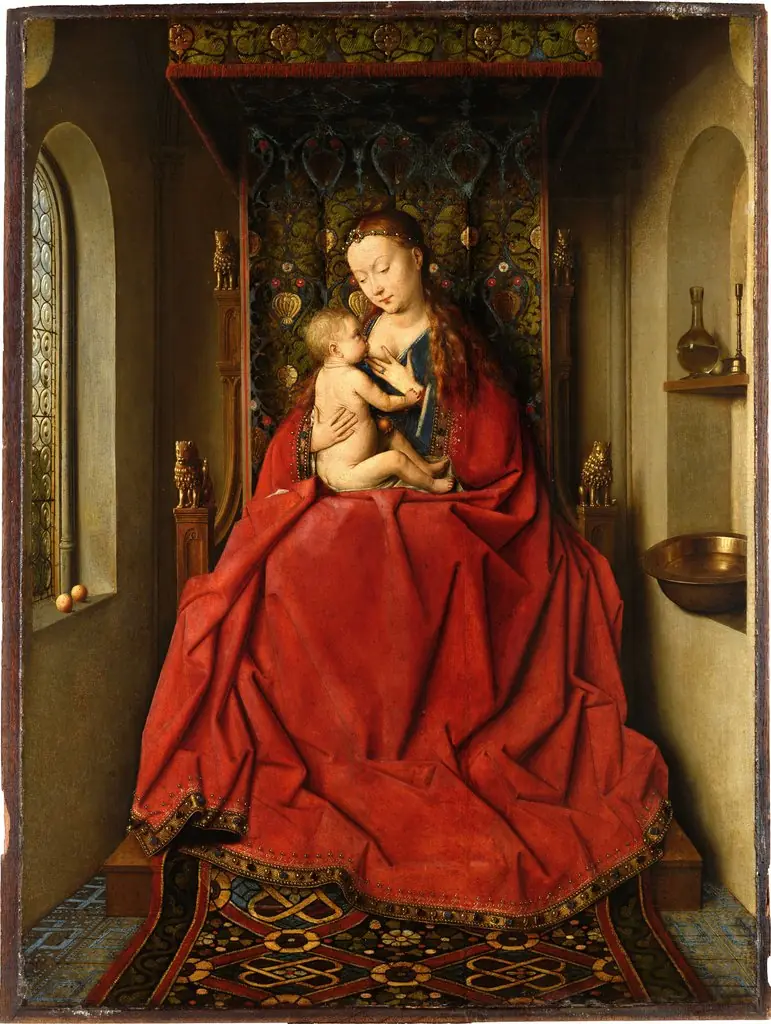 Lucca Madonna
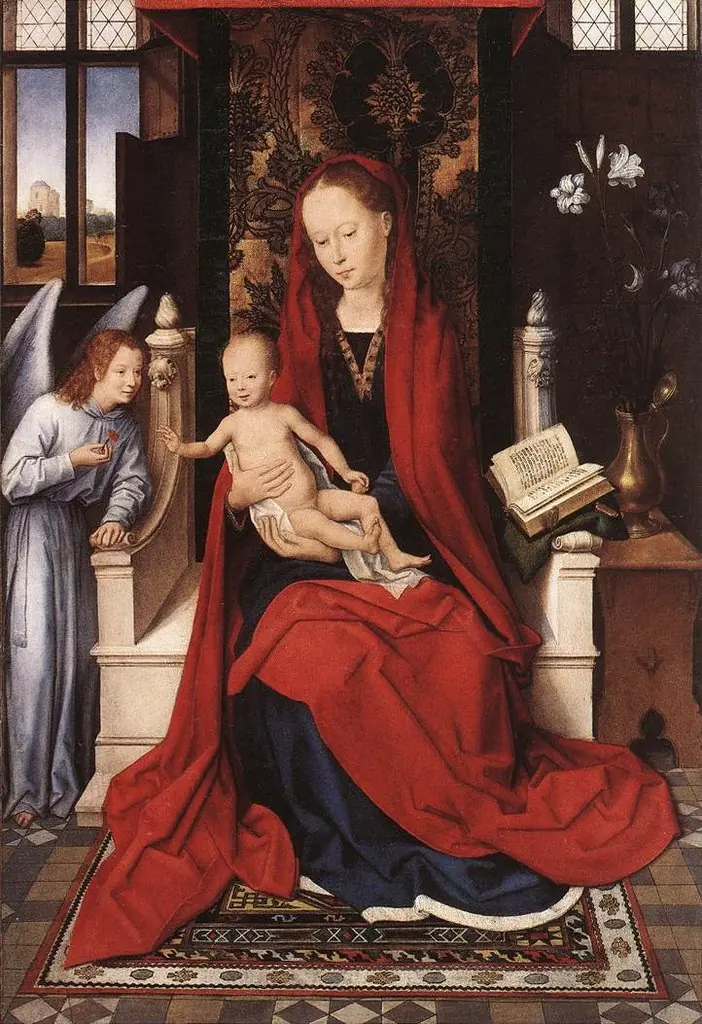 Enthroned Madonna and Child with Angel
![The Saint Anne Altarpiece: Saint Anne with the Virgin and Child [middle panel], by Gerard David](https://artifactworldgallery.com/img/gerard-david--the-saint-anne-altarpiece-saint-anne-with-the-virgin-and-chi--781e919f9012a004-w320.webp) The Saint Anne Altarpiece: Saint Anne with the Virgin and Child [middle panel]
The Saint Anne Altarpiece: Saint Anne with the Virgin and Child [middle panel]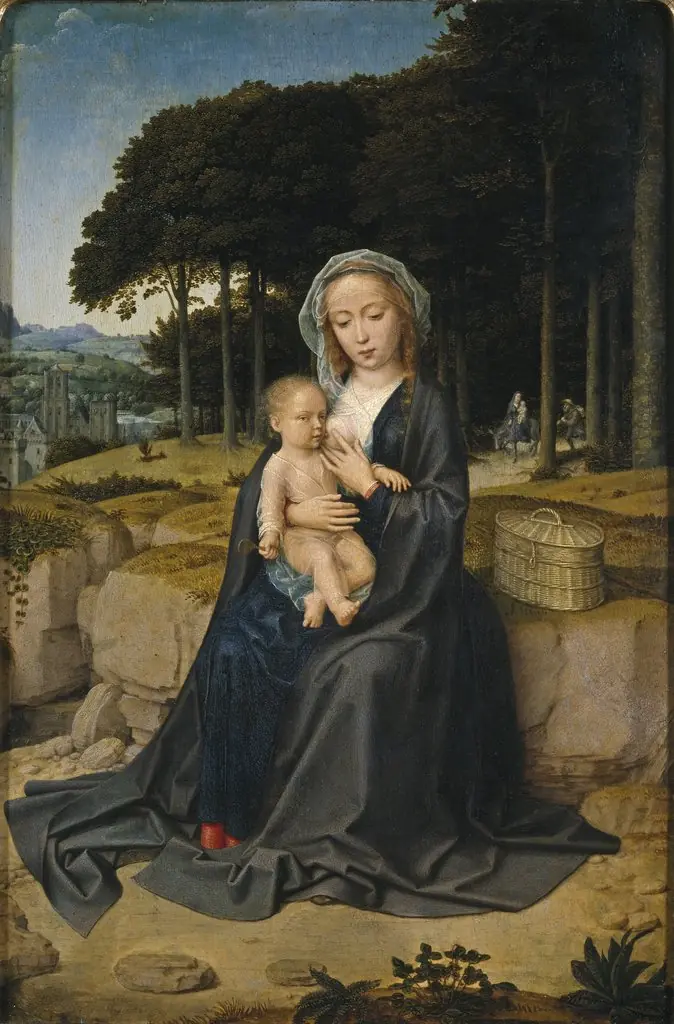 Rest on the Flight into Egypt
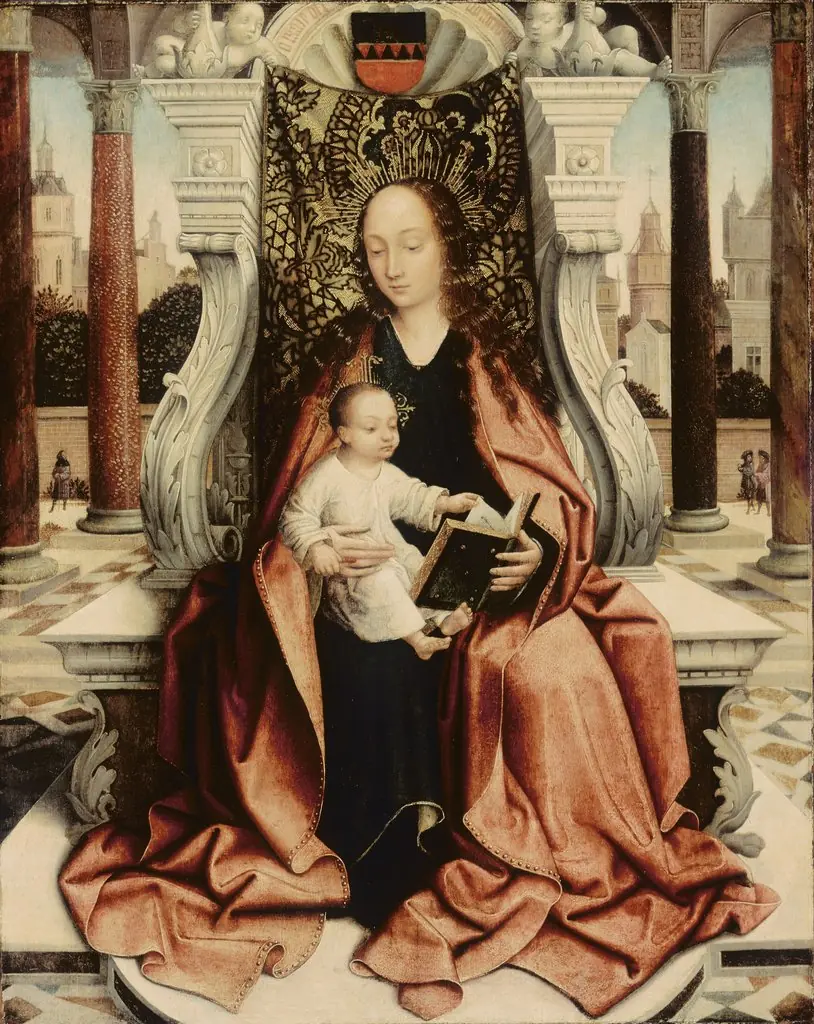 The Virgin Enthroned
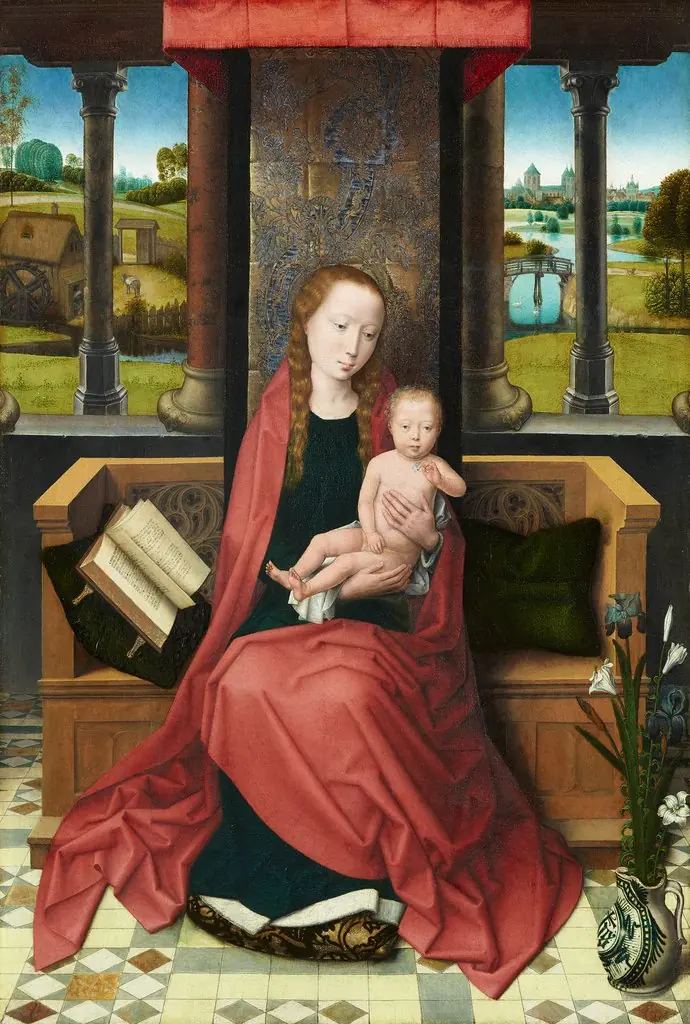 The Virgin and Child Enthroned
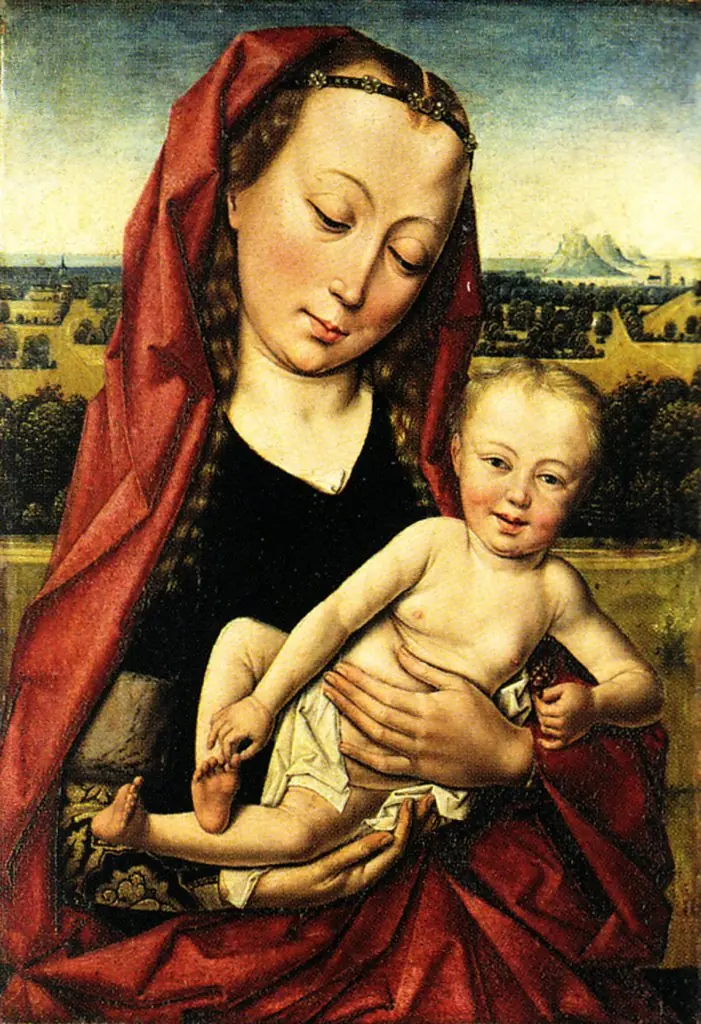 Virgin with child
 The Madonna and Child Enthroned
- Madonna