Artwork
Elderly Man Watching Putti Dissect an Eye
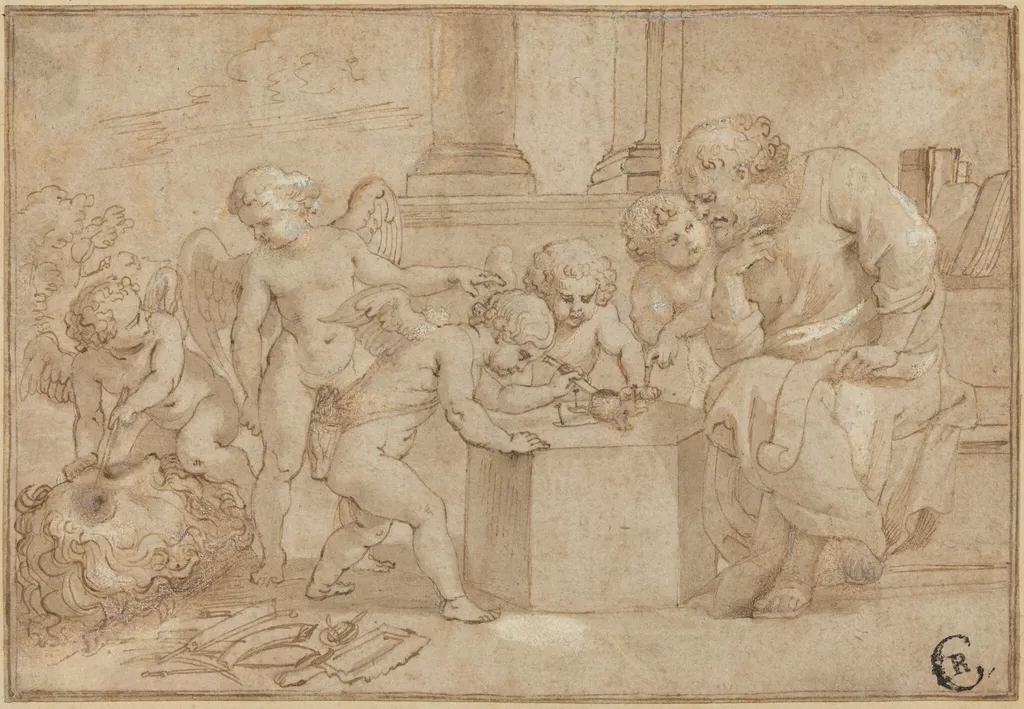
Elderly Man Watching Putti Dissect an Eye is a chalk drawing by the Baroque artist Peter Paul Rubens. It dates from 1613 and is held in the collection of the National Gallery of Art.
About this work
Subject & Meaning
The composition allegorizes the pursuit of knowledge, with cherubs engaged in dissection symbolizing the intersection of sacred and scientific inquiry.
An elderly man observes cherubic figures dissecting an eye, embodying themes of scholarly observation and divine revelation through anatomical study. The composition allegorizes the pursuit of knowledge, with cherubs engaged in dissection symbolizing the intersection of sacred and scientific inquiry. This drawing reflects Rubens' exploration of theological and intellectual concepts through meticulous anatomical representation, aligning with early 17th-century emblematic traditions that merged art and scientific curiosity.
The work features a man in contemplation, surrounded by cherubs performing an eye dissection, a motif tied to Renaissance symbolism of vision and divine insight. Such iconography underscores the era's fascination with understanding both the physical and spiritual realms through observation.
Depicted elements include a man, cherub, eye, and teaching figures, all rendered in pen, brown ink with brown wash over black chalk on laid paper. The drawing measures 10.1 cm by 14.8 cm and is housed at the National Gallery of Art in Washington, D.C., having entered the collection in 1996 via purchase from Michael Jaffé in Somerset, England, previously owned by Richard Cosway.
The subject reflects Rubens' engagement with allegorical themes, where anatomical dissection serves as a metaphor for spiritual enlightenment and the acquisition of divine knowledge through scholarly pursuit.
The drawing was commissioned by François d'Aguilon and is cataloged under NGA 95975 in the National Gallery of Art's collection of drawings.
Technique & Style
Executed in 1613, this drawing utilizes a complex layering of materials on laid paper. The artist first established the composition using black chalk, which was subsequently indented with a stylus to facilitate transfer to another surface. Over this underdrawing, Rubens applied pen and brown ink, enhancing the forms with brown wash and selective white heightening to create volume and contrast.
The sheet measures 10.1 by 14.8 centimeters. The combination of fluid ink washes with precise chalk lines and the physical indentation marks demonstrates a dynamic handling of media, characteristic of preparatory studies intended for replication or further development.
History & Provenance
The drawing Elderly Man Watching Putti Dissect an Eye by Peter Paul Rubens was created in 1613 and commissioned by François d'Aguilon. It entered the collection of Richard Cosway in London before passing to Michael Jaffé in Somerset, England. The work was acquired by the National Gallery of Art in 1996.
Its material medium consists of pen, brown ink, black chalk, and white heightening on laid paper, and it measures 10.1 by 14.8 centimeters.
The drawing Elderly Man Watching Putti Dissect an Eye is held in the collection of the National Gallery of Art in Washington, D.C. It entered the museum's holdings in 1996 following its purchase from Michael Jaffé of Somerset, England. Prior to this acquisition, the work was owned by the London dealer Richard Cosway (1740–1821). The artwork is cataloged under the accession number NGA 95975 within the museum's drawings collection.
The piece was originally commissioned by François d'Aguilon and dates to 1613. While the sources confirm its current location and acquisition history, no specific exhibition history is recorded in the provided documentation.
Context
The drawing Elderly Man Watching Putti Dissect an Eye (1613) exemplifies Rubens' engagement with anatomical study and theological allegory, reflecting early 17th-century artistic fascination with scientific inquiry and divine creation. Its depiction of a cherub performing dissection aligns with Counter-Reformation themes emphasizing God's revelation through both nature and intellect, situating it within Rubens' broader exploration of humanist scholarship and artistic mastery of complex compositions. The work's provenance, including ownership by miniaturist Richard Cosway and acquisition by the National Gallery of Art in 1996, underscores its significance as a rare surviving preparatory study linked to Rubens' network of intellectual patrons such as François d'Aguilon.
Scholars have noted its technical precision and thematic resonance with Rubens' altarpieces and cabinet paintings, where anatomical motifs serve didactic and spiritual purposes. The drawing's classification as a pen-and-wash study highlights his experimental approach to rendering three-dimensional forms on paper, while its stylistic analysis places it within the trajectory of Northern Renaissance disegno traditions, bridging artistic practice and emerging scientific discourse.
Overview
Created around 1613, this drawing is attributed to Peter Paul Rubens. Executed on laid paper, the work combines pen, brown ink, brown wash over black chalk, and white highlights, with the image transferred by stylus indentation. The composition presents an elderly figure observing a group of putti engaged in the dissection of an eye.
Own this work as a print
Artist & collection
Artist
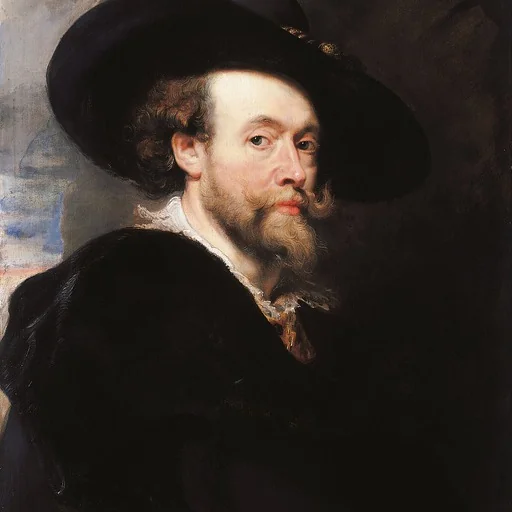
Sir Peter Paul Rubens ( ROO-bənz; Dutch:; 28 June 1577 – 30 May 1640) was a Flemish artist and diplomat.

- The Four Elements
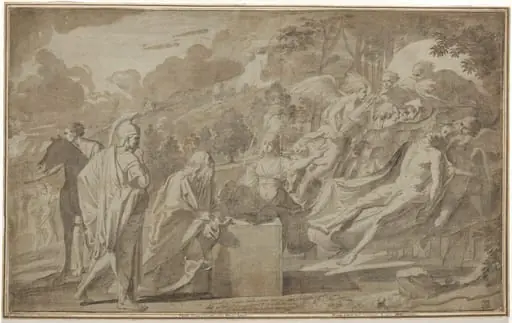 The Prophecy of Basilides
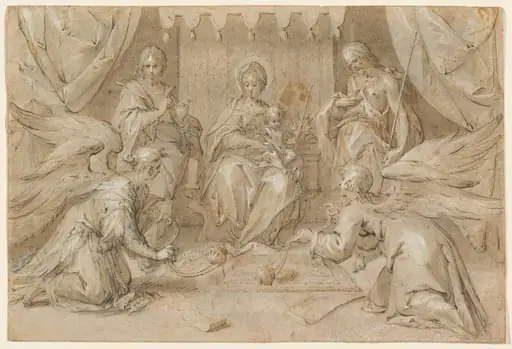 The Madonna Enthroned with Saint John the Baptist and Saint John the Evangelist
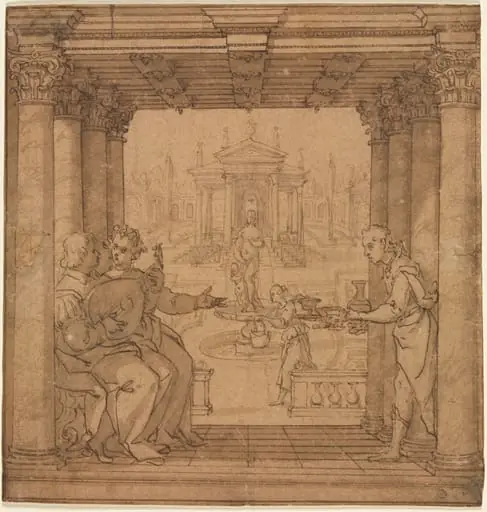 Illustration from Torquato Tasso's Gerusalemme Liberata
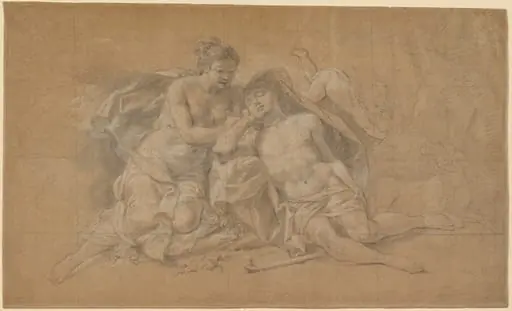 Diana and Endymion
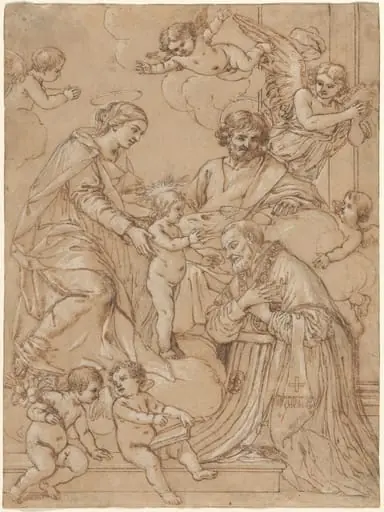 The Holy Family with Saint Philip Neri in Adoration, an Angel, and Putti
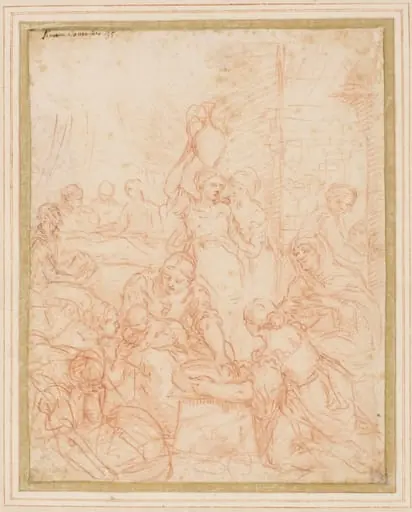 The Birth of the Virgin
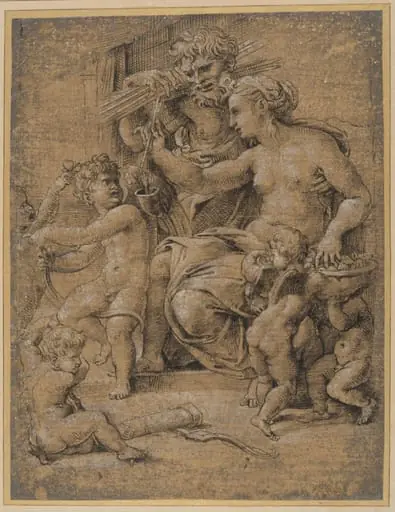 Venus and Vulcan
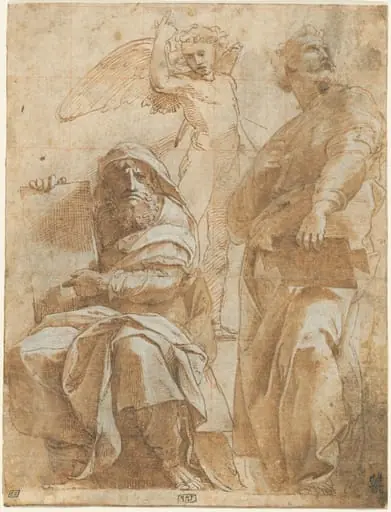 The Prophets Hosea and Jonah
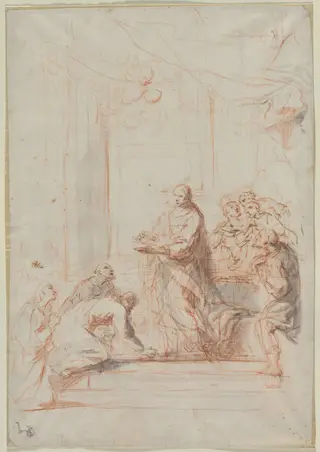 Christ Administering the Host
 Madonna and Child in Glory with Saints John the Baptist, Stephen, and Lawrence
 The Baptism of Christ