Artwork
Martha Jefferson Tyler Waggaman
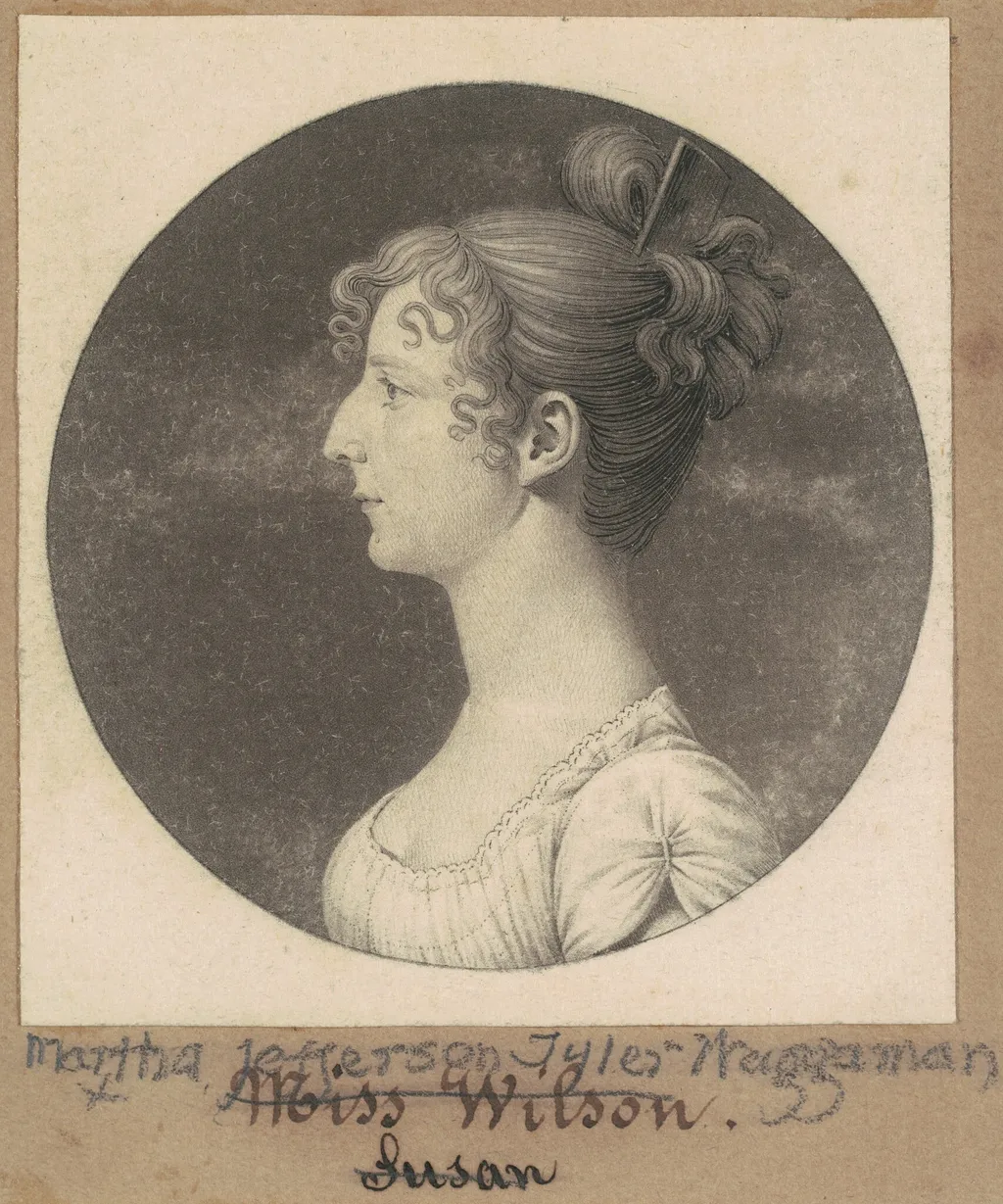
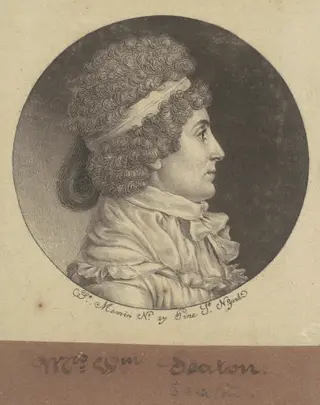
Martha Jefferson Tyler Waggaman is an ink print by the Romanticist artist Charles B. J. Févret de Saint-Mémin. It dates from 1808 and is held in the collection of the National Gallery of Art. This print, created around 1808, is a mezzotint and engraving by Charles B.
- Inscription
- Inscribed:lower center mount in graphite by unknown hand: Martha Jefferson Tyler Waggaman; lower center mount in black ink by unknown hand: Miss Wilson. [strikethrough] / Susan [strikethrough]
About this work
Overview
The work belongs to the Saint-Mémin Collection of Portraits, a systematic effort to document prominent American figures through detailed graphic portraiture.
This print, created around 1808, is a mezzotint and engraving by Charles B. J. Févret de Saint-Mémin, rendered in black ink on wove paper and mounted to a brown wove support. It depicts Martha Jefferson Tyler Waggaman, daughter of Thomas Jefferson, as part of a broader series of portraits commissioned during Saint-Mémin’s time in the United States. The work belongs to the Saint-Mémin Collection of Portraits, a systematic effort to document prominent American figures through detailed graphic portraiture.
Subject & Meaning
Martha Jefferson Tyler Waggaman, the eldest daughter of Thomas Jefferson, is portrayed in formal attire, reflecting her social standing and familial prominence. The portrait captures her as a member of the Jefferson family during the early republic, emphasizing dignity and composure. Saint-Mémin’s choice to depict her reflects both personal connection through the Jefferson circle and the broader cultural interest in documenting elite American families during this period.
Technique & Style
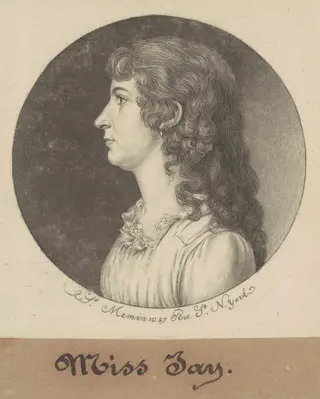
Saint-Mémin employed mezzotint for its capacity to render subtle tonal gradations, complemented by fine engraving lines to define facial features and fabric textures. The contrast between rich blacks and delicate highlights enhances the three-dimensionality of the sitter’s form. The composition is restrained, focusing attention on the head and shoulders, with minimal background detail, characteristic of Saint-Mémin’s approach to portraiture in print.
History & Provenance
The portrait was produced during Saint-Mémin’s residency in the United States, where he received commissions from politically connected families. It was likely created after a sitting with Martha Jefferson, possibly facilitated through her father’s network. The work entered the Saint-Mémin Collection of Portraits, a curated group of over 200 prints documenting American elites, now held in institutional collections including the National Portrait Gallery.
Context
In the early 19th century, portrait prints served as accessible records of social and political figures, especially in a young nation lacking established artistic institutions. Saint-Mémin’s project filled this gap by combining European engraving techniques with American subjects. His portraits, including this one, reflect the intersection of personal identity and public representation in the post-Revolutionary era.
Legacy
Saint-Mémin’s portrait series remains a vital visual archive of early American society. This print contributes to the understanding of how elite families like the Jeffersons were visually represented in print culture. The technical precision and documentary intent of his work influenced later generations of American printmakers and continue to inform historical studies of portraiture and identity in the early republic.
Own this work as a print
Artist & collection
Artist
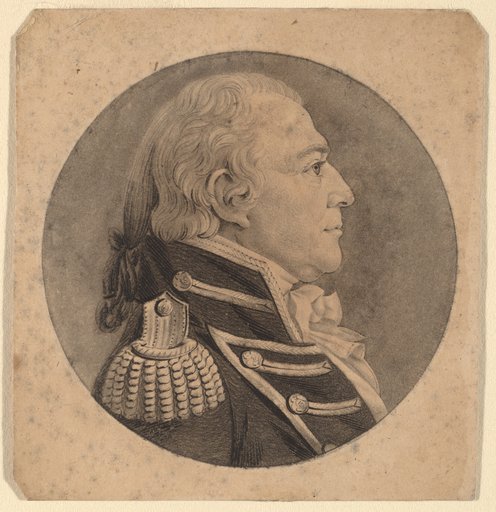
Charles B. J. Févret de Saint-Mémin
Charles Balthazar Julien Févret de Saint-Mémin (French pronunciation: ; 1770–1852) was a French portrait painter and museum director.