Artwork
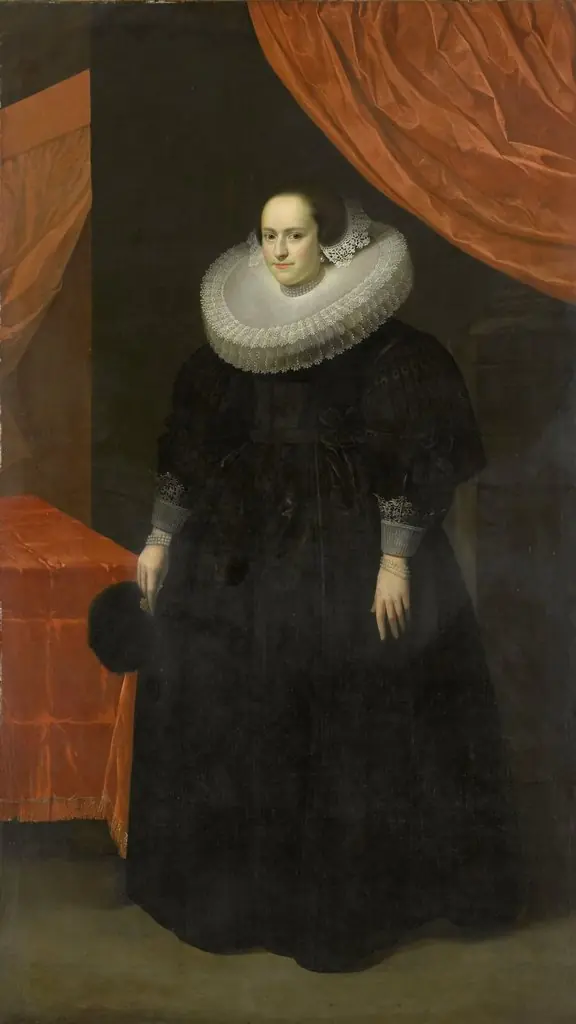
Portrait of Margarita Courten (1564-1640)
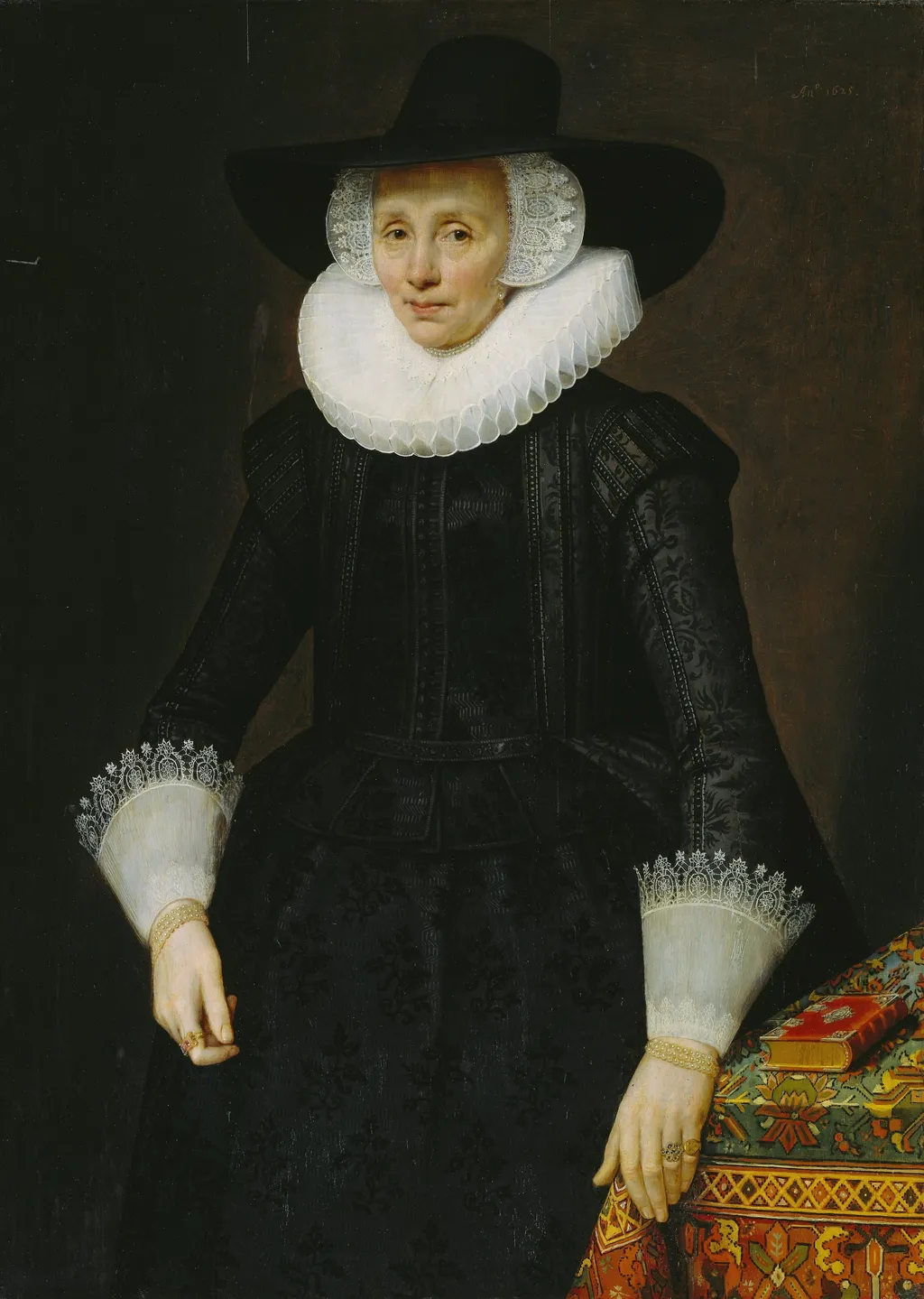
Portrait of Margarita Courten (1564-1640) is an oil painting by the Dutch Golden Age artist Salomon Mesdach. It dates from 1625 and is held in the collection of the Rijksmuseum.
About this work
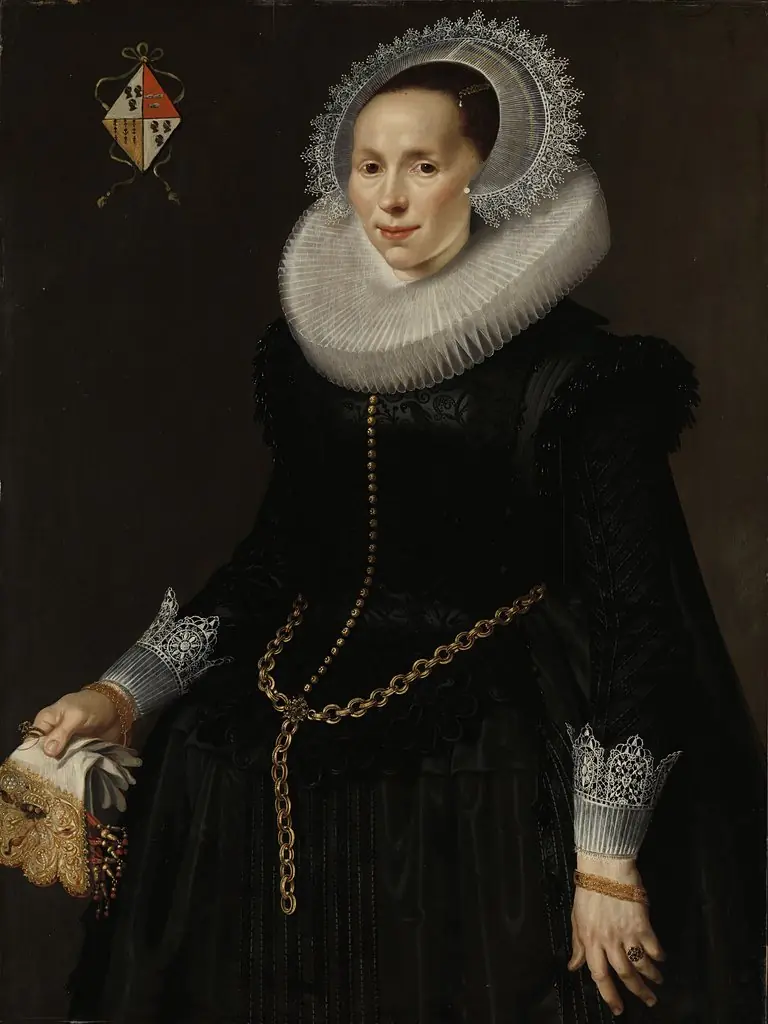
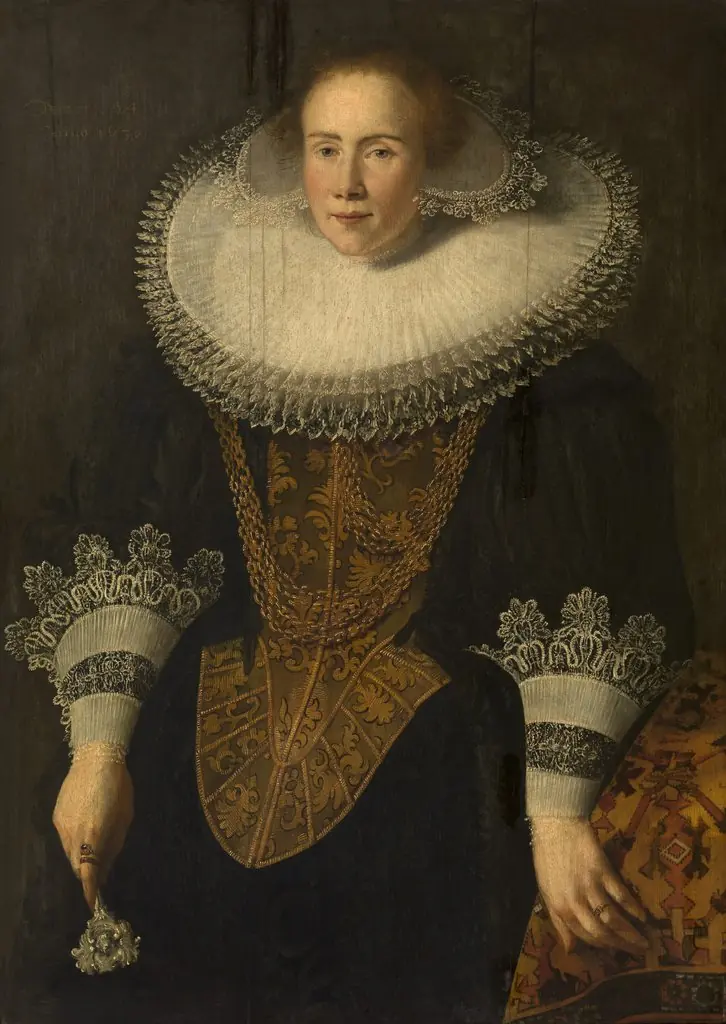
The painting depicts a woman in a black dress with lace cuffs and a white ruffled collar, wearing a wide-brimmed black hat.
The painting depicts a woman in a black dress with lace cuffs and a white ruffled collar, wearing a wide-brimmed black hat. She stands beside a colorful tablecloth, with her hands resting on it. The background is dark and shadowy.
The woman's attire and the style of the painting suggest a formal portrait from the early 17th century. The use of dark colors and shadows creates a sense of depth and dimensionality.
This painting is characteristic of the work of Salomon Mesdach, who was known for his detailed and realistic portraits.
Technique & Style
Executed in 1625 by Salomon Mesdach, this portrait is an oil painting on a wooden panel. The work measures 102.5 cm in height and 74 cm in width. As a formal portrait, the piece utilizes oil paint as its primary medium to render the likeness of Margarita Courten.
The combination of oil and panel support was a standard approach for Netherlandish portraiture of this period, providing a durable surface for the detailed application of pigment.
History & Provenance
The portrait of Margarita Courten was painted by Salomon Mesdach in 1625, executed in oil paint on panel. According to the documented provenance, the work was owned by Jacob de Witte van Citters before entering the Rijksmuseum collection, where it is currently held.
Context
The painting's enduring scholarly attention stems from its rarity as a dated, signed portrait from Salomon Mesdach's mature period, particularly given his limited documented output. Art historians regard it as a significant example of 17th-century Dutch portraiture, reflecting the era's focus on individual likeness and status. Its presence in the Rijksmuseum collection, acquired from Jacob de Witte van Citters' estate, anchors its provenance within a major national institution, facilitating ongoing study of Mesdach's technique and the broader context of portraiture in the Dutch Golden Age.
Overview
Salomon Mesdach's 'Portrait of Margarita Courten (1564-1640)' is a 1625 oil painting housed at the Rijksmuseum. It depicts Margarita Courten in formal attire, characterized by a black dress, lace cuffs, a white ruffled collar, and a wide-brimmed black hat.
Subject & Meaning
The subject, Margarita Courten, is portrayed in a pose of quiet dignity, with her hands resting on a colorful tablecloth beside her. The overall composition conveys a sense of solemnity and refinement, typical of formal portraiture from the early 17th century.
Legacy
As a representative work of Mesdach's, the portrait contributes to the understanding of early 17th-century Dutch portraiture, showcasing the artist's skill in capturing the essence of his sitters through detailed, realistic depictions.
Own this work as a print
Artist & collection

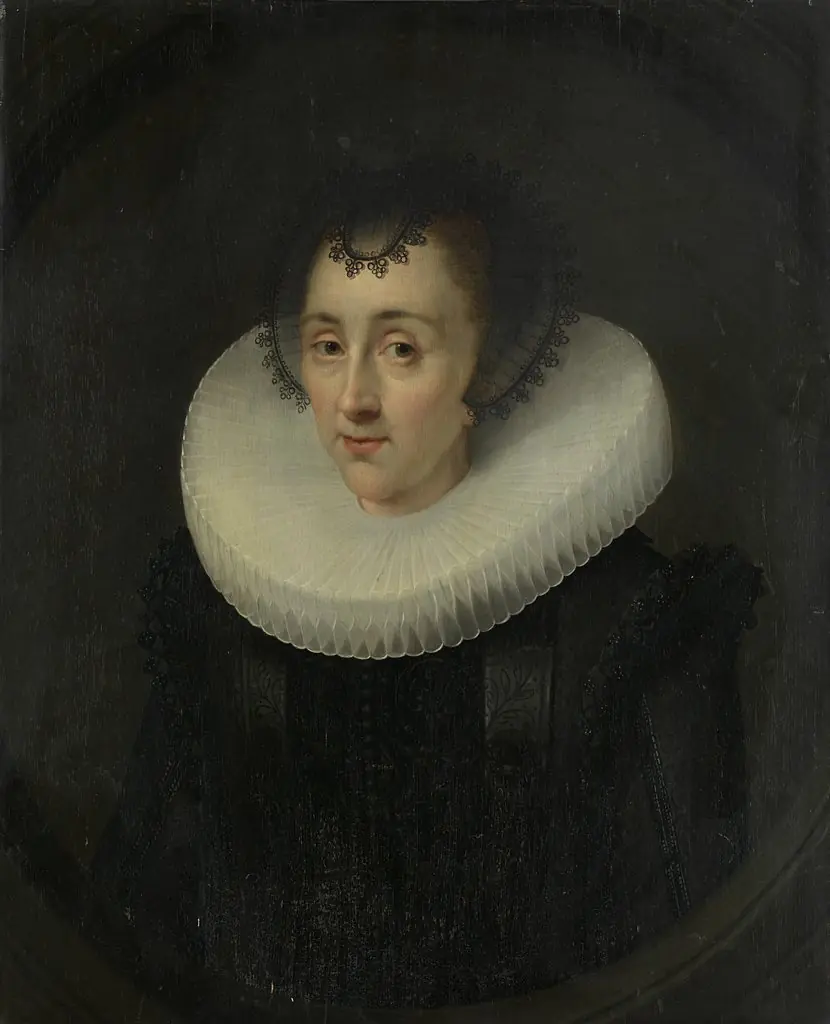 Portrait of Hortensia del Prado (?-1627)
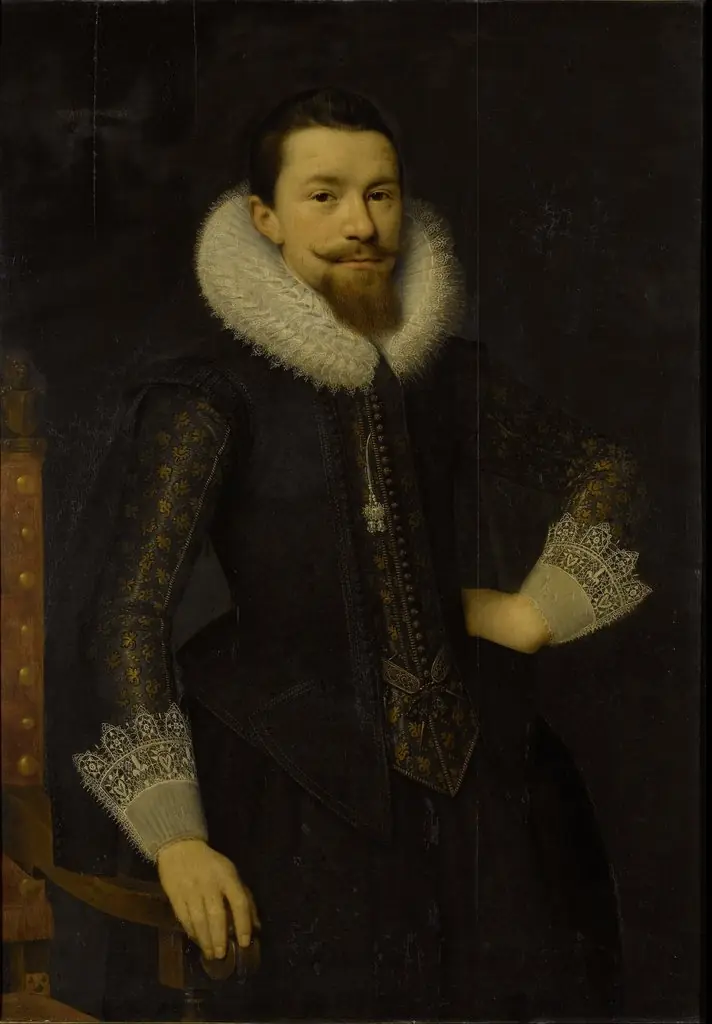 Portrait of Pieter Boudaen Courten (1594-1668)
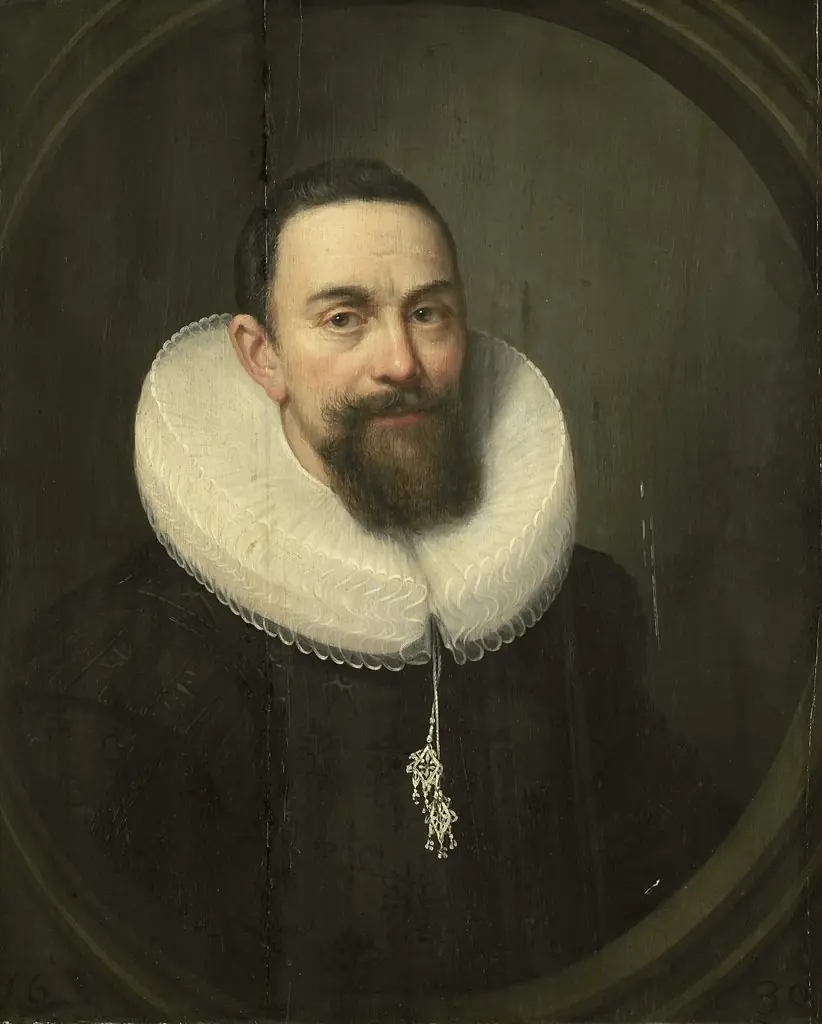 Portrait of Sir Pieter Courten (1581-1630)
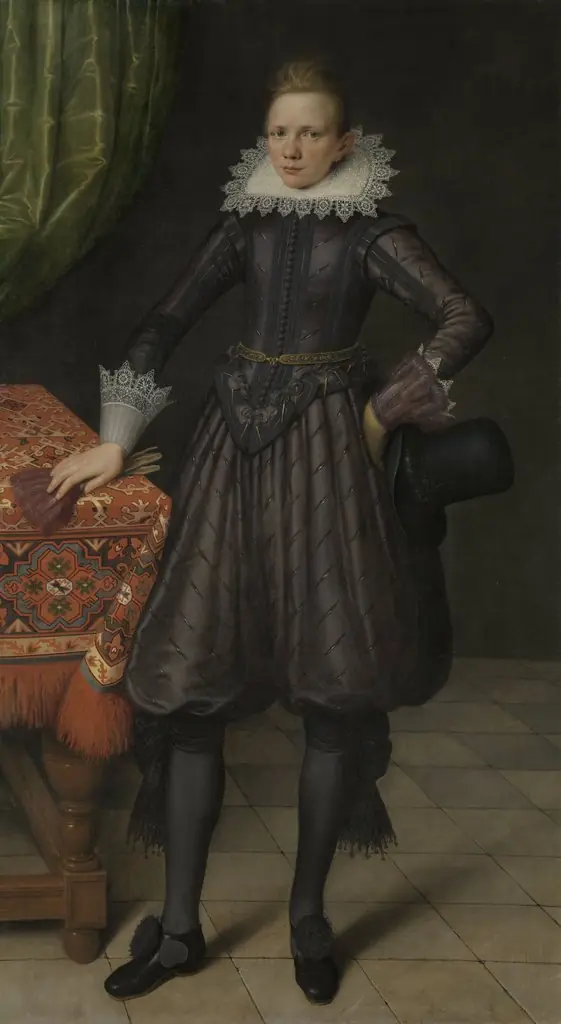 Portrait of Peter Courten
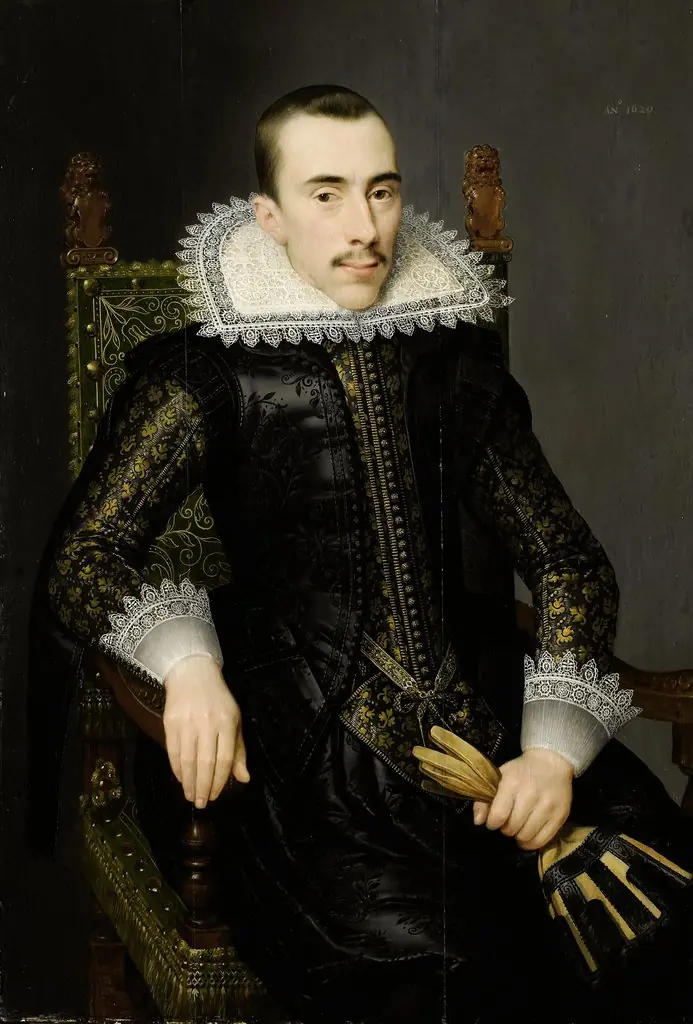 Portrait of a man, possibly Walterus Fourmenois (1596-1653)
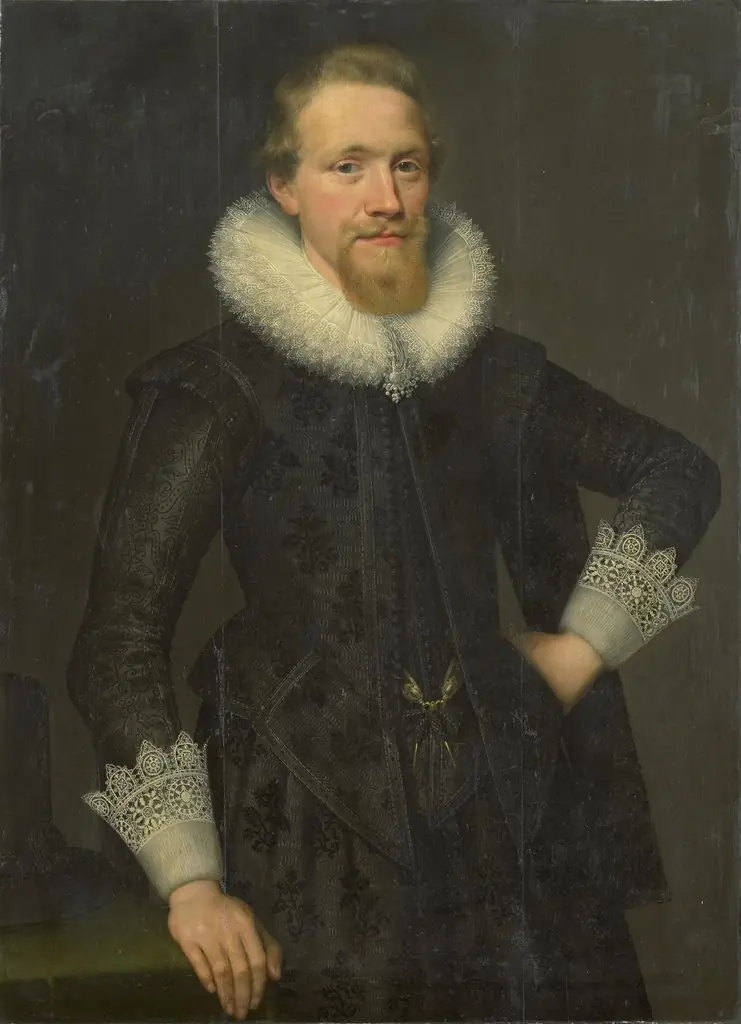 Portrait of Jacob Pergens (?-1681)
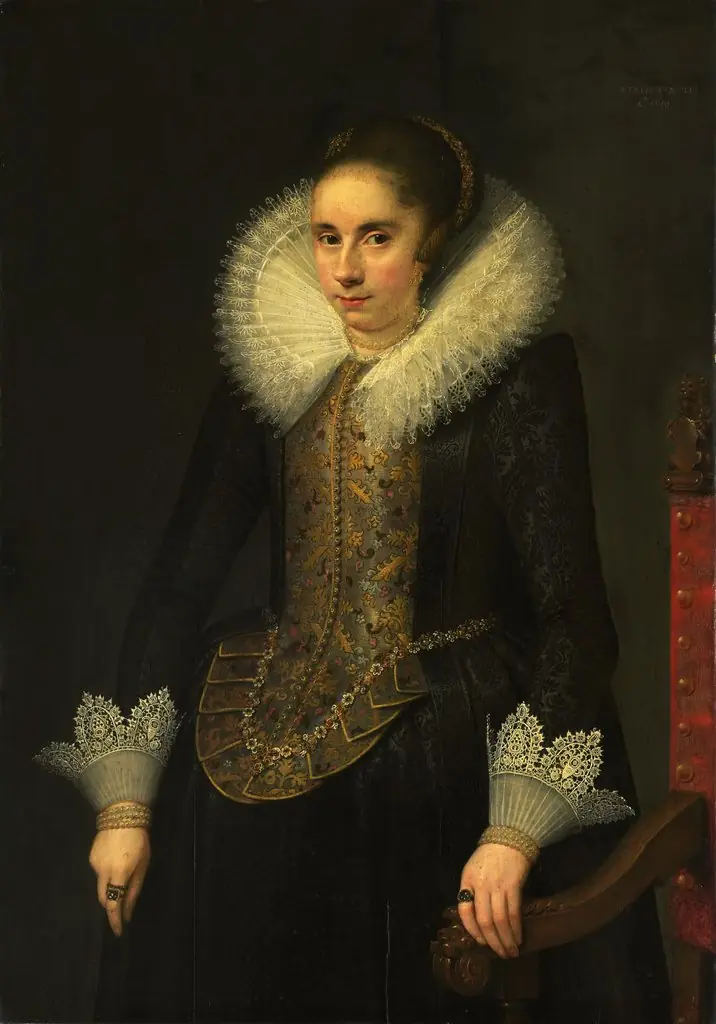 Portrait of Catharina Fourmenois (1598-1665)
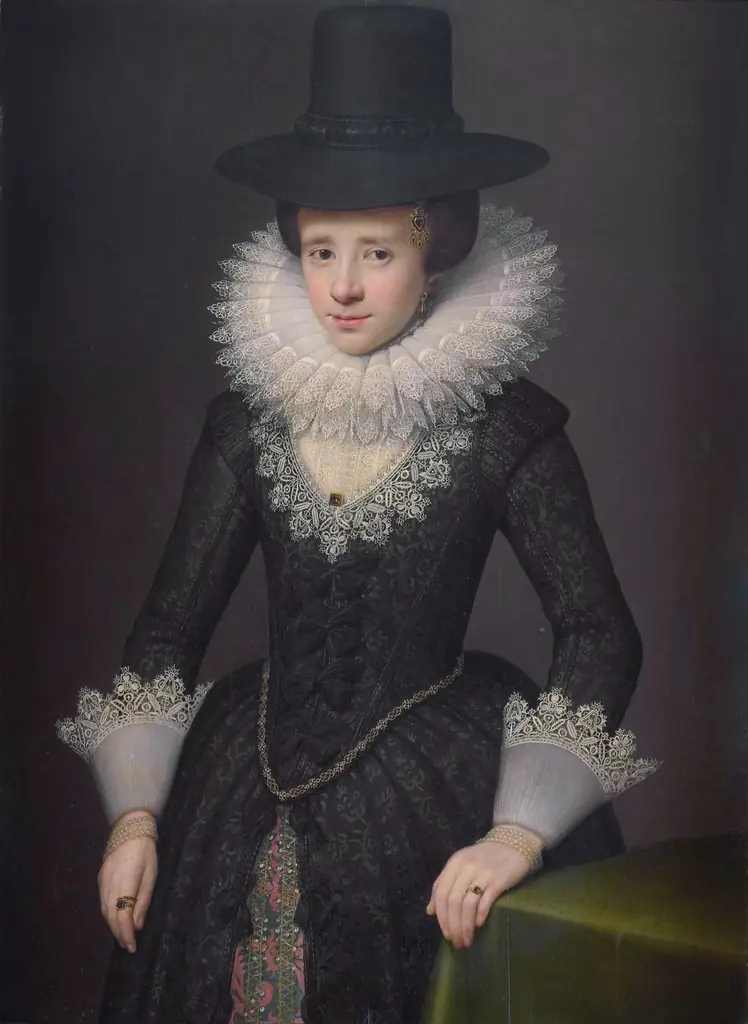 Portrait of Anna Boudaen Courten (1599-1622)