Artwork
Portrait of a Lady known as Esmeralda Brandini
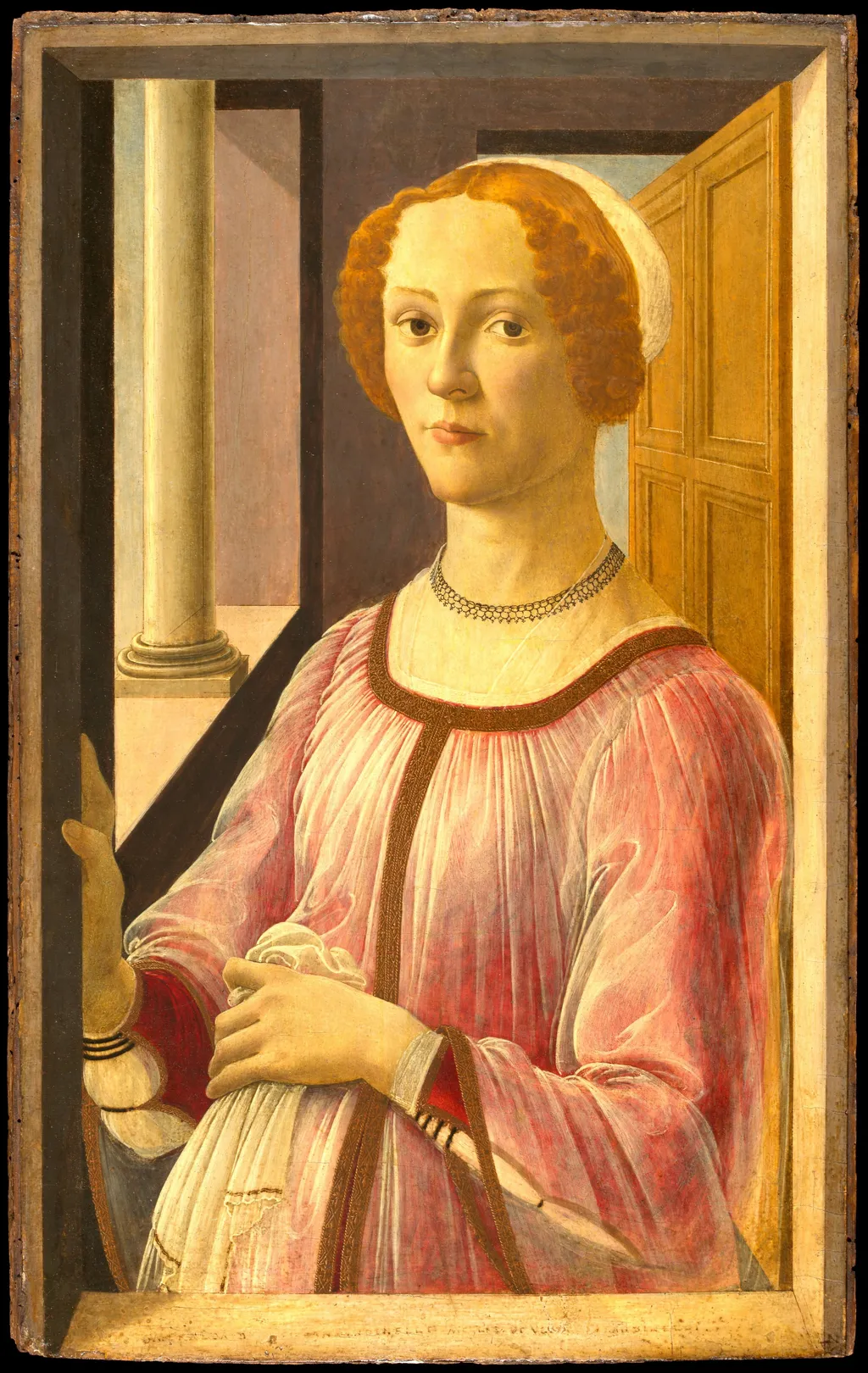
Portrait of a Lady known as Esmeralda Brandini is a tempera painting by the Early Renaissance artist Sandro Botticelli. It dates from 1470 and is held in the collection of the Victoria and Albert Museum. The work is a tempera painting on wooden panel created around 1475.
About this work
Subject & Meaning
The work depicts Esmeralda Donati Brandini, identified through an inscription on the window sill as the wife of Viviano Brandini and grandmother of the sculptor Baccio Bandinelli, though the inscription is considered likely apocryphal. The painting represents a significant departure from tradition as the first known Florentine portrait to utilize a three-quarter pose rather than the customary profile, introducing a new sense of movement and direct engagement with the viewer. The sitter is shown holding a fine linen bundle, while her attire includes a guarnello, a transparent overdress historically associated with pregnancy or the postpartum period. Her expression is characterized by a melancholic reflection, and her physical features, such as the high forehead and elongated chin, are rendered with a purified, non-descriptive style typical of the artist's early career.
Technique & Style
The sitter wears a guarnello, a transparent summer garment, and is placed within an interior setting framed by a mullioned window and a wooden door.
The work is a tempera on panel painting measuring 65.7 cm in height and 41 cm in width, dating to the 1470s. It depicts a woman identified as Esmeralda Brandini, a member of a prominent Florentine family, shown in a three-quarter pose with her hand resting on a window frame, a composition regarded as Botticelli’s innovation that introduced movement into Renaissance portraiture. The sitter wears a guarnello, a transparent summer garment, and is placed within an interior setting framed by a mullioned window and a wooden door. Stylistically, the portrait exemplifies the early phase of Botticelli’s career, displaying refined modelling of the face and a restrained, contemplative mood, and it shares compositional and stylistic affinities with works such as the San Marco Altarpiece and the Adoration of the Magi. The attribution remains primarily to Botticelli, supported by stylistic comparison and the museum’s curatorial assessment, although some scholars have proposed the involvement of an assistant.
History & Provenance
The Portrait of a Lady known as Esmeralda Brandini is a tempera on panel painting attributed to Sandro Botticelli, created around 1470-1475 in Florence. It depicts Esmeralda (Smeralda) Donati Brandini, a Florentine noblewoman identified through an inscription on the window ledge referencing her lineage as wife of Viviano Brandini, mother of goldsmith Michelangelo de Viviano de Brandini, and grandmother of sculptor Baccio Bandinelli. Archival records indicate she was 30 years old in 1469. The work remained in the Pourtalès Gorgier collection in Paris by 1805, was sold in 1865 for 3,400 francs, and acquired by Dante Gabriel Rossetti in 1867 through Charles Augustus Howell. It entered the Victoria and Albert Museum in 1901 via bequest from Constantine Alexander Ionides, who had purchased it from Rossetti in the 1880s. The painting was later featured in the 1866 exhibition catalogue and referenced in Rossetti's poem 'For Spring'. The attribution has been debated, with some critics suggesting it was executed by an assistant under Botticelli's influence, dubbed 'Amico di Sandro', though the V&A maintains authorship by Botticelli. Stylistic analysis highlights its innovative three-quarter pose, marking a shift from traditional profile depictions of Renaissance women, and its influence on later works such as Leonardo's 'Guaranello' in the 'Mona Lisa'. The portrait measures 65.7 cm in height and 41 cm in width, and is housed in Room 64 of the V&A's prints, drawings, and paintings collection. The Portrait of a Lady known as Esmeralda Brandini is held in the Victoria and Albert Museum, London, where it is recorded under accession number CAI.100. Its provenance begins in 1805 with Comte James de Pourtalès Gorgier in Paris, was sold in 1865 for 3,400 francs, and entered the collection of Dante Gabriel Rossetti in 1867 before being bequeathed to the museum by Constantine Alexander Ionides in 1901. The work has been exhibited in The Renaissance Portrait. From Donatello to Bellini, Florence and its Painters: From Giotto to Leonardo da Vinci, and Botticelli Reimagined.
Context
The Portrait of a Lady known as Esmeralda Brandini is recognized as a pivotal example of early Renaissance portraiture, noted for its innovative three-quarter pose that broke from traditional profile conventions and influenced later artists. Art historians highlight its stylistic significance and role in identifying contemporary dress elements, such as the guarnello, later echoed in works like the Mona Lisa. The work's provenance traces to James de Pourtalès Gorgier, sale in 1865, acquisition by Rossetti, and bequest to the V&A in 1901, with ongoing scholarly debate over its attribution to Botticelli versus an assistant, reflecting its complex place in art history.
Legacy
The portrait is recognized as an early example of the three-quarter pose in Florentine portraiture, a compositional innovation that influenced later artists and helped scholars identify details in works such as the Mona Lisa. Its stylistic links to Botticelli’s other works, particularly the Virgin of the Eucharist and the Saint Ambrose Altarpiece, underpin its general attribution to Botticelli, though art historians acknowledge ongoing debate about the involvement of his workshop. The work’s provenance traces from its 1805 appearance in the collection of James de Pourtalès Gorgier through sales in 1865 and 1867 to its acquisition by the Victoria and Albert Museum in 1901 via Constantine Alexander Ionides. Dante Gabriel Rossetti owned the painting in the 1860s and 1880s, referencing it in his writings and making minor interventions. The portrait’s representation of Esmeralda Brandini, identified through an inscription and archival records of her family lineage, has contributed to discussions about Renaissance portraiture and gender roles.
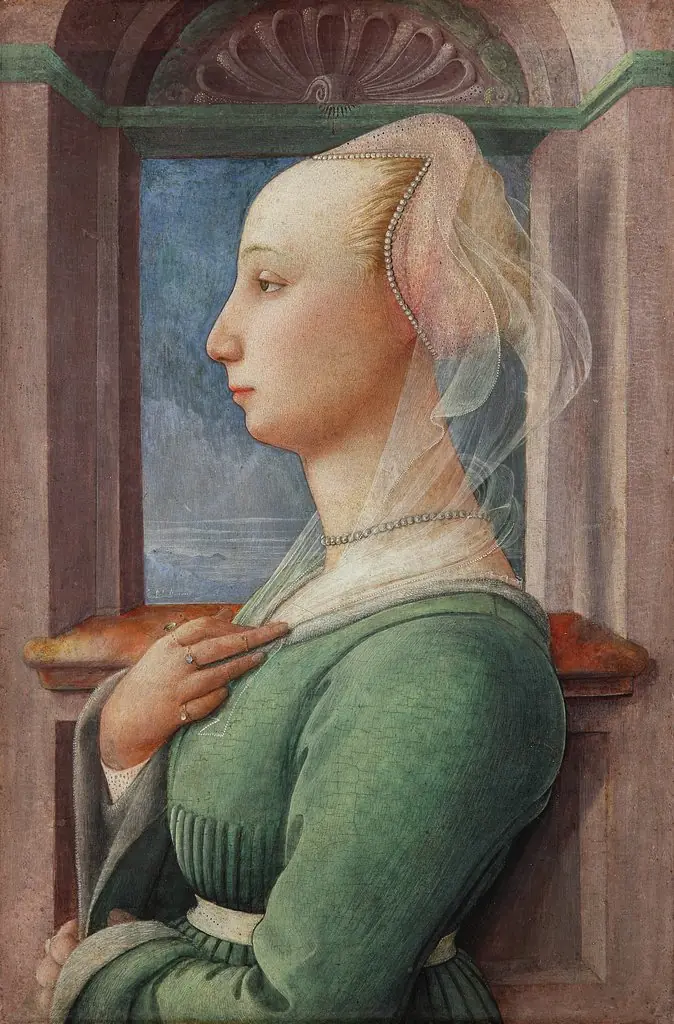
Own this work as a print
Artist & collection
Artist
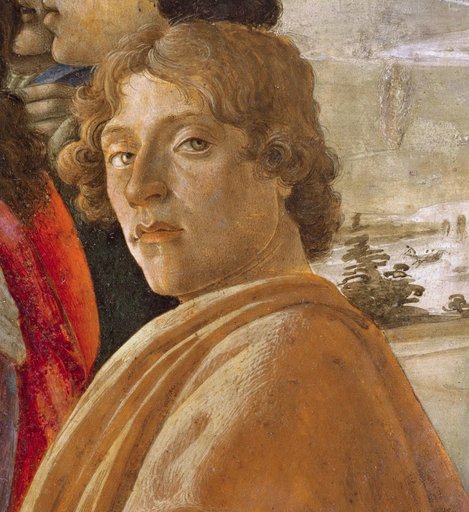
Alessandro di Mariano di Vanni Filipepi, better known as Sandro Botticelli or simply Botticelli, was an Italian painter of the Early Renaissance.


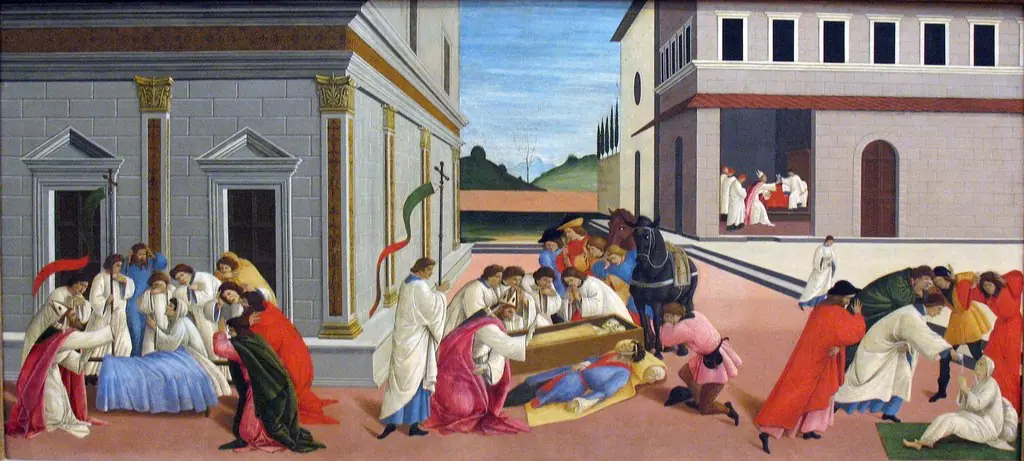
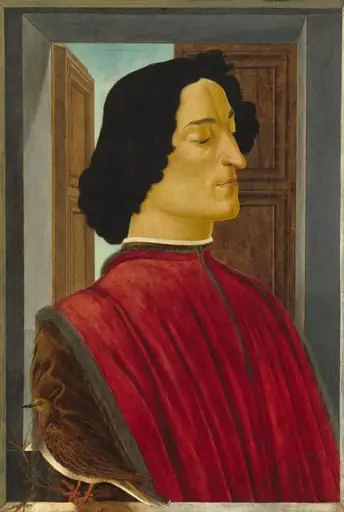
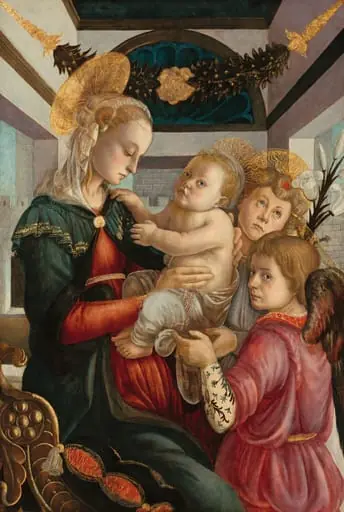
- Portrait of a Lady
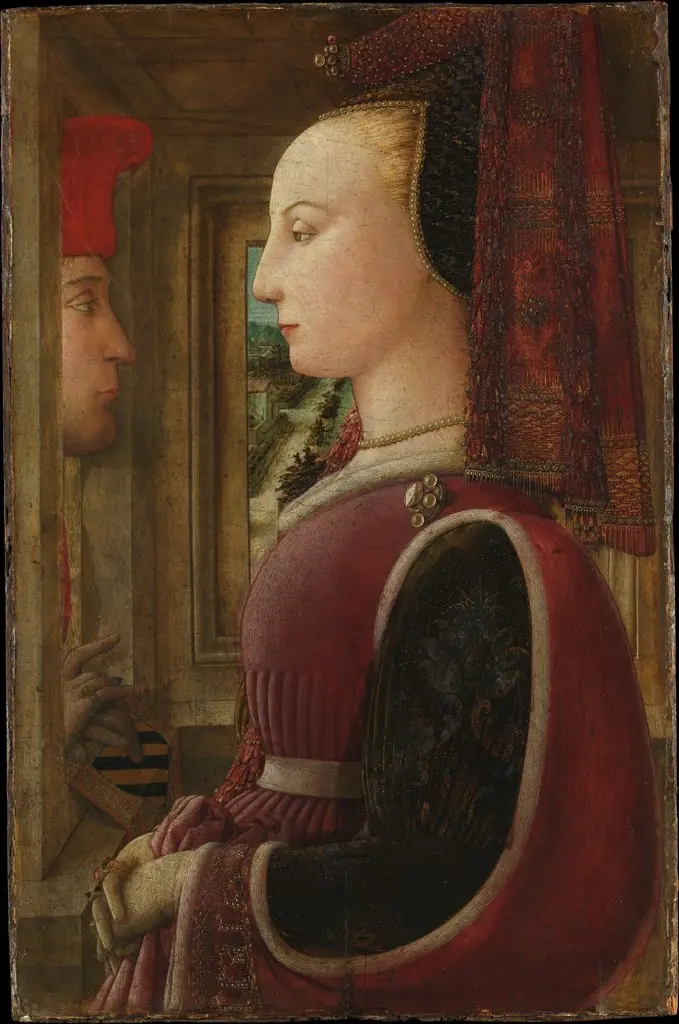 Portrait of a Woman with a Man at a Casement
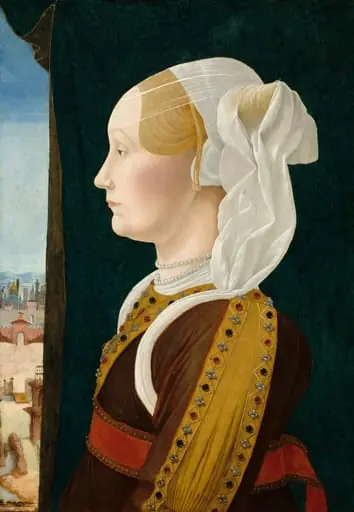 Ginevra Bentivoglio
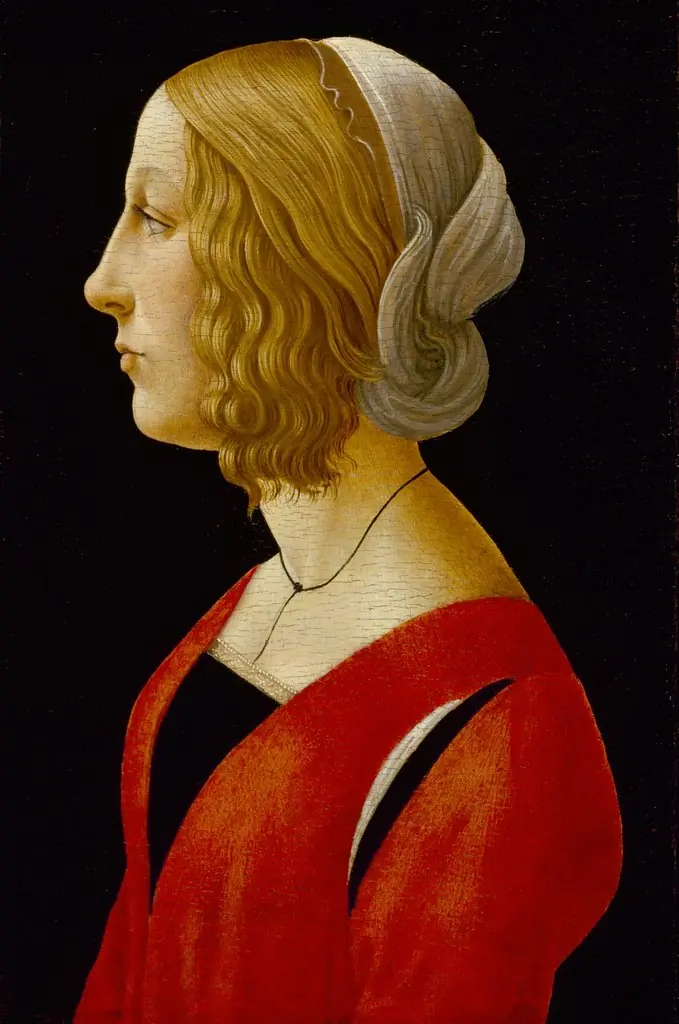 Bust of a Young Woman
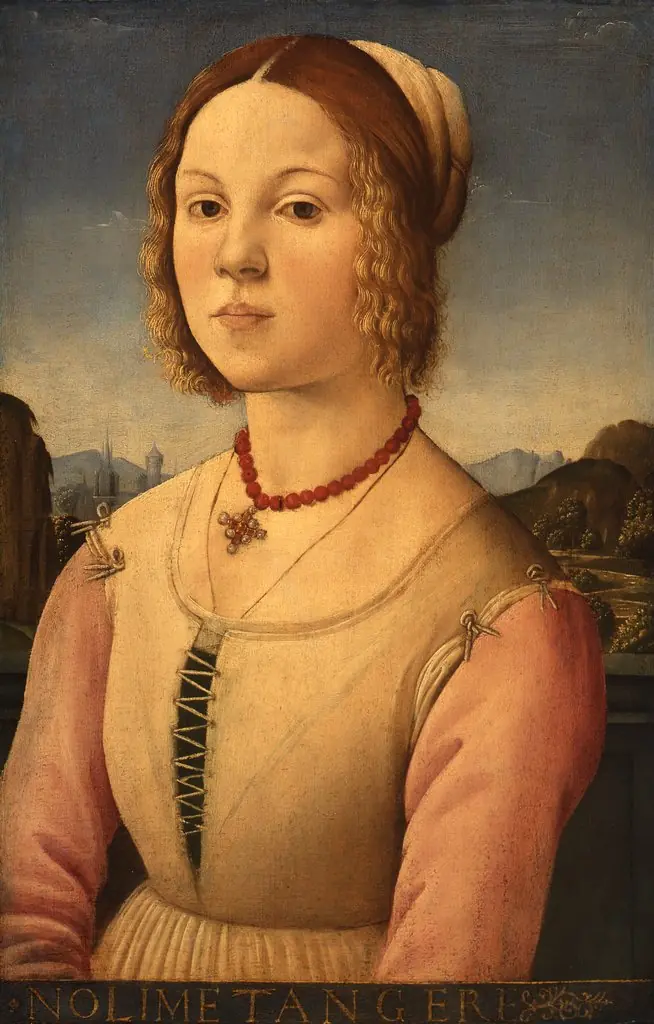 Portrait of a young woman
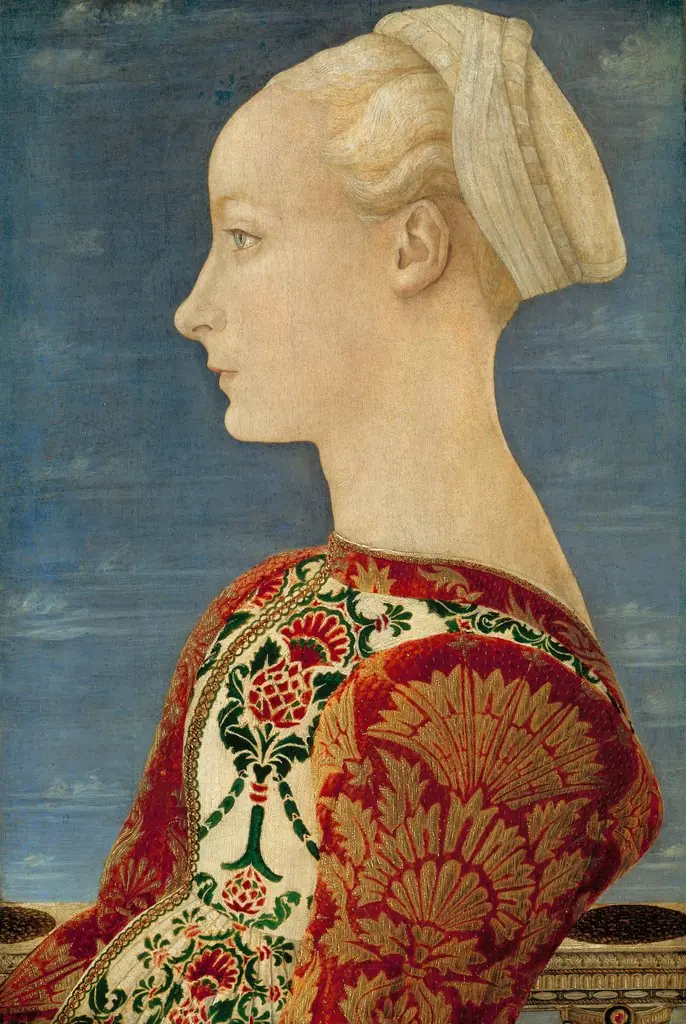 Profile Portrait of a Young Lady
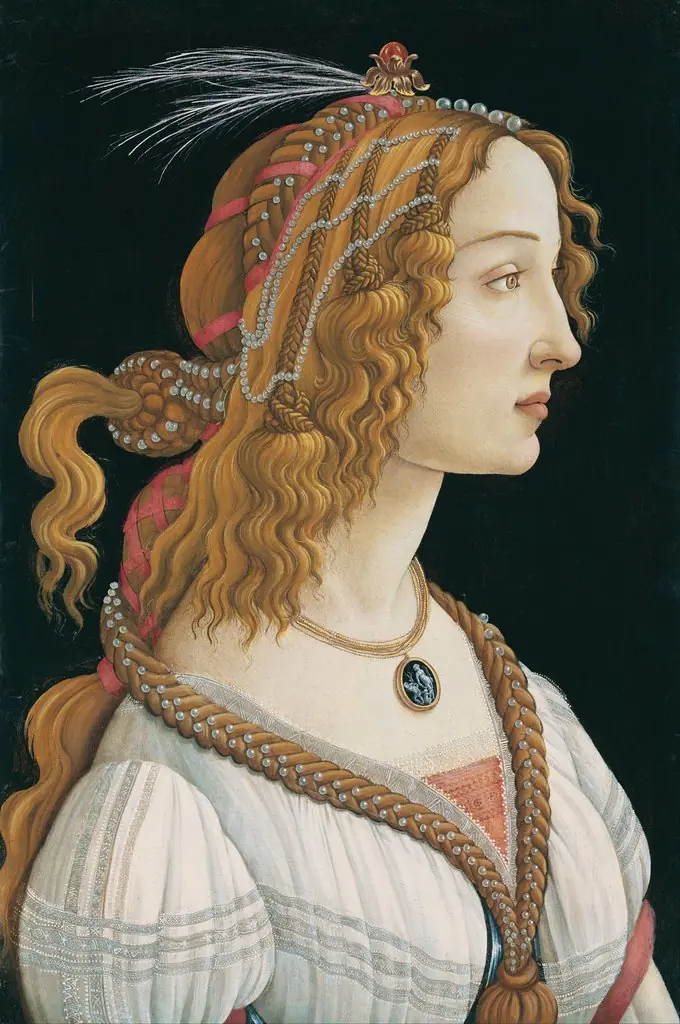 Idealized Portrait of a Lady (Portrait of Simonetta Vespucci as Nymph)
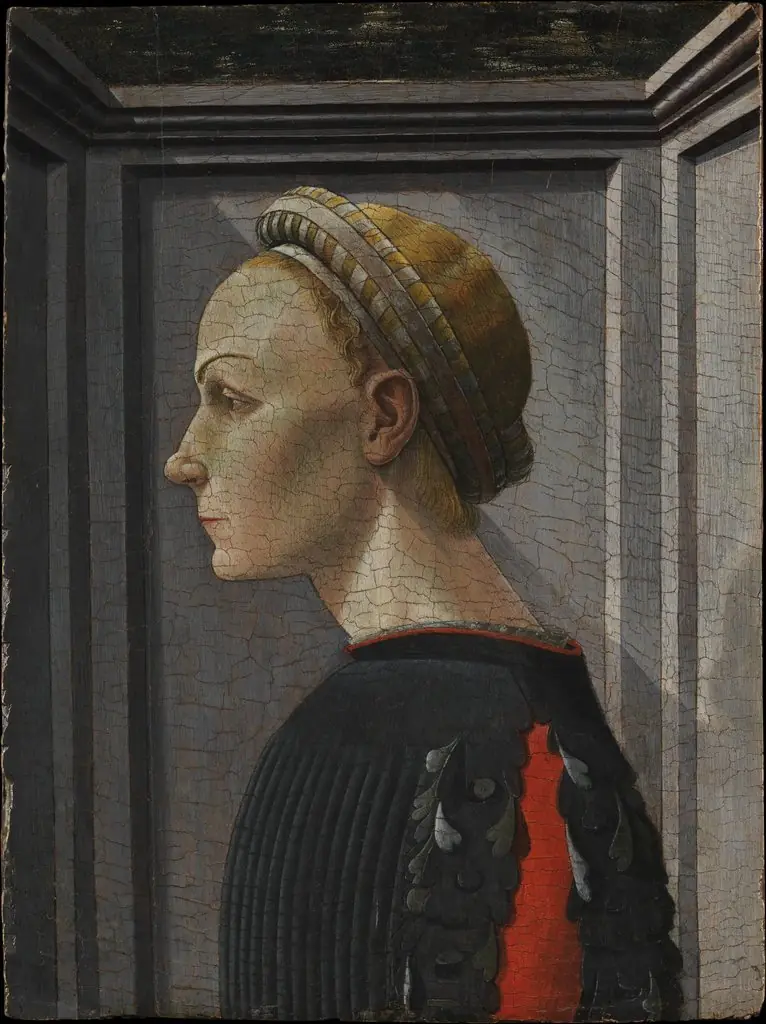 Portrait of a Woman
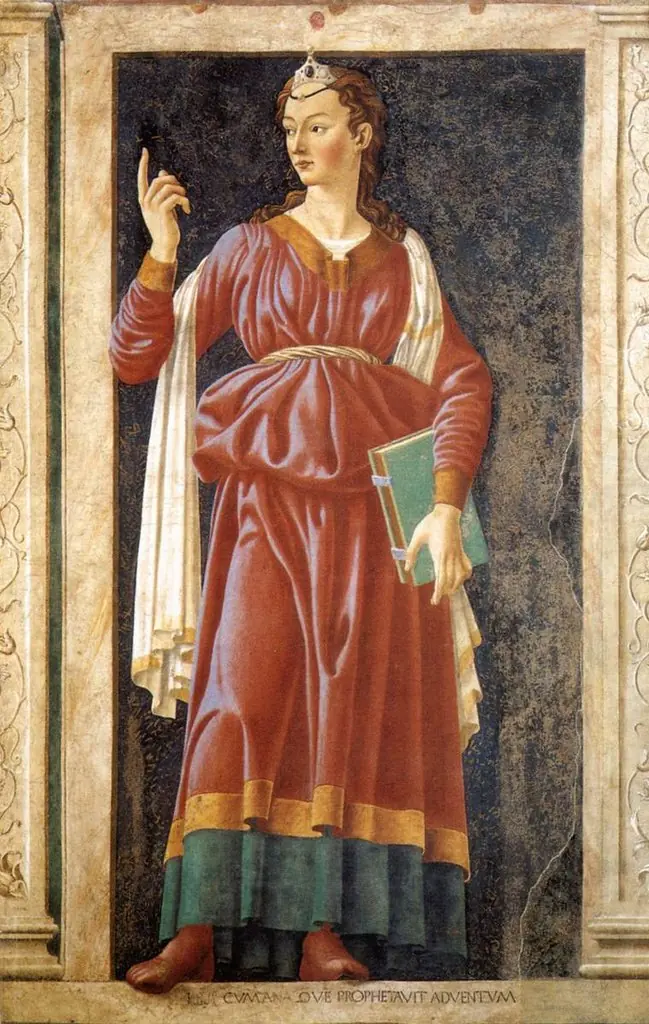 Famous Persons: The Cumean Sibyl
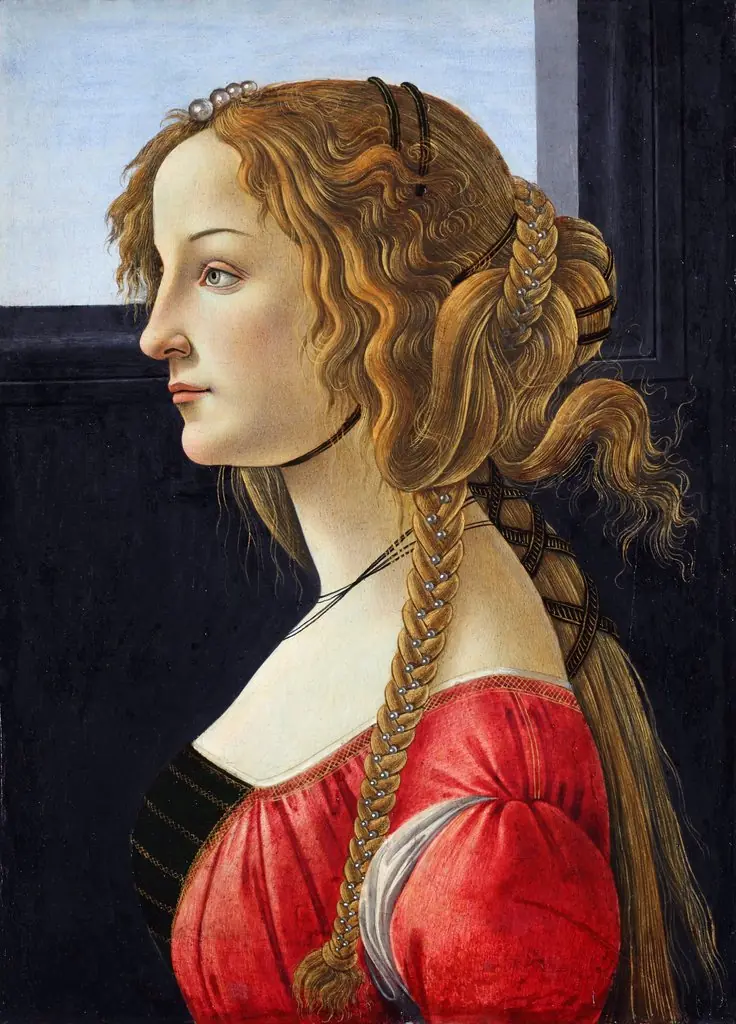 Profile Portrait of a Young Woman
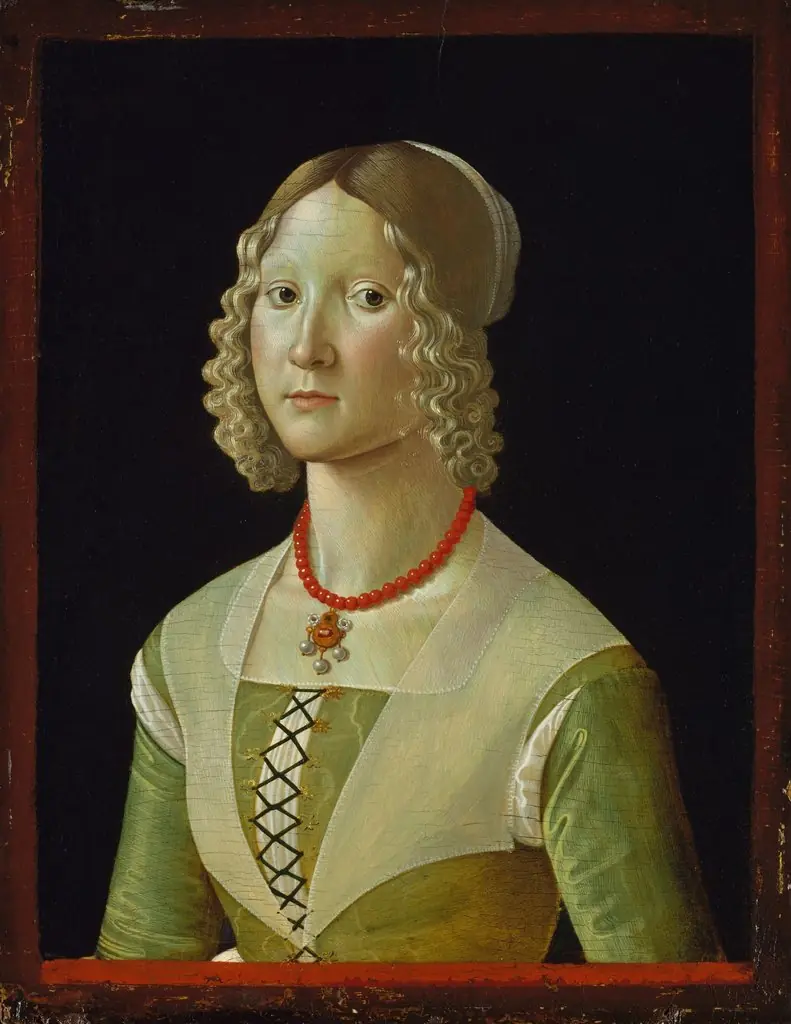 Selvaggia Sassetti (born 1470)
 Saint Catherine of Alexandria