Artwork
Profile Portrait of a Young Woman
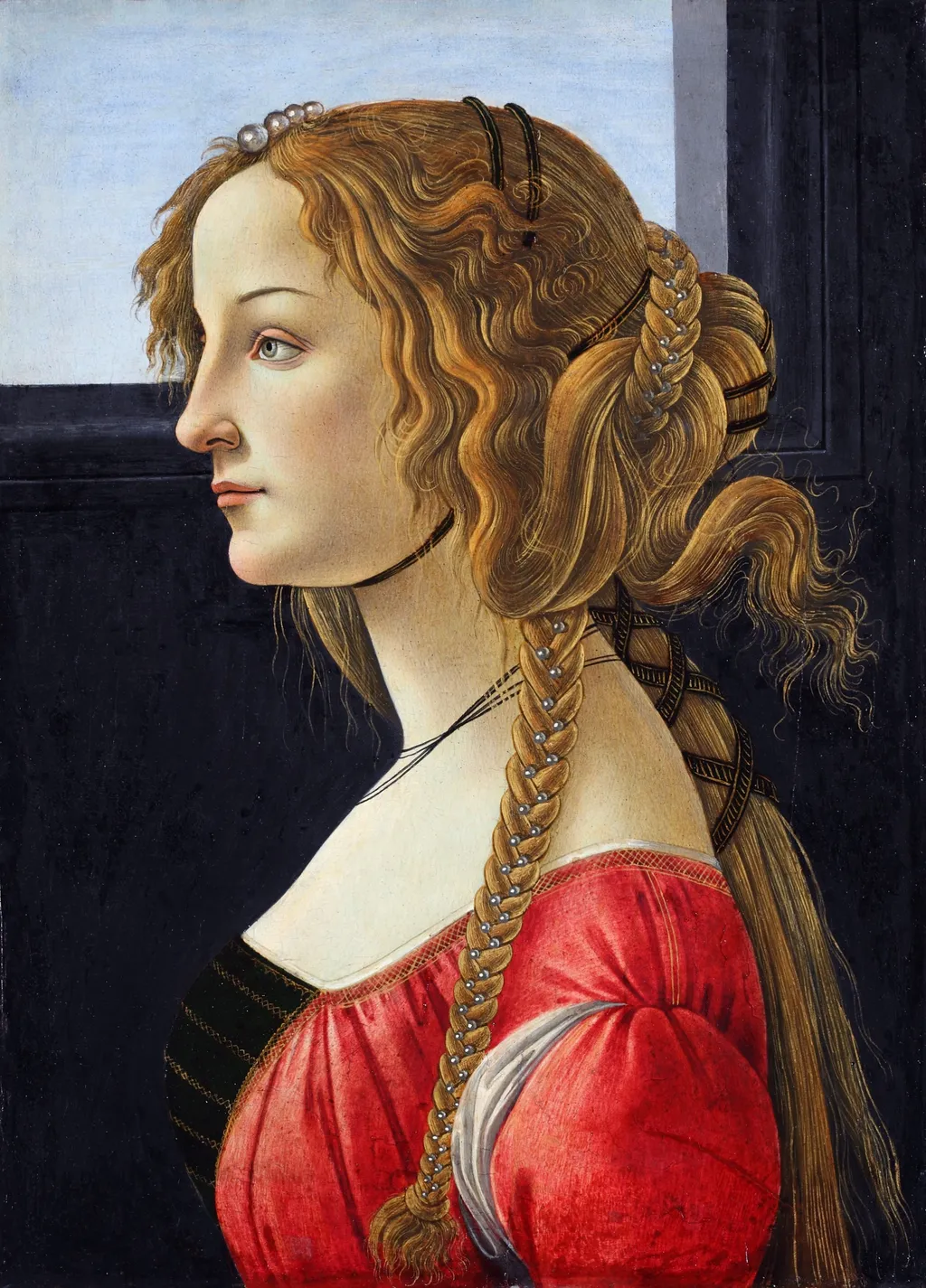
Profile Portrait of a Young Woman is a tempera painting by the Northern Renaissance artist Unknown. It dates from 1490 and is held in the collection of the Gemäldegalerie Berlin. A tempera painting depicting a young woman in profile, characterized by serene and elegant qualities.
About this work
Subject & Meaning
Her elaborate hairstyle adorned with pearls and ribbons, also used by Botticelli in mythological figures such as the nymphs, symbolizes idealized femininity.
The painting depicts a young woman in profile, traditionally identified as Simonetta Vespucci, celebrated in Renaissance Florence for her beauty and linked to the Medici circle. Her elaborate hairstyle adorned with pearls and ribbons, also used by Botticelli in mythological figures such as the nymphs, symbolizes idealized femininity. The work is interpreted both as an idealized portrait and possibly as a commemoration of Simonetta Vespucci’s celebrated status, with later scholarship suggesting connections to Medici patronage and allegorical representations of love.
Scholars like Wilhelm von Bode initially regarded the piece as a imaginative creation rather than a direct likeness, while Aby Warburg connected its features to Simonetta Vespucci, reinforcing her identification in art historical discourse.
Technique & Style
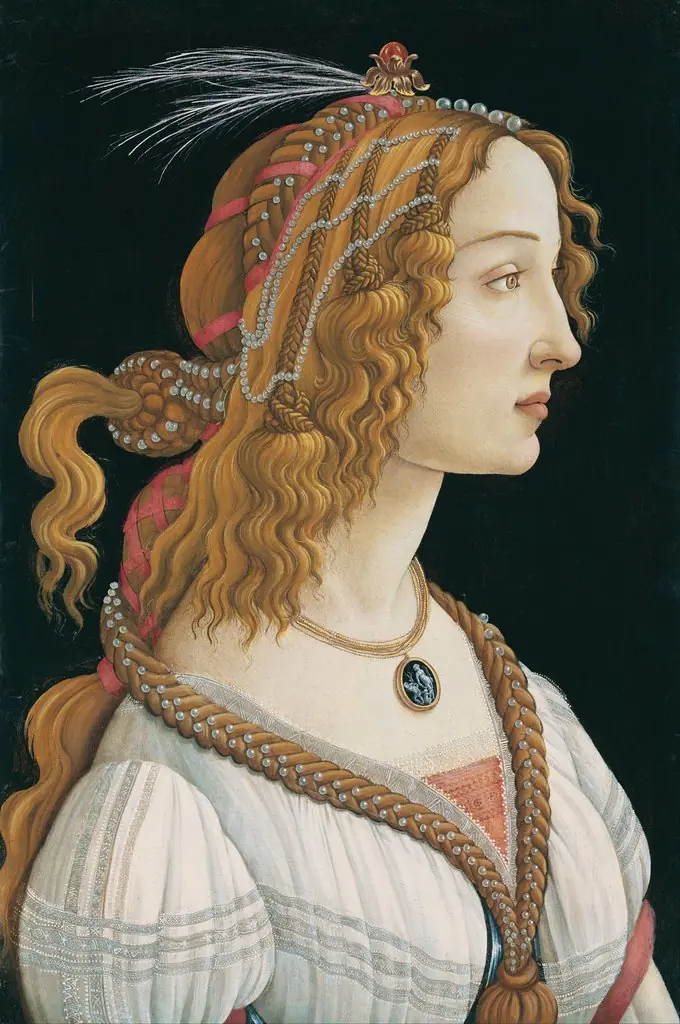
The work is an early tempera painting on a poplar panel, measuring 55.4 cm by 43 cm (source 2). It depicts a young woman in profile, shown against a dark interior with a window opening toward the left; her hairstyle features pearls and ribbons, and she wears a contemporary red garment with a black central panel (source 3). The attribution has been debated: Giovanni Morelli considered it entirely by Botticelli, while Wilhelm von Bode described it as a workshop production (source 3). The composition reflects Botticelli’s idealized treatment of femininity, with delicate facial features and a stylized profile that appears in both allegorical and mythological contexts (source 3). Two related versions exist, one in the Städel Museum, Frankfurt, which may also portray Simonetta Vespucci in a mythological guise (source 3).
History & Provenance
The painting is attributed to Sandro Botticelli and dated to between 1475 and 1478, with 1478 given as the terminal year in internal documentation. It is widely conjectured to have been commissioned as a homage to Giuliano de’ Medici’s love for Simonetta Vespucci, possibly for Lorenzo di Pierfrancesco de’ Medici’s Villa di Castello. The Berlin canvas is one of several versions linked by Aby Warburg to Simonetta Vespucci, though modern scholarship often interprets it as an idealized portrait rather than a specific likeness. Acquired in 1875 from the Palazzo Medici Riccardi in Florence by art dealer Stefano Bardini for the Gemäldegalerie, Berlin, the painting entered the museum’s Italian holdings following its purchase. The painting is held by the Gemäldegalerie, Staatliche Museen zu Berlin, where it carries the accession number 1875. It was first recorded in modern collections in Florence, from where it was purchased in 1875 by the art dealer Stefano Bardini on behalf of the Gemäldegalerie. The work entered the museum’s holdings that same year. It was included in the exhibition “The Renaissance Portrait: From Donatello to Bellini” and in “Botticelli Reimagined,” both held at the Gemäldegalerie in 2015-2016.
Context
The *Profile Portrait of a Young Woman* is widely recognized as a key example of Florentine portraiture from the late 15th century, frequently linked to the idealized beauty of Simonetta Vespucci. Art historical debate has long centered on whether the work depicts a specific individual or serves as an allegorical ideal, with Wilhelm von Bode suggesting it was a fantasy piece utilizing a recurring female type found in Botticelli's mythological works. Attribution remains contested; while Giovanni Morelli affirmed the artist's direct hand, von Bode classified the painting as a product of the workshop. Scholars such as Aby Warburg connected the sitter to Vespucci, noting the prevalence of similar features in other works associated with her. The painting is often discussed alongside a companion portrait in the Städel Museum, with recent interpretations favoring the view of the Berlin work as an idealized image rather than a strict likeness.
Artist & collection









 Portrait of a young woman
 Idealized Portrait of a Lady (Portrait of Simonetta Vespucci as Nymph)
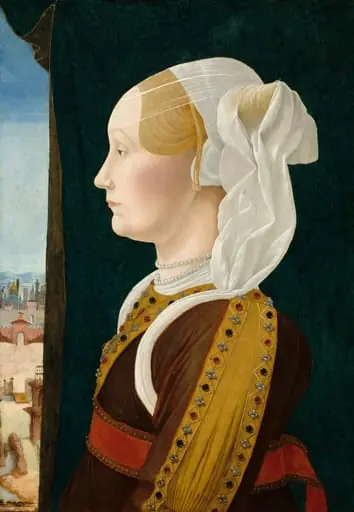 Ginevra Bentivoglio
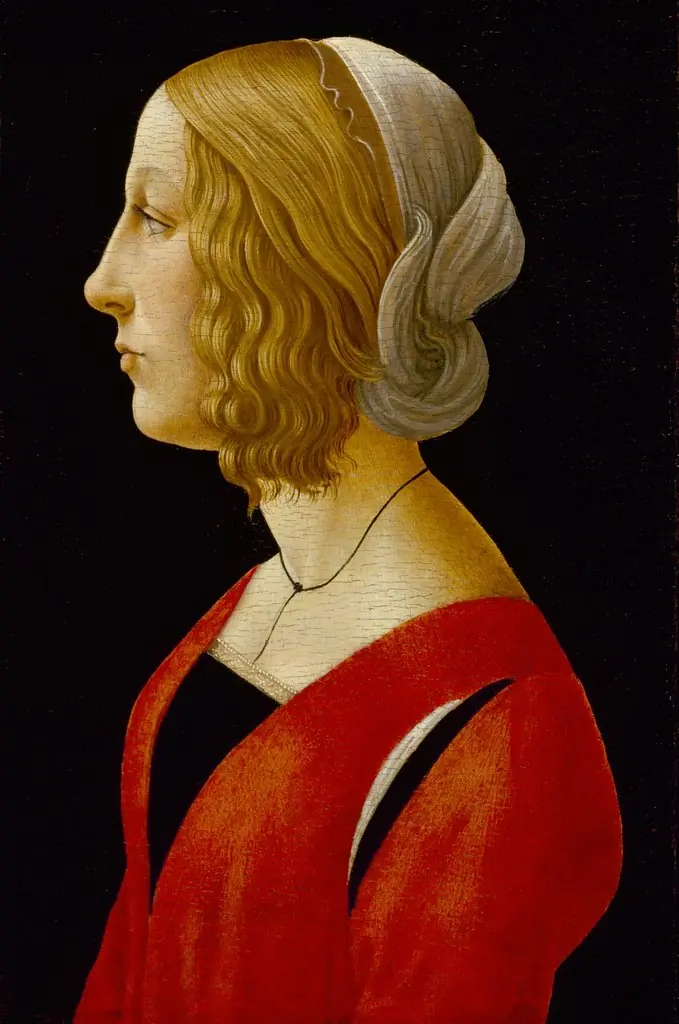 Bust of a Young Woman
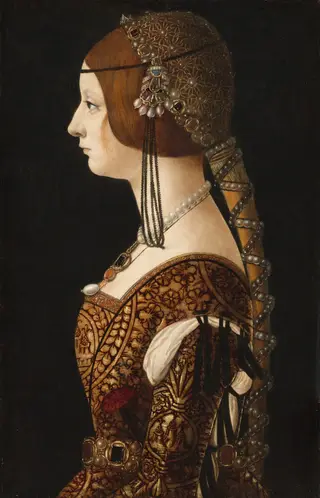 Bianca Maria Sforza
![Ginevra de' Benci [obverse], by Leonardo da Vinci](https://artifactworldgallery.com/img/leonardo-da-vinci--ginevra-de-benci-obverse--afb6ec3a3e65f392-w320.webp) Ginevra de' Benci [obverse]
Ginevra de' Benci [obverse]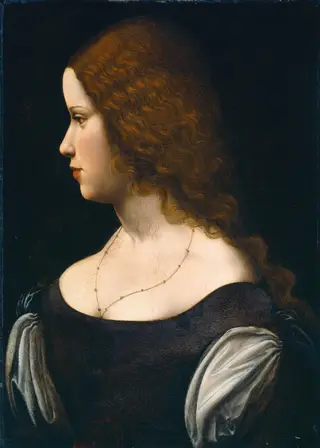 Portrait of a Young Lady
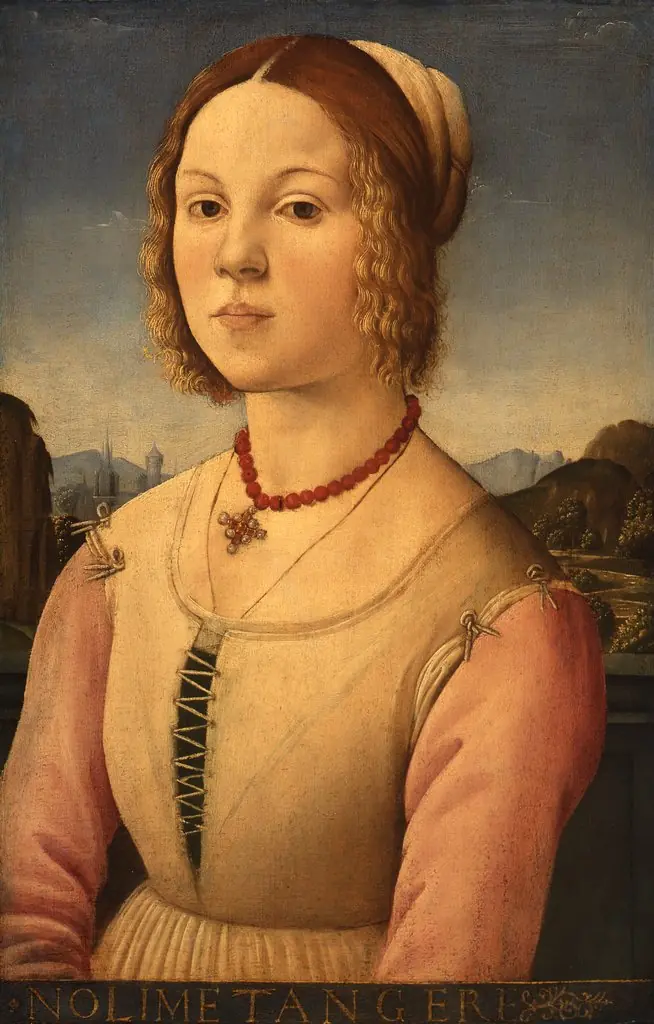 Portrait of a young woman
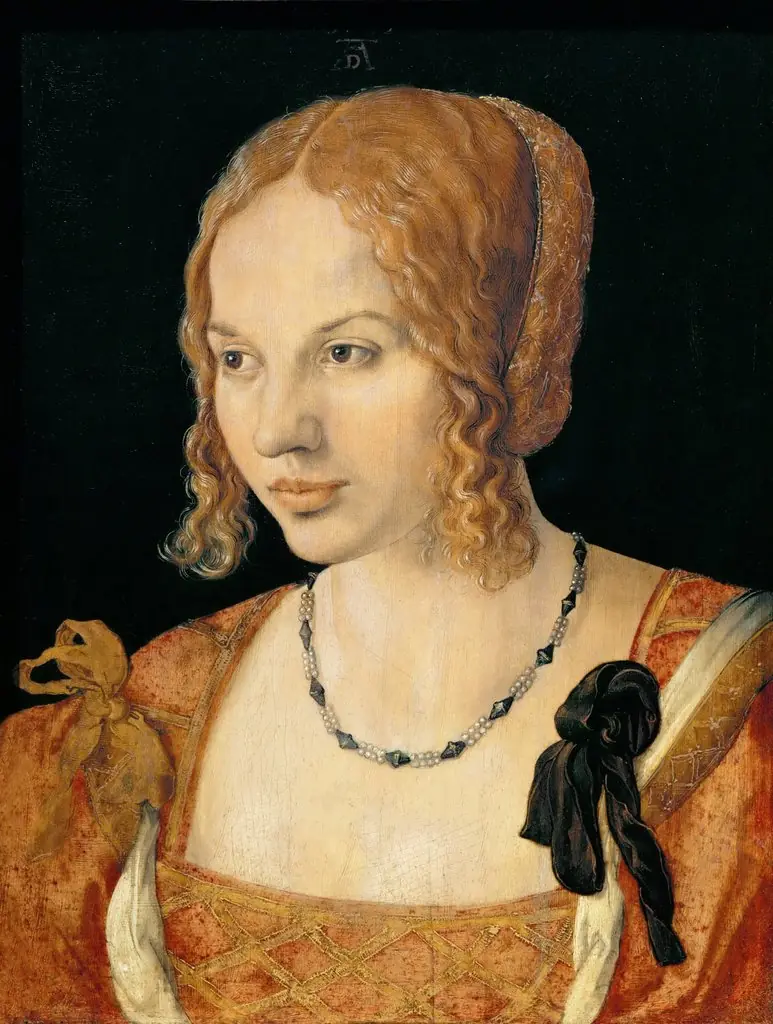 Portrait of a Venetian Woman
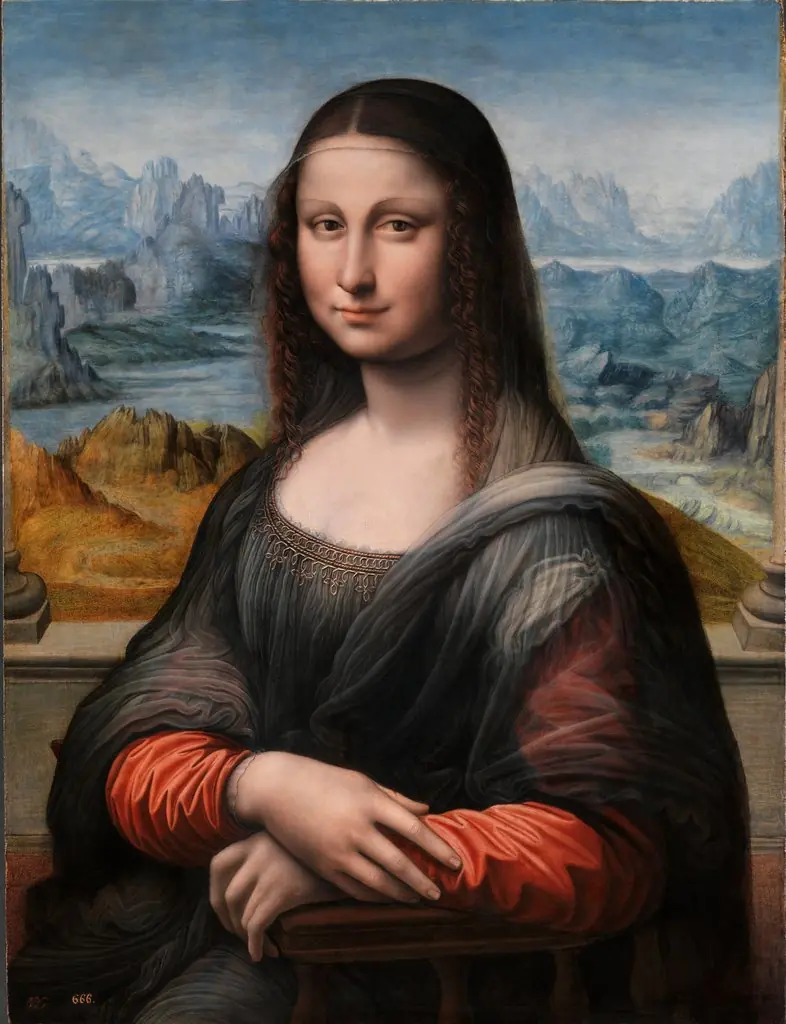 Mona Lisa
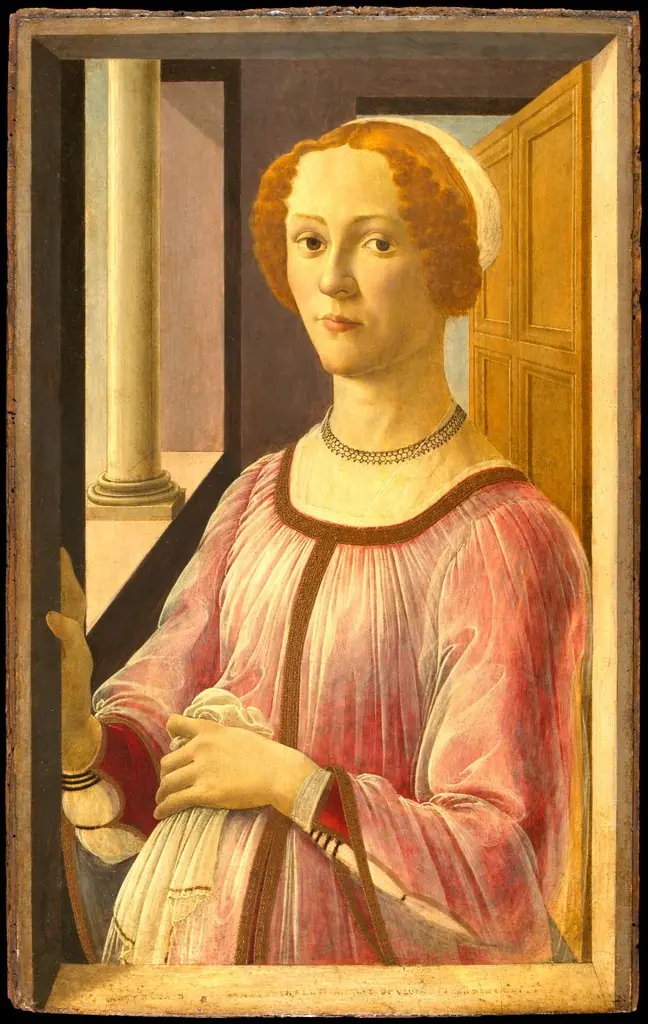 Portrait of a Lady known as Esmeralda Brandini
- Profile Portrait of a Young Lady