Artwork
Nagisa Palace from the Tales of Ise
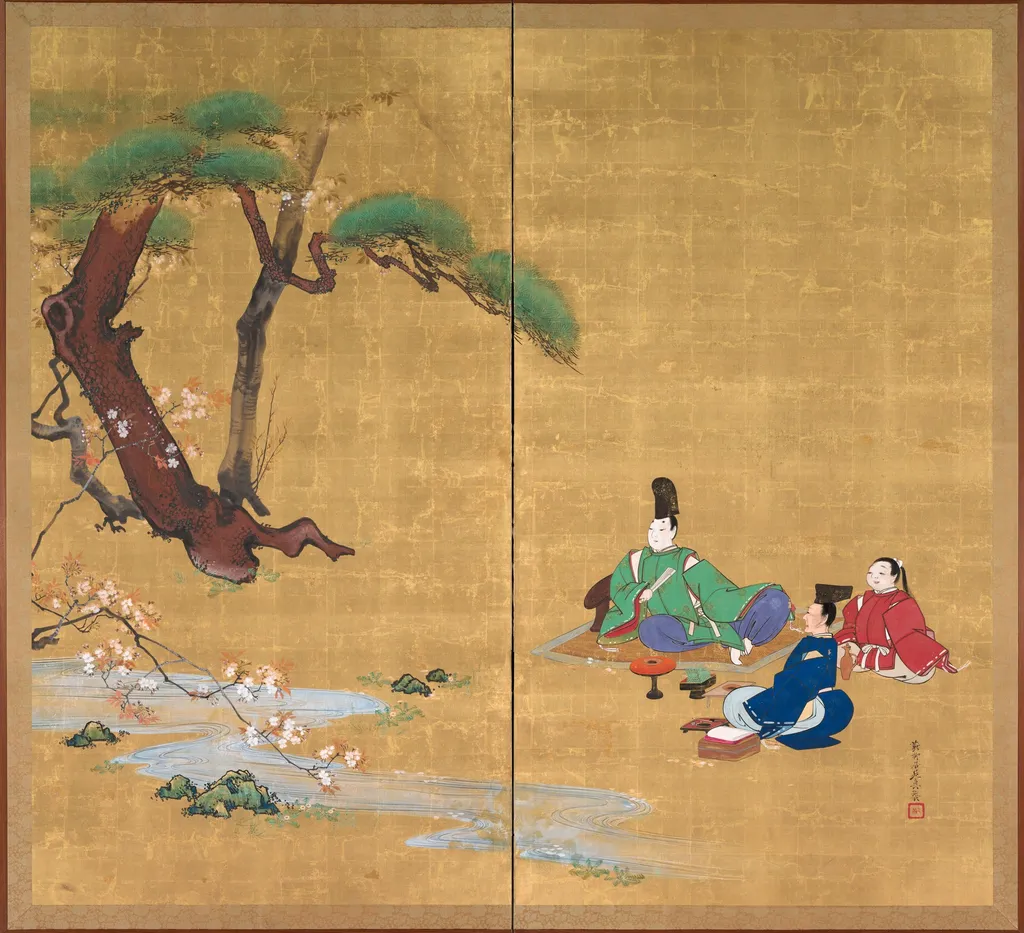
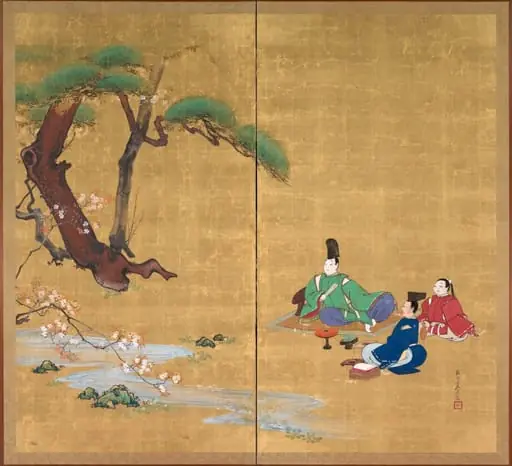
Nagisa Palace from the Tales of Ise is an unspecified painting by the Japonisme artist Shibata Zeshin. It dates from 1870 and is held in the collection of the Cleveland Museum of Art.
About this work
Technique & Style
Shibata Zeshin painted Nagisa Palace from the Tales of Ise in 1870 using traditional Japanese lacquer on wood panel, employing layered maki-e gold dust application to achieve luminous surface effects and subtle gradations of light. The work demonstrates his mastery of narrative composition within the yamato-e style, balancing delicate brushwork with rich ornamental detailing characteristic of Meiji-era painting. Its formal treatment emphasizes flattened spatial depth and stylized natural motifs, reflecting both classical conventions and contemporary artistic innovation in Japanese painting.
History & Provenance
Nagisa Palace from the Tales of Ise is held in the collection of the Cleveland Museum of Art, where it is recorded under accession number 1981.
Nagisa Palace from the Tales of Ise is a painted work by Shibata Zeshin created in 1870 in Japan. The painting entered the collection of the Cleveland Museum of Art, where it remains on view. Its inception date is recorded as 1870-01-01, reflecting the year of its creation.
Nagisa Palace from the Tales of Ise is held in the collection of the Cleveland Museum of Art, where it is recorded under accession number 1981.2.
The painting entered the museum’s holdings in 1981 as a gift from an anonymous donor.
Overview
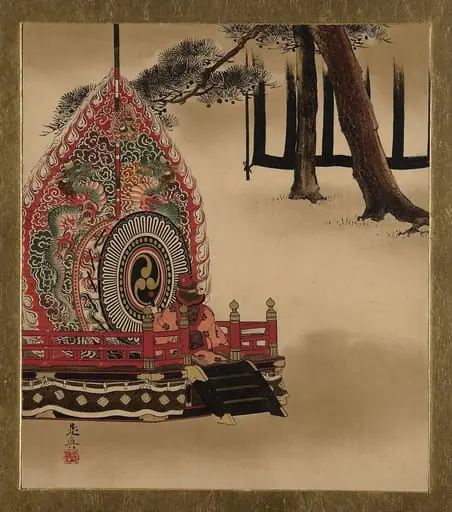
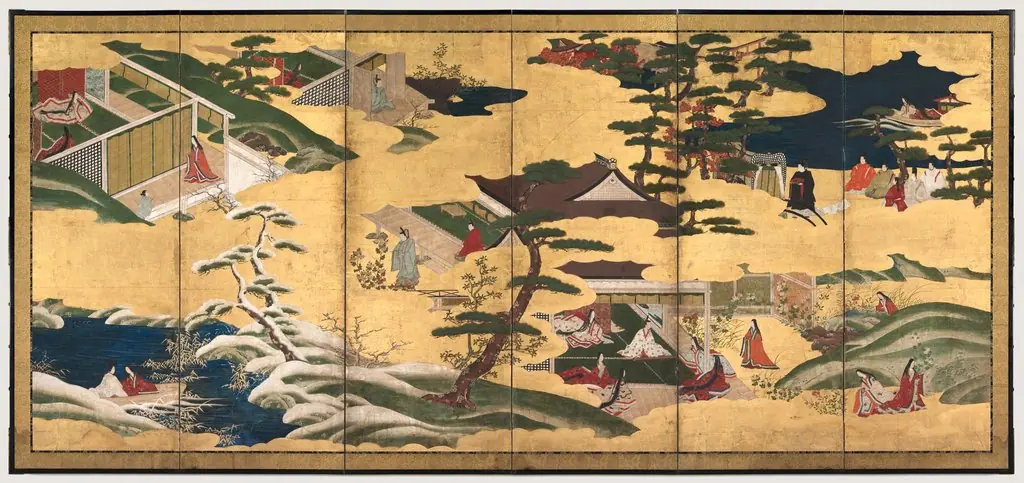
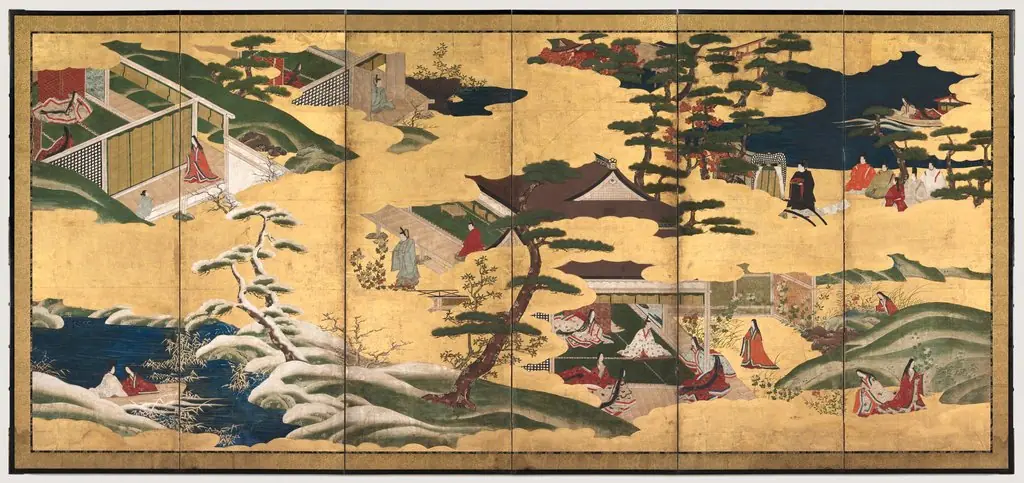
Created in 1870 by the Japanese painter Shibata Zeshin, Nagisa Palace from the Tales of Ise is a two‑panel composition now in the collection of the Cleveland Museum of Art. The work juxtaposes a solitary, flowering tree beside a tranquil pond with a small scene of two elegantly dressed figures near the water’s edge, all set against a gold‑toned background.
Subject & Meaning
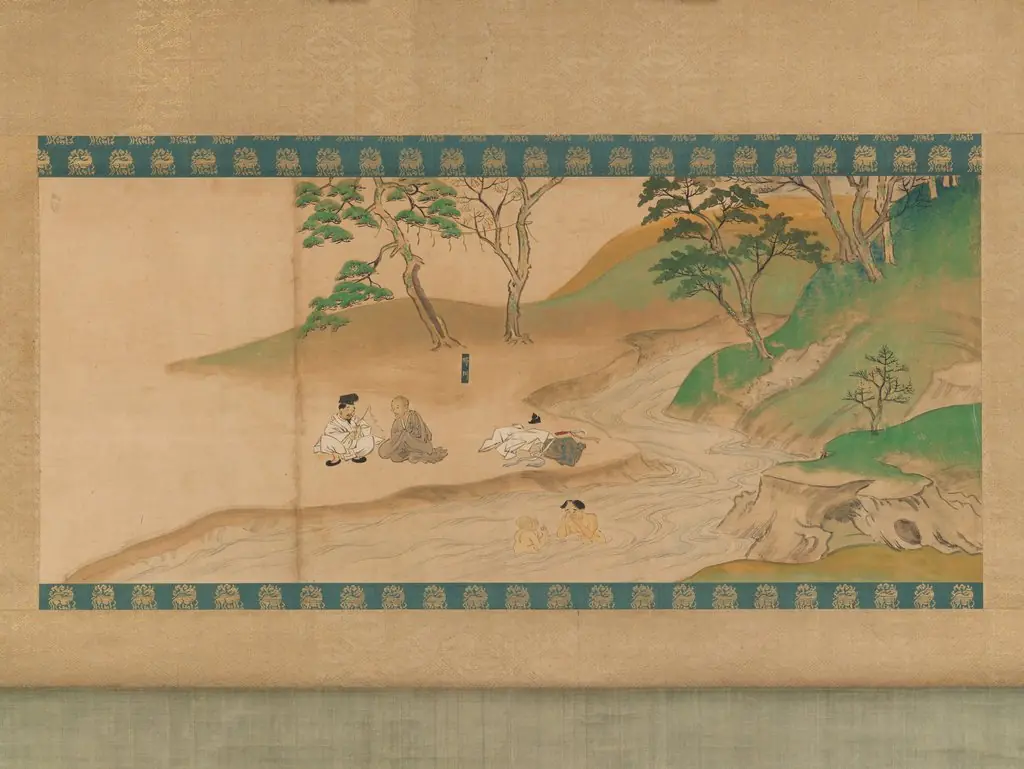
The left panel presents a stark, leafless tree adorned with delicate white blossoms, its twisted limbs hovering over a placid pond dotted with rocks and additional flowers. On the right, a figure in vivid green robes holds a fan while a companion in blue kneels with a tray, suggesting a moment of refined interaction, possibly drawn from the poetic narrative of the Tales of Ise.
Context
Nagisa Palace references the classic Heian‑era literary work Ise Monogatari, a collection of poems and episodes that often depict courtly love and seasonal scenery. By placing a solitary tree and a quiet encounter beside water, Zeshin evokes the poetic atmosphere of the tale, aligning visual art with the literary tradition that celebrated subtle emotion and natural beauty.
Own this work as a print
Artist & collection