Artwork
Angel of the Annunciation
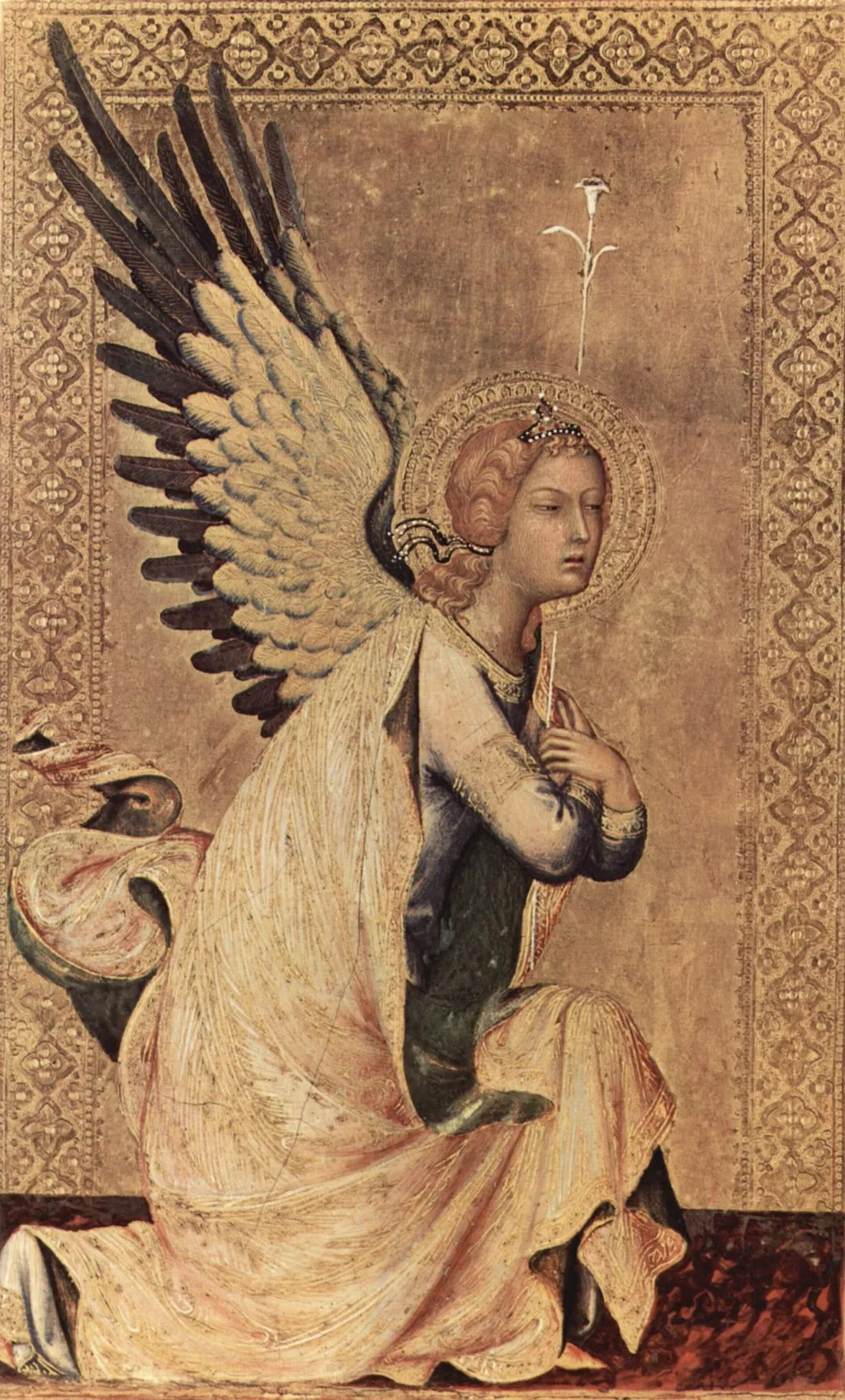
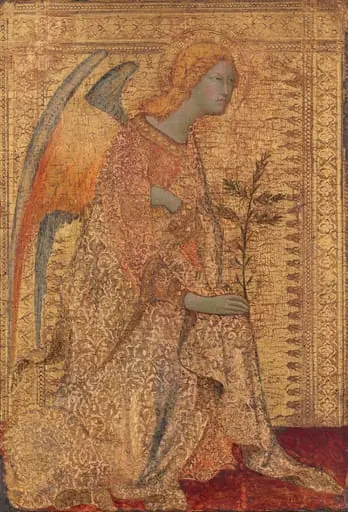
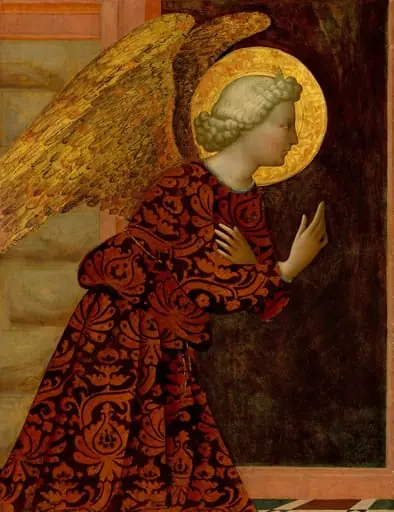
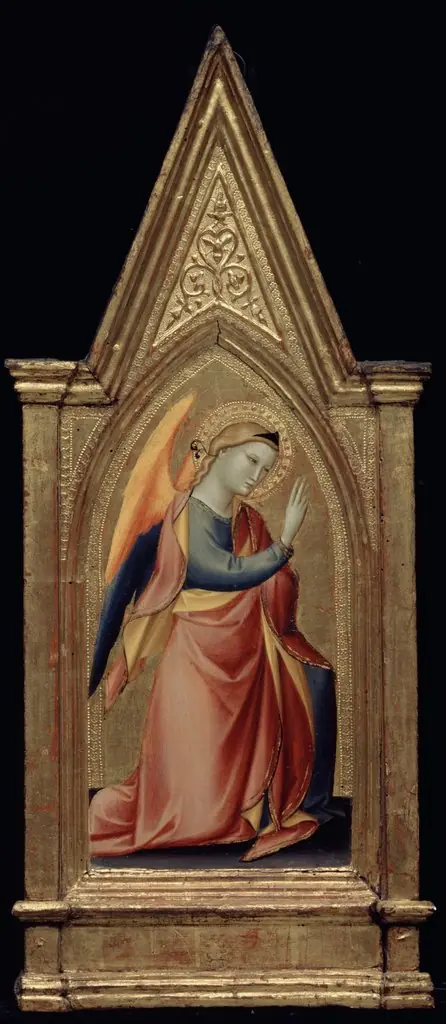
Angel of the Annunciation is a tempera painting by the Sienese School artist Simone Martini. It dates from 1320 and is held in the collection of the Royal Museum of Fine Arts Antwerp.
About this work
Overview
Painted in 1320 by Simone Martini, this tempera work depicts the Angel of the Annunciation as a solitary figure in quiet reverence. Executed on a wooden panel, it was likely part of a larger altarpiece. The painting is now housed in the Royal Museum of Fine Arts Antwerp, where it remains a key example of Sienese Gothic devotional art from the early 14th century.
Subject & Meaning
The gesture and serene expression convey a moment of sacred revelation, emphasizing spiritual grace over dramatic intensity.
The angel represents the divine messenger announcing to the Virgin Mary the birth of Christ. Kneeling in humility, the figure embodies both celestial authority and tender solemnity. The gesture and serene expression convey a moment of sacred revelation, emphasizing spiritual grace over dramatic intensity. The composition invites contemplation rather than spectacle, aligning with devotional practices of the time.
Technique & Style
Martini employed tempera on panel, using fine brushwork to render delicate details in the angel’s robe and wings. Gold leaf outlines the intricate patterns on the garment, while the feathers are subtly shaded in muted browns and grays to suggest volume. The flowing lines of the robe and loose curls of hair reflect the elegance of the International Gothic style, prioritizing rhythm and refinement over naturalistic depth.
History & Provenance
The painting entered the collection of the Royal Museum of Fine Arts Antwerp in the 19th century, though its earlier ownership is undocumented. It likely originated in Siena as part of a multi-panel religious altarpiece, possibly commissioned by a local church or noble patron. Its survival in good condition reflects careful preservation through centuries of religious and political change in Europe.
Context
Created during the height of Sienese painting, this work reflects the city’s emphasis on lyrical beauty and spiritual refinement. Martini’s style, influenced by Byzantine iconography and French illumination, diverged from Florentine naturalism. The use of gold and flowing forms catered to devotional needs in a period when religious imagery served as a bridge between the earthly and the divine.
Legacy
Martini’s Angel of the Annunciation influenced later Gothic artists across Europe through its refined linearity and emotional restraint. While not widely reproduced in its time, its presence in Antwerp’s collection ensured continued scholarly attention. It remains a touchstone for understanding how Sienese painters translated theological themes into visually serene, highly stylized forms.
Artist & collection