Artwork
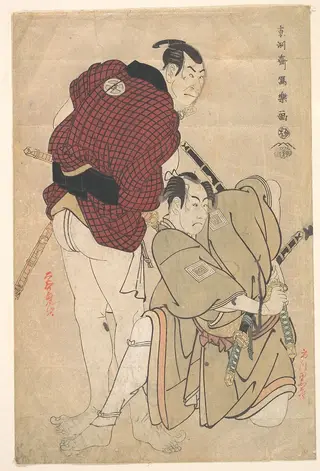
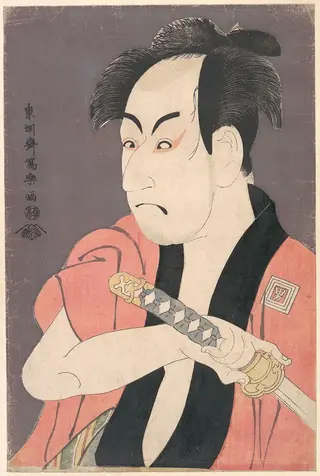
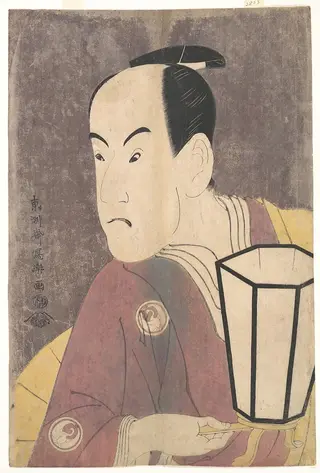
Otani Tokuji I as the Retainer Sodesuke in "Flowering Irises: A Soga Vendetta of the Bunroku Era"
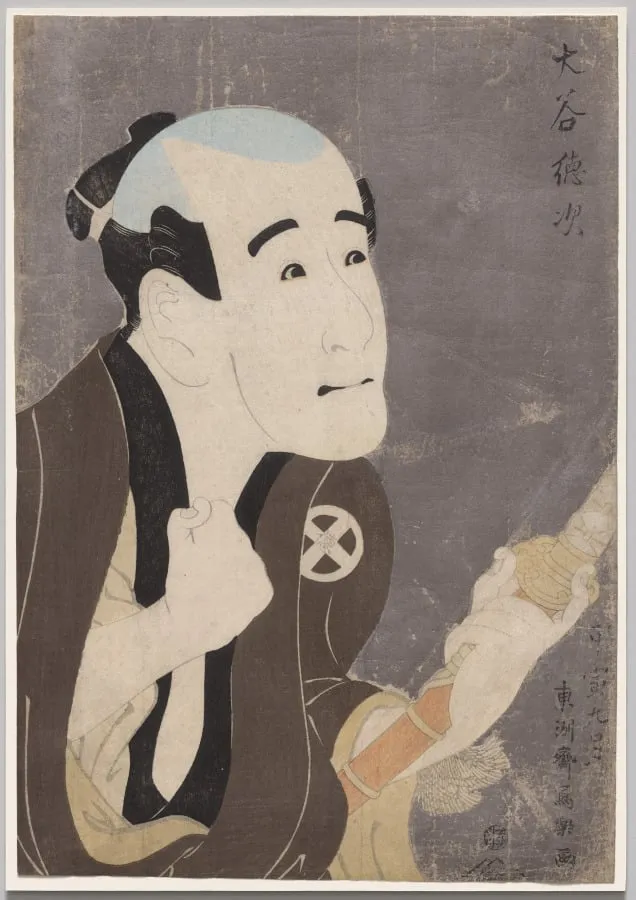
Otani Tokuji I as the Retainer Sodesuke in "Flowering Irises: A Soga Vendetta of the Bunroku Era" is a print by the Romanticist artist Tōshūsai Sharaku. It dates from 1794 and is held in the collection of the Cleveland Museum of Art.
- Accession no.
- 1930.206
- Credit line
- Bequest of Edward L. Whittemore
About this work
Overview
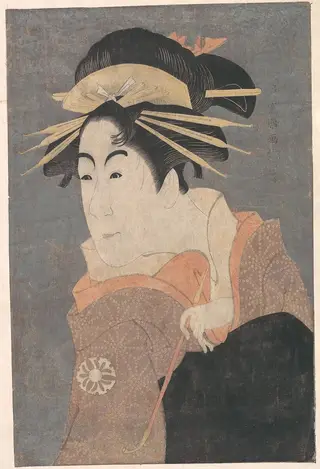
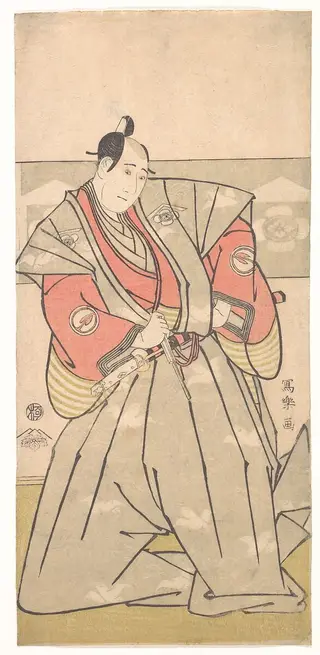
Ōtani Tokuji I (1756–1808) created a woodblock print depicting a servant character from a Kabuki drama in which two brothers seek vengeance against a murderer who stole their family’s secret scroll. The image is an example of yakusha-e, prints that captured the likenesses of popular actors for their admirers.
Subject & Meaning
The figure shown is the retainer Sodesuke, rendered with an intense, scowling expression that conveys his role in the climactic confrontation of the play. The portrayal underscores the themes of loyalty and retribution central to the narrative, highlighting the servant’s fierce dedication to his masters’ cause.
Technique & Style
Ōtani employs bold line work and exaggerated facial features to make the actor instantly recognizable, a common practice in yakusha-e that aided identification in the crowded theater. The composition focuses on a close-up of the costumed figure, emphasizing the dramatic makeup and costume details that define Kabuki performance aesthetics.
History & Provenance
Printed during the Bunroku era, the work was originally sold as an inexpensive souvenir for Kabuki audiences. Because such prints were not intended for longevity, surviving copies are relatively rare, adding to their value for collectors of Edo‑period theatrical ephemera.
Context
Kabuki theatre, which emerged in the early Edo period, evolved from simple dance pieces to elaborate productions featuring intricate sets, music, and stylized dialogue. Actors enhanced their performances with striking costumes, heavy makeup, and dramatic poses called mie, elements that Ōtani captures in this portrait.
Artist & collection

 Untitled
 Untitled
 Untitled
 Untitled
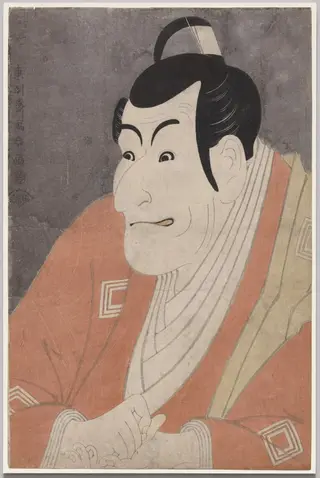
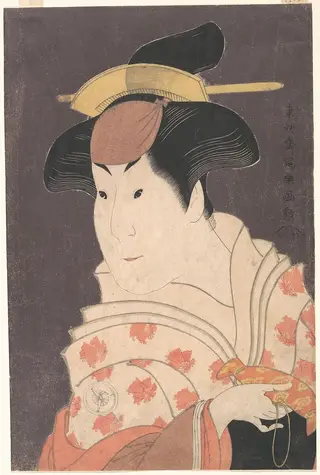 東洲斎写楽画 四代岩井半四郎の重の井 『恋女房染分手綱』|Iwai Hanshirō IV as Shigenoi in the Play "Koinyōbō Somewake Tazuna"
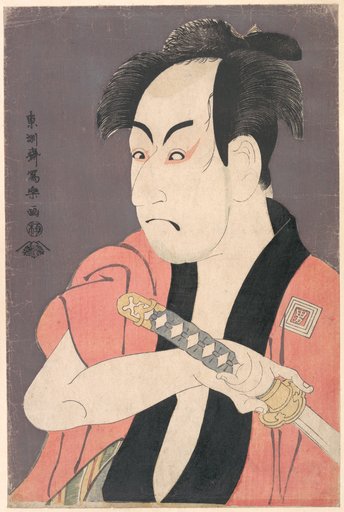
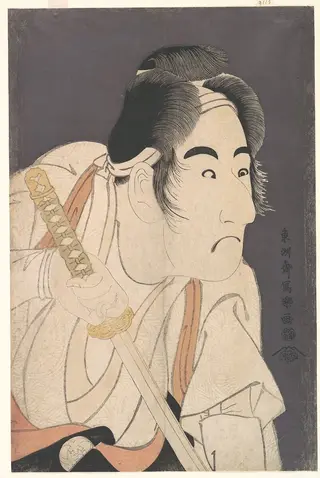
 東洲斎写楽画 初代市川男女蔵の奴一平 『恋女房染分手綱』|Ichikawa Omezō I in the Role of Yakko Ippei from the Play "Koinyōbō somewake tazuna"
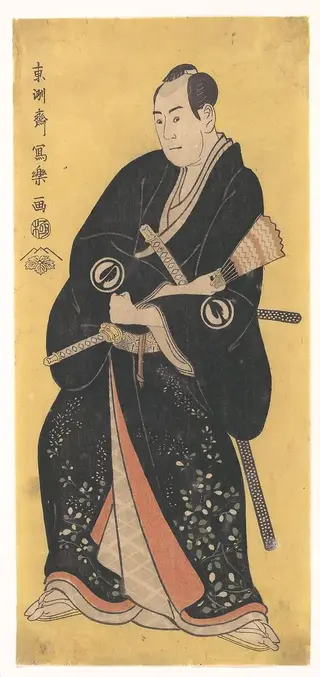
 東洲斎写楽画 二世坂東三津五郎の石井源蔵 『花菖蒲文禄曽我』|Bandō Mitsugorō II as Ishii Genzō in the Play "Hana-ayame Bunroku Soga"
 Untitled
 Untitled
 Untitled
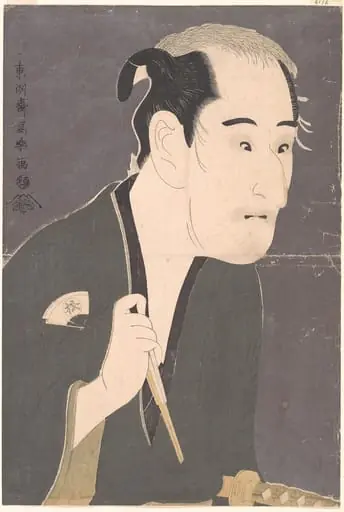 東洲斎写楽画 尾上松助の松下酒之進 『敵討乗合話』|Onoe Matsusuke I as Matsushita Mikinojō in the Play "Katakiuchi noriyaibanashi"
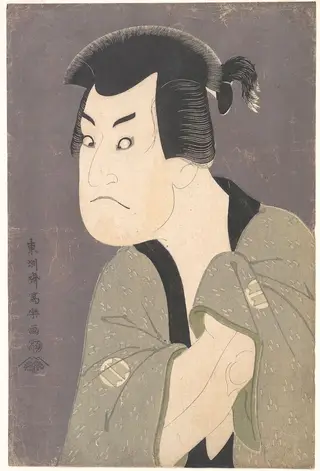 東洲斎写楽画 三世坂田半五郎の藤川水右衛門 『花菖蒲文禄曽我』|Sakata Hangorō III as Fujikawa Mizuemon in the Play "Hana Ayame Bunroku Soga"
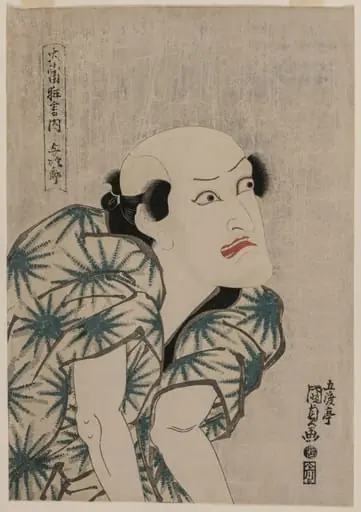 Nakamura Utaemon III as the Monkey Trainer Yojiro (from the series Famous Kabuki Plays)
 Untitled
 Memorial Portrait of Sawamura Sojuro III as Satsuma Gengobei