Artwork
Miroku (Maitreya)
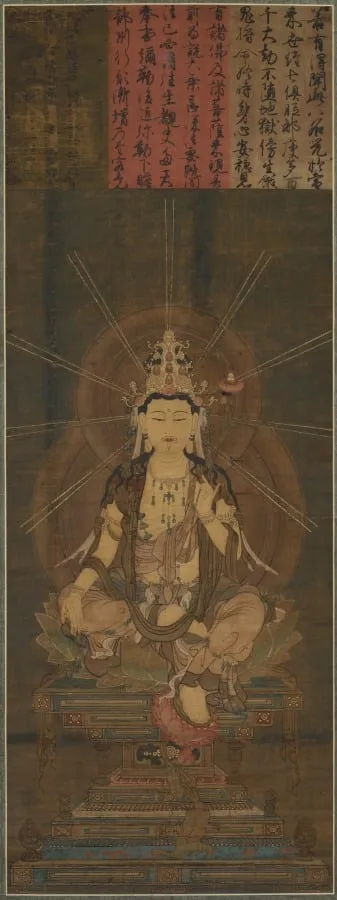
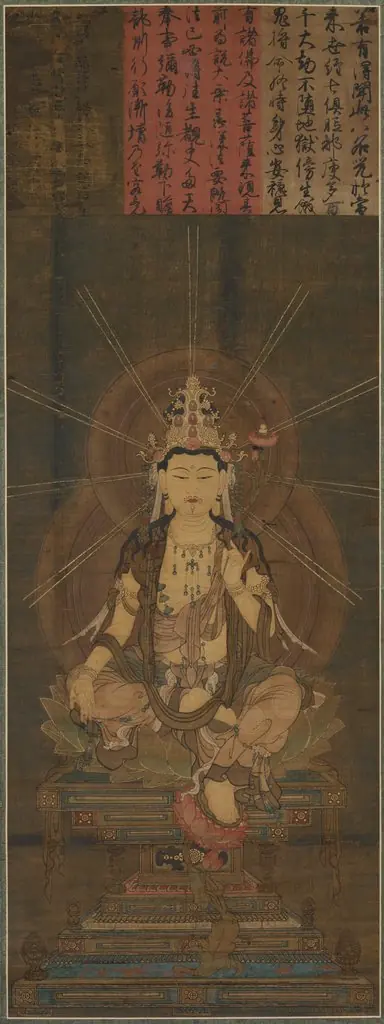
Miroku (Maitreya) is an unspecified painting by the Joseon dynasty painting artist Unknown. It dates from 1304 and is held in the collection of the Cleveland Museum of Art. This Japanese painting from the Nanbokuchō period depicts Miroku, the future Buddha, as a bodhisattva in celestial attire.
- Accession no.
- 1999.195
- Credit line
- Gift of Rosemarie and Leighton Longhi in memory of Robert P. Bergman
About this work
You see a golden-robed figure with a tall crown, jewels, and flowing scarves, sitting on a cloud.
This is Miroku, a future Buddha who hasn’t arrived yet. The painting was made in Japan during a time of war and change. The artist used thin layers of color to make the fabric look light and airy, almost like it’s moving.
If you like this, look up more about japan, nanbokuchō period (1336–92).
Overview
This Japanese painting from the Nanbokuchō period depicts Miroku, the future Buddha, as a bodhisattva in celestial attire.
This Japanese painting from the Nanbokuchō period depicts Miroku, the future Buddha, as a bodhisattva in celestial attire. Rendered on silk with delicate pigments, the work combines devotional imagery with subtle technical precision. Though intended for ritual contemplation, the painting’s reverse side bears unexpected inscriptions, revealed only after pigment loss exposed the backing, a rare glimpse into its hidden construction.
Subject & Meaning
Miroku, known as Maitreya in Sanskrit, is portrayed not as a fully enlightened Buddha but as a bodhisattva who delays final nirvana to guide sentient beings. According to Mahayana tradition, he will descend to Earth during a time of spiritual decay to renew the Dharma. His regal appearance, crowned with five seated Buddhas and draped in flowing silks, symbolizes his divine status and compassionate resolve, bridging the earthly and the transcendent.
Technique & Style
The artist employed thin, translucent layers of pigment to suggest the weightlessness of fabric and the luminosity of gold leaf. Fine brushwork defines the intricate patterns of jewelry and the undulating folds of scarves, creating a sense of movement despite the static pose. The use of silk as support allowed for subtle gradations in color, enhancing the ethereal quality of the figure and its celestial setting.
History & Provenance
Created during the turbulent Nanbokuchō period (1336–1392), the painting reflects a time of political fragmentation and religious devotion in Japan. Its survival suggests it was preserved within a temple or aristocratic collection. The inscriptions on its reverse, likely added during mounting, were never meant for public view, revealing an intimate layer of its history overlooked for centuries.
Context
The Nanbokuchō era saw heightened interest in esoteric Buddhist practices and the veneration of future Buddhas amid social instability. Images of Miroku offered hope for renewal, aligning spiritual aspiration with the desire for cosmic order. This painting’s elaborate iconography and refined execution indicate patronage by elites seeking both spiritual merit and cultural prestige during a fractured age.
Legacy
The painting endures as a testament to the technical skill and devotional intent of 14th-century Japanese Buddhist art. Its accidental revelation of reverse inscriptions underscores the layered nature of religious objects, where hidden texts and unseen repairs contribute to their historical depth. It remains a quiet witness to the interplay of faith, craftsmanship, and time.
Artist & collection









- Miroku (Maitreya)
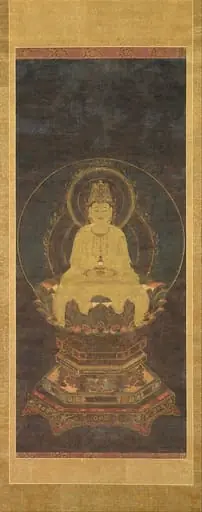 弥勒菩薩像|Miroku Bosatsu
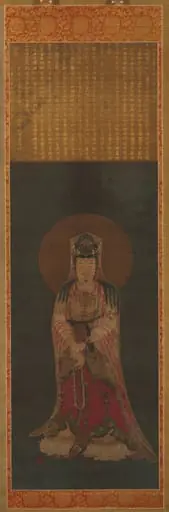 Kannon
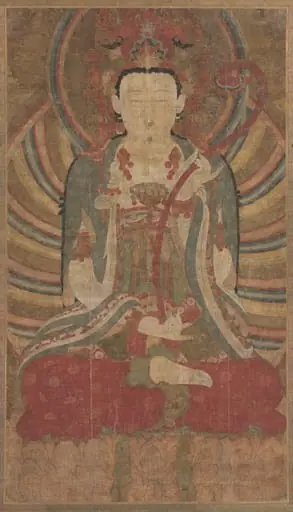 Seated Manjusri
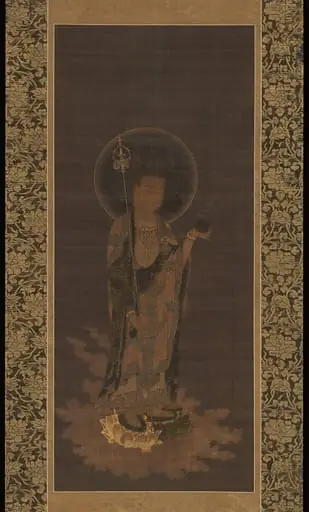 地蔵菩薩来迎図|Welcoming Descent of the Bodhisattva Jizō
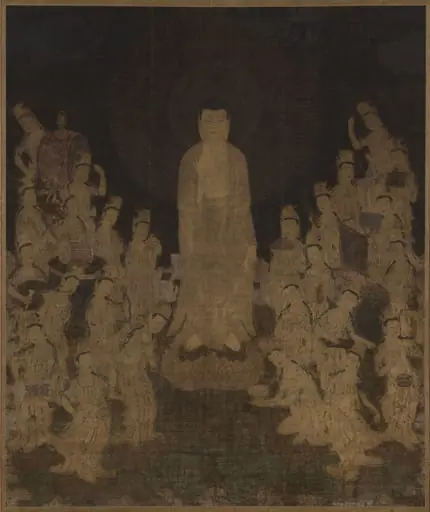 Welcoming Descent of Amida with Twenty-Five Bodhisattvas
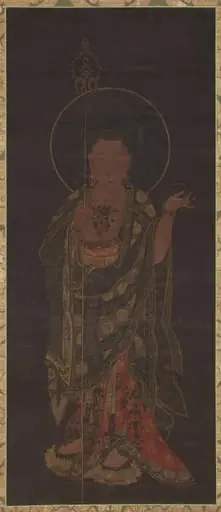 Standing Ksitigarbha
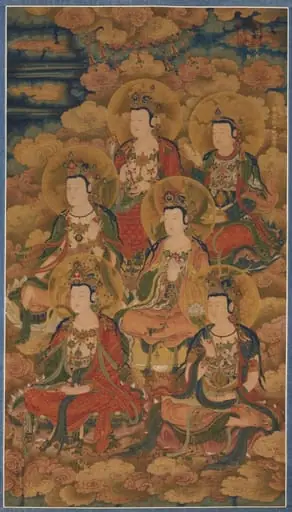 The Bodhisattvas of the Ten Stages in Attaining the Most Perfect Knowledge
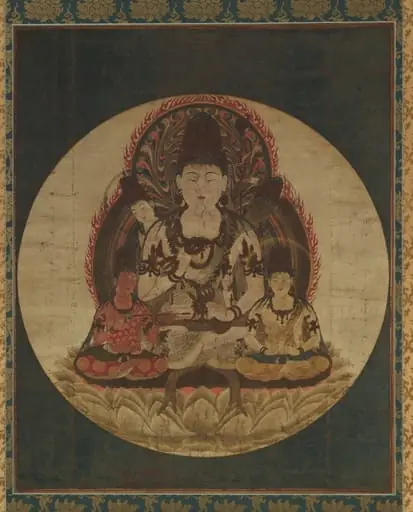 The Secret Five Bodhisattvas (Gohimitsu Bosatsu)
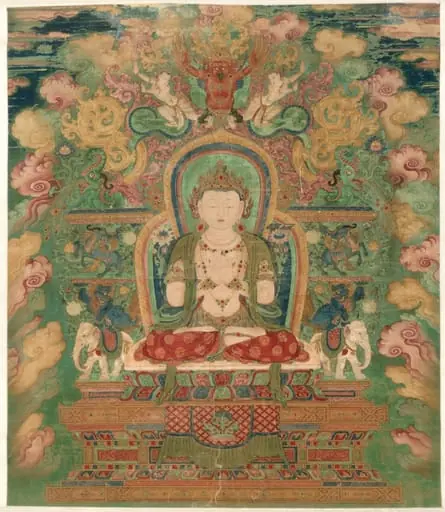 Manjushri
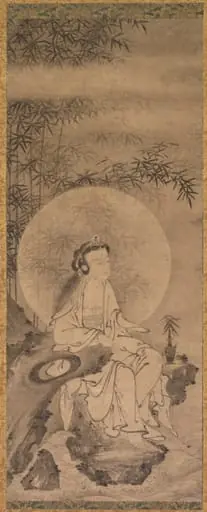 White-Robed Guanyin