Artwork
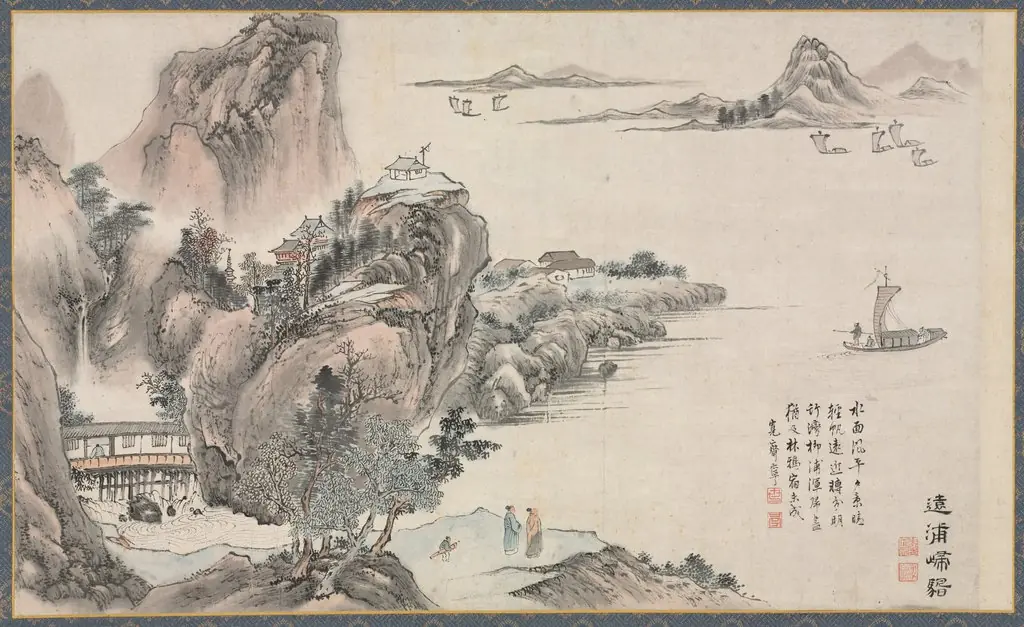
An Old Man and his Attendant heading towards a House on a Hill
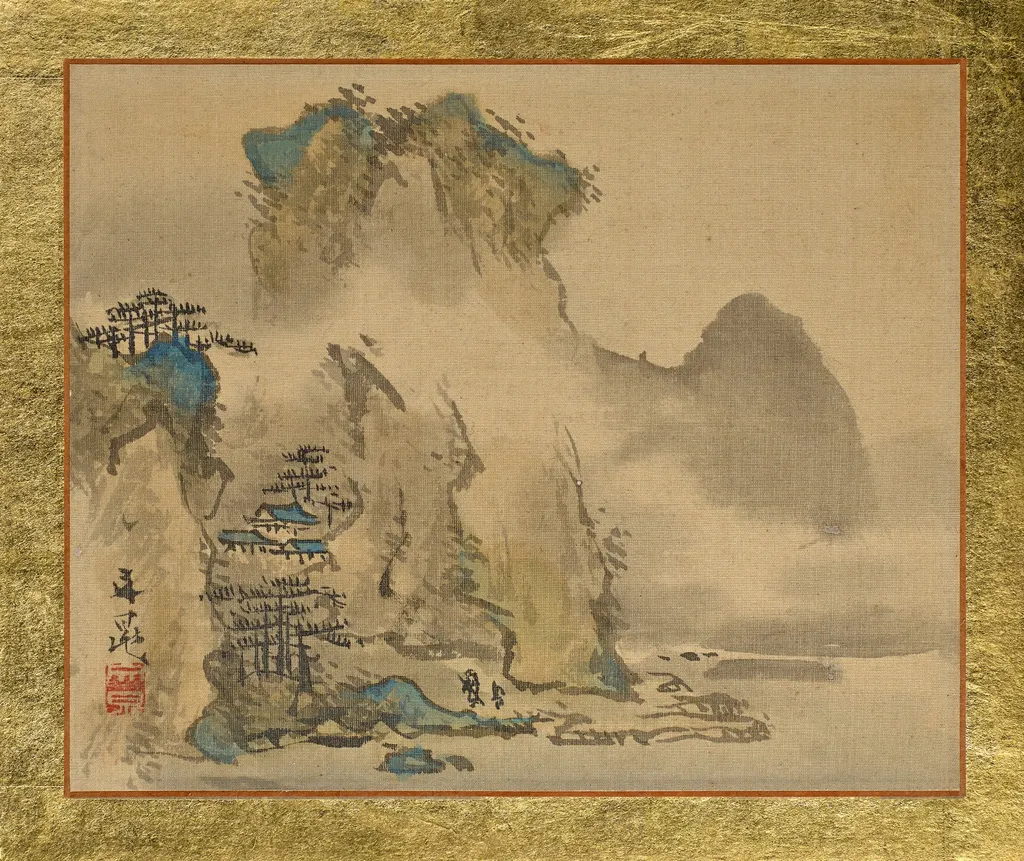
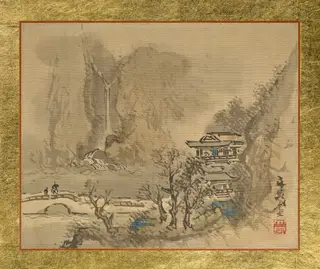
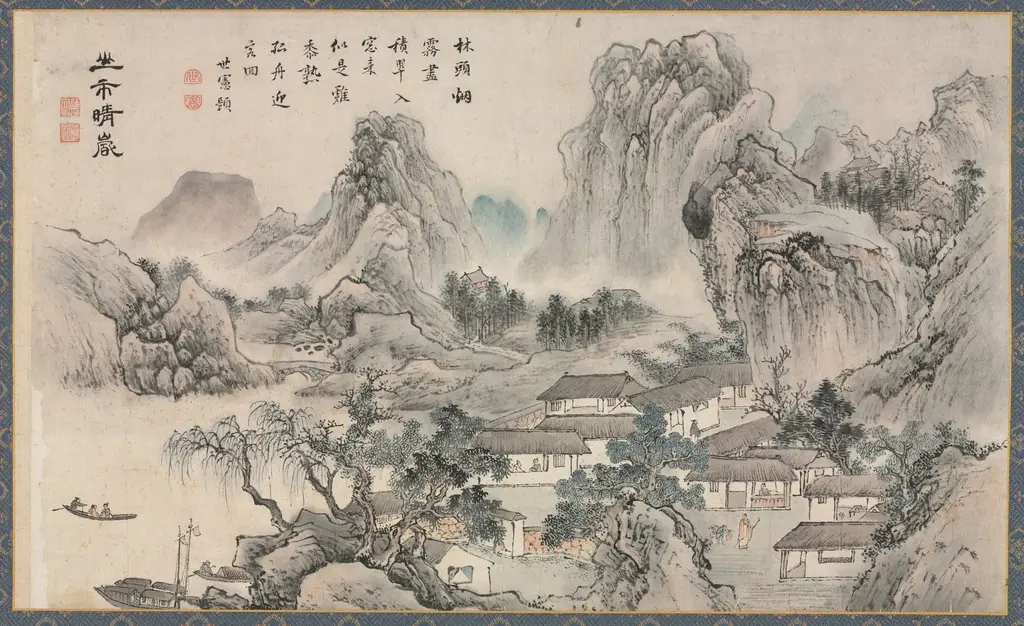
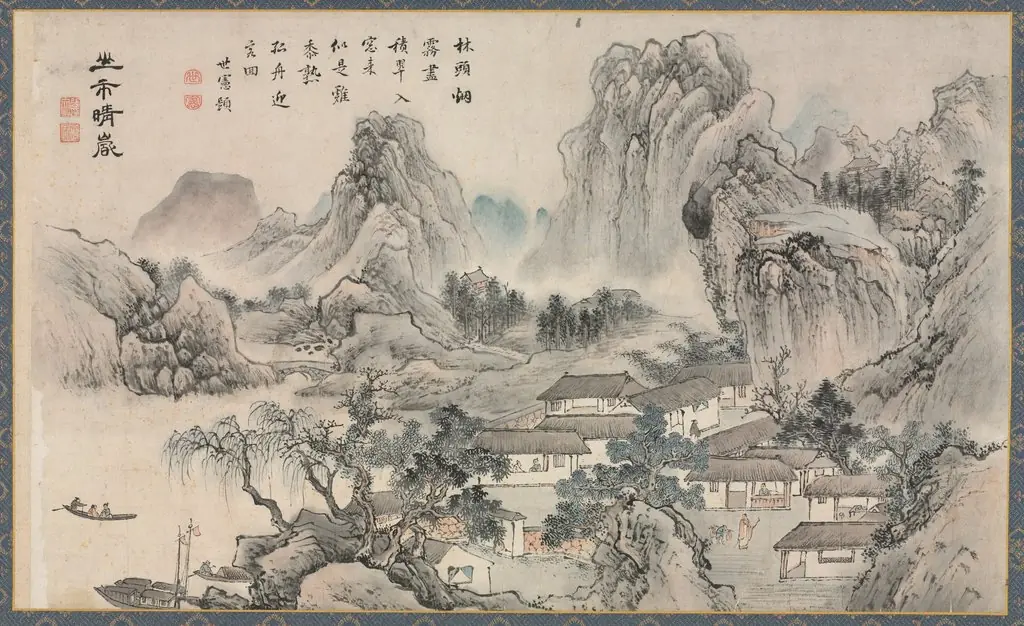
An Old Man and his Attendant heading towards a House on a Hill is an unspecified painting by the Nanga artist Tani Bunchō. It dates from 1815 and is held in the collection of the Museum of Fine Arts, Houston.
About this work
Overview
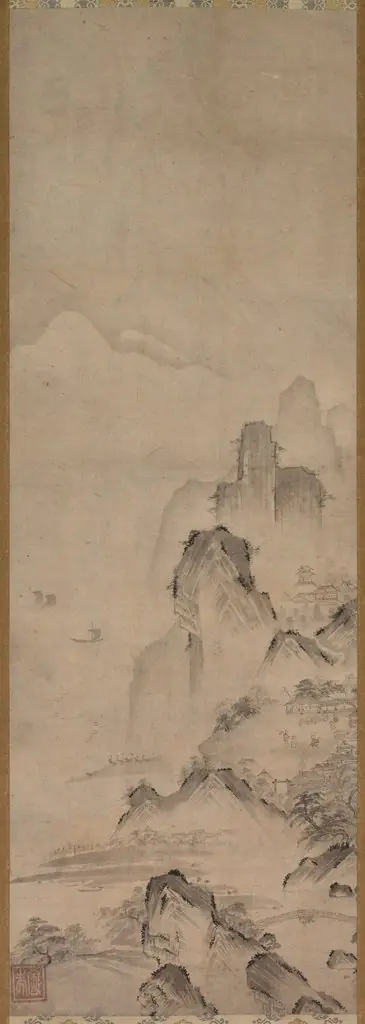
Painted in 1815 by Tani Bunchō, this ink-and-color work portrays a quiet journey along a winding path toward a dwelling atop a gentle hill. The composition emphasizes stillness and distance, with the figures small against the expansive landscape. Rendered in subdued tones, the scene avoids dramatic emphasis, instead inviting contemplation through restrained visual pacing and spatial depth.
Subject & Meaning
The absence of overt symbolism invites interpretation as a meditation on aging, solitude, or the quiet passage of time within nature’s enduring rhythm.
An elderly man and his attendant move slowly along a path, their figures suggesting a private, unremarkable moment of transit. The destination, a house nestled among trees on a distant rise, hints at retreat or homecoming, but offers no narrative clues. The absence of overt symbolism invites interpretation as a meditation on aging, solitude, or the quiet passage of time within nature’s enduring rhythm.
Technique & Style
Bunchō employs soft ink washes and muted pigments to model form and atmosphere, avoiding sharp outlines. Subtle gradations of tone suggest volume and recession, echoing traditional Chinese ink painting principles while adapting them to Japanese aesthetic sensibilities. Light is diffused rather than stark, creating a hazy, atmospheric depth that enhances the scene’s quietude without relying on dramatic chiaroscuro.
History & Provenance
The painting entered the collection of the Museum of Fine Arts, Houston, through documented acquisition, though its earlier ownership history remains largely unrecorded. As a work from the late Edo period, it reflects Bunchō’s engagement with literati traditions, likely produced for private patrons rather than public display. Its survival into the modern era underscores its quiet resonance among collectors of Japanese ink painting.
Context
Created during the Edo period’s cultural maturity, the painting aligns with the literati (bunjinga) movement, which valued personal expression over courtly refinement. Artists like Bunchō drew from Chinese models but infused their work with Japanese sensibilities, emphasizing restraint, naturalism, and introspection. This piece reflects a broader trend toward landscapes as vehicles for inner reflection rather than mere topographical records.
Legacy
Though not widely exhibited, the painting contributes to the understanding of Edo-period ink painting’s emotional subtlety. It exemplifies how Japanese artists adapted Chinese literati conventions to express domestic tranquility and human quietude. Its preservation in a major Western institution ensures continued scholarly attention to the nuanced aesthetics of late Edo visual culture.
Own this work as a print
Artist & collection


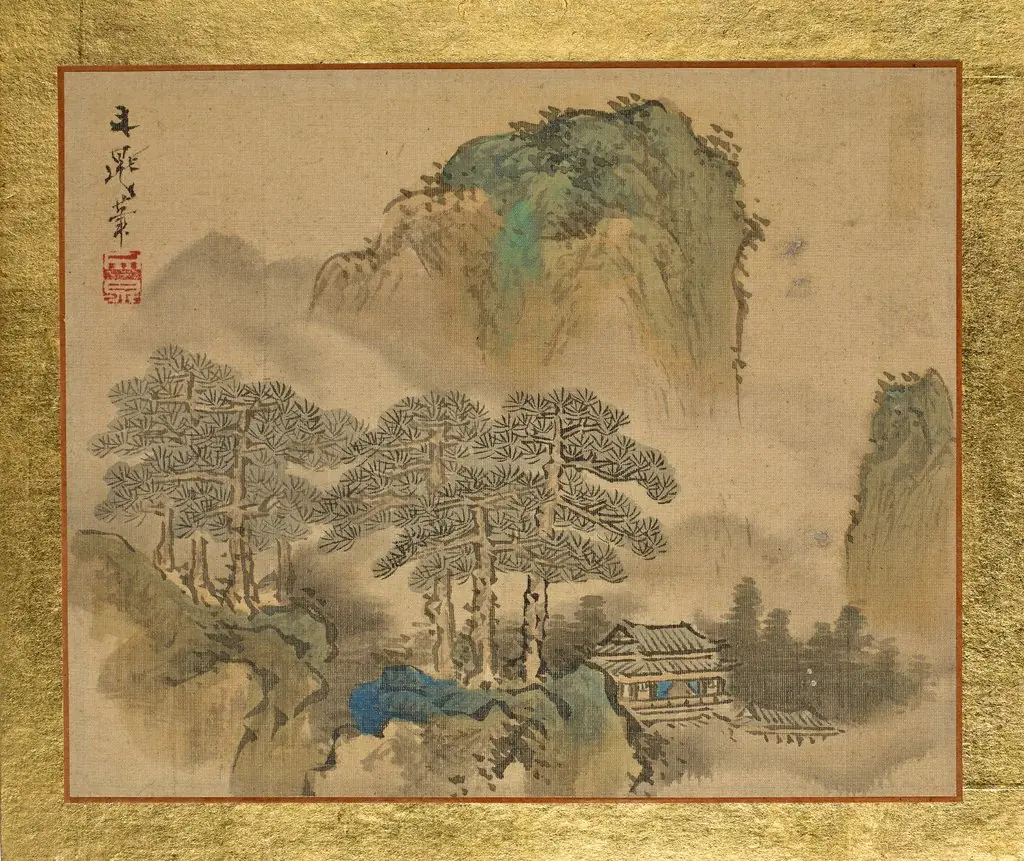 A House next to Pine Trees, in front of Mountains
 A House next to a Small Grove at the Shore in the Mist
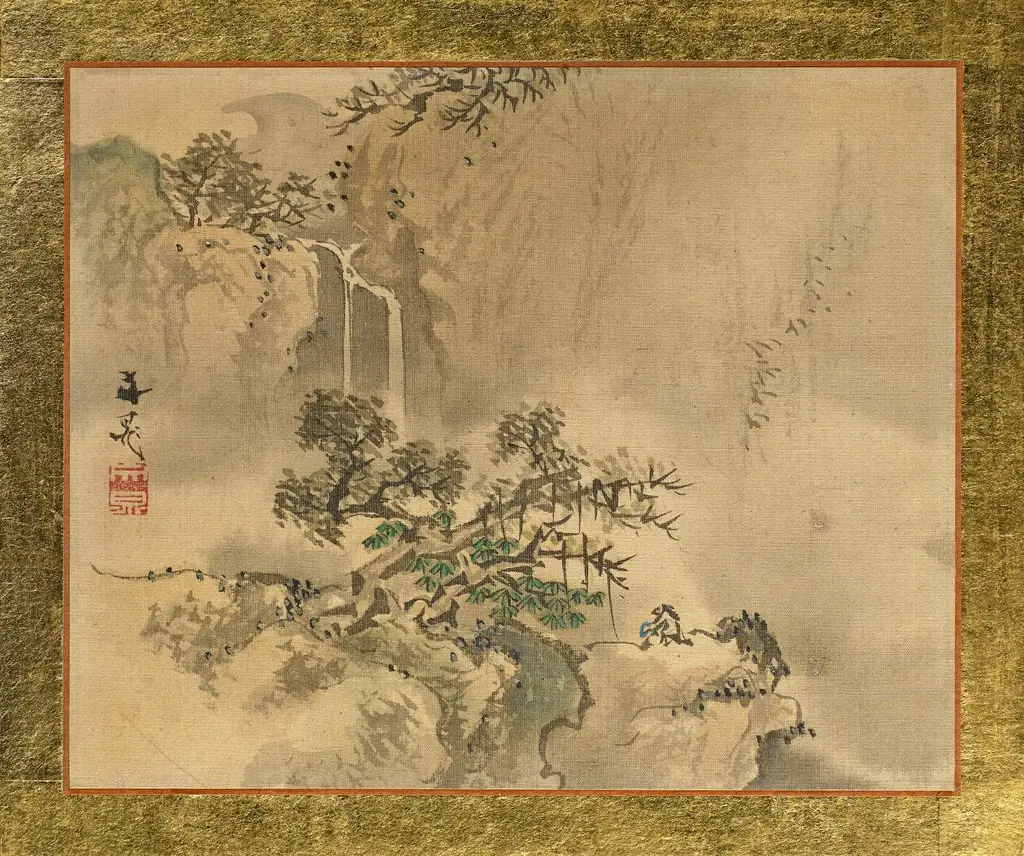 A Man taking a Rest under a Big Pine Tree
 Yutai Peak (Jade Terrace Peak)
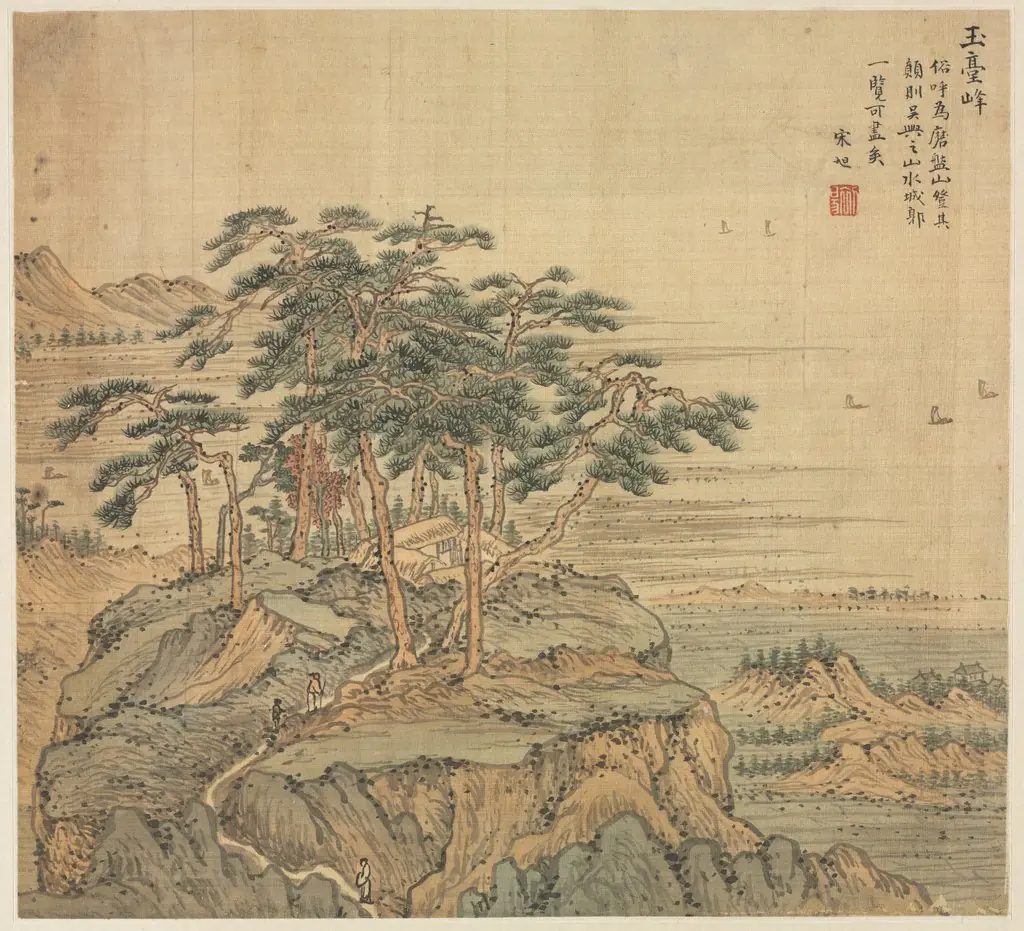 Yutai Peak (Jade Terrace Peak)
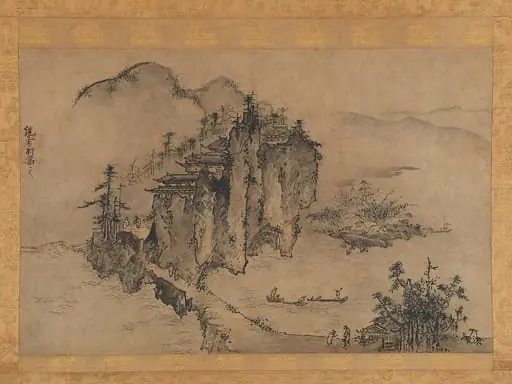 雪村周継筆 山水図|Landscape with Rocky Precipice
 Landscape
 Landscape
- An Old Man and an Attendant heading to a two-story Mansion at the Shore